

-
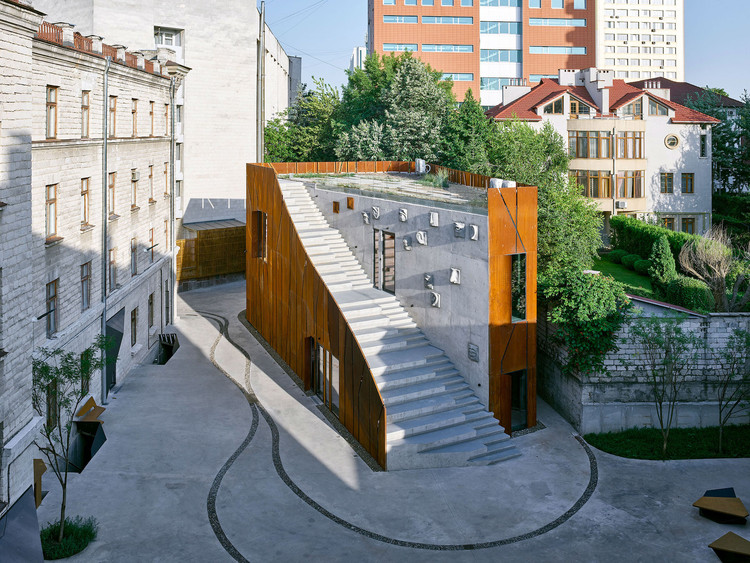
Architects: Supermachine Studio
- Year: 2014



NextOffice’s Sadra Artists Forum is a public cultural center to be located in the arid suburban town of Sadra. Consisting entirely of low-lying or subterranean building levels, the project's unique structure contrasts the surrounding urban area and uniquely shapes the relationship between interior and exterior spaces.
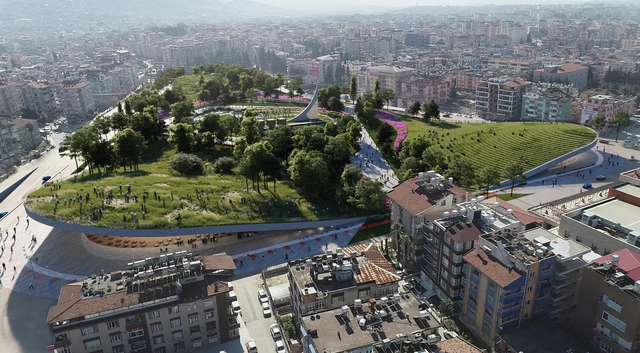
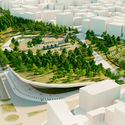
Antakya Atatürk Stadium of Hatay, Turkey, was originally built in 1950 but closed recently due to its inability to meet growing demand. In a new public project titled Green Wings, ONZ Architects aim to transform this former urban center into a new park with a cultural hub.
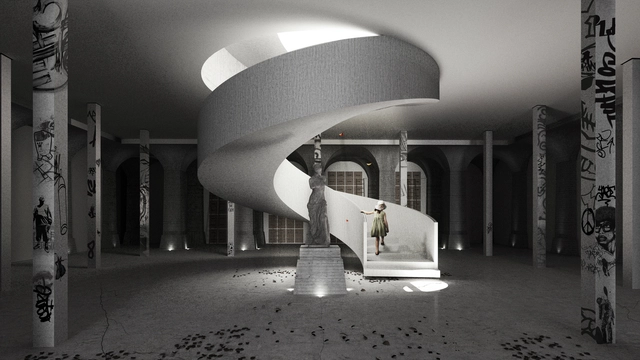
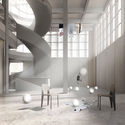
In their recently completed thesis project, Sebastian Siggard, Neemat Azizullah, and Thomas Ron propose the revitalization of a 19th century Parisian water reservoir into a new cultural hub. Addressing growing social issues and inequality across Europe, the project, titled “New Parisian Stories,” promotes social interaction in an effort to create a more integrated and cohesive society. Two primary questions motivate their design: With the 2024 Olympics games coming to Paris, what role can architecture play in capturing the opportunities and potential of such events? And how can architecture better the lives of those lowest in society while also creating social and sympathetic spaces for people of all languages, cultures and ages?
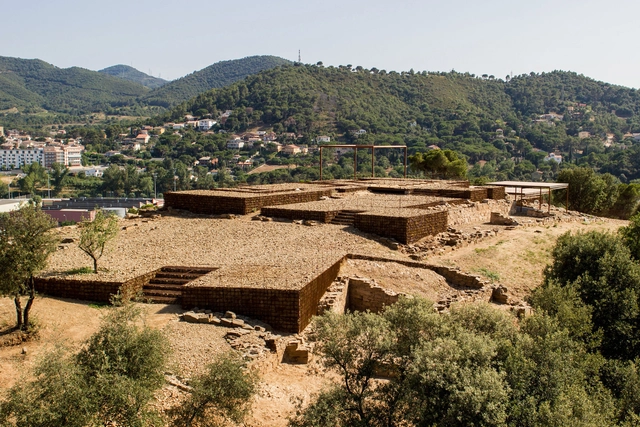
A historic site in the heart of Basel will soon be revived as Kaserne Cultural Center, the city’s new urban hub by Focketyn Del Rio Studio.
The 45 million CHF (44.7 million USD) transformation project is the first publicly-funded large facility in the Kleinbasel district, and will unite and unlock two previously disconnected and enclosed spaces on the Rhine River. The 9,000 sqm project by the Swiss firm is currently under construction and is expected to be complete in 2021.

This article was originally published on May 25, 2015. To read the stories behind other celebrated architecture projects, visit our AD Classics section.
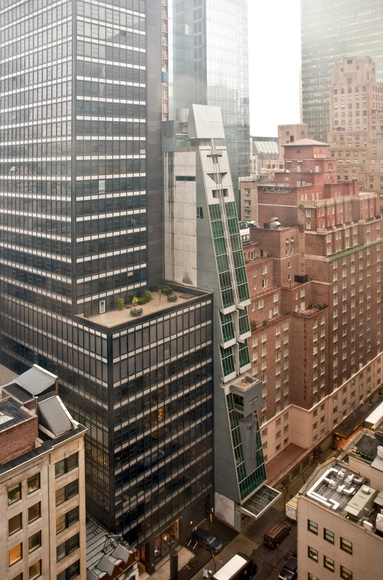
Before the impossibly “super-thin” tower became ubiquitous on the Midtown Manhattan skyline, Raimund Abraham’s Austrian Cultural Forum challenged the limits of what could be built on the slenderest of urban lots. Working with a footprint no bigger than a townhouse (indeed, one occupied the site before the present tower), Abraham erected a daring twenty-four story high-rise only twenty-five feet across. Instantly recognizable by its profile, a symmetrical, blade-like curtain wall cascading violently toward the sidewalk, ACFNY was heralded by Kenneth Frampton as “the most significant modern piece of architecture to be realized in Manhattan since the Seagram Building and the Guggenheim Museum of 1959.” [1]
This article was originally published on November 25, 2014. To read the stories behind other celebrated architecture projects, visit our AD Classics section.
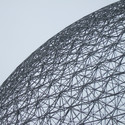
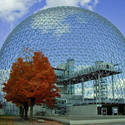
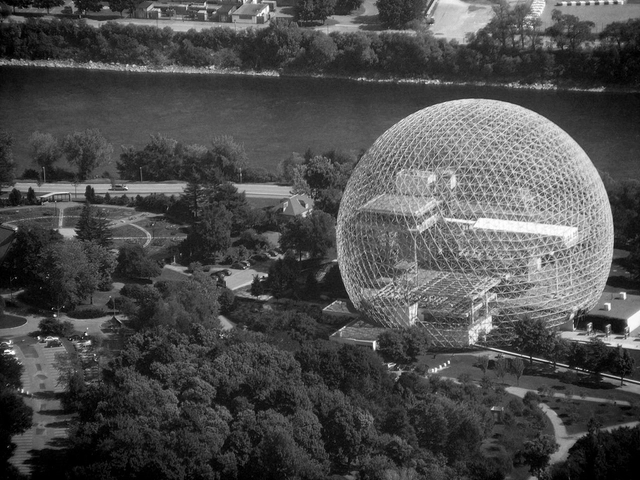
Architects have never enjoyed a position of such supreme prominence as they did in the worldview of Buckminster “Bucky” Fuller. To him, architects alone were capable of understanding and navigating the complex interrelationships of society, technology, and environment as viewed through the comprehensive paradigm of systems theory. Architecture, in this model, was intended to exist in close contact with both mankind and nature, playing civilization’s most critical role in elevating the state of humanity and promoting its responsible stewardship of the environment. Emerging from the ethical positivity of postwar modernism, this melioristic perspective marks perhaps the zenith of optimism’s ascent in mid-twentieth century thought, and gave Fuller a uniquely moral blueprint for his revolutionary designs.
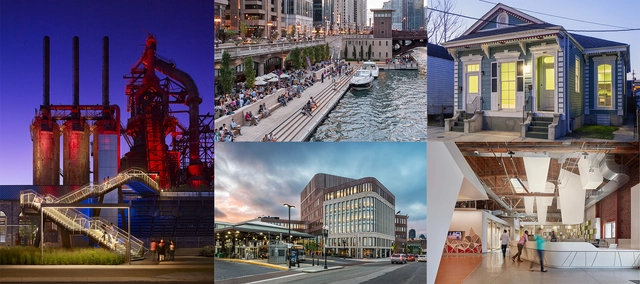
The Rudy Bruner Award for Urban Excellence (RBA) is an urban design award that seeks to promote innovative thinking about the built environment and advance conversation about making cities better. The award discovers and celebrates urban places in the United States that are distinguished by quality design along with their social and economic contributions to American cities.









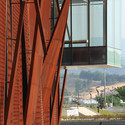






.jpg?1431981450 "The director's office that occupies the box-like protrusion on the southern facade. Image © Photo by David Plakke, davidplakke.com; Courtesy of Austrian Cultural Forum New York")