

ArchDaily complete coverage

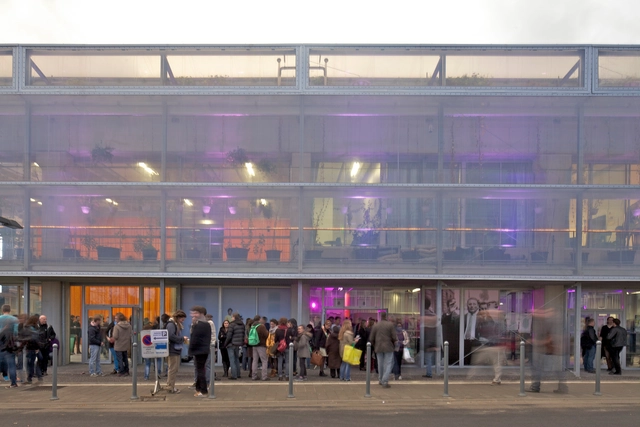
The multi-purpose hall in Lille is a place of cultural dissemination both at a city scale and at a neighborhood scale. It is part of the 28 ha restructuring process of the Arras Europe sector.

One of the main focuses of the Turato Architects’ Hall and Square project in Krkwas to finish an architectural dialogue started way back in 2005, when Idis Turato completed an elementary school, Fran Krsto Frankopan (with his former studio “Randić Turato”).
.jpg?1384142860&format=webp&width=640&height=580)
This design is prompted by the desire for a better integration of all the teaching facilities connected with the Medical Centre. The Medical Centre thereby hoped to optimise the synergy between the departments, their staff and their expertise. This ambition called for a new building that matches both the goals and the existing buildings on location. The design, however, also contributed to a better integration and linking of the entire Erasmus Medical Centre with the city. In that process the Westzeedijk, but especially the adjacent Museumpark, must be transformed from barriers into a turntable or meeting point. After all, other institutions border on this park which also contribute to an urban culture such as the museums, the Kunsthal, the Medical Faculty, the Polytechnic, and the Erasmiaans Gymnasium. The urban and cultural potential of the park and its potential as a flywheel have hardly been exploited so far.
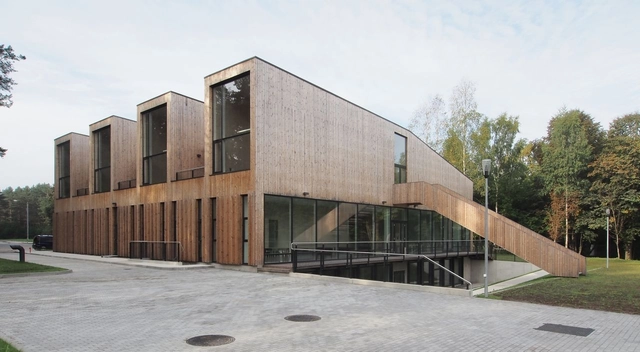
The purpose of centre is to provide the artists and researchers with space for workshops, lectures, individual projects and residency. The 2096 sq. meters building is located in Vilnius, Valakampiai, next to the city beach. Built instead of the old shop, it stands in the axis of the street, just at the ending of the former trolley ring.

Dungeness beach is a classic example of ‘Non-Plan’ and the houses that populate the beach have developed through improvisation and bodge. This scheme develops this tradition in a way that responds to the drama and harshness of the landscape.

The project consists of the renovation of a building from the late Nineteenth century in the old centre of a small town in the province of Bergamo, which had initially been built as a primary school. The intention was to make the building available to the citizens, by renovating and expanding the original building, which was to become the new municipal library and thus a centre of culture. The C-shaped plan of the original building and the fact that more space was needed suggested the addition of a new block on the open side, to create an internal open court and turn the building into a more stately “palazzo” formed around a court.
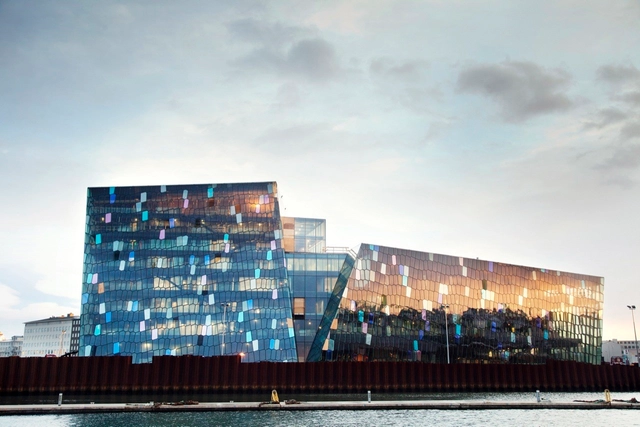
Harpa, the Reykjavik Concert Hall and Conference Centre in Iceland, is the winner of the 2013 European Union Prize for Contemporary Architecture - Mies van der Rohe Award the European Commission and the Mies van der Rohe Foundation announced today. Designed by Henning Larsen Architects, Batteríið Architects and Studio Olafur Eliasson the building has helped to transform and revitalise Reykjavik harbour and brought the city and harbour district closer together.

The city of Tartu has the goal of implementing high-quality modern architecture in new public buildings. The new kindergarten, which is located in one of the most dilapidated areas of Tartu (the so-callled Chinatown is a former Soviet military garrison), is a result of this policy.

Timisoara is a town with around 320 000 inhabitants, “a gate” for Romania to the Western Europe and a typical central European urban structure.It is also a multicultural and rich multiethnic city. We can also refer to it’s tradition as a pole of artistic and technological avantguard. The entire historical centre is now subject for modernization, restoration, public space regeneration. Some new projects are on the run, others are just finished – The rehabilitation on the east side of the citadel, a Phare project.

After restoration, conversion, and extension by Arkitema, the beautiful Nørre Vosborg manor is now an up-to-date hotel, cultural venue, and conference center, with a newly-built hotel wing and new design solutions for all of the manor's many different buildings. The architectural practice of Erik Einar Holm was responsible for the restoration and conversion of the manor house. The new hotel wing, designed by Arkitema, matches the largest of the complex's buildings in terms of volume.
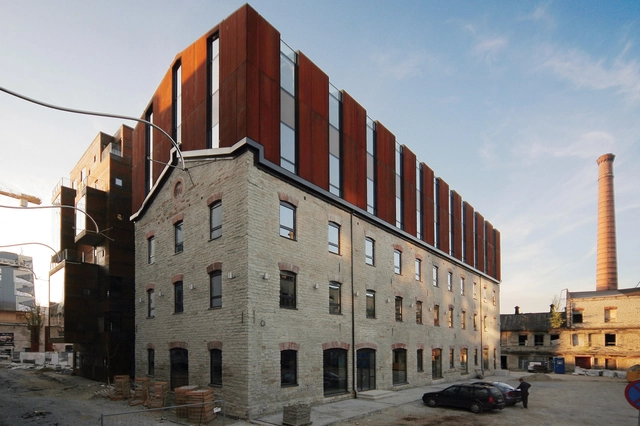
The 1,5 century-old Rotermann Quarter, a former industrial area for food production, is located between the Tallinn's old town and the port, where stands still historically-valuable limestone buildings under heritage protection. The approved detail planning calls for adoptive re-use of existing buildings as well as insertion of new volumes amongst in order to create “live-work” and pedestrian-friendly environment right at the city center, supported by 400 parking lots underground.
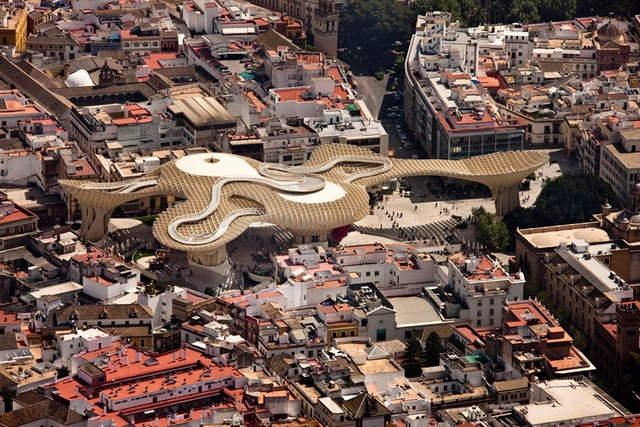
The European Commission and the Fundació Mies van der Rohe have announced the five finalists who will compete for the 2013 European Union Prize for Contemporary Architecture, also known as the Mies van der Rohe Award. Out of 355 works submitted from 37 countries, five have been short-listed, including BIG's Superkilen (also up for an ArchDaily Building of the Year Award for best public facility).
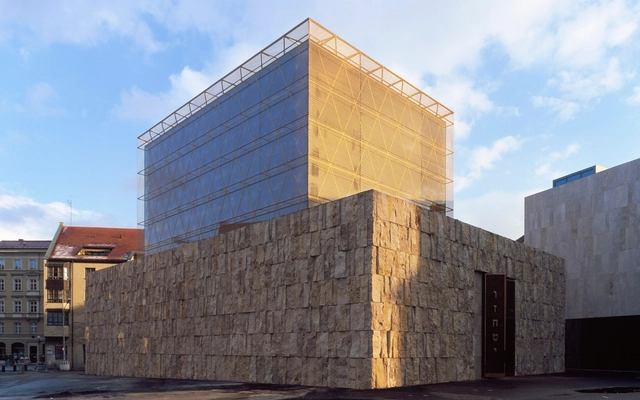
The Idea
Our competition concept was the idea of a natural integration of the Jewish Center into the structure of the city through public space. Its public nature and openness can be experienced in a succession of squares, paths and passage-ways between the buildings and in their neighbourhood./ Community center, the chief synagogue and the Jewish Museum of the City of Munichare a balanced ensemble , in their own autonomy formulated and across their spaces correlated.
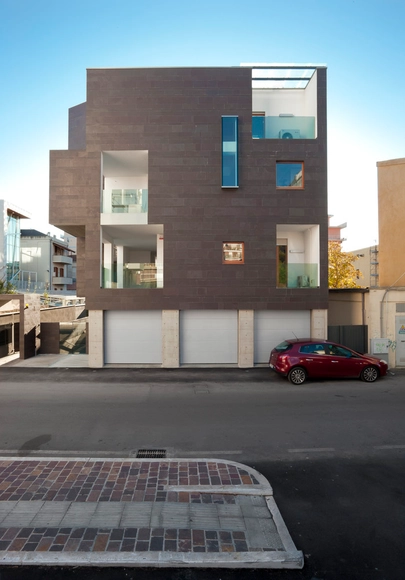
The building is in an upgrading area by replacing unqualified and obsolete construction. The size of the project, however, and its location on a side street than the major artery of Viale G. Bovio, urban section of the SS16 Adriatica, confer to this building a exclusively architectonic role, with no possibility of influencing the city around, if not its presence qualifying. In this scenario we have set ourselves the goal of developing a compositive program intentionally in self-referential mode, but that would meet the contingencies of the site, the demands of clients and, more importantly, he had the strength and clarity of a statement of intent: so we wanted to decline, with a didascalic irreverence, the Vitruvian triad Firmitas, Utilitas and Venustas in three separate volumes that the predominant feature descend directly from one single entry in the triad. So the concrete basement, for Firmitas, the stone sharded cube, for the Utilitas, and the Apollonian cube in white plaster, for Venustas, forming three portions of the building making it articulated from the volumetric and material point, and then, rich in continuously changing views: actually there is no surface portion of the building that can be flanked by similarity to another and all the elements that compose this articulated ensamble follow one another as in a film storyreel. Harmonic sequences of perspectives in succession.
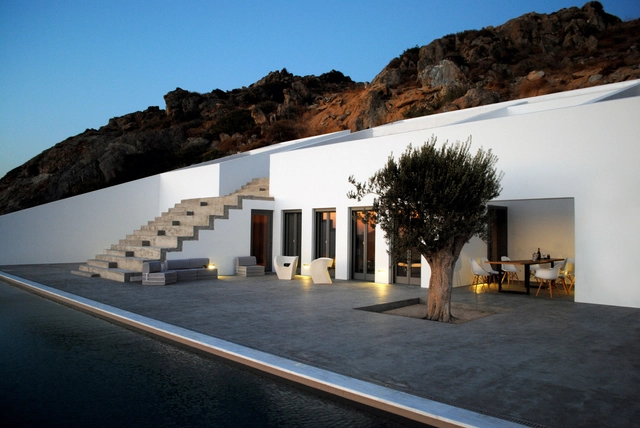
On a rocky inclined site of 9,000m², with a sea view to the west, a holiday home of an area of 280m² has been built for a French family of five and their guests.
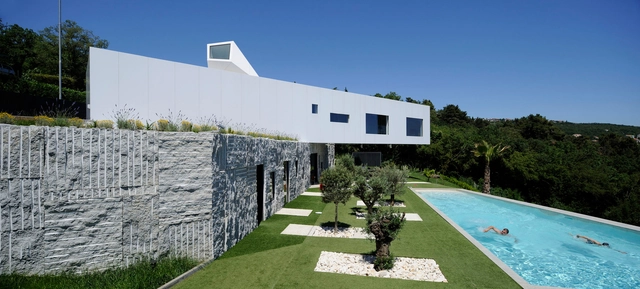
The hinterland of the Opatija Riviera in Croatia is dotted with villas (built within a century and a half). Their upper, front side reveals nothing but entrances beyond which we can only imagine their spaciousness. Their scale and relation to the bay are entirely dependent on the seafront slope (perhaps, it is the tension arising from the assumption of something hidden what gives the spatial frame of Opatija’s hinterland its appeal).
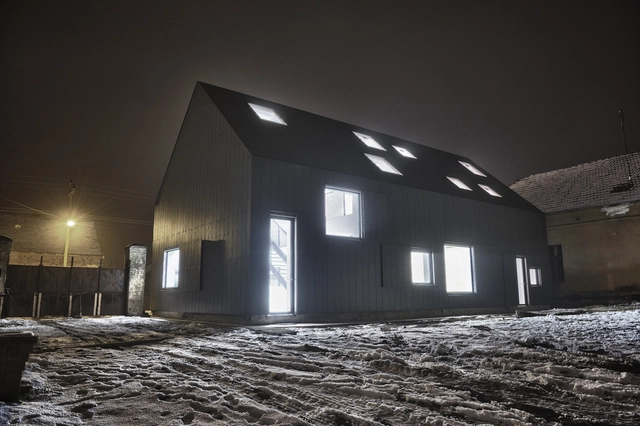
Mokrin is a settlement in the municipality Kikinda, found 13 km from the town Kikinda, in Vojvodina region. The village of Mokrin is part of a planned type of villages that have been established by the Austro-Hungariarian Empire on the territory of Vojvodina since the 18th century. These types of villages are characterized by regular communication infrastructure, organization of buildings on the plots and typology of buildings.