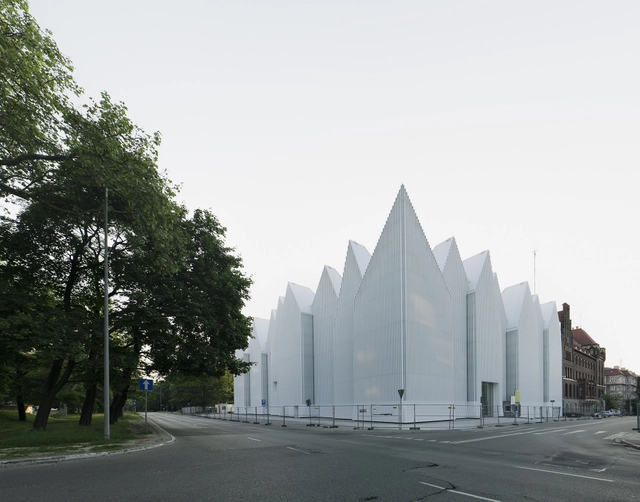
Earlier this month, during the award ceremony for the 2015 EU Prize for Contemporary Architecture-Mies van der Rohe Award, we had the opportunity to speak with winners Barozzi / Veiga, who won for their Philharmonic Hall Szczecin. We asked Fabrizio Barozzi and Alberto Veiga, founders of the eponymous, Barcelon-based firm, about their project and their office.
Barozzi / Veiga’s Philharmonic Hall Szczecin in Szczecin, Poland has been selected as the winner of the 2015 EU Prize for Contemporary Architecture-Mies van der Rohe Award. The design was influenced by the surrounding context and buildings, specifically by the “verticality of the city’s residential buildings, by the monumentality of the upright ornaments of its neo-Gothic churches and the heavy volumes of its Classicist buildings, by the towers that dot its entire skyline and the cranes of its port,” according to the architects. The Philharmonic Hall features large skylights and is clad with glass on the outside, providing a contrast to the surrounding buildings.
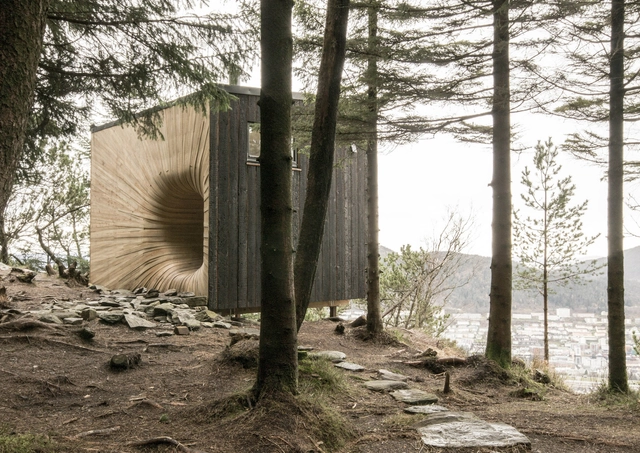
Overview : Hovering above the city, hidden behind trees in the forest of Bergen's most famous mountain; through a tuba-tunnel, you can enter a wooden bubble. One night, just for you and your kids. The project is the result of a design-build workshop at Bergen School of Architecture lead by Espen Folgerø at OPA Form architects.
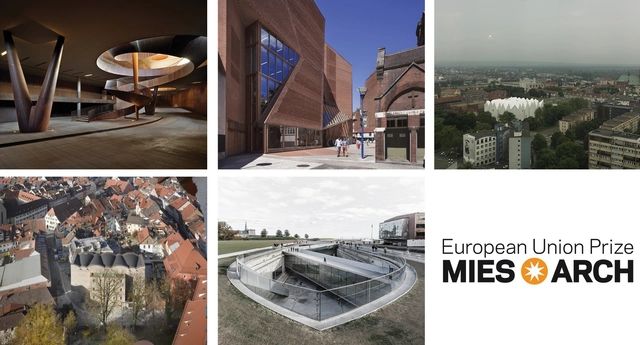
Five projects have been selected as finalists of the 2015 EU Prize for Contemporary Architecture- Mies van der Rohe Award. The finalists were selected from a shortlist of 40 projects, and over the next couple of months the jury members will visit each of the finalist projects to evaluate the buildings firsthand and gather information from the people who use them. On May 7, the architects will present their projects to the jury. The winner will be announced the following day at a ceremony at Mies van der Rohe’s Barcelona Pavilion.
Update: The five finalists for the 2015 Mies van der Rohe Award will be announced on February 25 at 12 UTC. 40 projects from 17 European countries have been shortlisted for the 2015 European Union Prize for Contemporary Architecture – Mies van der Rohe Award. Chosen from the 420 original nominees, five of the shortlisted projects will be chosen for the next round of selection, to be announced at the end of February in London. These selected architects will then present their projects before a committee on May 7, who will select one recipient of the highly esteemed international design award, as well as one recipient of the Emerging Architect Prize. The winners will be announced the following day at the Mies van der Rohe Pavilion in Barcelona.
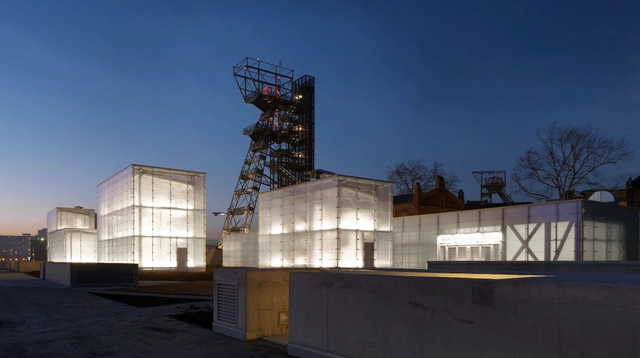
The history of the city of Katowice is closely tied with the themes of heavy industry and mining. They have left behind distinctive artificial landscapes, industrial complexes, and buildings and are anchored in the collective consciousness as an unmistakable cultural heritage endowing a sense of identity.
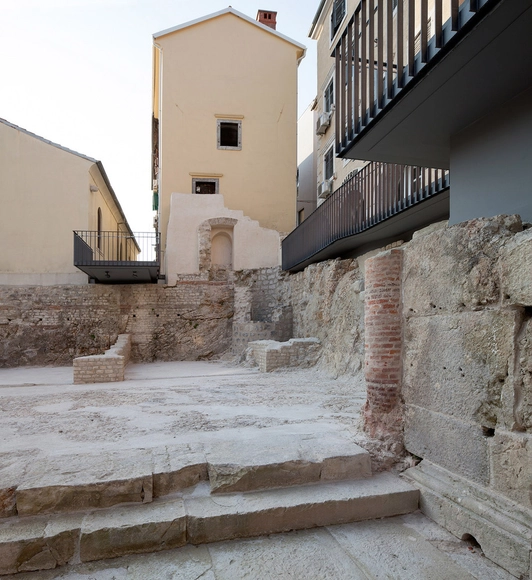
The opening of the Principia Archaeological Park in Rijeka, in February 2014, enriched the topography of ancient sites on the Adriatic’s eastern shore, adding a monumental locus, unique in the type and the shaping level of presentation. As for the type, the Principia was an architectural and town-planning element of castrum, a Roman military encampment or town, one of the many scattered along the boundaries of the Roman Empire (limites).
R50 – cohousing is a joint building venture project in Berlin-Kreuzberg. It was initiated by the architects during the course of a concept-based award procedure for building plots and implemented in close cooperation with the clients. The building proposal is founded on a clear urban design position, robust and precisely detailed architectural design, and both a collective and individual process of occupancy.
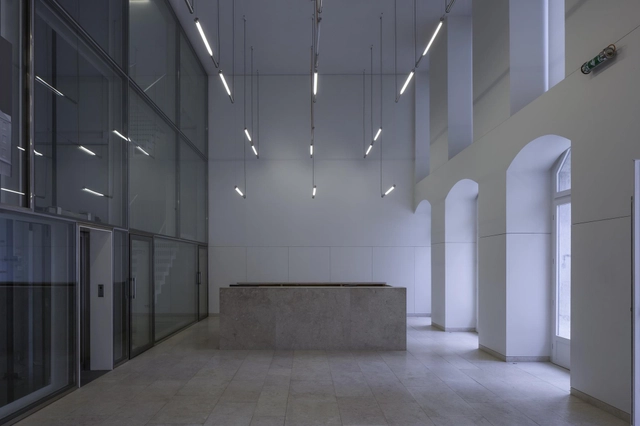
Following Bulgaria’s recent accession to the European Union, Phase I of the National Museum Complex in Sofia, comes at a time when Bulgarian society is undergoing a reevaluation of cultural values and is in great need of a new self-assured and positive identity.
« Maison d’accueil de l’enfance Eleanor Roosevelt » is an emergency residential centre managed by the local department of child welfare (Aide Sociale à l’Enfance- ASE) in Paris. It provides emergency shelter for minors under legal guardianship.
NoXX Apartment is located in a narrow dead end in Cihangir. Due to the location of the Project and the short timing for construction, conventional construction techniques seem unattainable, therefore a steel structure apartment building is designed with an industrial sensibility and as a homage to the rare standing structures from early century typical of the area.
The ambitions of AG SOB (Ghent Urban Development Corporation) go further than developing new urban districts and redrawing, in broad gestures, the existing urban fabric. Their Kavel project is an exercise in the precise implementation of small-scale housing following unconventional principles. The corporation seeks opportunities within the urban fabric – arising if necessary through demolition – to build new homes, either individually or in groups ranging from two or three to seven or eight. However, they do not manage everything themselves. Instead, they offer the site to a young or otherwise suitable family, selected from a number of candidates, as a package complete with a selected architect, on highly advantageous terms. The deal is also bound by stringent conditions for financing and program requirements: a high grade of sustainability is required on a practically impossible budget.
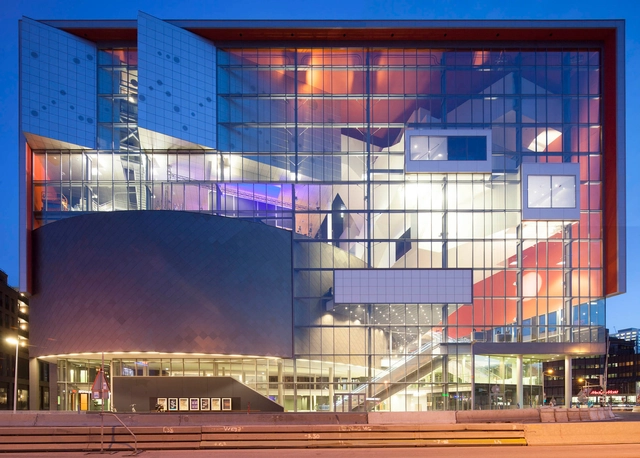
The so-called Muziekpaleis is a spectacular endeavour. When we first learnt about the project we could hardly believe its radicality. The project is part of the renovation of the station area. The idea was to construct a music building with 4 halls on top of the existing concert hall Vredenburg. That would mean to partly demolish the Hertzberger Masterpiece! It also would bring together totally different target groups in one building: in addition to the symphony hall, the complex will feature a 2000 people hall dedicated to pop music, a jazz hall, a room for chamber music and the so-called Crossoverzaal. These ‘Biotopes’ will be developed by 4 different architects within the master plan by Architectuurstudio HH. In a way it is a super-sized ‘showcase’ containing stacked ‘buildings’: 3D Urbanism!
The ‘Nieuwe Park Rozenburgschool’ is an elementary school in Rotterdam’s quarter Kralingen-Crooswijk with children from various ethnic, cultural and social backgrounds. The school has been spread over two locations within the district. With the extension of one of the locations all school facilities could be united again and help the school function as one institution.



.jpg?1432311958&format=webp&width=640&height=580)
.jpg?1431095540&format=webp&width=640&height=580)
.jpg?1423515349&format=webp&width=640&height=580)



.jpg?1422590016&format=webp&width=640&height=580)

_Ossip_van_Duivenbode_004.jpg?1422499515&format=webp&width=640&height=580)