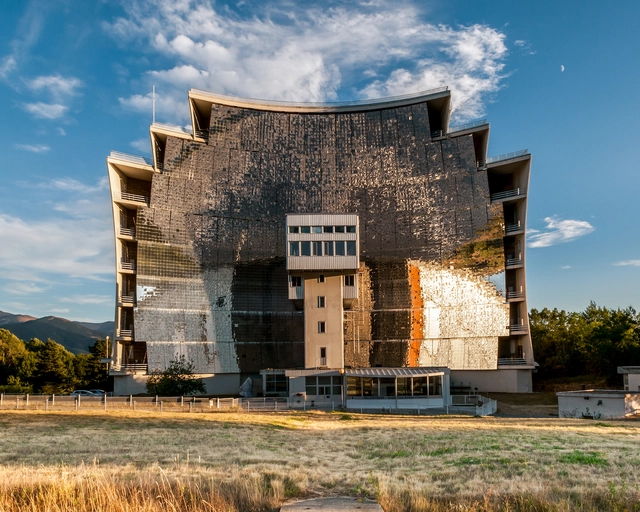
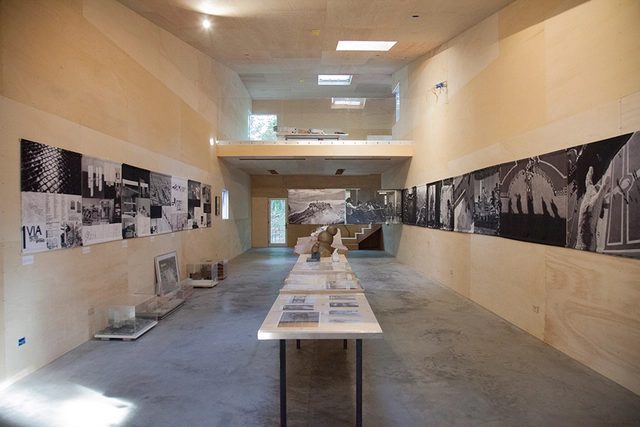
RIBA presents Forms of Industry, an exhibition of contemporary photographs by Alastair Philip Wiper (1980) and archival images by Eric de Maré (1910-2002) from the RIBA Collections. Separated by more than 50 years, the two photographers share a common interest in industrial buildings and landscapes, yet their differing approaches create a commentary on changing attitudes towards industrialisation and sustainability.
Freestyle by Space Popular at RIBA Architecture Gallery @ Francis Ware
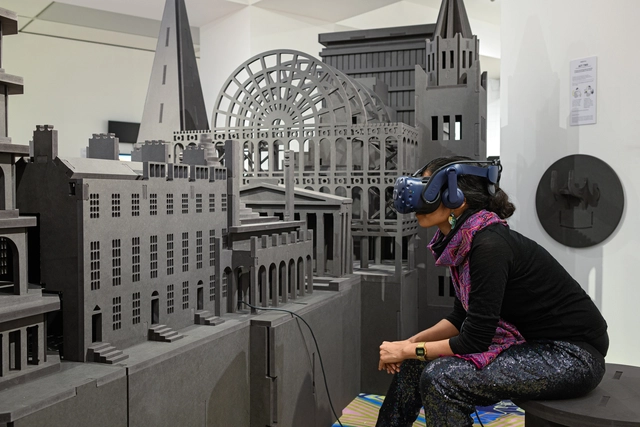
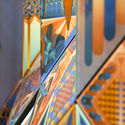
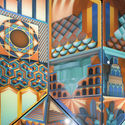
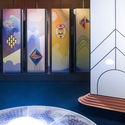
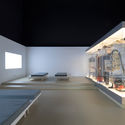
RIBA presents its first virtual reality (VR) exhibition, exploring moments across 500 years of aesthetics in architecture.
What makes a style? How is a style collectively agreed upon and shared? Drawing on RIBA’s world-class collections, Space Popular uses virtual reality to examine styles of the past and to consider the technology’s impact on contemporary spaces and buildings. Historic artefacts will be displayed alongside newly commissioned content, inviting you to enter a beguiling virtual universe to experience how popular cultures and technologies impact architecture and its style evolution.
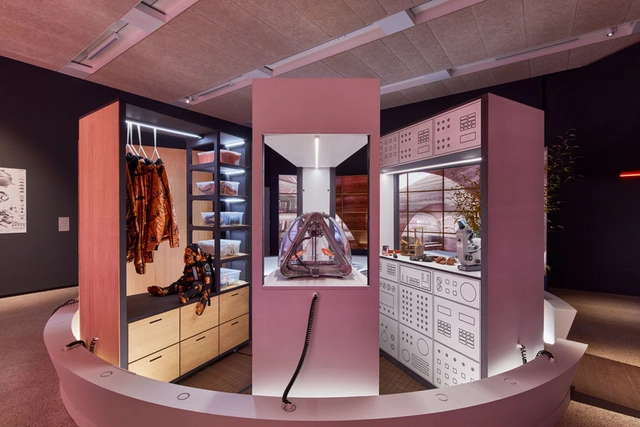
Mars has been notable for capturing humans' interest, intriguing business moguls such as Elon Musk and Jeff Bezos to go on a "billionaire space race" and settle on the planet. But does humanity have the right to colonize another planet? If so, who does this sky-high ambition serve?
Architect and educator Astra Zarina wasn’t just the teacher of Tom Kundig, Ed Weinstein, and Steven Holl (who designed ‘T’ Space); she was also an advocator for public spaces, cohesive urbanity, and the communities that these attributes fostered. ‘T’ Space’s newest exhibit Rome and the Teacher, Astra Zarina celebrates Zarina’s life and teachings in the context of recognizing overlooked pedagogical figures, particularly women. A recent article by Metropolis Magazine describes this exhibit in detail and with it, Zarina’s own life story.
https://www.archdaily.com/922753/t-spaces-new-exhibit-celebrates-the-overlooked-history-of-an-influential-female-architect-and-educatorLilly Cao
Although The Architecture of Happiness did not gain momentum after its publication in the mid-2000s, the ideology of architecture and well-being has remained a topic of intrigue until today. To further explore this ideology, the Canadian Centre for Architecture (CCA), with the curation of Francesco Garutti, have put together an exhibition that explores how the "happiness industry" has controlled every aspect of contemporary life after the 2008 financial crash.
Our Happy Life, Architecture and Well-being in the Age of Emotional Capitalism is a non-archival show that exhibits work from architects, artists, and photographers. Metropolis' Samuel Medina spoke to Garutti to discuss the notion behind the exhibition, social media, and architecture's new spaces of meaning.
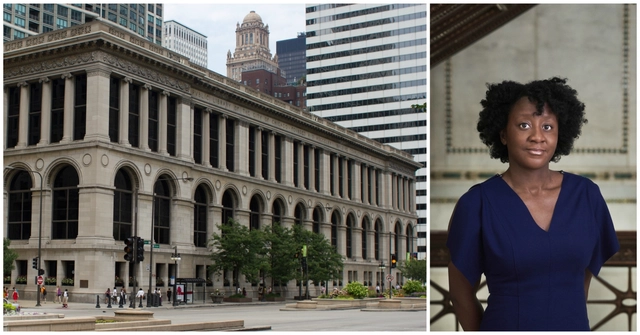
Currently holding the position of Exhibitions Curator at the Reva and David Logan Center for the Arts at the University of Chicago, Umolu draws from her background in architectural design and curatorial studies in creating exhibitions that explore the politics of the built environment. Recent projects include Kapwani Kiwanga: The sum and its parts, The Land Grant: Forest Law, and The Museum of Non Participation: The New Deal.
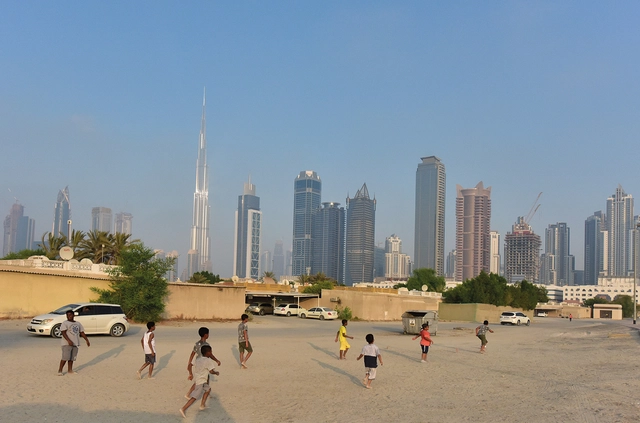
Children playing soccer on sandy street outside the boundaries of bigness. Image Courtesy of National Pavilion UAE - la Biennale di Venezia
As part of our 2018 Venice Architecture Biennale coverage we present the proposal for the UAE Pavilion. Below, the participants describe their contribution in their own words.
The National PavilionUAE will present “Lifescapes Beyond Bigness,” an exhibition exploring human-scale architectural landscapes, at the 2018 Venice Biennale. The exhibition aims to highlight the role of architecture and urban design in forming the choreography of people’s daily routines. It particularly investigates the role of ‘quotidian’ (every day) landscapes in accommodating, enhancing, and facilitating social activities across different places in the UAE.
Videos
Sex and the So-Called City. Office for Political Innovation. Storefront for Art and Architecture, 2018.. Image Courtesy of Imagen Subliminal
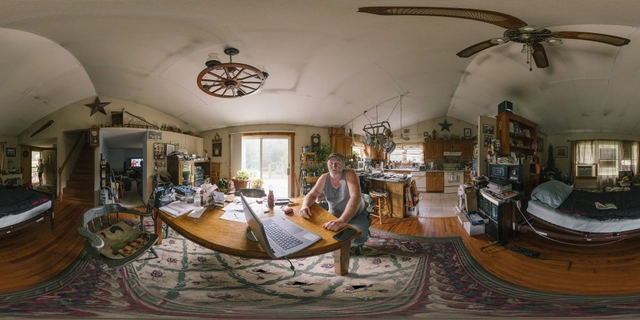
Storefront for Art and Architecture in 97 Kenmare St, New York, opened yesterday “Sex and the So-Called City,” an alternative version of Sex and the City (SATC) made by the architect Andrés Jaque / Office for Political Innovation with Miguel de Guzmán (Imagen Subliminal) on occasion of the show’s 20th anniversary.
"The Glass Chain" (Die Gläserne Kettein its native German) was an exchange of written letters initiated by Bruno Taut in November 1919. The correspondence lasted only a year, and included the likes of Walter Gropius, Hans Scharoun, and Paul Gösch. In the letters, the penfriends—thirteen in all—speculated and fantasized about the possibilities of glass, imagining, in the words of Fredrik Hellberg and Lara Lesmes (Space Popular), "fluid and organic glass follies and colourful crystal cathedrals covering entire mountain chains and even reaching into space."
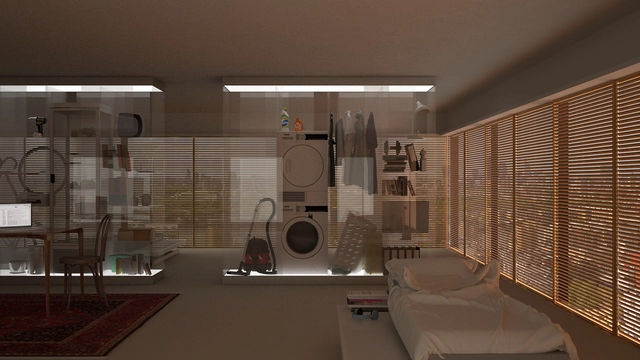
Interior design by REAL Foundation for Common Stock: Sharing as Luxury, the fourth tower in the Derivative Architecture series. Image Courtesy of Real Foundation
The Chicago Architecture Biennial is the largest platform for contemporary architecture in North America, and the blog invites designers and other contributors to express their perspectives in a range of formats. The 2017 exhibition, entitled Make New History, will be free and open to the public between September 16, 2017 and January 6, 2018.
Chicago Architecture Biennial (CAB): We want to start by noting that REAL foundation, which stands for "Real Estate Architecture Laboratory," is not a typical design practice. You design spaces, but you also make books, exhibitions, a magazine, and tools for advocacy. Why?
Jack Self (JS): The REAL foundation is an unusual model for an architectural firm. We're a normal architectural practice, but we are governed by a very strict set of conditions that allow us to pursue certain political and economic ideologies. We see the social role of the architect, as well as the structure of the architectural firm, as a subject for design as much as buildings.
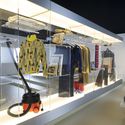
Pierre Chareau was an architect whose buildings have almost all been demolished; an interior designer whose designs have all been remodeled; and a film set designer whose films you cannot see. These are not the most auspicious circumstances on which to mount a retrospective, but an ongoing exhibition at the Jewish Museum, imaginatively designed by Diller Scofidio + Renfro (DS+R), attempts it nonetheless.
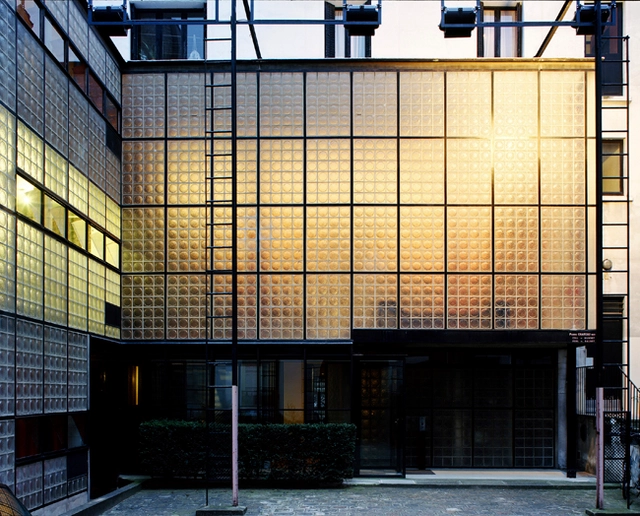
Chareau, who is best known for his one surviving building, the Maison de Verre in Paris, defies neat classification. Without any sort of architectural training, he worked briefly as a furniture designer for a British firm then struck out on his own, creating an idiosyncratic corpus of furniture, interior designs for life and cinema, and even several homes.
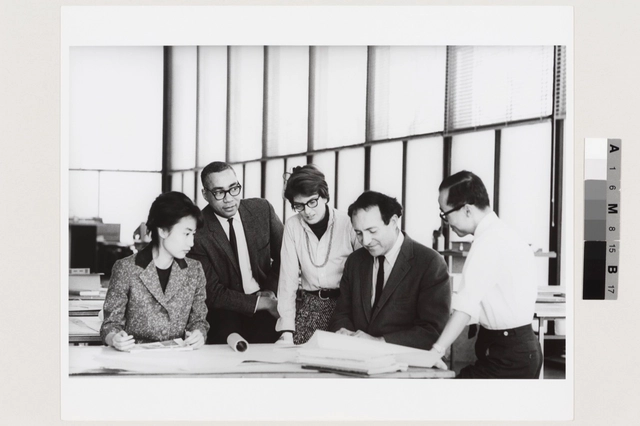
This week Phyllis Lambert, widely considered to be among the most influential figures in architecture, turned 90. Known primarily for founding the Canadian Centre for Architecture (CCA) in her hometown of Montrèal in 1979, she also acted as Director of Planning for the world-renowned Seagram Building in Manhattan (a tower commissioned by her family). The project is often cited as one of Mies van der Rohe's most important built works. As a practising architect, Lambert designed the Saidye Bronfman Centre (1967) – a performing arts center named after her mother.
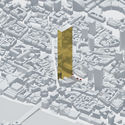
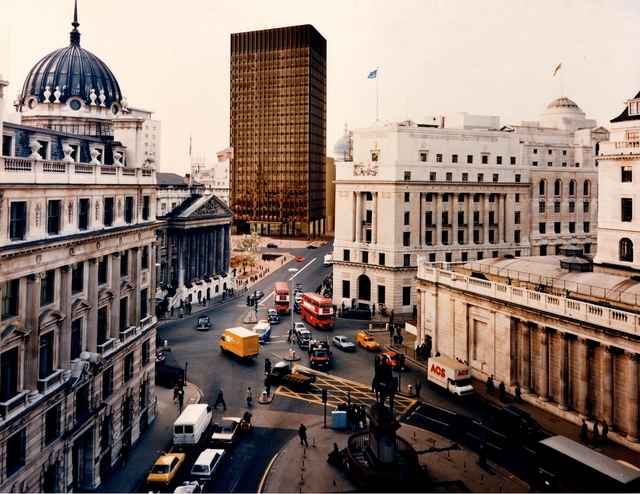
Next year the Royal Institute of British Architects (RIBA) will open a seminal new exhibition: Mies van der Rohe & James Stirling: Circling the Square. The show will examine two iconic schemes proposed for the same site in the City of London: Mies van der Rohe’s unrealised Mansion House Square project (developed by Lord Peter Palumbo) and its built successor, James Stirling Michael Wilford & Associates’ No.1 Poultry.
https://www.archdaily.com/801387/riba-to-present-seminal-show-on-mies-van-der-rohes-unrealized-mansion-house-towerAD Editorial Team
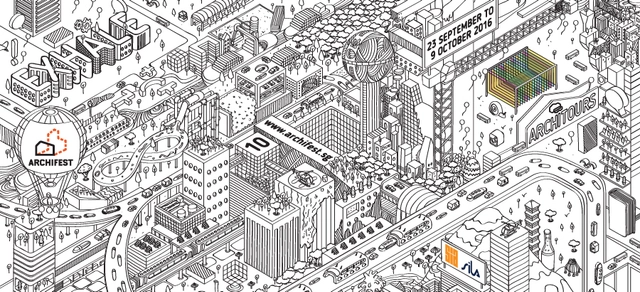
Singapore Archifest 2016 returns with a Pavilion designed with ‘Exhale’ as its theme at Raffles Place Park. Celebrating its 10th edition, Archifest’s theme for this year ‘Exhale’ seeks to challenge the rapidity and density of activities that define our pace of life, weigh in on the state of Singapore’s built environment and breathe new life into it. The annual architecture festival not only celebrates Singapore’s urban environment but also sets the stage for a wider discussion about our city, spaces and life. From exhibitions, conversations, workshops, markets to architecture tours, the Archifest Pavilion will host an exciting programme that is diverse, informative, thought-provoking and fun.
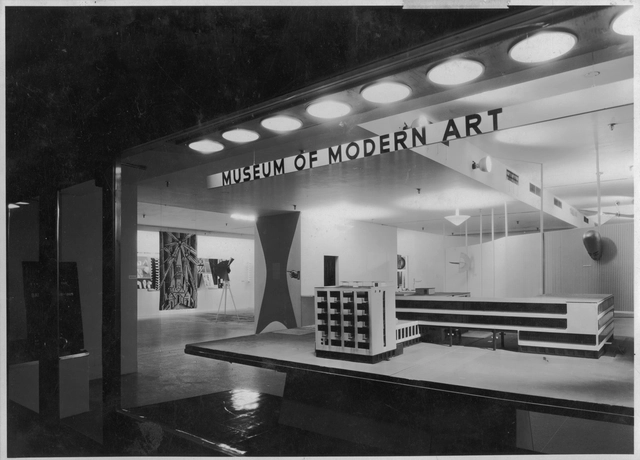
The Museum of Modern Art in New York (MoMA) has released an online archive of over 3,500 of the museum’s past exhibitions from its founding in 1929 to today. Free and available to the public, the database contains photographs, press releases, checklists, catalogues and lists of featured artists.