
1. ArchDaily
  2. In Collaboration

In Collaboration: The Latest Architecture and News

Material Memory: What We Lose When We Demolish Buildings

 | In Collaboration

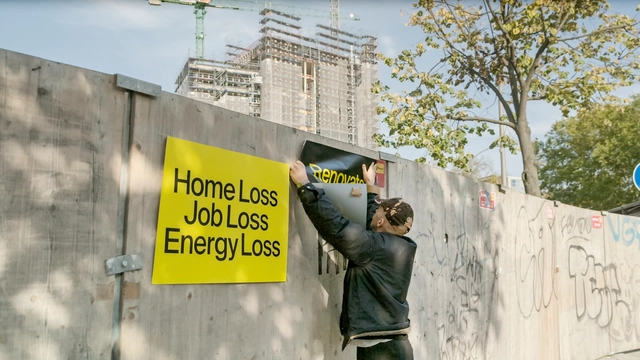
Concrete, steel, wood, glass. Every year, millions of tons of construction materials are discarded, piled up in landfills, and silenced beneath the weight of the next building. Entire structures disappear to make way for others, restarting a voracious cycle of resource extraction, material production, and replacement. Along with the debris that accumulates, something deeper is also lost: time, human labor, stories, and the collective memory embedded in matter. At a time when climate goals demand reducing emissions and extending the lifespan of what already exists, demolition is increasingly recognized as a form of urban amnesia, one that erases not only cultural continuity but also the embodied energy of buildings. And even though it is often said that the most sustainable building is the one that already exists, that principle rarely survives when other interests come into play.

Architectural Competitions as a Tool to Empower Emerging Voices

 | In Collaboration

Open architectural competitions have long been regarded as gateways for new ideas. They level the playing field by proposing a single call, a clear set of rules, and an evaluation based on the quality of the work, conducted anonymously. For organizers, like cities, institutions, or companies, they represent a way to gather relevant proposals in a transparent public forum, backed by a competent jury. Unsurprisingly, competitions have marked decisive moments in the history of the discipline, such as the Centre Pompidou competition in Paris, which brought Renzo Piano and Richard Rogers to prominence with their "inside-out building," or the one for Brazil's new capital, won by Lúcio Costa with the Pilot Plan that synthesized the city into two intersecting axes, interpreted as either an airplane or a cross.

So, why do competitions still matter in architecture today? Beyond their historic role in shaping iconic projects, they continue to serve as testing grounds for fresh ideas, talent, and innovation. In the following sections, we explore competitions from three angles: the motivations that keep architects returning to them, the reasons organizers continue to launch them, and a practical playbook of strategies to help you approach your next competition with clarity and purpose.

Harnessing Vertical Light: Strategies for Spatial Depth and Comfort

 | In Collaboration

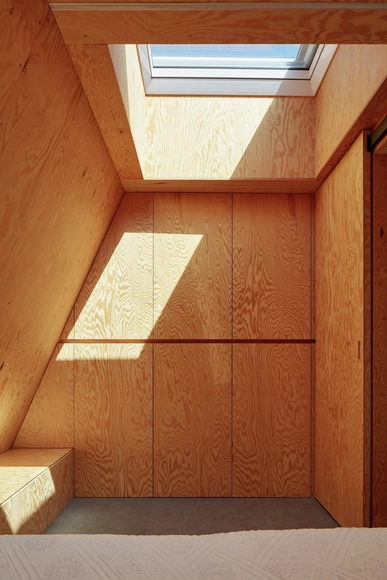
Architecture goes beyond its fundamental function of defining spaces and providing protection; it shapes the user experience, influencing sensations of comfort, spaciousness, and well-being. Among the many elements that make up a building, openings play a crucial role in connecting the interior and exterior, balancing privacy with transparency, and allowing the entry of natural light and ventilation. In particular, natural light transforms environments, defines atmospheres, and enhances architectural details, making spaces more dynamic and inviting.

Rugs as Woven Memory: How Origin and Materiality Shape Interiors

 | In Collaboration

Materials can carry memory. They do more than finish a space; they can anchor it, shape atmosphere, and connect interiors to broader cultural and material narratives. Some architects and designers explore local techniques, natural resources, and craft traditions to balance cultural preservation with modern functionality, introducing context and depth. This is not necessarily a return to the past, but a reinterpretation of inherited knowledge to create architecture that resonates with contemporary needs.

Godwin Austen Johnson and the Evolution of Contextual Architecture in the Middle East

 | In Collaboration

Established in the UAE in 1989 by Chairman Brian Johnson and now led by Managing Director Jason Burnside, Godwin Austen Johnson draws on a British design lineage dating back to 1847 and has contributed to the development of the Middle East's built environment for over three decades. Its 110 multinational professionals, based in Dubai, Abu Dhabi, Sharjah, and the United Kingdom, work across disciplines, combining technical rigor, contextual analysis, and digital methodologies within a collaborative design process.