1. ArchDaily
  2. Inclusivity

Inclusivity: The Latest Architecture and News

DIALOG and HOK Redesign Calgary's Scotia Place: A Celebration of Community and Indigenous Heritage in Canada

DIALOG and HOK have just revealed the redesign of Scotia Place, Calgary’s new event center in Canada. Set to become a hub of community and culture, Scotia Place is inspired by Indigenous ancestral lands and cultural significance, integrated these perspectives with the natural beauty of Calgary. Commissioned by the City of Calgary and the Calgary Sports and Entertainment Corporations, Scotia Place seeks to bring people together and activate the public realm.

DIALOG and HOK Redesign Calgary's Scotia Place: A Celebration of Community and Indigenous Heritage in Canada - Image 1 of 4DIALOG and HOK Redesign Calgary's Scotia Place: A Celebration of Community and Indigenous Heritage in Canada - Image 2 of 4DIALOG and HOK Redesign Calgary's Scotia Place: A Celebration of Community and Indigenous Heritage in Canada - Image 3 of 4DIALOG and HOK Redesign Calgary's Scotia Place: A Celebration of Community and Indigenous Heritage in Canada - Image 4 of 4DIALOG and HOK Redesign Calgary's Scotia Place: A Celebration of Community and Indigenous Heritage in Canada - More Images+ 7

World Autism Day: 5 Projects Crafted for Differently-Abled Bodies

Subscriber Access | 

In the realm of architecture, inclusivity and accessibility have emerged as pivotal pillars in design philosophy. In honor of World Autism Day, this curated collection recognizes the evolution of architecture’s response to differently-abled bodies. The history of disability in architecture is deeply intertwined with advocacy and activism. In fact, a group of pioneering students named “The Rolling Quads” spearheaded a movement for disability rights in 1972 in California. This grassroots activism has not only reshaped the physical world but also catalyzed broader conversations about social justice in architectural design.

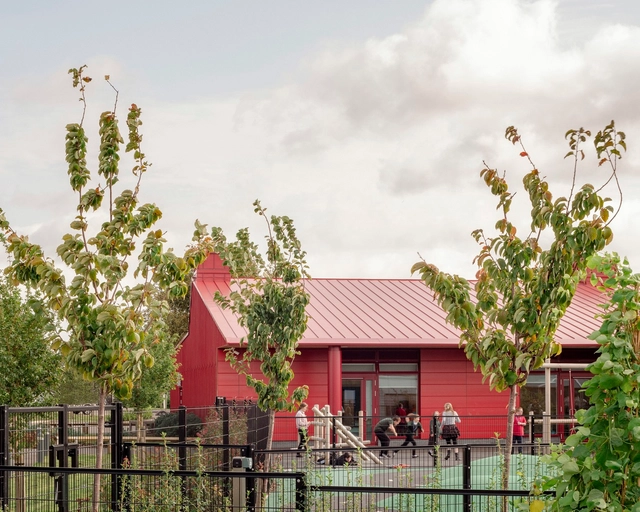
In commemorating World Autism Day, it is crucial to acknowledge the impact of design on the lives of individuals with disabilities. Whether it’s the Autism Garden in Iran by Hajm.e.Sabz, the Sycamore at Northgate Park Hospital in the United Kingdom, or the Home for The Homeless, each of these projects celebrates diverse needs and seeks to foster a sense of belonging and empowerment for all.

World Autism Day: 5 Projects Crafted for Differently-Abled Bodies - Image 1 of 4World Autism Day: 5 Projects Crafted for Differently-Abled Bodies - Image 2 of 4World Autism Day: 5 Projects Crafted for Differently-Abled Bodies - Image 3 of 4World Autism Day: 5 Projects Crafted for Differently-Abled Bodies - Image 4 of 4World Autism Day: 5 Projects Crafted for Differently-Abled Bodies - More Images+ 3

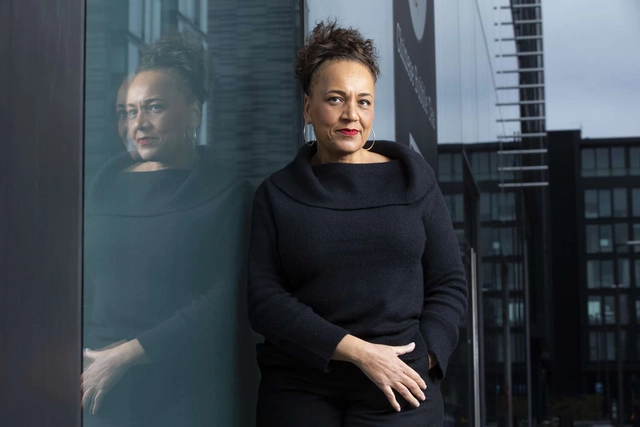
“Champion of Equity and Inclusion” Lesley Lokko Receives the 2024 RIBA Royal Gold Medal

Ghanaian-Scottish architect, academic, and curator Lesley Lokko has been announced as the recipient of the 2024 Royal Gold Medal by the Royal Institute of British Architects (RIBA), becoming the first African woman to receive the award. Lokko is not a practicing architect, but as a teacher, writer, and curator she has fought to widen access to the profession and to bring forward voices that have been disregarded for far too long. As the curator of the 2023 Venice Architecture Biennale, she has shifted the focus to Africa and its diaspora, exploring the complex themes of decolonization and decarbonization. For all her contributions to the profession, Lesley Lokko will be formally presented with the medal in May 2024 by Muyiwa Oki, RIBA’s first black president.

“Champion of Equity and Inclusion” Lesley Lokko Receives the 2024 RIBA Royal Gold Medal - Image 1 of 4“Champion of Equity and Inclusion” Lesley Lokko Receives the 2024 RIBA Royal Gold Medal - Image 2 of 4“Champion of Equity and Inclusion” Lesley Lokko Receives the 2024 RIBA Royal Gold Medal - Image 3 of 4“Champion of Equity and Inclusion” Lesley Lokko Receives the 2024 RIBA Royal Gold Medal - Image 4 of 4“Champion of Equity and Inclusion” Lesley Lokko Receives the 2024 RIBA Royal Gold Medal - More Images

The Curb Cut Effect: How Accessible Architecture is Benefiting Everybody

Subscriber Access | 

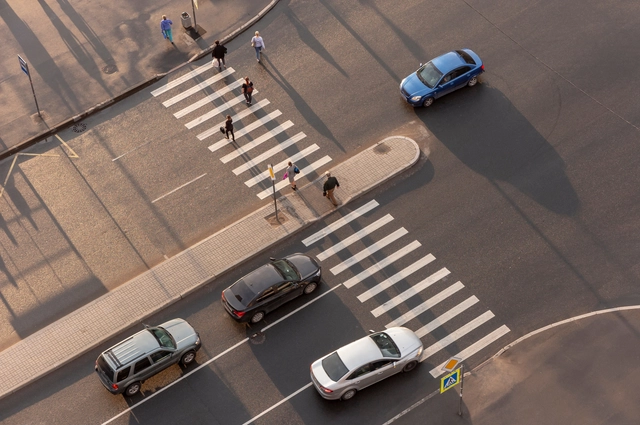
The fabric of our cities is shaped by millions of small decisions and adaptations, many of which have become integral to our experience. Nowadays taken for granted, some of these elements were revolutionary at the time of their implementation. One such element is the curb cut, the small ramp grading down the sidewalk to connect it to the adjoining street, allowing wheelchair users and people with motor disabilities to easily move onto and off the sidewalk. This seemingly small adaptation has proven to be unexpectedly useful for a wider range of people, including parents with strollers, cyclists, delivery workers, etc. Consequently, it lends its name to a wider phenomenon, the “curb cut effect”, where accommodations and improvements made for a minority end up benefiting a much larger population in expected and unexpected ways.

The Curb Cut Effect: How Accessible Architecture is Benefiting Everybody - Image 1 of 4The Curb Cut Effect: How Accessible Architecture is Benefiting Everybody - Image 2 of 4The Curb Cut Effect: How Accessible Architecture is Benefiting Everybody - Image 3 of 4The Curb Cut Effect: How Accessible Architecture is Benefiting Everybody - Image 4 of 4The Curb Cut Effect: How Accessible Architecture is Benefiting Everybody - More Images+ 5

Design for Inclusivity at the UIA World Congress of Architects 2023

The UIA World Congress of Architects 2023 is an invitation for architects from around the world to meet in Copenhagen July 2 – 6 to explore and communicate how architecture influences all 17 UN Sustainable Development Goals (SDGs). For more than two years, the Science Track and its international Scientific Committee have been analyzing the various ways in which architecture responds to the SDGs. The work has resulted in the formulation of six science panels: design for Climate Adaptation, design for Rethinking Resources, design for Resilient Communities, design for Health, design for Inclusivity, and design for Partnerships for Change. An international call for papers was sent out in 2022 and 296 of more than 750 submissions from 77 countries have been invited to present at the UIA World Congress of Architects 2023 in Copenhagen. ArchDaily is collaborating with the UIA to share articles pertaining to the six themes to prepare for the opening of the Congress.

In this fifth feature, we met with co-chairs of design for Inclusivity architect Magda Mostafa, Professor of Design, Department of Architecture, the American University in Cairo and architect Ruth Baumeister, Associate Professor of Theory and History, Aarhus School of Architecture.

Design for Inclusivity at the UIA World Congress of Architects 2023 - Image 1 of 4Design for Inclusivity at the UIA World Congress of Architects 2023 - Image 2 of 4Design for Inclusivity at the UIA World Congress of Architects 2023 - Image 3 of 4Design for Inclusivity at the UIA World Congress of Architects 2023 - Image 4 of 4Design for Inclusivity at the UIA World Congress of Architects 2023 - More Images+ 24

"Habitat: Vernacular Architecture for a Changing Climate" Offers Strategies and Instruments for a Sustainable Transition

As the challenges posed by climate change increase in number and intensity, it also heightens the need to find sustainable building practices that connect to ecosystems and livelihoods rather than harm them. While often overlooked in the search for innovation, vernacular architecture can offer answers to contemporary issues. This type of architecture not only relies on readily available locally sourced materials but also on indigenous knowledge of local conditions like sun orientation, wind patterns, ventilation needs, and the behavior of materials in time. Dr. Sandra Piesik, director and architect of 3 ideas, and founder of HABITAT Coalition, explores this potential in her newest book, 'Habitat: Vernacular Architecture for a Changing Climate.'

"Habitat: Vernacular Architecture for a Changing Climate" Offers Strategies and Instruments for a Sustainable Transition - Image 1 of 4"Habitat: Vernacular Architecture for a Changing Climate" Offers Strategies and Instruments for a Sustainable Transition - Image 2 of 4"Habitat: Vernacular Architecture for a Changing Climate" Offers Strategies and Instruments for a Sustainable Transition - Image 3 of 4"Habitat: Vernacular Architecture for a Changing Climate" Offers Strategies and Instruments for a Sustainable Transition - Image 4 of 4Habitat: Vernacular Architecture for a Changing Climate Offers Strategies and Instruments for a Sustainable Transition - More Images+ 5