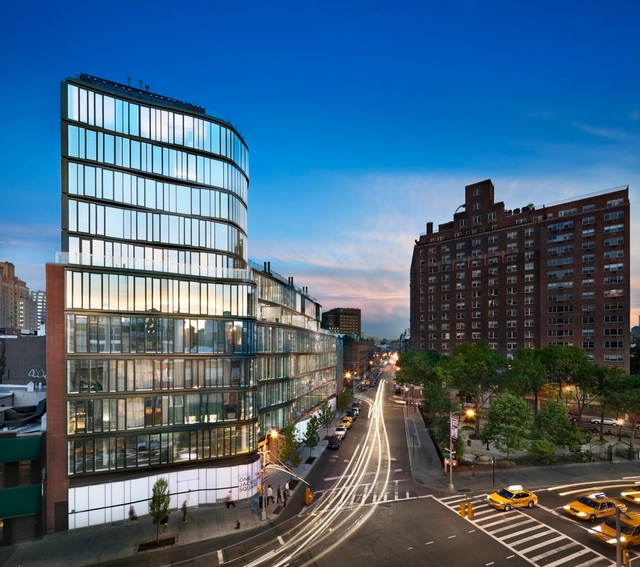
The following projects were selected by insulation specialist Saint-Gobain Isover as the eight shortlisted projects for the UK final of the Multi-Comfort House Competition. The competition produced many interesting solutions to the problem of urban development and energy efficient construction for high rise buildings.
Read on for more informations and images from the shortlisted projects.
Founded by Eugene Kohn, William Pedersen, and Sheldon Fox, on July 4th 1976, Kohn Pedersen Fox (KPF) has a reputation as one of the world’s preeminent architecture practices. Focusing on design excellence coupled with collaboration and dialogue, KPF encourages an open exchange of ideas throughout the creative process both within the firm and between clients.
Tel-Aviv based designers, Ifat Finkelman_Ofer Bilik Architects, have submitted their competition winning entry, a Habitat for Urban Wildlife, which repurposes existing Israeli water towers. Additional images and a description of both the project and the competition after the break.
CO Architects, specialists in architecture for education and healthcare, along with the office of Ayers Saint Gross, associate and master plan architect, shared with us their award-winning design that exemplifies new, interdisciplinary teaching and research.
The physical manifestation of a new, interdisciplinary approach to health sciences education and research is rising from the flat pans of downtown Phoenix, AZ in the form of an architecturally expressive, world-class, sustainable educational facility. Currently under construction, the project recently won a 2010 NEXT LA Citation Award given to “on-the-boards” projects by the Los Angeles Chapter of the American Institute of Architects (AIA). More images and project description after the break.
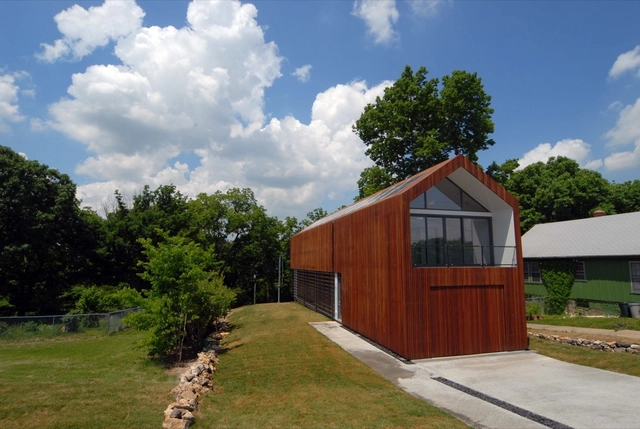
This house is a contemporary version of an Earthship, an ecologically benign house type popularized in the 1970s by Mike Reynolds, founder of Earthship Biotecture. This version is similarly set into the earth, cut into a hillside facing Pike’s Peak. Because of its rural location, it relies on PVs and solar thermal energy for electricity and heat. It also has a shallow plan, south facing windows, and a finished concrete floor to maximize passive solar gains during winter months.
A while ago we visited Stephan Jaklitsch and Mark Gardner in New York. Jaklitsch/Gardner Architects, formerly Stephan Jaklitsch Architects, have made a name for themselves by designing buildings that engage their users and respond to their cultures. The conceptual framework of each project derives from the context, time and place of each project.
Yushang Zhang, Rajiv Sewtahal, Riemer Postmaand Qianqian Cai (with studio tutor Alexander Sverdlov, at The Why Factory of professor Winy Maas (MVRDV) at the TU Delft) shared with us their project, “Vertical Village: A Sustainable Way of Village-style Living”, which was awarded the first prize in the d3 Housing Tomorrow 2011 Competition. The competition called for transformative solutions that advanced sustainable thought, building performance, and social interaction through the study of intrinsic environmental geometries, social behaviors, urban implications, and programmatic flows.
The d3 Housing Tomorrow competition assumes that architecture does not simply form, but rather perform various functions beyond those conventionally associated with residential buildings. More images and architects’ description after the break.