The Avions Voisin C7 was manufactured between 1924 and 1928 and featured a groundbreaking design for the time. The extensive use of glass, aluminum bodywork, and sharp angles hinted at the shapes of an aircraft. This was the car that Le Corbusier liked to park in front of his buildings - the architect considered this car to be the ultimate translation of modern age and technology combined into a single object. He was convinced that architecture had much to learn from this machine.
With 3 gears and a 30-horsepower engine, it is hard to imagine anyone using this car today since the automobile industry has experienced countless innovations since that time. Corbusier's architecture, however, doesn't seem so outdated, but the cars pictured alongside the brand new buildings are actually what reveals how old the photograph is. Locating elements that can point out the time period of a photograph is very effective, especially in architecture. Some elements can make this task much easier, for example, household appliances, computer monitors, or other particular details.
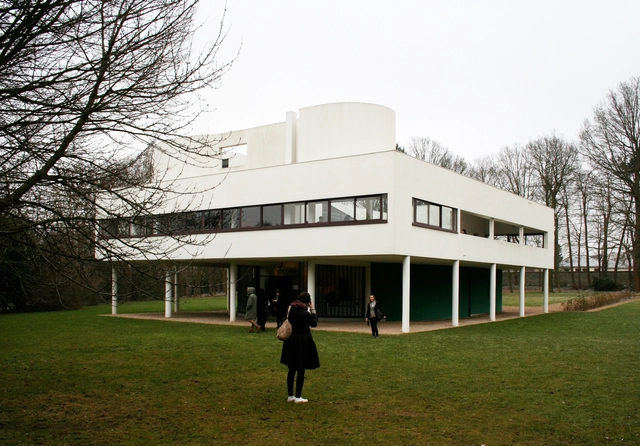
In 1926, Le Corbusier developed the five points that would become the foundations for modern architecture. Once materialized in 1929 in the iconic Villa Savoye project, Le Corbusier's principles - pilotis, free design of the ground plan, free design of the facade, horizontal window, and roof garden - have been extensively explored in modern architecture and continue to influence the most diverse contemporary architectural projects to this day.
The five points became a kind of guideline for the New Architecture, as Corbusier used to call it. Even after decades, new technologies, materials, and demands of society have continued to update those architectural solutions, announced almost a century ago as the basis for a new architecture.
How did modern architecture happen? How did we evolve so quickly from architecture that had ornament and detail, to buildings that were often blank and devoid of detail? Why did the look and feel of buildings shift so dramatically in the early 20th century? History holds that modernism was the idealistic impulse that emerged out of the physical, moral and spiritual wreckage of the First World War. While there were other factors at work as well, this explanation, though undoubtedly true, tells an incomplete picture.
During the COVID-19 pandemic, due to the lack of exhibitions and commissions, artists around the world started to struggle. The Artist Support Pledge, an initiative born in March of 2020 in response to this global crisis, seeks to support creative individuals, including architectural photographers. Founded by artist Matthew Burrows, the global movement connects communities in order to ensure “an equitable and sustainable economy for artists and makers of all countries, media, and ethnicities”.
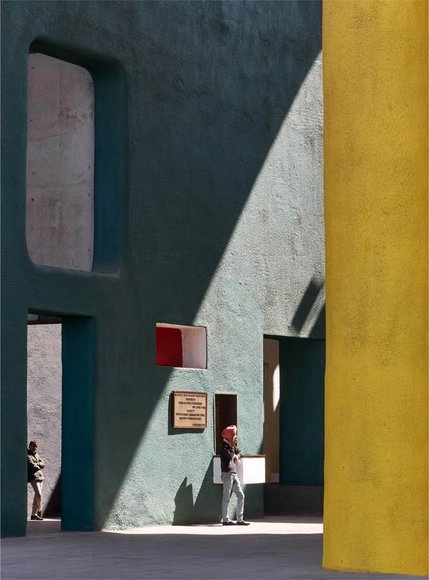
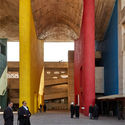
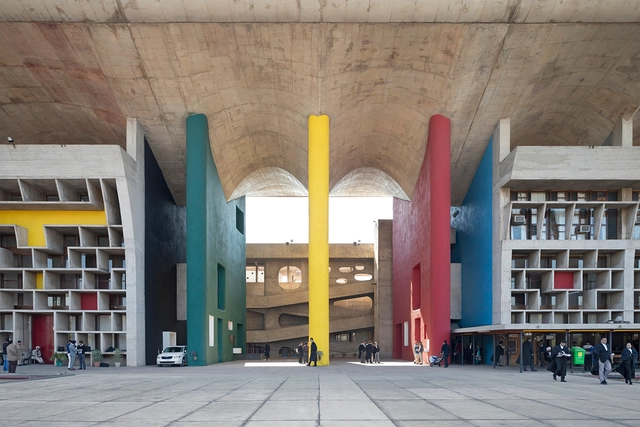
Through its urban planning and civic buildings, Chandigarh represents an iconic fragment of Modernist architecture. This economic and administrative centre was meant to showcase the progressiveness of the 1950s' newly independent India.
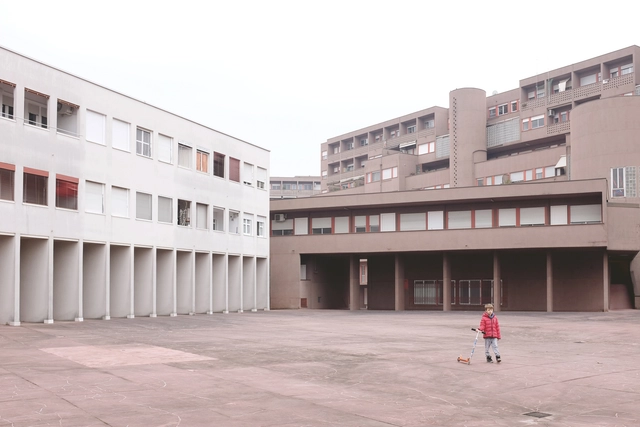
As the dust settled following the Second World War much of Europe was left with a crippling shortage of housing. In Milan, a series of plans were drafted in response to the crisis, laying out satellite communities for the northern Italian city which would each house between 50,000 to 130,000 people. Construction the first of these communities began in 1946, one year after the end of the conflict; ten years later in 1956, the adoption of Il Piano Regolatore Generale—a new master plan—set the stage for the development of the second, known as 'Gallaratese'. The site of the new community was split into parts 1 and 2, the latter of which was owned by the Monte Amiata Società Mineraria per Azioni. When the plan allowed for private development of Gallaratese 2 in late 1967, the commission for the project was given to Studio Ayde and, in particular, its partner Carlo Aymonino. Two months later Aymonino would invite Aldo Rossi to design a building for the complex and the two Italians set about realizing their respective visions for the ideal microcosmic community.[1]
In recent years, people started to regain interest in a movement that dates back to the last century; a movement, first introduced during the 1940s and 1950s, through the works of Le Corbusier and Alison and Peter Smithson. With monolithic structures, modular shapes, and impressive massing, Brutalism highlights architectural integrity. This movement is highly characterized by rough, raw, and pure surfaces that underline the essence of the substances in question. Spread across the globe, architects have adopted and developed their own vision of this modern movement, creating contextual variations.
In the midst of all the chaos currently taking place in the city of Beirut, we look back on the Lebanese capital’s hidden Brutalist gems. To shed the light on a movement that's often neglected and forgotten, Architect Hadi Mroue created a series of images that highlight the Lebanese Brutalism movement as well as its evolution as an important part of the Lebanese modern heritage.
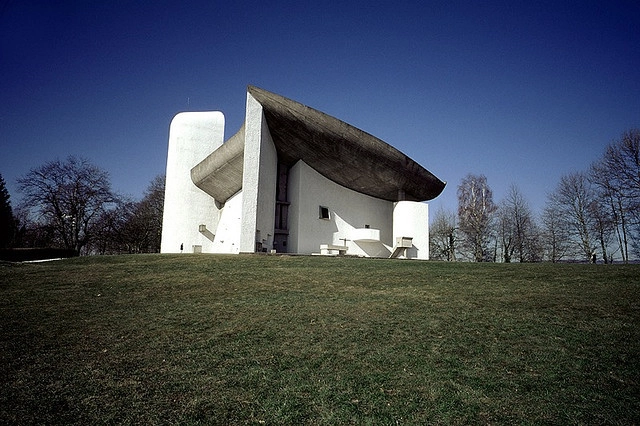
Born in the small Swiss city of La Chaux-de-Fonds, Charles-Édouard Jeanneret-Gris—better known by his pseudonym Le Corbusier (October 6, 1887 – August 27, 1965)—is widely regarded as the most important architect of the 20th century. As a gifted architect, provocative writer, divisive urban planner, talented painter, and unparalleled polemicist, Le Corbusier was able to influence some of the world’s most powerful figures, leaving an indelible mark on architecture that can be seen in almost any city worldwide.
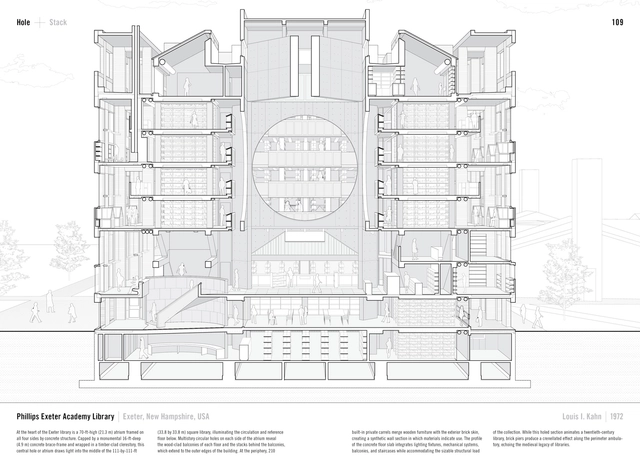
Phillips Exeter Academy Library by Louis I. Kahn (1972). Published in Manual of Section by Paul Lewis, Marc Tsurumaki, and David J. Lewis published by Princeton Architectural Press (2016). Image Courtesy of LTL Architects
For Paul Lewis, Marc Tsurumaki and David J. Lewis, the section “is often understood as a reductive drawing type, produced at the end of the design process to depict structural and material conditions in service of the construction contract.” A definition that will be familiar to most of those who have studied or worked in architecture at some point. We often think primarily of the plan, for it allows us to embrace the programmatic expectations of a project and provide a summary of the various functions required. In the modern age, digital modelling software programs offer ever more possibilities when it comes to creating complex three dimensional objects, making the section even more of an afterthought.
With theirManual of Section(2016), the three founding partners of LTL architects engage with section as an essential tool of architectural design, and let’s admit it, this reading might change your mind on the topic. For the co-authors, “thinking and designing through section requires the building of a discourse about section, recognizing it as a site of intervention.” Perhaps, indeed, we need to understand the capabilities of section drawings both to use them more efficiently and to enjoy doing so.
The Centre Le Corbusier, the final project of renowned architect Le Corbusier, has reopened to the public in Zurich following an extensive renovation. Completed in 1967, the scheme is only of the only Le Corbusier buildings to be constructed almost entirely from glass and steel: realizing his concept of the synthesis of architecture, life, and art in real life.
From the Publisher: The book presents the first historical analysis of the productive tension between the city and the architectural form. It introduces 20th-century theories to construct a historical context from which a new architecture-city relationship emerged. The book provides a conceptual framework to understand this relationship and comes to the conclusion that urbanization may be filled with potential, i.e. be a Good Metropolis.
Sergey Makhno Architects. Image Courtesy of ArchDaily
As Milan Design Week continues to set avant-garde design trends for the upcoming years, the 2019 Salone del Mobile’s lighting biennale, Euroluce, saw a nod to classic designs mixed with contemporary craftsmanship.
Two dominant trends at this year’s Euroluce are ‘rediscovering the past’ and a ‘reference to nature’. Vintage lighting pieces were rediscovered, not only to serve as valuable tokens of the past, but as foundation for new research. The reference to nature is evidently the most dominant design trend at this year’s lighting biennale, as designers found inspiration from natural, organic forms, and produced their pieces with eco-friendly material.
However, some of the most unique pieces at this year’s Euroluce were developed in collaboration with heavyweights in the world of design. Profound architects found their way into the 2019 Euroluce, bringing together their design skills with the engineering solutions of design companies.
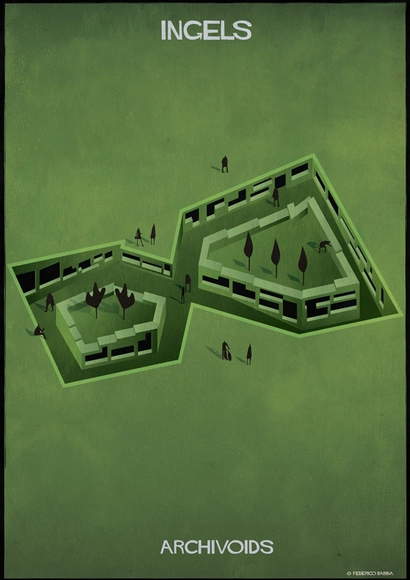
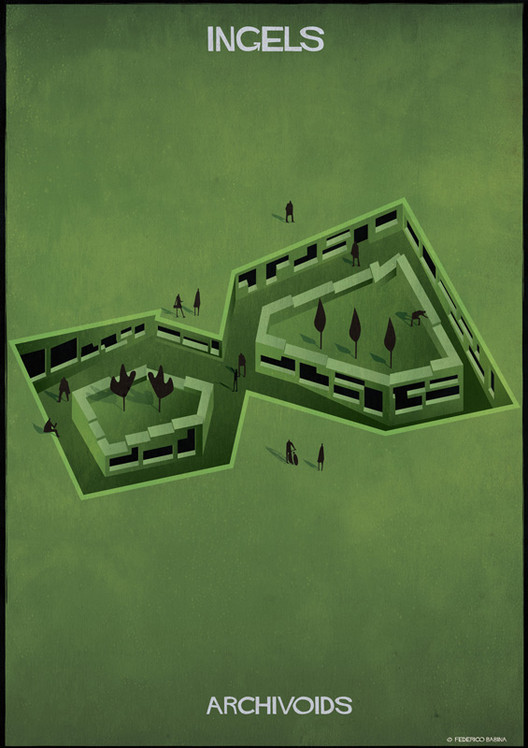
Babina’s images create an inverse point of view, a reversal of perception for an alternative reading of space, and reality itself. Making negative space his protagonist, Babina traces the “Architectural footprints” of famous architects, coupling mysterious geometries with a vibrant color scheme.
“A model by Corbusier is the only image that brings to my mind the idea of immediate suicide.” - Ivan Chtcheglov
Despite their pranks and dirty politics, the Situationists may have been right after all. The death of architecture students will not be a result of excessive studio work, but will rather occur from the sermonizing repetition of modernist ideals that continue to be taught. In Le Corbusier's manifesto, Vers une Architecture (Toward An Architecture), he advocates for the adoption of modern architecture as the solution to 20th-century global crises, in a way that now seems rather limiting.
If the discipline doesn't move past the black-and-white photographs of the Barcelona Pavilion or the reductionist designs of the Bauhaus, students will continue to produce what may now be incorrectly associated with the “right architecture.” In order to break away from these stereotypes of what architecture should be, here are six explorations of building, curating and writing that resist these notions:
The Fondation Le Corbusier has celebrated its 50th anniversary with the unveiling of a restored apartment originally designed by the famous architect. The studio apartment on Nungesser-et-Coli in Paris was designed by Le Corbusier in 1931 for his own habitation and was completed in 1934.
The apartment underwent two years of restoration following its listing as a classified world heritage site in 2016 and is now open to the public.
https://www.archdaily.com/904426/le-corbusiers-restored-parisian-apartment-opened-to-the-publicNiall Patrick Walsh
This article was originally published on August 15, 2016. To read the stories behind other celebrated architecture projects, visit our AD Classics section.
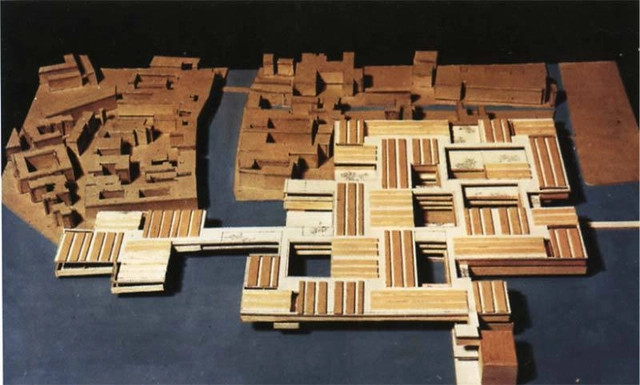
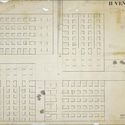
Le Corbusier made an indelible mark on Modernist architecture when he declared “une maison est une machine-à-habiter” (“a house is a machine for living”). His belief that architecture should be as efficient as machinery resulted in such proposals such as the Plan Voisin, a proposal to transform the Second Empire boulevards of Paris into a series of cruciform skyscrapers rising from a grid of freeways and open parks.[1] Not all of Le Corbusier’s concepts, however, were geared toward such radical urban transformation. His 1965 proposal for a hospital in Venice, Italy, was notable in its attempt at seeking aesthetic harmony with its unique surroundings: an attempt not to eradicate history, but to translate it.
They say one cannot separate art from the artist, or perhaps in this case, the artist from the architect. Arguably one of the most criticized architects, Le Corbusier is often portrayed as cold and controlling. Depicting his more dreamy and humorous nature, the Nasjonalmuseet's exhibition titled, “Le Corbusier by the Sea,” draws upon his memories from his summer travels along the coast of southwest France.
Hosted in Villa Stenersen, one of the National Museum's venues, the exhibition showcases Le Corbusier's work as an artist during the period 1926-36. Not only does the exhibition include fifteen of his reproduced paintings alongside a collection of sketches, but also screens two films from Le Corbusier's own footage of his surrounding views.












.jpg?1573123210&format=webp&width=640&height=580)




.jpg?1559132289&format=webp&width=640&height=580)
-2.jpg?1559132060 "© Paul Clemence")
-2.jpg?1559132035 "© Paul Clemence")
.jpg?1559132098 "© Paul Clemence")
-3.jpg?1559132228 "© Paul Clemence")
.jpg?1559132289)

_0523.jpg?1554982545&format=webp&width=640&height=580)





.jpg?1540209301&format=webp&width=640&height=580)
.jpg?1540209293 "© FLC/ADAGP/Mercusot")
.jpg?1540209287 "© FLC/ADAGP/Mercusot")

FLC_Beaux_Arts_Paris_4juin2018_FLC.jpg?1540209273 "© FLC/ADAGP")
.jpg?1540209301)