
-
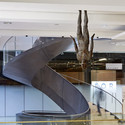
Architects: WilkinsonEyre
- Year: 2015


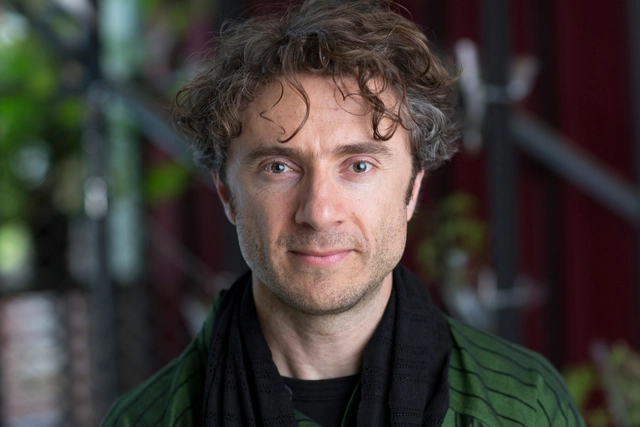
In an exclusive hour-long interview with British designer Thomas Heatherwick, Monocle's Andrew Tuck discusses building a business in the world of design and architecture, the process behind revamping the iconic red London bus, and the inspiration behind placing people – and plants – at the heart of the River Thames. Heatherwick leads London-based Heatherwick Studio, a multidisciplinary design practice who have recently completed a distillery in England and a learning hub in central Singapore, They are currently collaborating with BIG on the new Google Campus in San Francisco having been recently labelled as among the top ten most innovative architectural practices of 2015 by FastCompany.
Listen to the interview in full below:
.jpg?1434051501&format=webp&width=640&height=580)
An exploration of "post-war design for play," The Brutalist Playground by Assemble and artist Simon Terrill has opened to the public at RIBA's Architecture Gallery. The immersive installation draws on a number of historic London estates - Churchill Gardens, Pimlico; the Brunel Estate, Paddington and the Brownfield Estate in Poplar - where playgrounds were once made from concrete and cast into sculptural forms to offer children an abstract landscape for play. Now deemed unsafe, these playgrounds no longer exist. Thus, The Brutalist Playground was envisaged to explore play, "the Brutalist way."
Images of the complete installation, after the break.
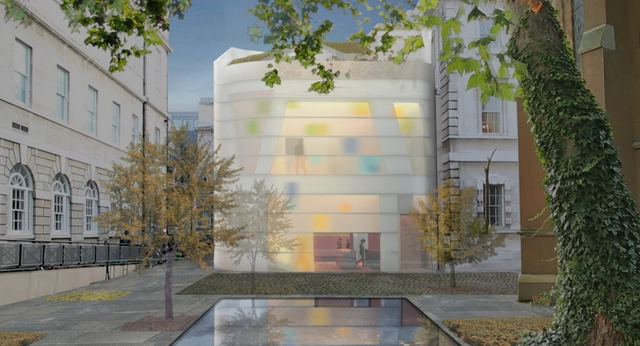
Steven Holl Architects (SHA) has broken ground on London's newest Maggie's Centre across from the large courtyard of St. Bartholomew’s (Barts) Hospital, the city's oldest hospital. The structure, a branching concrete frame lined with perforated bamboo and matte white glass, was inspired by its historic site, which also neighbors the St. Bartholomew the Great Church. It was envisioned as a "vessel within a vessel within a vessel" embellished with colored glass fragments that recall "neume notation" of Medieval music in the 13th century.
"The word neume originates from the Greek pnevma, which means 'vital force.' It suggests a 'breath of life' that fills oneself with inspiration like a stream of air, the blowing of the wind. The outer glass layer is organized in horizontal bands like a musical staff while the concrete structure branches like the hand," describes SHA.
A video of Steven Holl detailing the center's design, after the break.
.jpg?1433941926)
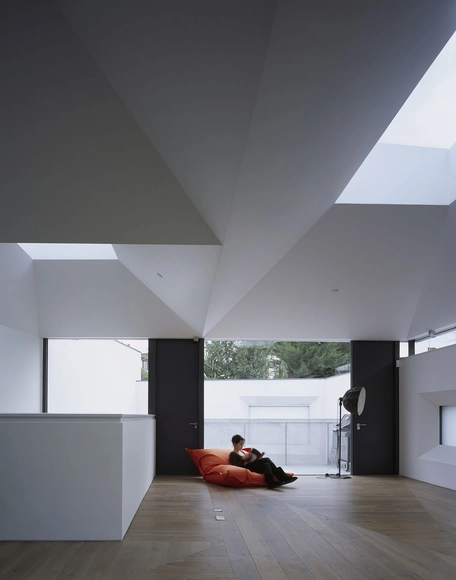
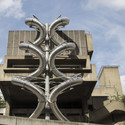
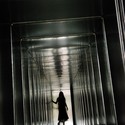
Today, London's Hayward Gallery at the Southbank Centre has opened a major exhibition of the work of Carsten Höller, the artist who is best-known for playfully inserting his slide installations into major galleries worldwide. Titled Carsten Höller Decision, the exhibition features works from throughout Höller's career, as well as a number of new works created especially for the show - not least Isometric Slides, his latest slide installation that gives gallery visitors the option of leaving the exhibition at speed from the Hayward Gallery's pyramidal roof lights.
This edition of Section D, Monocle 24's weekly review of design, architecture and craft, dives into Beirut Design Week exploring "what Lebanese designers can show the world." In this show Josh Fehnert examines why Domus have decided to start an academy in Milan, speaks to Dutch typographer Joep Pohlen about his ultimate type reference guide, and assesses some of the architectural similarities between Istanbul and London. While the likenesses are not immediately obvious, both cities are currently undergoing an unprecedented property boom. Istanbul, a city with no strategic masterplan, is growing fast and there are lessons to be learnt from London's comparatively porous urban realm.


Exhibitions, much like publications and films, are one of the key contemporary methods for the communication of architectural concepts and ideas. They allow the practice, curator or educative body to edit and present information and visuals in a way which narrates a story, provokes new ideas, or feeds into a wider discourse. For many, exhibitions are an invaluable source of inspiration and an engaging way of gaining new, or reaffirming old, knowledge and design precedents. Intimately linked to the space or place in which they are displayed, the best exhibitions also remind us that the practice of architecture is both a profession and a discipline; a valuable way of understanding the built, and unbuilt, world we live in.
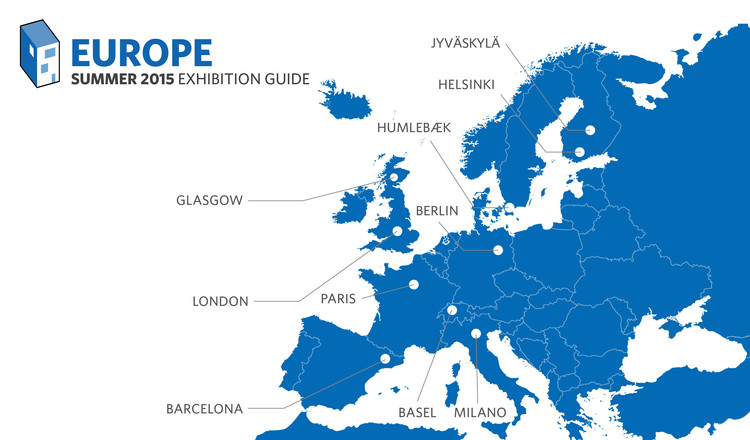
If you're traveling to, living or studying in Europe this summer then dive into our compilation of what we consider to be some of the most informative and exciting exhibitions on show in between June and October 2015. If you visit them, or any other exhibitions that you enjoy, share a photograph on Instagram or Twitter with the hashtag #archdailyexhibitions.
Check out our favourite exhibitions on architecture, urbanism and design, from Jyväskylä to Milano, after the break.
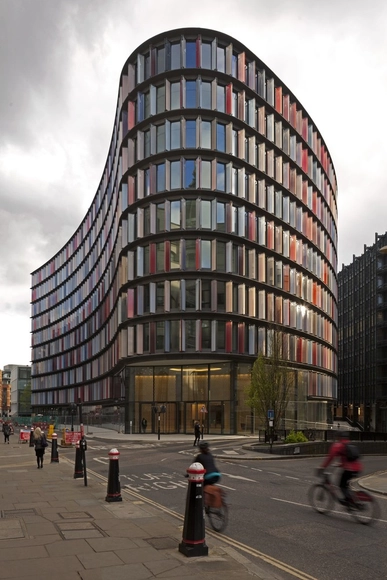
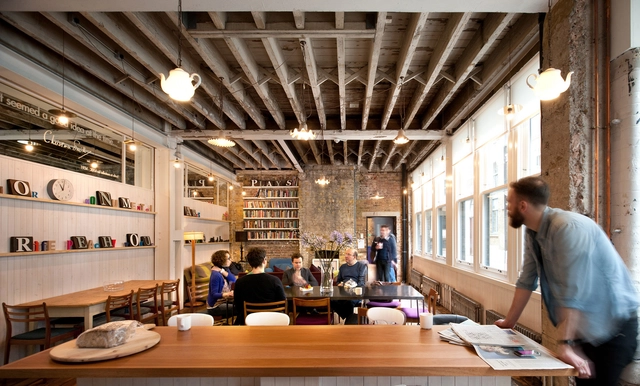
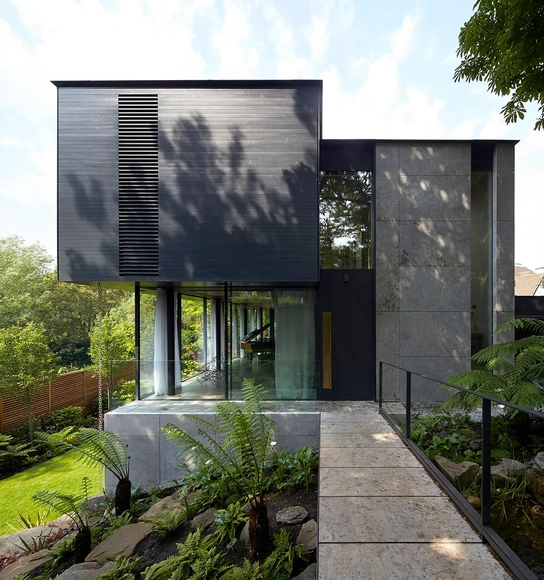

EAA- Emre Arolat Architects, a leading international architectural practice based in İstanbul and London, presents an exhibition exploring the urban histories of both cities. Through a two way, dual city approach the practice will reveal “situations” that unite and differentiate these two great cities at the east and west ends of Europe in their development. The exhibition covers a timeline beginning with the mid 19th century that shows key events or turning-points in the course of their stories respectively. The exhibition is curated by EAA - Emre Arolat Architects, in collaboration with Prof. Dr. Murat Güvenç from Istanbul City University and London-based Urban Planning & Development Consultant Ömer Çavuşoğlu.
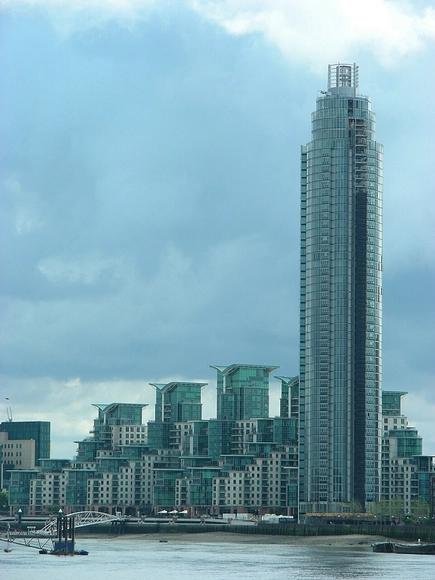
A report released last week aims to highlight the problems involved in high-density housing in London, offering 10 suggestions for how to create future developments that offer density while maintaining the UK capital's distinctive character. Produced as a follow-up to their 2007 report entitled "Superdensity", four UK housing specialists Pollard Thomas Edwards, HTA, Levitt Bernstein and PRP Architects have produced "Superdensity: The Sequel," aiming to address the dramatic changes that have taken place in London development over the intervening 8 years.
Read on for more of the report's aims and its 10 recommendations for future housing in London.
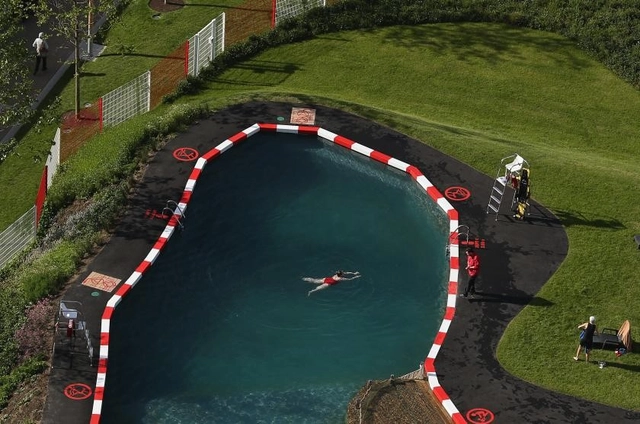
A new pool has just opened in the heart of London's King's Cross. In the centre of one of the city's largest mixed-use development projects Ooze Architects, in collaboration with artist Marjetica Potrc, have developed and realised "the UK's first man-made fresh water public bathing pond" as a piece of and art. The oblong pool is forty metres long, built two metres above ground level, and is surrounded by "pioneer plants, wild flowers grasses, and bushes so that the environment evolves as the seasons change." It will be purified through "a natural closed-loop process, using wetland and submerged water plants to filter and sustain clean and clear water."
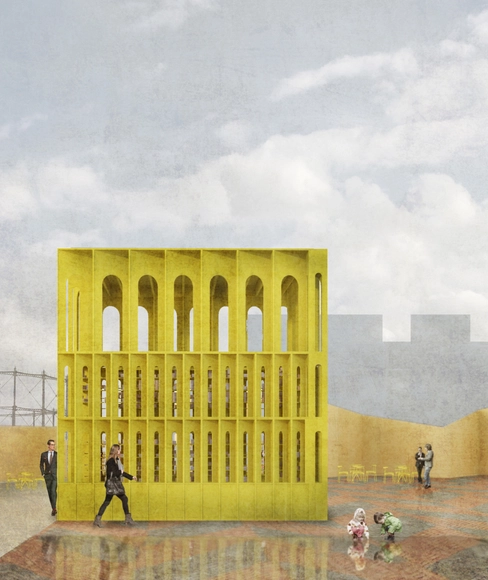
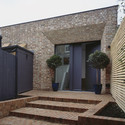
Belfast-based Hall McKnight are set to open a pop-up pavilion in London's King's Cross as part of the 2015 London Festival of Architecture. Located in Cubitt Square, the project forms part of the New Horizon’s initiative, supported by the Irish Architecture Foundation and ID15 (the year of Irish Design 2015). The structure, built from a collection of cut boards, "explores how the phenomenon of the city is assembled from individual pieces." The interior spaces will feature an installation of bricks reclaimed from a street of row houses in Belfast.
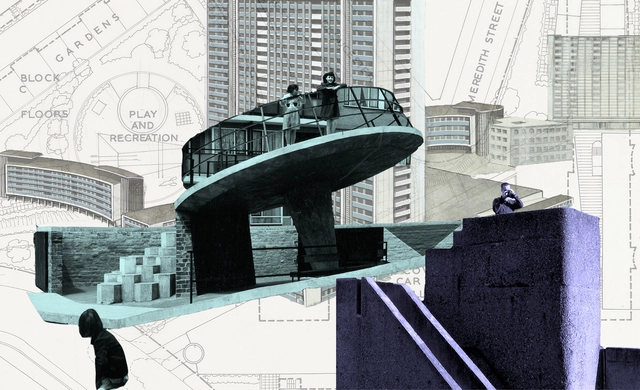
Starting June 10, the RIBA will present The Brutalist Playground - an exhibition that is part sculpture, part architectural installation, which invites people of all ages to come and play, the Brutalist way. Occupying the entire Architecture Gallery, the immersive landscape is a new commission by Turner Prize nominated design and architecture collective Assemble and artist Simon Terrill. It explores the abstract concrete playgrounds that were designed as part of Brutalist housing estates in the mid-twentieth century, but which no longer exist. They became playgrounds unsuitable for play.
.jpg?1434051743 "© Tristan Fewings / Getty Images for RIBA")
.jpg?1434051645 "© Tristan Fewings / Getty Images for RIBA")
.jpg?1434051783 "© Tristan Fewings / Getty Images for RIBA")
.jpg?1434051823 "© Tristan Fewings / Getty Images for RIBA")
.jpg?1434051501)
.jpg?1433944513 "Flying Mushrooms, 2015. Image © Linda Nylind")
.jpg?1433943325 "Two Flying Machines, 2015. Image © Ela Bialkowska, OKNO studio")











_Arch_Press_Archive_RIBA_Library_Photographs_Collection.jpg?1432159232 "Park Hill Estate, Sheffield - 1962. Image © Arch Press Archive RIBA Library Photographs Collection")


_John_Maltby__RIBA_Library_Photographs_Collection_(1).jpg?1432159169 "Churchill Gardens - 1956. Image © John Maltby RIBA Library Photographs Collection")
