
-
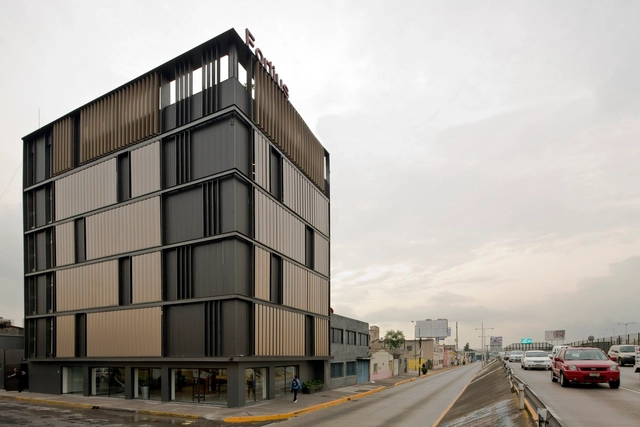
Architects: ERRE q ERRE arquitectura y urbanismo
- Year: 2015
-
Manufacturers: Comex, Duchateau, Global Woods, Hunter Douglas, Legrand / Bticino, +7







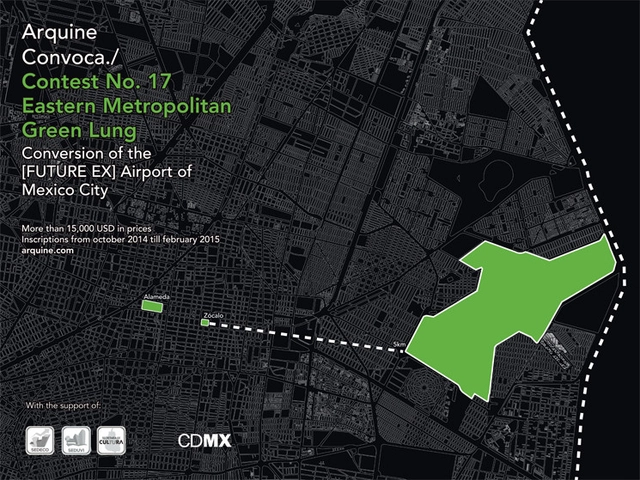
Held annually since 1998, the Arquine International Architecture Competition explores important and relevant topics for society as a whole, creating a space for dialogue and promoting active participation of both national and international architects. It has become one of the best architecture ideas competitions, with over 400 teams from more than 21 countries participating last year.
This year, Arquine is asking: What could be the vocation of the [future, ex] International Airport Benito Juarez of Mexico City? Following the announcement that Mexico City’s new international airport will be constructed in Texcoco, this competition aims to generate proposals for the [future] urban zone. Comprised of a total of 746 acres, the area has the potential to become a catalyst for development and growth of the eastern part of one of the most complex and populated cities in the world.
Determining the future use of the space now occupied by the International Airport Benito Juarez in Mexico City is one of the most interesting urban development challenges worldwide. The public competition offers a way to dig into the potential use of the area and explore the possibility of creating a large green area in the eastern part of Mexico City.
Arquine’s second annual International Architecture and Latin American City festival, MEXTRÓPOLI, will take place from March 6-10, 2015 in Mexico City. To encourage citizen participation, the festival will be broken down into six parts: listening, dialogue, observation, taking action, participation and celebration.
MEXTRÓPOLI aims to convert Mexico City into a pioneering city, making it an architectural reference for the continent. The festival also serves as an important cultural project for the city, encouraging urban regeneration and promoting Mexico city’s artistic heritage.
I always book a window seat when flying into Mexico City. It guarantees exposing the traveler to the exhilarating immensity of the city and the valley that barely contains it: a blunt encounter of geometry and geography indeed. Braving traffic I arrive to my hotel in the historic center and the first morning, over breakfast and with those aerial images still fresh in my mind, I invariably marvel at the fact that I have just had a hot shower and that I am enjoying, as usual, excellent huevos rancheros. "How did these eggs get here?" I wonder. The thoughts quickly dissipate as one is engulfed by the many renowned attractions of Mexico City.
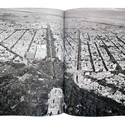
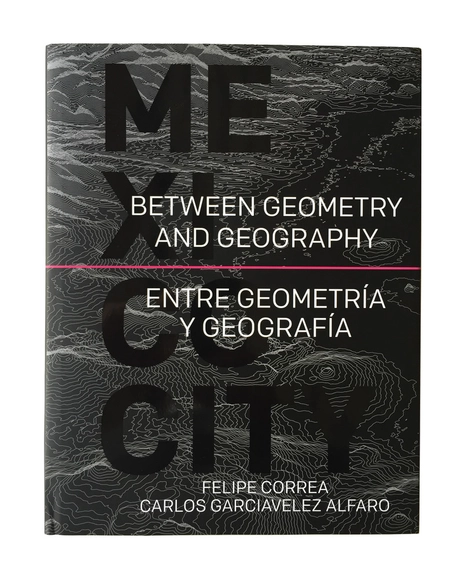
Felipe Correa and Carlos Garciavelez Alfaro have chosen not to be distracted. Their book, “Between Geometry and Geography: Mexico City”, is an ambitious portrait of Mexico City that avoids reading the city through the singularities of its monuments. They have produced instead a stunning graphic biography of the metropolis, focusing on the infrastructures that have shaped the city and make it function today and speculating on opportunities for future multifunctional infrastructures.