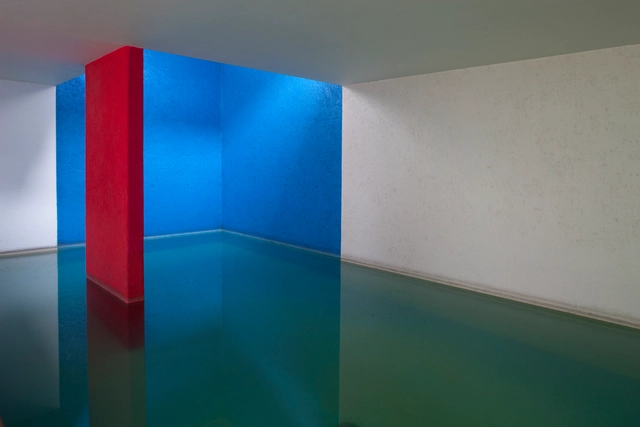
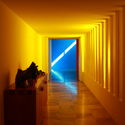
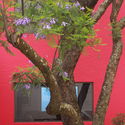
The great architect Luis Barragán, at 80 years of age, and after almost 10 years of inactivity, carried out his last work on a plot of land measuring 10x36 meters, between party walls in Mexico City. A work that reflects the influence of Mexican culture and painters Diego Rivera and Frida Kalho, where the most interesting thing, according to Barragán, was the challenge of the enormous jacaranda tree that had to be maintained, and the pool requested by the owner as part of the program.
The small pink house, which closes towards the street, reinforcing its interiority, is ordered on the longitudinal axis of the plot. Towards the back, the house is divided into two; the front volume, which contains the services and bedrooms, and the back, where the living room, dining room, and pool are located. These two volumes are joined by a corridor, forming a patio that surrounds the Jacaranda tree.
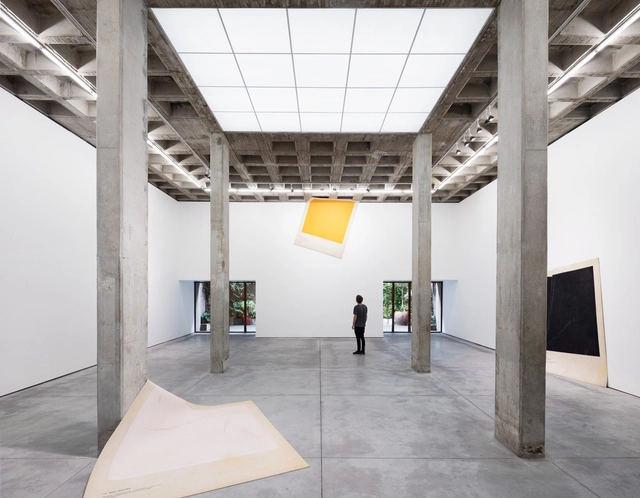
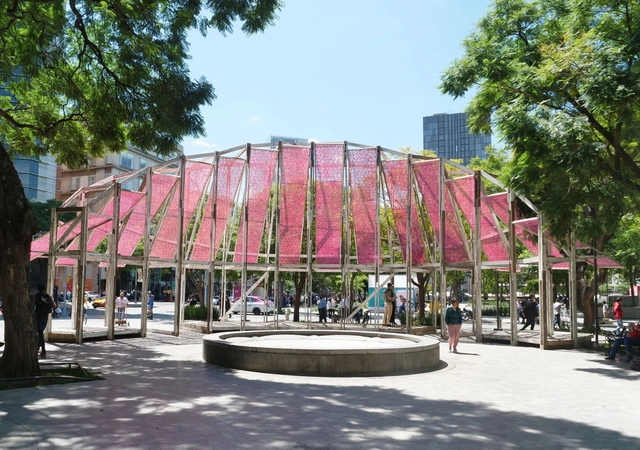
Every year in Mexico City, during the month of February, "Art Week" is celebrated with a series of events that seek to offer experiences in different spaces, mostly museums, cultural centers, or art galleries that join the cultural agenda. This event is important because both the city and these venues become the stage for different contemporary artists who come together to exhibit their work and enrich the dialogue around today's art. It is also a tourist destination that attracts collectors from all over the world.
Built in 1948, this Mexican modern house, designed by Luis Barragán, is recognized for its international significance. The house-studio, inhabited by the architect himself until 1988, incorporates principles of the vernacular architecture of the region in its design, including the use of striking colors. Barragán has been one of the most influential Mexican architects, and his house is one of the most visited places in Mexico City.
March 9 marks the birthday of one of the most important Mexican architects worldwide. A pioneer of the Modern Movement in Mexico whose work has transcended geographical limits to be studied by different generations of architects who have rewritten his teaching to make it their own. Every year, this date represents the perfect excuse to rethink Barragan's legacy to architecture not only in Mexico but also in the world, and different projects have been carried out with this intention, awakening the interest of new generations. However, until a few years ago, the record of the architect's work was not very accessible since more than 50% of the projects he built remained anonymous due to the lack of a proper archive of his work.
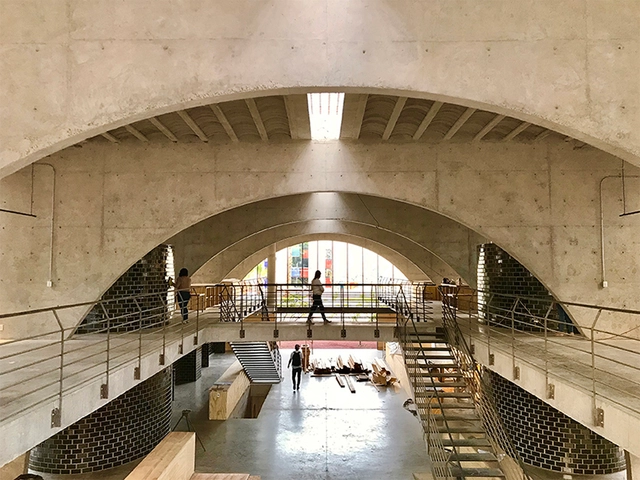
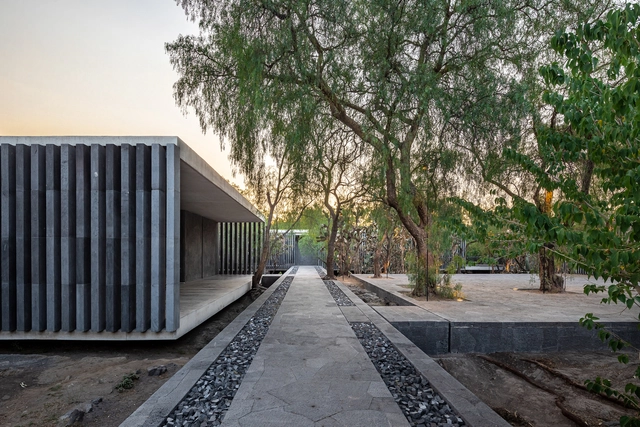
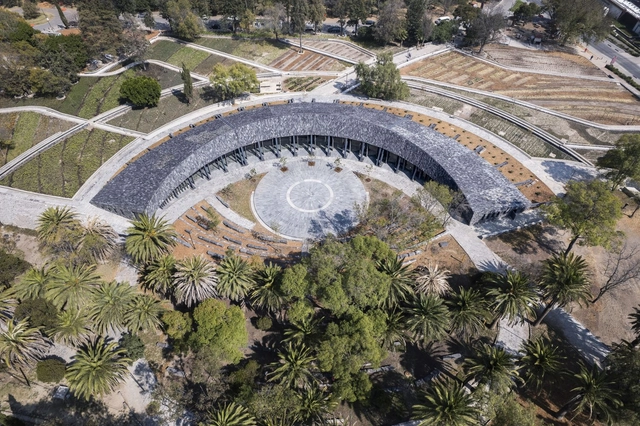
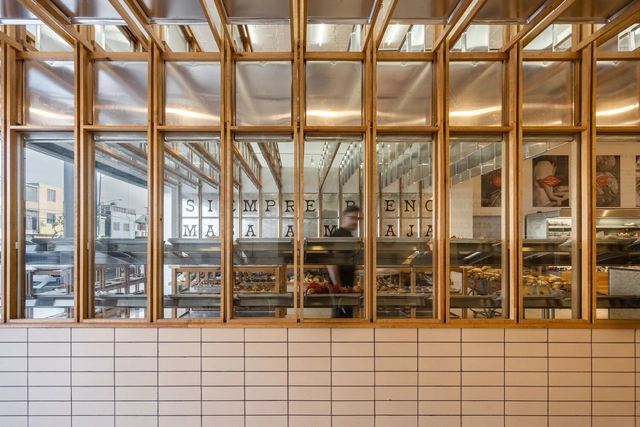
The remodeling and expansion of the Anahuacalli Museum in Mexico City by Taller | Mauricio Rocha is the 2023 recipient of the Mies Crown Hall Americas Prize (MCHAP), the biennial prize that recognizes a built work in the Americas that best embodies architectural excellence. The winner announcement was made by MCHAP Director Dirk Denison and Jury Chair Sandra Barclay at the MCHAP Symposium and Gala Awards Benefit Dinner that took place in Chicago at S. R. Crown Hall on the Illinois Institute of Technology’s historic Mies campus this Friday, March 24, 2023.
Mies Crown Hall Americas Prize (MCHAP) Director Dirk Denison and 2023 MCHAP Jury Chair Sandra Barclay (Barclay & Crousse) have just announced the six finalists for the 2023 Americas Prize. The award recognizes the best-built works of architecture in the Americas completed between December 2018 and June 2021. This represents the latest stage of the fourth cycle of the MCHAP, launched in Venice, Italy, in August 2021. On March 24, 2023, the jury will announce the winners of the the 2023 Americas Prize. The authors of the winning project are set to receive a $50,000 fund for research along with a publication.
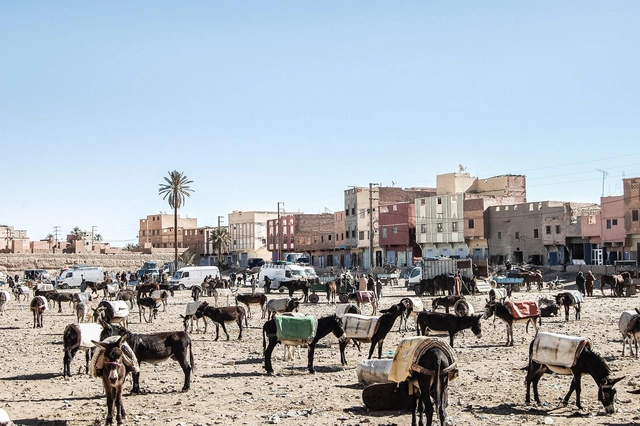
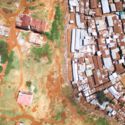
As populations continue to migrate from rural to urban areas, space is at a premium. Many settlements are becoming ever-more congested – with adequate, affordable housing in short supply and transport systems struggling to serve their respective residents. But as much the conversation about urbanization is about people, it is sometimes also about the animals that come with those people – urban livestock that play a key role at providing sustenance on an individual level, in addition to becoming an avenue for communal trade.
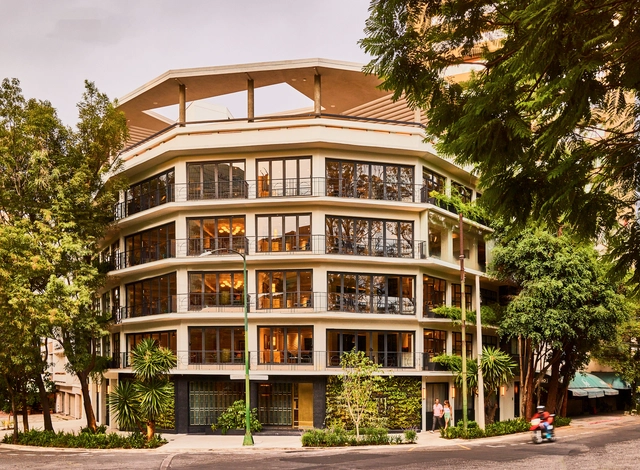
As part of a new concept that offers a proposal of tourism and rest, in an art deco building, Campos Polanco opened its doors in September of this year. Located in front of the Garden of the Republic of Lebanon on one side of the Chapultepec Forest in Mexico City, the project puts in place 12 suites created for executives and digital nomads looking to get away from chain hotels to immerse themselves in the local culture in one of the most exclusive areas of the city.
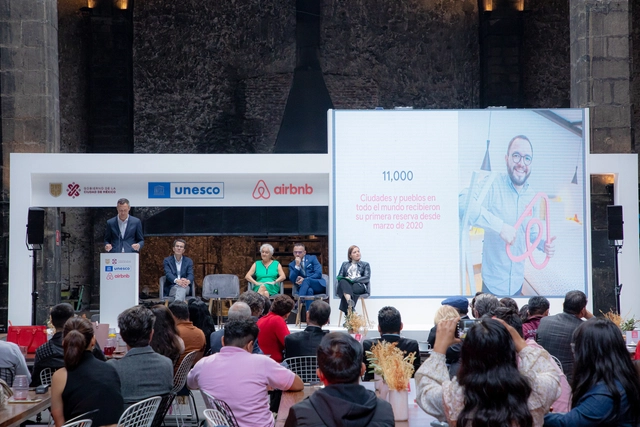
Airbnb se une con la Ciudad de México y con UNESCO para posicionar a la ciudad como capital del turismo creativo y los trabajadores remotos en América Latina. Image via Airbnb
The Government of Mexico City, UNESCO and Airbnb announced an alliance "to position the city as the capital of creative tourism and remote workers in Latin America". The announcement was made known through the Mexico City Government's social networks and Airbnb's news section. However, on August 9th, 2021, UNESCO unveiled the strategy with the intention of "contributing to the reactivation of tourism in a responsible and sustainable way in Mexico, and extending the benefits of cultural and creative tourism to more communities, Airbnb will promote, with the accompaniment of the United Nations Educational, Scientific and Cultural Organization ("UNESCO"), destinations and experiences outside the traditional tourist circuit."