Mumbai stands as the wealthiest city in India and is well-known for its diverse culture and is considered a melting pot of several cultures and communities. Traffic congestion remains a major apprehension despite the progress in technological fields concerning public transportation. With a present population of over 21 million, the city generates more than 17 million trips in a day. Majority of Mumbaikars depend on local trains and buses as their means of egress.
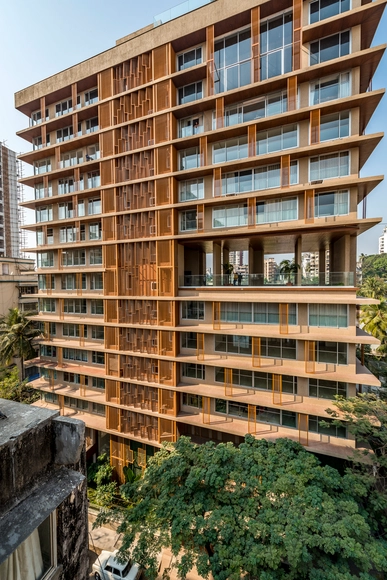
BACKGROUND Rapid urban growth and growing inequality has created a global crisis in housing that increasingly segregates the rich from the poor. Though not fully understood, there is a clear and parallel relationship between the size of a city and its level of socio-economic disparity: the larger the city, the less equal it tends to be. Physical and social segregation, which both reflects and perpetuates socio-economic disparity within a city, is a growing concern in cities worldwide - including Mumbai. The long-term success of a city depends on the collective well-being of all its inhabitants. To what extent can architecture support social inclusion and break down spatial segregation within the megacity?
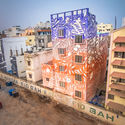
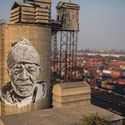
Last month, ArchDaily had an opportunity to speak with Akshat Nauriyal, Content Director at Delhi-based non-profit St+Art India Foundation which aims to do exactly what its name suggests—to embed art in streets. The organization’s recent work in the Indian metropolises of Delhi, Mumbai, Hyderabad, and Bengaluru, has resulted in a popular reclamation of the cities’ civic spaces and a simultaneous transformation of their urban fabric. Primarily working within residential neighborhoods—they are touted with the creation of the country’s first public art district in Lodhi Colony, Delhi—the foundation has also collaborated with metro-rail corporations to enliven transit-spaces. While St+Art India’s experiments are evidently rooted in social activism and urban design, they mark a significant moment in the historic timeline of the application of street art in cities: the initiative involves what it believes to be a first-of-its-kind engagement between street artists and the government.
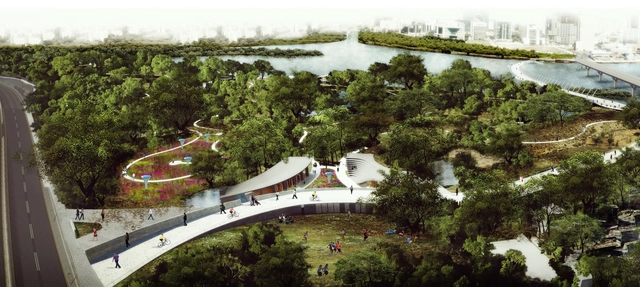
The Mumbai Metropolitan Region Development Authority (MMRDA) has named the winners of an international competition to redesign the city’s the Maharashtra Nature Park and the pedestrian/cyclist Bridge over the Mithi River. From 30 multi-discplinary teams from around the world, the expert jury selected a longlist of 8 teams, a 4-team shortlist, 2 finalists, and finally, an overall competition winner.
The winning team will now work with the MMRDA to develop their master plan to meet the environmental guidelines and construction regulations required to allow the project to be executed following approval from local authorities.
This episode of Monocle 24'sOn Design podcast, which briefly surveys the state of Indian architecture and suggests a blueprint for a 21st Century vernacular, was written and recorded by ArchDaily's European Editor at Large,James Taylor-Foster.
In the first half of 2016 an exhibition was opened in Mumbai. The State of Architecture, as it was known, sought to put contemporary Indian building in the spotlight in order to map trends post-independence and, more importantly, provoke a conversation both historical and in relation to where things are heading.
https://www.archdaily.com/802970/is-india-building-the-wrong-sort-of-architectureAD Editorial Team
From Yaba in Lagos to the suburb of Bandra in Mumbai, Metropolis Magazine provides a scenic tour around the world’s “most creative” neighborhoods. Spread across ten rapidly growing cities like Cape Town and Turin, the article provides a comprehensive glimpse into these lesser discussed hubs of creativity.
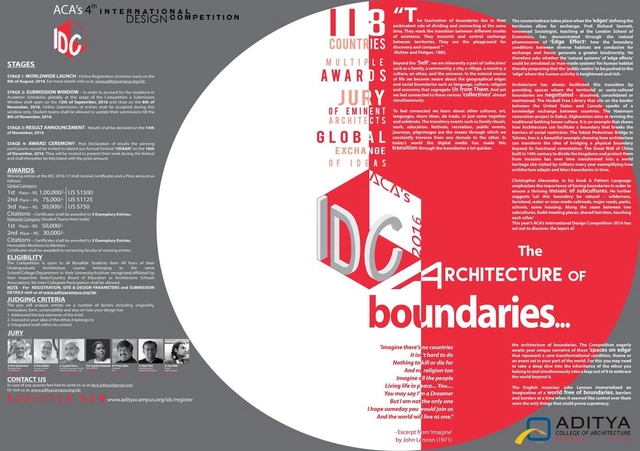
ACA's 4th International Design Competition by Aditya College of Architecture
The Architecture of Boundaries: “The fascination of boundaries lies in their ambivalent role of dividing and connecting at the same time. They mark the transition between different modes of existence. They transmit and control exchange between territories. They are the playground for discovery and conquest." —Richter and Peitgen (1985)
A year ago today, on June 16th 2015, the architectural community lost Charles Correa (b.1930) – a man often referred to as “India’s Greatest Architect” and a person whose impact on the built environment extended far beyond his own native country. Rooted in India, Correa’s work blended Modernity and traditional vernacular styles to form architecture with a universal appeal. Over the course of his career, this work earned him—among many others—awards including the 1984 RIBA Royal Gold Medal (UK), the 1994 Praemium Imperiale (Japan), and the 2006 Padma Vibhushan (India’s second highest civilian honor).
Through his buildings we, as both architects and people who experience space, have learnt about the lyrical qualities of light and shade, the beauty that can be found in humble materials, the power of color, and the joy of woven narratives in space. Perhaps more than anything else, however, it was his belief in the notion that architecture can shape society which ensures the continued relevance of his work. “At it’s most vital, architecture is an agent of change,” Correa once wrote. “To invent tomorrow – that is its finest function.”








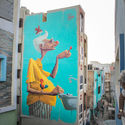
__Anpu_Varkey___photo_by_Akshat_Nauriyal.jpg?1501258835 "Gandhi Mural by Hendrik Beikirch and Anpu Varkey, Delhi. Image © Akshat Nauriyal")

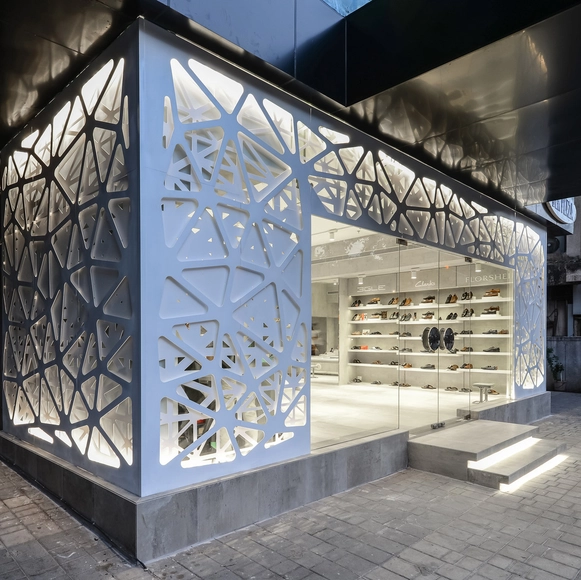


























.jpg?1465264626&format=webp&width=640&height=580)

.jpg?1459907177&format=webp&width=640&height=580)


.jpg?1459907177)