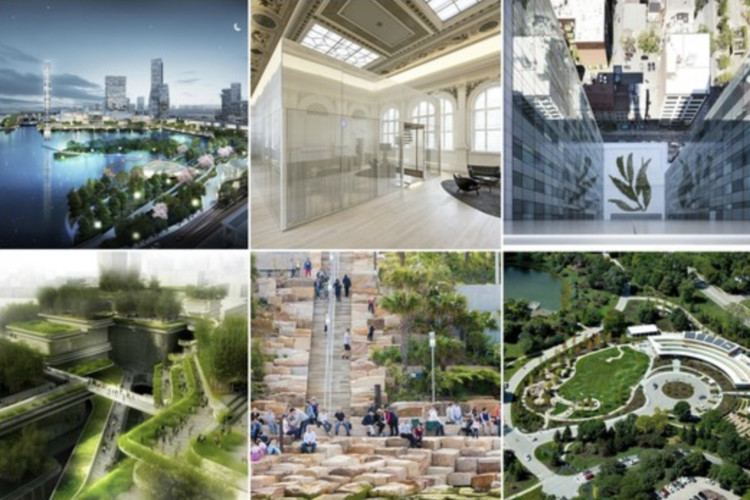
Three projects have been selected as the winners of The American Architecture Prize (AAP) 2017, which aims to recognize “creativity and innovation in architectural, interior and landscape design.”
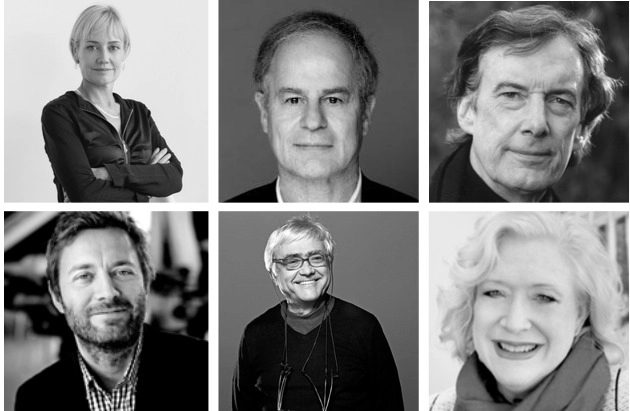
An expert Jury judged thousands of entries from 68 countries and winners were selected from 41 categories. The jurors included Peggy Deamer, Professor of Architecture at Yale University; Troy C. Therrien, Curator of Architecture and Digital Initiatives at the Guggenheim Foundation and Museum; Ben Van Berkel, Principal of UNStudio and Professor at Harvard University Graduate School, and many more.
It has been a privilege to receive such exceptional entries competing for the AAP this year. Every submission is outstanding in its own way. All these entries from accomplished architects and architecture firms give us the opportunity to not only promote amazing designs but also to marvel together at the evolution of architecture, interior design and landscape architecture across the globe - AAP President Hossein Farmani.
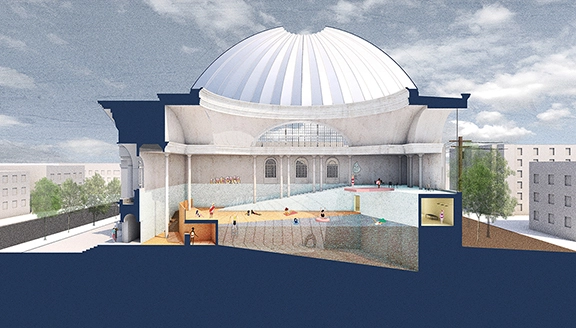
The Burnham Prize 2017 is a competition hosted by the Chicago Architectural Club (CAC), this year the title was ‘Under the Dome,' requiring participants to rethinking the radial form that has been a part of architecture for centuries.
Participants were asked to develop a speculative proposal for the abandoned St Stephen’s Church on its centennial anniversary, challenged with the task of injecting energy and life back into the desolated ruin. In reaction to the Chicago Architecture Biennale, the historical and typological construct of the dome was to be taken and reconsidered as a contemporary structure with an understanding of the historical context.
Can you even call yourself an architect if you don’t have an old box of LEGO that you can’t bare to throw out stored away in an attic somewhere?
LEGO has become a part of architecture’s collective conscience – an inspiration, a modeling tool, a nostalgic driver, a raison d'être for architects who grew up piecing worlds together and imagining alternative realities. With the completion of BIG’s LEGO House in Billund, LEGO is once again in the spotlight. But, as this short documentary explains, it never really left.
Architecture has to be organic… we need to create a space for people to connect, to coexist - MAD Architects.
As the demographic of China’s buildings changes, one architect is fighting the “artificial” straight lines and tower blocks that are plaguing the skyline. In the government’s mass urbanization, skyscrapers are having to be built constantly for all the people that are flocking to the cities.
Ma Yansong, the founder of MAD Architects explains “They often deal with efficiency, the function, the structure. There's no nature. People love to go closer to nature and other people, so we need to create environments that let people have these emotional connections."
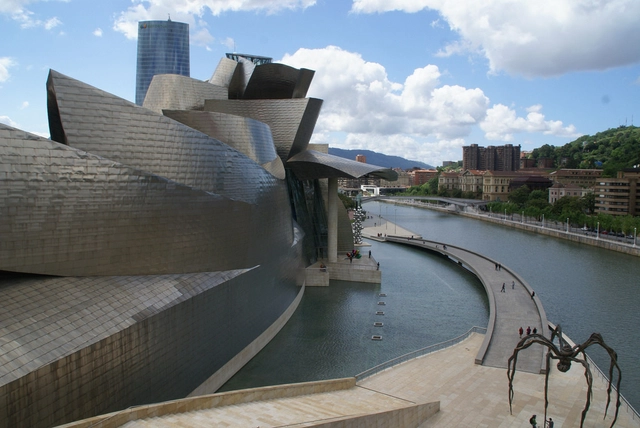
On October 15th four languages, three countries, and three astounding architectural projects will be brought together through a series of events and workshops to celebrate the 20th anniversary of the Guggenheim Museum Bilbao. The Solomon R. Guggenheim Foundation seeks to commemorate the event with a full day program of activities entitled Drawing the Guggenheim. Visitors can explore and sketch the museums during a variety of public drawing exercises, architectural tours, films and family events at each of the Guggenheim locations.
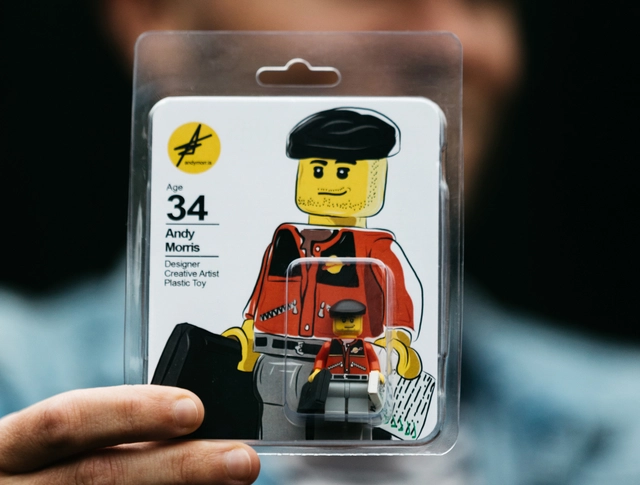
In a career market where young people are changing jobs more often than ever before, the Curriculum Vitae becomes a crucial way to differentiate yourself from the crowd. Andy Morris’ LEGO Résumé does just that.
A recent design graduate from the University of South Wales, Morris used his design skills and philosophy to develop a LEGO mini-figure and appropriate packaging to show potential employers exactly what it is that he does.
In the summer of 2017, Fredericia, Denmark was touched by EASA [European Architecture Students Assembly]. The largest network of architecture students in Europe, EASA is a diverse community where the common language is architecture. The theme for EASA 2017 was: Hospitality - Finding the Framework. Hospitality was the foundation for the 30 different projects the groups of students worked on for two weeks.
The EASA community includes 500 students representing over 40 countries and 200 different architecture schools. Run by students, for students, EASA had an organizing board of 12 international architecture students this year who were chosen by EASA.
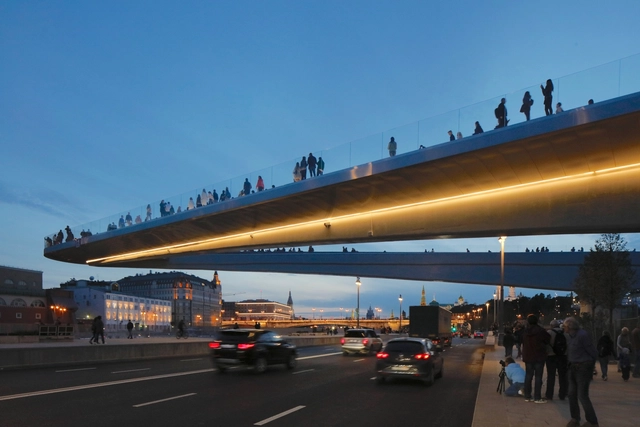
As part of the series of new urban developments sprawling up in Moscow, Zaryadye Park is the latest to open this month in a bid to improve the city’s green space. Commissioned by Moscow Chief Architect, Sergey Kuznetsov, an international consortium led by Diller Scofidio + Renfro in collaboration with Hargreaves Associates and Citymakers has designed this new public space that encourages integration and celebrates the amplitude of regions across Russia by artificially emulating each of their climates: the steppe, the forest, the wetlands and the tundra.
Designed for the V-A-C Foundation, Venice-Based Israeli architect Omri Revesz’s adjustable Street Cinema rests lightly next to a canal in Venice, Italy, expanding, contracting, opening, and closing as its program changes.
Acting as a social gathering point during the day and an open-air cinema at night, the structure was open for the 74th Venice Film Festival as part of the V-A-C’s Venice Art Biennale 2017 exhibition Space Force Construction – a reflection on the centenary of the Soviet Revolution.
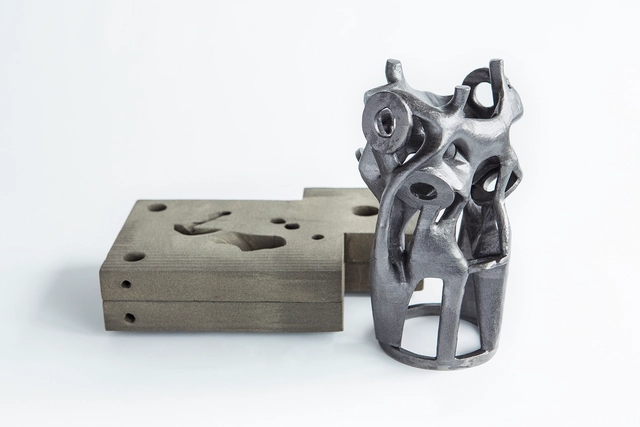
Arup's’ research into alternative production techniques and materials has focused on the potential of 3D printing metal in the construction sector. Complex and individually designed steel structural elements can be efficiently produced “resulting in endless possibilities in mass customisation, weight reduction, product integration and more.”
Working with the Anglo-Dutch company 3Dealise, their 3D-printed sand molds are used in the traditional casting process to create sophisticated, unique structural steel nodes as a certified material. Sand printing offers a quick technique that can reuse the materials and allows costs to be kept low.
Working out of a UNESCO world heritage site in Cartagena, Colombia, Smart Everyday Nighttime Design is a research project that aims to use light as a means to build better communities. The project, spearheaded by Arup’sLighting team with urban-lighting leader Leni Schwendinger, seeks to address nighttime activation of Getsemaní’s streets and public spaces in a bid to improve safety, stimulate the night time economy and engage with the local communities and events.
This documentary, produced by PLANE—SITE, presents the project’s findings and explains the research process and the resulting prototype. The team had two main ambitions:
The World Architecture Festival (WAF) has announced their program for the 2017 edition focusing on the theme of “Performance.” An incredible list of speakers including Alison Brooks, Charles Jencks, Pierre de Meuron and France Kéré will feature across 3 days from November 15th to 17th at the Arena Berlin, Germany. Conferences, city tours, lectures and critiques of the shortlisted projects from the 2017 WAF awards are among the events scheduled for the festival.
The seminars, speeches, debates and discussions will examine “the topic of performance from the perspectives of housing, public spaces, festivals, cultural institutions and new technologies.”
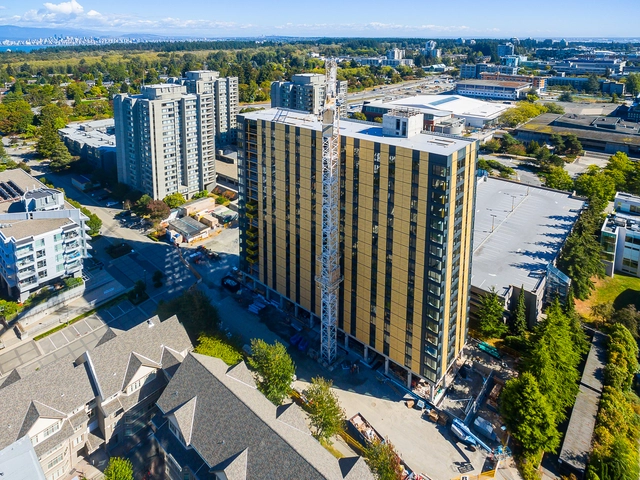
“Plyscraper,” “woodscraper,” call it what you will, but the timber age is upon us. Brock Commons Tallwood House, the recently completed student residence building at the University of British Columbia (UBC) in Vancouver, now occupies a prominent position within architecture: the tallest building with a timber structure in the world.
Diverse, green and dynamic, in this video Singapore is shown through a new kind of lens, one that exists above the city, pans down it, rolls over it and offers a view of its architecture from an alternative angle. André Eckhardt's drone hyperlapse video takes us onto the street, up in the air, and down by the sea as the weather shifts and changes, and as people go about their day to day lives. Using clever speed adjustments, Eckhardt switches between the fast-paced movements of the city up-close and moments of pause as he takes us up over it. Picking out architectural works including the iconic Bayside projects of Moshe Safdie, PARKROYAL on Pickering and the Oasia Hotel by WOHA, the Gardens by the Bay, and the Helix Bridge, Eckhardt brings Singapore's colorful skyline to life.
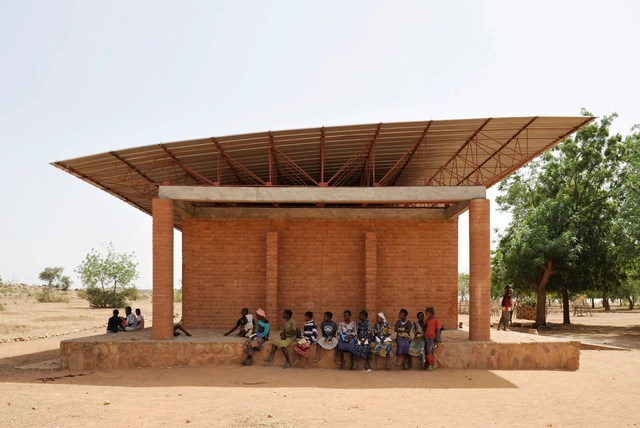
Architect Diébedo Francis Kéré was named Prince Claus Laureate for 2017, highlighting the cultural value and importance of beautiful, sustainable and empowering architecture.
Kéré received the award for his “design and construction of buildings of great beauty that meet people’s needs; …for honoring people’s pride in their cultural traditions and techniques, …for inventively combining relevant factors from two different knowledge systems to achieve practical solutions of global relevance and creating an exchange of ideas between Africa and Europe; …and for his ethical commitment to creating inspiring architecture that improves living conditions and uplifts communities...”
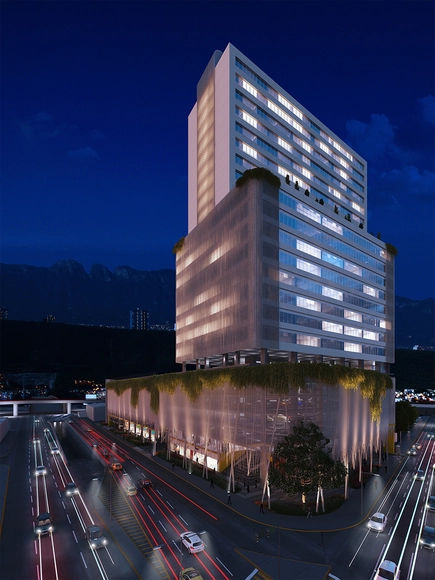
Courtesy of Miró Rivera Architects and Ibarra Aragón Arquitectura
An important step in providing pedestrian access along downtown Monterrey’s main transportation routes, Torre Citica is a 25-storey mixed-use development designed by Austin-based Miró Rivera Architects and Mexican firm Ibarra Aragón Arquitectura (IAARQ) in Monterrey, Mexico. The project is the first of its kind situated over Venustiano Carranza, a significant thoroughfare that links Monterrey with the neighboring municipality of San Pedro Garza García.
Our first priority was the creation of a pedestrian-friendly experience that would enhance the level of activity at the street, said the architects. The project is intended to serve as a catalyst for a municipal plan to provide pedestrian improvements along major transit corridors radiating from downtown Monterrey.
Designed by London and Liverpool based practice shedkm, construction is underway on Circus Street, an exemplary urban design for a mixed-use innovation quarter in Brighton that aims to celebrate the diverse architectural styles and individuals that populate the city. Working with regeneration developers U+I, shedkm’s masterplan works with an existing abandoned fruit and vegetable market to create “a strong sense of place, distinct yet in tune with the unique city of Brighton and its people.”
The start on site is a major milestone in our journey to create a new urban quarter in Brighton, which, through the belief and dedication of all stakeholders and individuals, has become a significant placemaking venture in our portfolio, explained Hazel Rounding, director at shedkm.
https://www.archdaily.com/877888/shedkms-130-pounds-billion-mixed-use-masterplan-to-facilitate-brightons-economic-and-creative-revitalisationOsman Bari
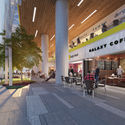
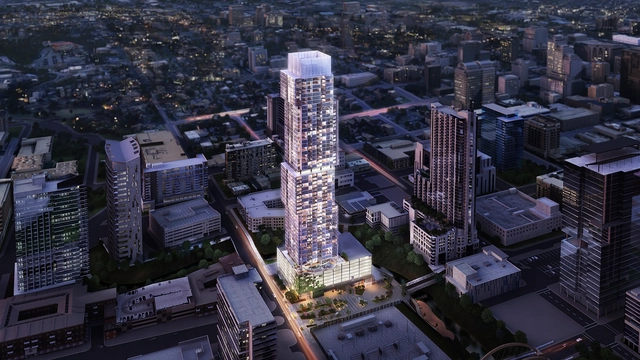
Construction has begun on The Independent, a 685-foot residential tower set to be the tallest of its kind, located west of the Mississippi in Austin. Designed by local practice Rhode Partners, major progress in shaping the building’s stacked and offset form has been made, through the setting of the 24th floor to create the first of these tiers, which encompass 58 stories and 370 units.











.jpg?1506417220)


.jpg?1504854210 "The Serpentine Pavilion. Image © Laurian Ghinitoiu")


.jpg?1504854192 "Courtesy of Kéré Architecture")





.jpg?1502671282 "Courtesy of The Independent")


