1. ArchDaily
  2. News

News: The Latest Architecture and News

Hanking Center Tower in China to Become Tallest Detached Core Building Worldwide

Hanking Center Tower in China to Become Tallest Detached Core Building Worldwide  - Image 5 of 4

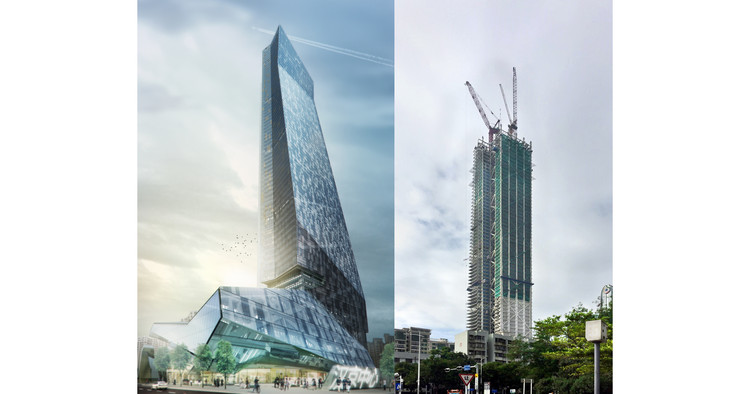
Morphosis Architects’ Hanking Center Tower in Shenzhen, China has recently topped out, with the 62nd floor now in place. Defined by its detached core configuration, the building positions its primary core 9 meters outside its main body, connected by a series of sky bridges and braces, in order to increase flexibility and light penetration into the floor plate.

Two secondary cores in the body of the building provide structural reinforcement and house private elevators for VIP users, as well as freight elevators and mechanical services.

In an effort to serve global professionals and bring density to the suburb of Nanshan, the tower will feature flexible office space on its open floor plate, anchored by high-end retail and dining.

Hanking Center Tower in China to Become Tallest Detached Core Building Worldwide  - Image 1 of 4Hanking Center Tower in China to Become Tallest Detached Core Building Worldwide  - Image 2 of 4Hanking Center Tower in China to Become Tallest Detached Core Building Worldwide  - Image 3 of 4Hanking Center Tower in China to Become Tallest Detached Core Building Worldwide  - Image 4 of 4Hanking Center Tower in China to Become Tallest Detached Core Building Worldwide  - More Images+ 7

Foster + Partners to Design Apple Store in Historic Washington D.C. Library

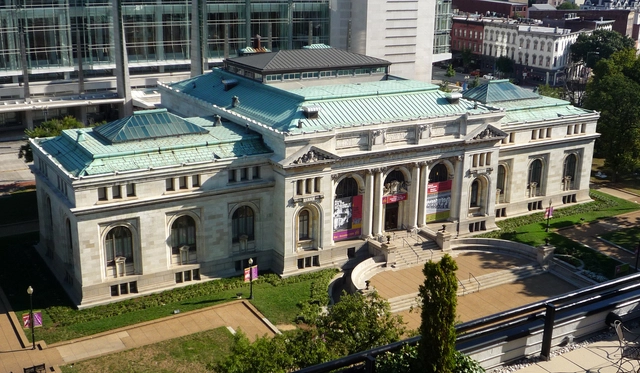
London’s Foster + Partners will likely design a flagship Apple store for the historic Carnegie Library at Mount Vernon Square in Washington, D.C., reports The Architect’s Newspaper. According to Events DC, Apple will lease a portion of the 63,000-square-foot building’s ground floor and basement levels in a ten-year lease, sharing the space with its existing tenant, The Historical Society of Washington.

This Concave Roof System Collects Rainwater in Arid Climates

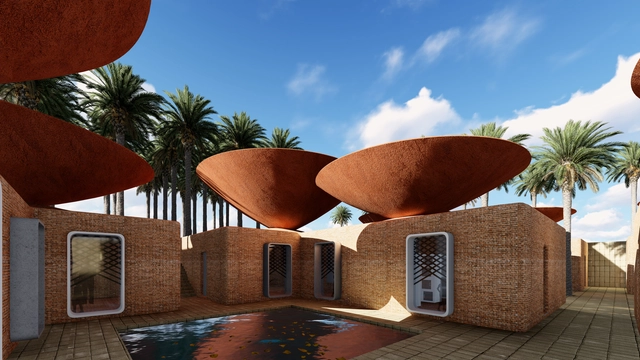
Iran-based BMDesign Studios has unveiled Concave Roof, a double-roof system with steep slopes resembling a bowl for the purpose of rainwater collection in arid climates like Iran, where a lack of water could lead to mass displacement in the future.

Because precipitation in this area is less than one-third of that of the world average, and evaporation is more than three times higher than the world average, the concave roof system is designed to “help [make] even the smallest quantities of rain [flow down] the roof and eventually coalesce into bigger drops, just right for harvesting before they evaporate” explained the architects. 

This Concave Roof System Collects Rainwater in Arid Climates - Image 1 of 4This Concave Roof System Collects Rainwater in Arid Climates - Image 2 of 4This Concave Roof System Collects Rainwater in Arid Climates - Image 3 of 4This Concave Roof System Collects Rainwater in Arid Climates - Image 4 of 4This Concave Roof System Collects Rainwater in Arid Climates - More Images+ 24

Hello Wood Creates Reusable Christmas Tree From Lightboxes in Budapest

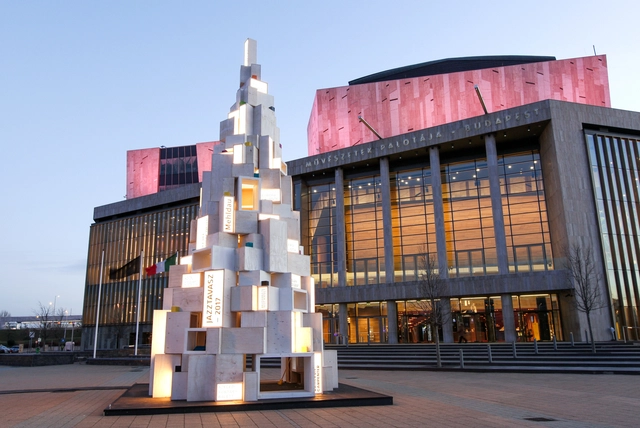
Hello Wood has continued its tradition of building socially responsive Christmas trees in European cities though its latest addition, the Tree of Arts, built in front of Budapest’s largest concert hall, Müpa, also known as the Palace of Arts.

Based on the idea that the spirit of Christmas should live beyond the holiday season and continue to symbolize community-building and sustainability into the New Year, the 11-meter tall tree made from lightboxes will be recycled into display units for the inside of the cultural venue in 2017.

Lightboxes in the installation feature the names of performances that will be visiting Budapest in the coming year, including the New York Philharmonic Orchestra, John McLaughlin, and Cameron Carpenter.

Hello Wood Creates Reusable Christmas Tree From Lightboxes in Budapest - Image 1 of 4Hello Wood Creates Reusable Christmas Tree From Lightboxes in Budapest - Image 2 of 4Hello Wood Creates Reusable Christmas Tree From Lightboxes in Budapest - Image 3 of 4Hello Wood Creates Reusable Christmas Tree From Lightboxes in Budapest - Image 4 of 4Hello Wood Creates Reusable Christmas Tree From Lightboxes in Budapest - More Images+ 5

Winners Announced For Norwegian Competition to Convert Grain Silo into Art Museum

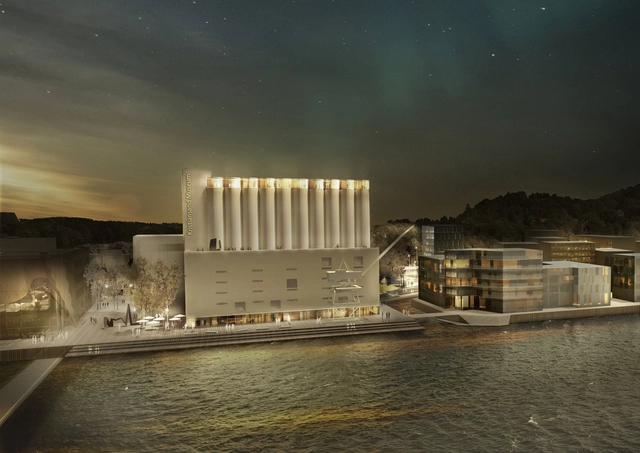
The winners of the Kunstsilo (Art Silo) competition to convert a 1935 harbor-side grain silo into an art museum in Kristiansand, Norway have been announced, with one overall winner and five runners up. MESTRES WÅGE ARQUITECTES and MX_SI ARCHITECTURAL STUDIO, a team from Barcelona, have won the competition, out of 101 proposals, with their concept, SILOSAMLINGEN (“The Silo Collection”), which, according to the jury, “demonstrates a crystal-clear combination of architectural self-assurance and humble respect for the silo building and its newly assigned task.”

Winners Announced For Norwegian Competition to Convert Grain Silo into Art Museum - Image 1 of 4Winners Announced For Norwegian Competition to Convert Grain Silo into Art Museum - Image 2 of 4Winners Announced For Norwegian Competition to Convert Grain Silo into Art Museum - Image 3 of 4Winners Announced For Norwegian Competition to Convert Grain Silo into Art Museum - Image 4 of 4Winners Announced For Norwegian Competition to Convert Grain Silo into Art Museum - More Images+ 3

Matthijs Ia Roi Wins Belgian Monument Competition with Museum of Hospitality

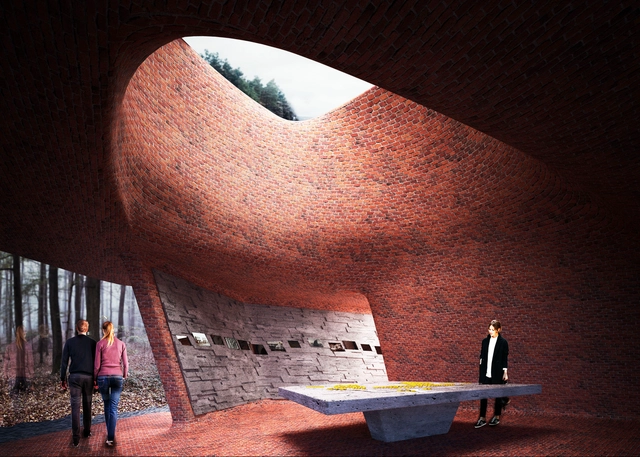
London-based Dutch architect Matthijs Ia Roi has won the Belgian Monument Competition with his proposal, Museum of Hospitality, which will be built in Amersfoort, Netherlands.

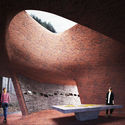
The museum will serve as a symbol of hospitality for refugees in the Netherlands and will compliment the neighboring World War I monument, which was a gift from Belgium in recognition of the Netherlands hosting Belgian soldiers during the war.

Matthijs Ia Roi Wins Belgian Monument Competition with Museum of Hospitality - Image 2 of 4Matthijs Ia Roi Wins Belgian Monument Competition with Museum of Hospitality - Featured ImageMatthijs Ia Roi Wins Belgian Monument Competition with Museum of Hospitality - Image 3 of 4Matthijs Ia Roi Wins Belgian Monument Competition with Museum of Hospitality - Image 4 of 4Matthijs Ia Roi Wins Belgian Monument Competition with Museum of Hospitality - More Images+ 4

The Blog As A Museum: Meganom Makes its Online Exhibition Debut with Thngs

Subscriber Access | 
The Blog As A Museum: Meganom Makes its Online Exhibition Debut with Thngs - Image 5 of 4
Courtesy of Thngs Co.

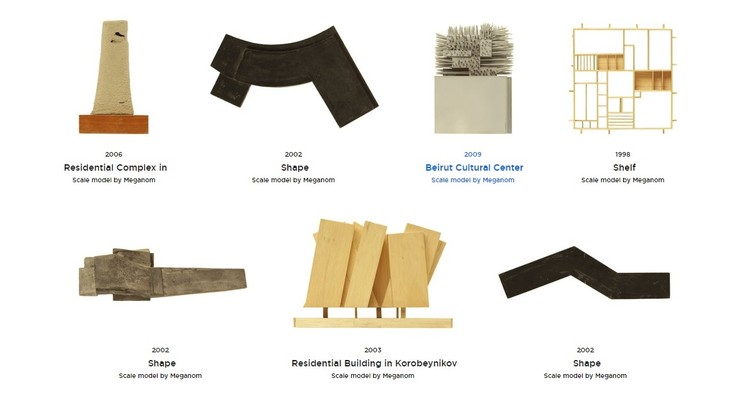
Our experience of information is changing. We now consume more and more information digitally, with much of this being non-textual. Videos, photos and GIFs have become commonplace, with technology allowing these mediums to be as easily shareable as text. This gives way to another trend: the increase in the number and accessibility of online platforms. Not only is more information being digitized, but more dynamic ways of digitization are being developed; multimedia articles and online exhibitions, for example, hope to provide a more engaging way of sharing information.
The Blog As A Museum: Meganom Makes its Online Exhibition Debut with Thngs - Image 1 of 4The Blog As A Museum: Meganom Makes its Online Exhibition Debut with Thngs - Image 2 of 4The Blog As A Museum: Meganom Makes its Online Exhibition Debut with Thngs - Image 3 of 4The Blog As A Museum: Meganom Makes its Online Exhibition Debut with Thngs - Image 4 of 4The Blog As A Museum: Meganom Makes its Online Exhibition Debut with Thngs - More Images+ 16

Interactive Infographic Unveils AIA's 2016 Third Quarter Home Design Trends Survey

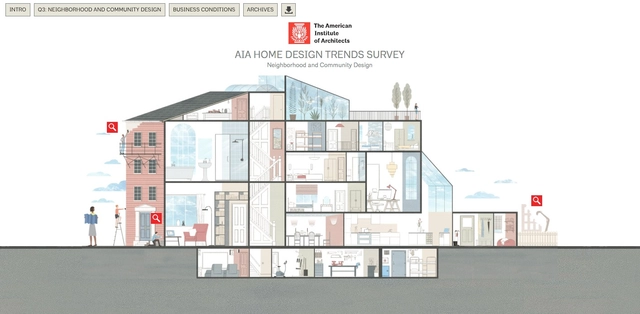
The American Institute of Architects (AIA) has released its Home Design Trends Survey for the third quarter of 2016, which focuses on community and neighborhood design. According to the Survey, homeowners are generally expressing more interest in community development, as indicated by the popularity of thoughtful community design with access to amenities.

There is additionally, according to the Survey, a demand for walkable neighborhoods, access to public transportation, and multi-generational housing, as well as a demand for more and larger glass windows, driven by building technologies like smart glass windows.

99% Invisible Explores the Strange Phenomenon of Rotary Jails

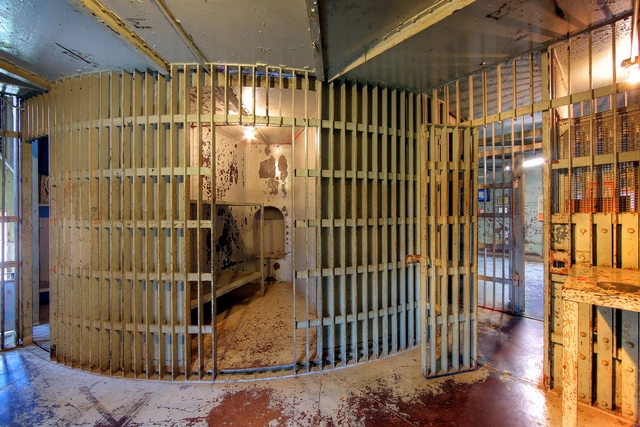
99% Invisible has recently published a review of rotary jails, a strange prison architecture system in which cell blocks turn to align with the position of a single door, in the attempt to create better security. Used around the early 20th century, this odd, carousel-like technology spread across the United States in mainly Midwestern towns.

99% Invisible Tackles McMansions and the Architecture of Evil

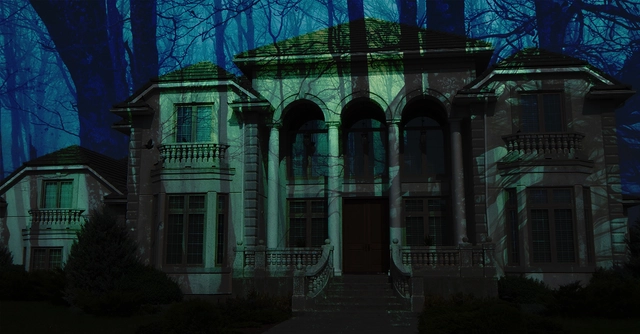
Architecture critic Kate Wagner has collaborated with 99% invisible on a podcast and a guest column delving into the tragedies of McMansions and the representation of evil through architecture in film, respectively.

In the podcast, Wagner, who is the author of McMansion Hell, is interviewed by Roman Mars and explains how the McMansion typology evolved, as well as how it became so despised, delving into topics of architectural history and representations of wealth.

Through her article as a guest columnist, Wagner explores the real-world buildings used in film to depict the evil corporation archetype in movies like Robocop, Blade Runner, and The Matrix.

99% Invisible Discusses How Algae Biotechnology Can Affect the Urban Environment

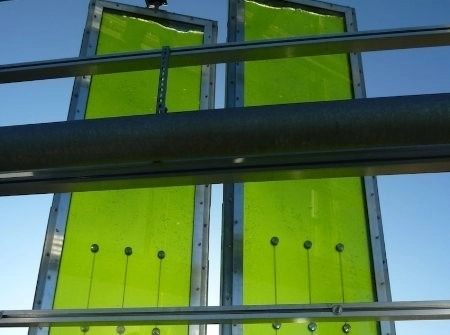
In a recent article for 99% Invisible, Kurt Kohlstedt explores how integrating microalgae into buildings can create a dualistic system of living and built, in order to perform services like create shade, generate power, and work with HVAC systems to modulate interior environments.

Projects that utilize such technology include bioreactors that produce oxygen and bio-fuel, a building with a bio-adaptive façade, and a street lamp that filters carbon dioxide from the urban environment.

This Former Professional Skateboarder Is Now a Skate Park Architect

After a career as a professional skateboarder, Helsinki-based Janne Saario has become one of few landscape architects in the world with a practice devoted completely to designing skate parks for young people. Saario’s designs—all of which are located in Europe—diverge from the typical brutalist stereotypes of concrete skate park masses, and rather, are site-specific and heavily influenced by their natural surroundings.

“Young people are our hope and future,” says Saario. “And by offering beautiful and meaningful surroundings to grow, like wonderful skate parks, we can make a positive change on their picture of the world and future behavior.”

Davis Brody Bond and Kieran Timberlake Unveil Designs for NYU Complex in New York

The architectural team comprised of Davis Brody Bond and Kieran Timberlake has unveiled its newest updates on the design for 181 Mercer, a 735,000-square-foot complex for New York University that will replace a 35-year-old gym facility and become NYU’s largest classroom building, as well as a space for performing arts, athletics, and students and faculty housing.
Is Arch has Unveiled the Winners of its ISArch Awards for Architecture Students

Is ARCH has announced the winners of the seventh edition of the ISArch Awards, an international award competition for students of architecture. In an effort to provide students with a “gateway to the professional and corporate world,” the competition calls for students to engage in dialogue and debate within the framework of their university studies.
The three winners of the seventh IsArch Awards are:

PLH Arkitekter Wins Rail Baltica Competition with Arch-Inspired Infrastructural System

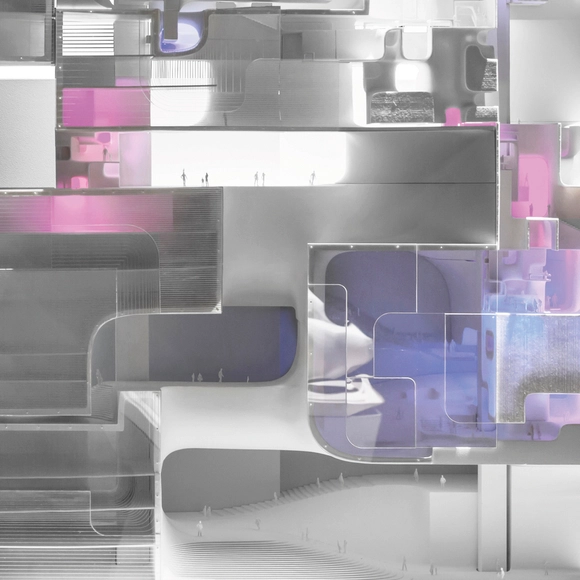
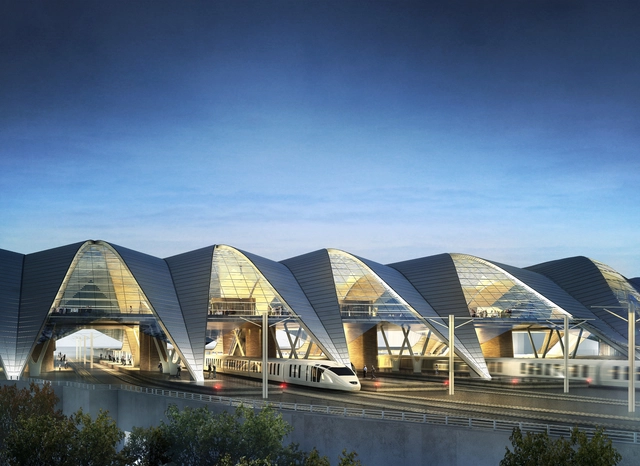
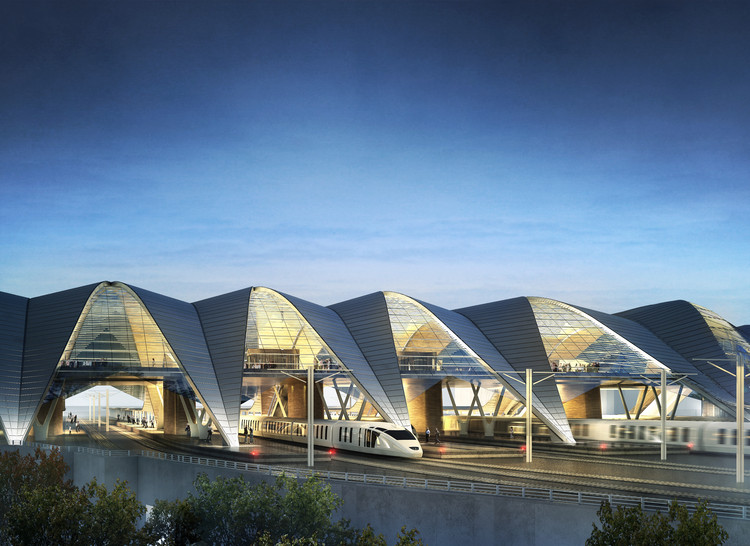
PLH Arkitekter has been announced as one of two winners in the international design competition for Rail Baltica, organized by The European Railroad Lines, Ltd. As a part of the European transport network, Rail Baltica will be a multi-modal public transport hub in the Latvian capital of Riga, with a railway bridge crossing the Daugava River.

The focal point of the project will be a train station building “that creates a strong visual identity in the cityscape, strengthening the sense of Riga as a metropolis.” Inspired by the archetypal form of the arch and the Art Nouveau period, the building will feature canopies that resemble arched fern leaves. On the north side of the building, the canopy shape allows for a unique view over the historic city, ideal for travelers entering or leaving the city to create a strong sense of place.

PLH Arkitekter Wins Rail Baltica Competition with Arch-Inspired Infrastructural System - Image 1 of 4PLH Arkitekter Wins Rail Baltica Competition with Arch-Inspired Infrastructural System - Image 2 of 4PLH Arkitekter Wins Rail Baltica Competition with Arch-Inspired Infrastructural System - Image 3 of 4PLH Arkitekter Wins Rail Baltica Competition with Arch-Inspired Infrastructural System - Image 4 of 4PLH Arkitekter Wins Rail Baltica Competition with Arch-Inspired Infrastructural System - More Images+ 6

M CO Design Unveils Dragon-Inspired Infrastructural Designs for Hong Kong

M CO Design has released its designs for “Dragon’s Link,” a new dragon-inspired, mixed-use infrastructure on the south side of Hong Kong Island “that will serve a large part of the community and will enhance a local historic monument,” the Tai Tam Dam, which will celebrate its 100th anniversary this coming February.

Drawing inspiration from local traditions and the natural topography of Hong Kong, the project will create new connections within an existing network of roads and hiking trails in Tai Tam Country Park in “a juxtaposition of old and new,” in order to improve user experience and infrastructure.

M CO Design Unveils Dragon-Inspired Infrastructural Designs for Hong Kong - Image 1 of 4M CO Design Unveils Dragon-Inspired Infrastructural Designs for Hong Kong - Image 2 of 4M CO Design Unveils Dragon-Inspired Infrastructural Designs for Hong Kong - Image 3 of 4M CO Design Unveils Dragon-Inspired Infrastructural Designs for Hong Kong - Image 4 of 4M CO Design Unveils Dragon-Inspired Infrastructural Designs for Hong Kong - More Images+ 12

AL_A Creates Stackable Soccer Pitches for Unused Urban Lots

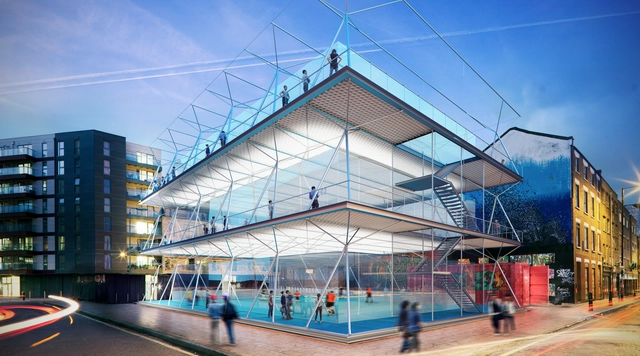
Architectural firm AL_A has unveiled its design for Pitch/Pitch, a series of 5-a-side soccer pitches designed for unused or temporarily vacant lots across London, as well as in other cities internationally.

Created as a response to shortage of sport space in inner cities, the project is meant to be fast and easy to construct, “meaning it could be set up for a fortnight to coincide with a World Cup tournament, or last for a year, bringing use to vacant sites that might otherwise lie dormant.”

After working with Arup, the practice developed a modular system that utilizes a lightweight carbon-fiber structure, a material generally associated with the aerospace industry, but that is emerging architecturally at larger scales.

EID Wins Competition for Stacked Block Mixed-Use Development in Chongqing

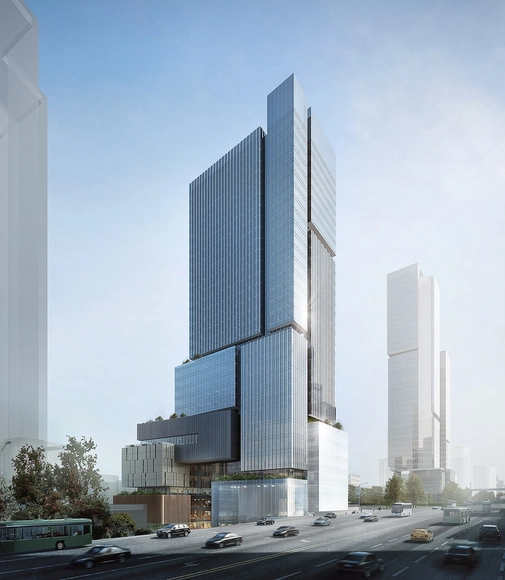
China-based firm EID Architecture has been selected as the winner of a design competition for a mixed-use development, entitled Longfor Phase IV, in Chongqing, China. Designed as an exploration of vertical urbanism on a high-density scope, the project is composed of a “single tower and associated podium integrated as an assembled massing of stacked box-like volumes.”

EID Wins Competition for Stacked Block Mixed-Use Development in Chongqing  - Image 1 of 4EID Wins Competition for Stacked Block Mixed-Use Development in Chongqing  - Image 2 of 4EID Wins Competition for Stacked Block Mixed-Use Development in Chongqing  - Image 3 of 4EID Wins Competition for Stacked Block Mixed-Use Development in Chongqing  - Image 4 of 4EID Wins Competition for Stacked Block Mixed-Use Development in Chongqing  - More Images+ 8