The winners of the 2016 INTBAUWorld Congress Excellence Awards have recently been announced. Categories for this year’s competition were Community Engagement, New Building, Urban Design, and Emerging Talent. The awards were given during the INTBAU World Congress 2016, a biennial forum that brings together international participants to debate the most pressing global issues facing building, architecture, and urbanism.
"I join my jurors in applauding the considerable depth and breadth of this year's award submissions," said Anne Fairfax, President a Fairfax & Sammons Architects and jury chair of the Excellence Awards. "We found the projects to be thoughtful in leading by example in the use of traditional design but we were also pleased to see the positive social activism and environmental responsibility that characterized many of the projects, reaching deep into the values of the INTBAU mission."
Young tech team (Bar Smith, Hannah Teagle, and Tom Beckett) has launched a Kickstarter campaign for Maslow, a four-by-eight-foot at home CNC cutting machine made to assist construction efforts by cutting user-specified shapes out of wood or any other flat material. Designed to be affordable—at under $500—easy to use, inclusive, and powerful, the project aims to share designs digitally so that you can build on the work of others or create your own from scratch.
Based on the design of the hanging plotter, Maslow “uses gear-reduced DC motors with encoders and a closed-loop feedback system to achieve high accuracy and high torque.”
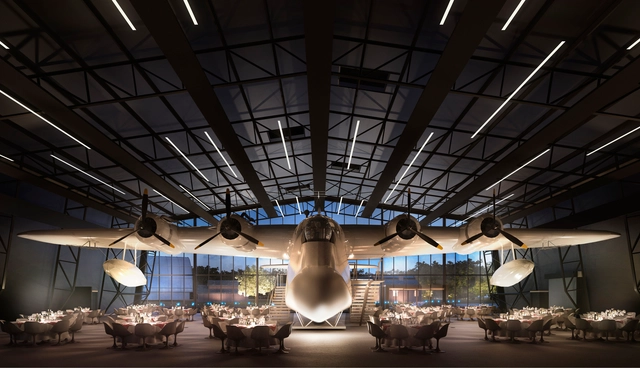
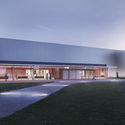
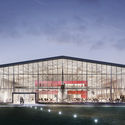
London-based firm Nex—Architecture has unveiled its plans for a new Royal Air Force (RAF) Museum as a part of the RAF’s 2018 Centenary Program. The new project will revitalize an existing RAF museum in North London that was created in 1972, transforming it into a visitor facility and promoting the airfield heritage of the museum’s location.
The new scheme will put emphasis on improving visitor experience by “establishing a clear route through the exhibition spaces.” A prominent new 40-meter-long entrance and visitor center will be placed inside the Hangar 1 building, acting as a welcome and orientation point.
Somatic Collaborative has unveiled its design for Neapolitan Housing and Co-working Complex, a new urban block typology located in Gravatai, Brazil, that contrasts the traditional landscape of repetitive housing types that dominate the urban peripheries of Latin American cities. Like a Neapolitan ice cream, the project’s buildings will be layered, housing a variety of residential units and co-working space.
In a drastic shift from typical low-rise residential enclaves, gates, and walled compounds, the project will create high-density urban blocks “that engage the street as a source of urban life” through porous borders that encourage new city centralities. A semi-porous perimeter block with retail and commercial space will allow the project to better interact with its surroundings while designating the distinction between public, semipublic, and private space through the buildings’ masses.
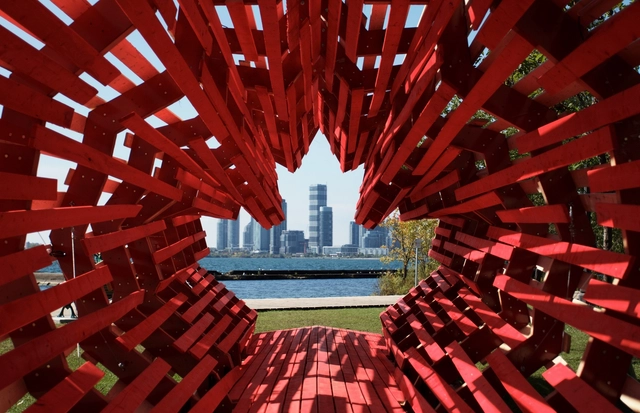
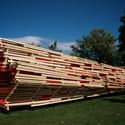
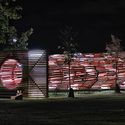
In memorial of the 1956 Hungarian Revolution, which resulted in the emigration of over 37,000 Hungarians to Canada, architectural studio Hello Wood has created Tunnel Through Time, a contemporary interpretation of the historic event that remembers the heroes of the revolution and especially honoring the Canadian people who welcomed Hungarian refugees.
Composed of 37,565 pieces—one for each Hungarian refugee accepted into Canada—the tunnel begins with a Hungarian flag with a hole in the middle, representing how protesters cut the communist coat of arms out of the Hungarian flag during the revolution. The tunnel then morphs—as a representation of the journey of the refugees—until it reaches an exit, which is shaped like the national symbol of Canada, the maple leaf.
From the Griffith Observatory to the LAX Airport, LACMA’s Urban Light installation, the Bradbury Building, Walt Disney Concert Hall,The Broad, and more, Los Angeles is full of inspiring architecture. In his new 10K x 4K resolution video, photographer and filmmaker Joe Capra of Scientifantastic captures the beauty of LA through panoramic footage. Over a span of two years, Capra stitched time-lapse footage from two synced DSLR cameras together resulting in a spectacular view of the city.
Find out more about Capra’s work here, or view his timelapse of Rio de Janeiro here.
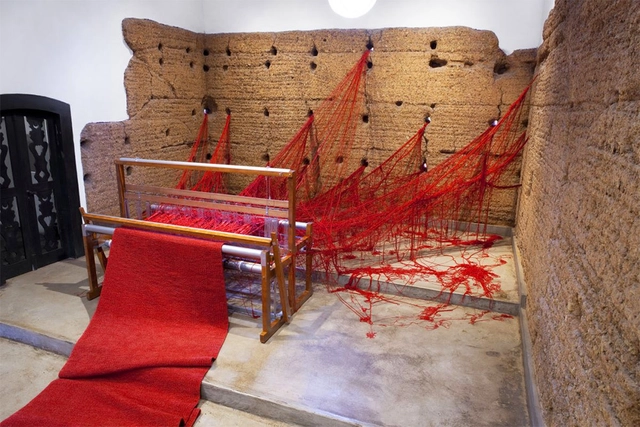
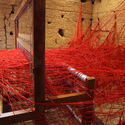
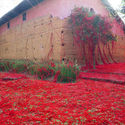
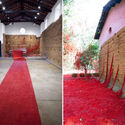
Made from a combination of tangled and woven red wool, Brazilian artist Tatiana Blass’ installation, “Penelope,” flows inside and out of the Chapel of Morumbi in São Paulo, Brazil.
The installation was inspired by the Greek myth of Penelope, who was Odysseus’ wife in Homer’s Odyssey. In the story, Penelope weaves and destroys a burial shroud for her husband, in a tribute to the power of love and to weaving.
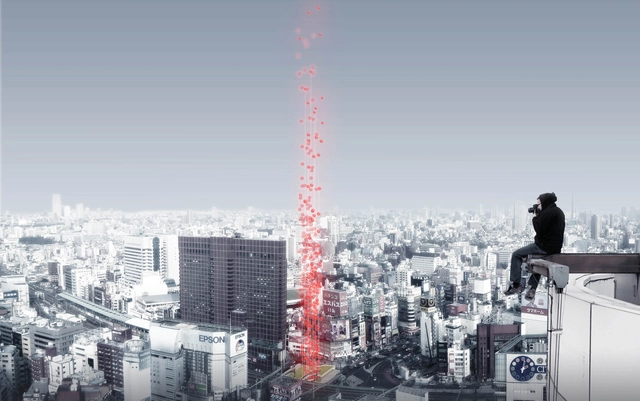
Architectural research initiative arch out loud has announced the winners of Tokyo Vertical Cemetery, its international open ideas competition that sought solutions to Tokyo’s rising issue of burial space.
Sited in the Shinjuku district of Tokyo, the competition challenged architects and designers to develop proposals for a vertical cemetery that explores the relationship between life and death in the city while taking into account the cultural identity that is tied to death.
From 460 proposals representing 54 countries and six continents, one winner and three runners-up were selected by a jury including David Adjaye, Tom Wiscombe, Alison Killing, and more.
The winners of the Tokyo Vertical Cemetery competition are:
Videos
Courtesy of Arkitema Architects & Arkitektgruppen Cubus
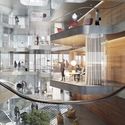
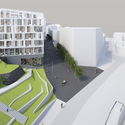
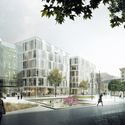
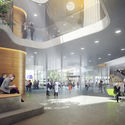
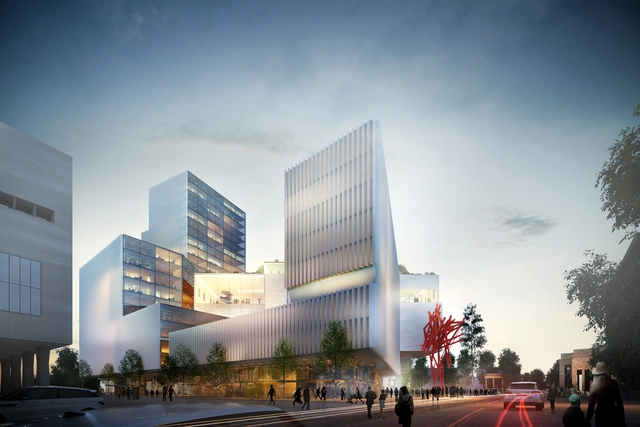
Danish firm Arkitema Architects, in collaboration with Arkitektgruppen Cubus, has won the competition to design a new Life Science building—called EnTek—at the University of Bergen (UiB) in Norway. As an Energy and Technology building, the project is designed to ensure collaboration between UiB’s faculty and the energy and technology industry.
The 17,500-square-meter building will become a southern gateway to the university, connecting the school to the city via a new street that will also become a central meeting point for both researchers and citizens.
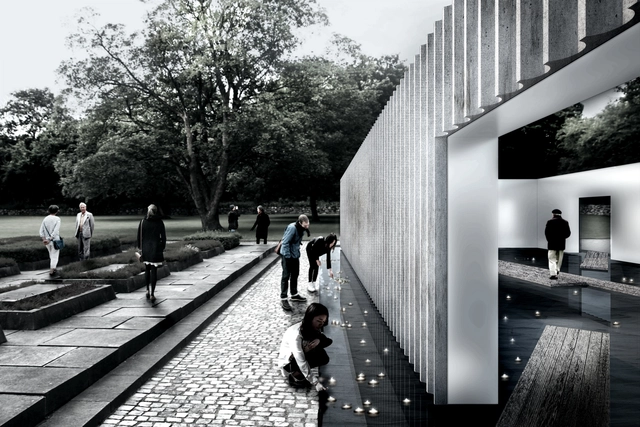
White Arkitekter A/S has revealed its plans for Arven fra Havet, or Legacy of the Sea, a World War II memorial to be built at the Mindelunden site in Ryvangen, Denmark. Arven fa Havet will honor the 2,000 Danish sailors and more than 800 Danes who died in merchant ships serving the Allies, and in Operation Overlord, respectively.
Currently, the Mindelunden site is a graveyard bound on one side with dense bushes and trees. With the new memorial, the site will be better framed by creating a symmetrical boundary, mimicking the proportions of the low tombs, but at a larger scale to represent the common grave of all sailors, the sea.
109 Architectes has released its proposal for the Beirut Museum of Modern Art (BeMA), for which a competition was recently held. The proposal was shortlisted, but did not ultimately win. In this proposal, BeMA is a box—“a generic form that belongs to everyone”—based on a scene in The Little Prince, where a traveler is asked to draw a sheep. The Prince rejects each sheep drawing until the traveler draws a box, inside of which a sheep is hidden. “The cube is a neutral form in the Little Prince’s search for identity. Within it, he sees what he wants to see.”
Within this generic box, visitors will thus be able to project their views of Beirut—the city’s chaos, diversity, creativity, history, streets, people, and more.
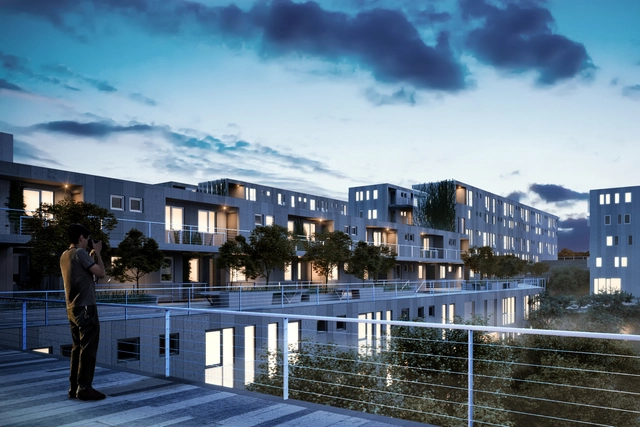
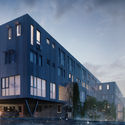
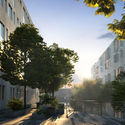
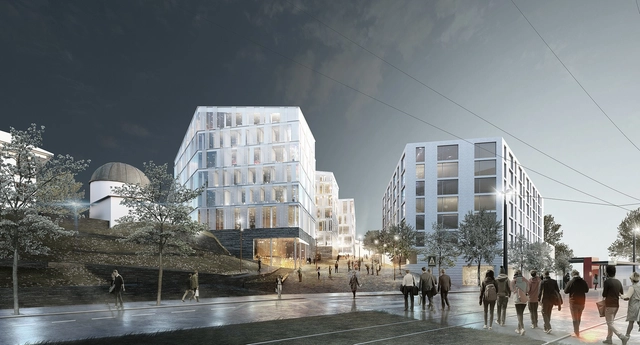
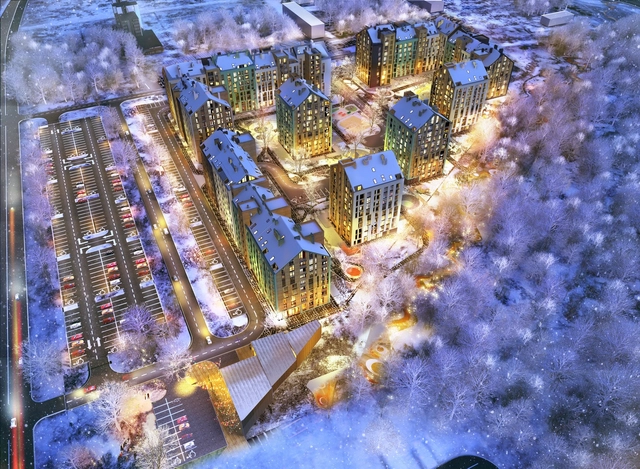
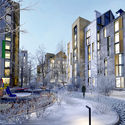
Archimatika Architects has unveiled the plans for “Leopol Town,” a new housing project located on Styiska Street in Lviv, Western Ukraine. Overall, the project will include seven buildings, with 757 flats, shops, cafeterias, restaurants, and public access at the lower levels.
In an effort to combat the uncomfortable Soviet “sleeping neighborhood” feeling of the city, the project will feature open blocks, parceling, energy efficient systems, and sustainability principles to “invite nature in.”
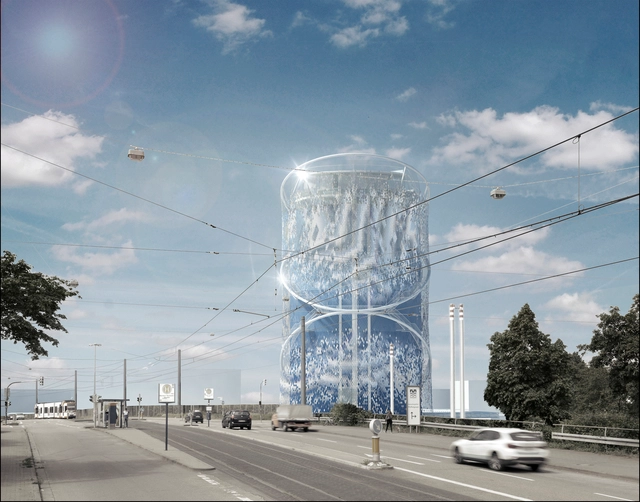
LAVA (Laboratory for Visionary Architecture) has won the competition to redesign an energy park and energy storage building in Heidelberg, Germany, for the Stadtwerke Heidelberg. Currently a cylindrically shaped storage center, the space will be transformed into a dynamic sculpture, city icon, and knowledge hub for sustainable energy, fully accessible to the public with city views.
In order to display the concepts of energy transition, decentralization, networking, flexibility and adaptability, the project will feature a multi-layered façade structure inspired by geometries in nature like leaves, spider webs, and reptile skins. “The result is a dynamic, ever-changing surface of light and shadow, animated by wind, turning the building into a beacon of a dynamic new energy regime.”
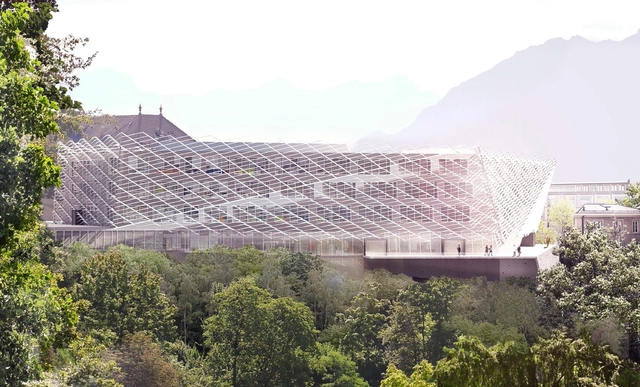
Behnisch Architekten has announced the groundbreaking of the AGORA—Cancer Research Center located in Lausanne, Switzerland within sight of Lake Geneva. As the new home of the Swiss Institute for Experimental Cancer Research (ISREC), the Center will bring together 400 researchers, scientists, doctors, and clinicians under the goal of enhanced communication.
The new AGORA building will connect to an existing building on one side, with minimal disruptions to existing programming. “Visual relationships both on the site and to the landscape beyond require a carefully defined building mass and the new building responds sensitively to these site conditions while sculpturally standing out from its heterogeneous surroundings.”
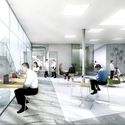
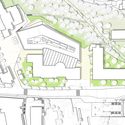
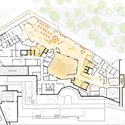
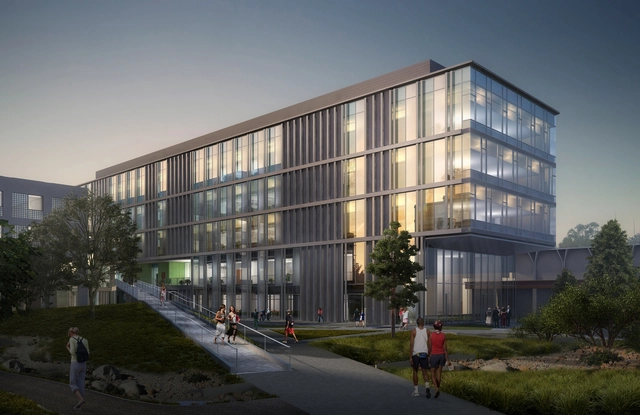
Los-Angeles-based CO Architects has released the plans for the Biological Physical Sciences Building (BPSB), a new life sciences facility at the University of California in San Diego. In order to “blend the richly diverse fields” of neurobiology, chemistry, and biochemistry, the seven-story, 128,000-square-foot building will promote collaborative research and visibility in teaching spaces.
Our goal at UC San Diego is to create opportunities to maximize interdisciplinary collaboration between multiple research and academic units, said Jennifer Knudsen, AIA, LEED AP BD+C Principal at CO Architects. We want the building to accommodate a range of research activities and teaching models capable of evolving over time.
Courtesy of Maksim Atayants & Maksim Atayants Workshop
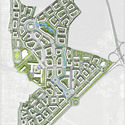
Maksim Atayants and Maksim Atayants Workshop have announced the construction of Laikovo, a new, large, classically-designed city in the Moscow Region that will be built from scratch – which, according to the architects, will be the first classical city to be built from the ground up in Russia in over 100 years.
Intended to embody the best practices of Russian and global urban planning, the city will be designed in the modern classic style in five districts, and will become Moscow’s nearest satellite city, located near Rublyovka, with easy access to the paid expressway, the M-1 double.
50 percent of the 116-hectare city will be dedicated to public space, including a two-hectare park and lake at city center, as well as a main waterway that will become the Moscow Region’s longest artificial channel.
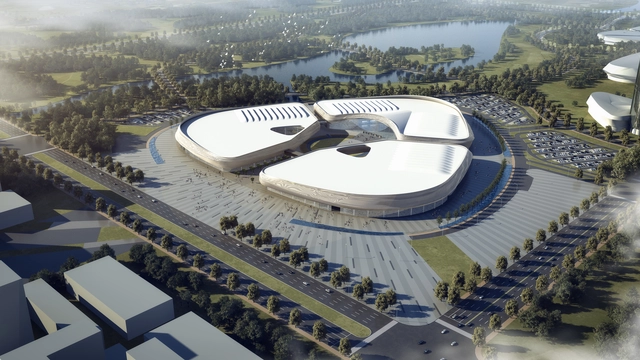
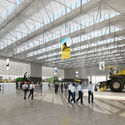
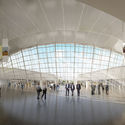
The team of tvsdesign and Shanghai Hecheng (上海合城) Architectural Design Ltd.(Cospace) has won the competition for the design of the Zhumadian International EXPO Center, located in Zhumadian, a city known for its agricultural industry, in the Henan Province of China. The competition sought out convention center designs that could not only serve as a location to hold agricultural conventions and trade fairs but could also connect back to the city’s historic roots in order to expand the area as a rendezvous of agriculture.
Drawing from the fact that Zhumadian is specifically known for supplying China with sesame seeds, the proposal utilizes the imagery of the seed in its shape—with rounded triangular forms—as well as in its overarching concept: “as an epicenter of activity in the agricultural industry, the convention center represents origins, life, growth, and health for the region and the people who visit the building" described the architects.
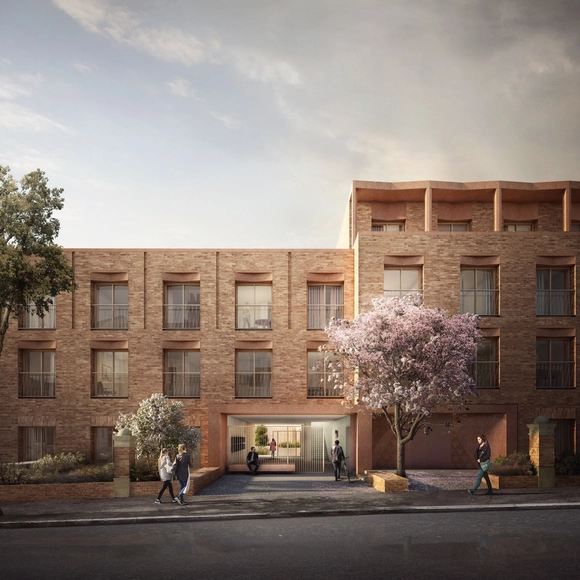
Gort Scott, in collaboration with developer Pocket Living, has secured planning permission to build 45 affordable “Pocket” apartments on the site of an unused office building in Walthamstow, England. In an effort to produce highly-sought-after living space in the heart of the city, the design features three- and four-story elements that complete the terrace in the rear of the existing building, filling the gap between neighboring developments.
Inspired by the legacy of the William Morris School that previously occupied the site, as well as by the Warner Houses typical to the city, the exterior of the project will be characterized by a decorative fletton type red brick and precast concrete.


_(6).jpg?1477973514&format=webp&width=640&height=580)


















s_balkonami_box2.jpg?1476151664 "Courtesy of Archimatika Architects")







.jpg?1475701455&format=webp&width=640&height=580)
.jpg?1475701388 "Courtesy of Maksim Atayants & Maksim Atayants Workshop")
.jpg?1475701334 "Courtesy of Maksim Atayants & Maksim Atayants Workshop")
.jpg?1475701484 "Courtesy of Maksim Atayants & Maksim Atayants Workshop")
.jpg?1475701455)