Following the recent completion of 432 Park Avenue in New York City, The Council on Tall Buildings and Urban Habitat (CTBUH) has announced that there are now 100 supertall (300-plus-meter) skyscrapers in the world. The majority of these skyscrapers are in Asia and the Middle East, mirroring construction trends that have emerged over the past decade. Dubai leads the rankings with 18 supertall buildings, while New York City now falls in second place with a total of seven, including 432 Park Avenue.
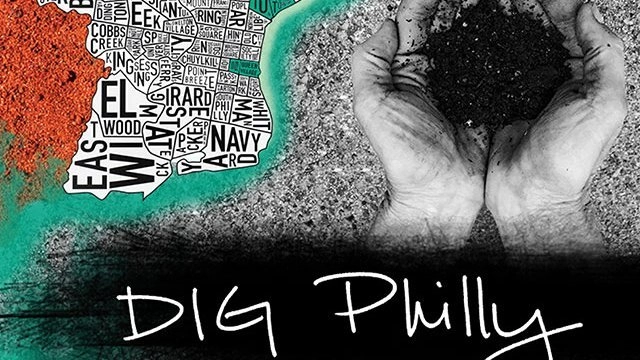
2015 Winning Entry by Jacques Gaffigan. Image Courtesy of The Knight Foundation
The John S. and James L. Knight Foundation has announced the names of the 158 finalists in the Knight Cities Challenge. The nation wide call was for innovative ideas to make the 26 communities where the Knight Foundation invests more social and vibrant places to live. More than 4,500 entries were submitted proposing a range of ideas from opening the world’s largest African American history museum in Detroit to a card game that encourages residents of Charlotte to visit new neighborhoods. The winners, who will split a prize of $5 million, will be announced in the spring of 2016.
It is surprising then to find the man or his eponymous firm Foster + Partners absent from a list like Fast Company’s “The World's Top 10 Most Innovative Companies in Architecture,” organized into superlatives: MMA Architects, “for thinking outside the big box,” Heatherwick Studio, “for reimagining green space,” or C.F. Møller Architects, “for rethinking high-rise living.” This is not to say that Foster or his firm should be substituted for any of these deserved accolades, but rather that for five decades Foster and his firm have ceaselessly worked to enhance and expand on the human experience with architectural solutions that are both inventive and practical - a fact that is perhaps lost as a result of his position within the architectural establishment.
With that in mind, we thought it was worth highlighting the many occasions over the decades where Foster + Partners has shown themselves to be among the world's most innovative practices. Read on for more.
Videos
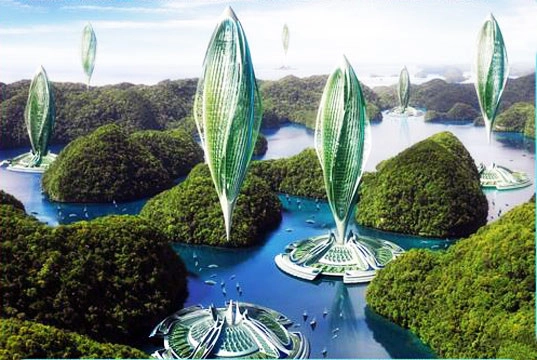
Proposals such as Vincent Callebaut's "Hydrogenase" have always been science fiction as much as they are architecture - but with Arx Pax's MFA technology, is it time to think more carefully about how to design levitating buildings?. Image Courtesy of Vincent Callebaut Architectures
Could Hovering Buildings be the Future of Sustainability?
If Arx Pax, a cutting-edge technology firm led by Greg and Jill Henderson, has its way, levitating objects could become a common sight. The team is developing what they call Magnetic Field Architecture (MFA), a technology which controls electromagnetic energy to make objects hover, and at the several months ago, they used it to produce Hendo Hover, a hoverboard capable of carrying a person. While the fact that Arx Pax was able to produce a hoverboard is fascinating, the technology could have much more serious applications: as an architect, Greg Henderson envisions that one day MFA technology could be used in buildings to produce sustainable structures which can better survive earthquakes and other natural disasters. Is this goal realistic?


_Macklowe_Properties.jpg?1452745763&format=webp&width=640&height=580)