1. ArchDaily
  2. Passive Design

Passive Design: The Latest Architecture and News

"Biodomes" in the UAE's Al Hajar Mountains Will Promote Ecotourism

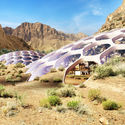
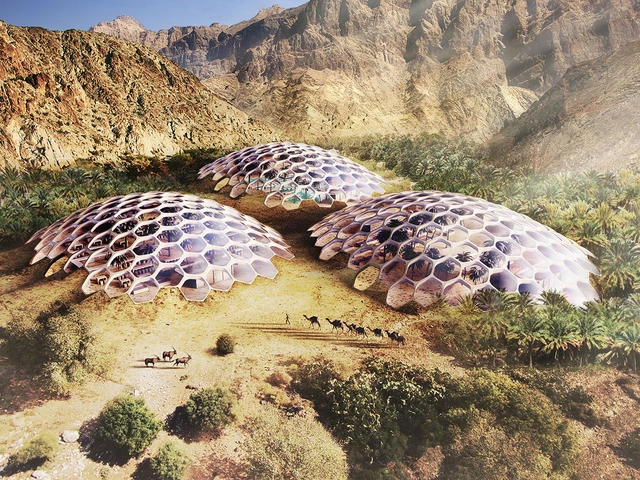
The world’s tallest building, the Burj Khalifa, towers at 828 meters in the heart of Dubai’s ever-growing urban core. But just a few hours east of the metropolis, a different kind of monument is garnering tourism to the United Arab Emirates: the Al Hajar Mountains. With its peak at 3,008 meters, the mountain range’s natural elegance rivals the country’s architectural achievements. The Biodomes Wildlife Conservation Centre, a project from Baharash Architecture for the UAE’s Eco Resort Group, seeks to celebrate the mountain range through an ecotourism paradigm.

"Biodomes" in the UAE's Al Hajar Mountains Will Promote Ecotourism  - Image 1 of 4"Biodomes" in the UAE's Al Hajar Mountains Will Promote Ecotourism  - Image 2 of 4"Biodomes" in the UAE's Al Hajar Mountains Will Promote Ecotourism  - Image 3 of 4"Biodomes" in the UAE's Al Hajar Mountains Will Promote Ecotourism  - Image 4 of 4Biodomes in the UAE's Al Hajar Mountains Will Promote Ecotourism  - More Images+ 5

Studio Bark's 'Black Barn' is an Environmentally Conscious Home in English Countryside

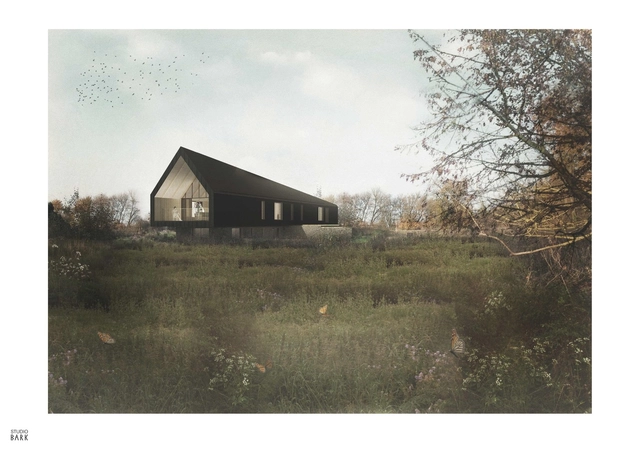
London-based Studio Bark has revealed its plans for Black Barn, an environmentally conscious family home in Dallinghoo, Suffolk.

Based on an interpretation of local black agricultural barns, the 300-square-meter house will be clad in charred timber, an ancient Japanese form of natural preservation as a way to enhance the longevity and beauty of wood.

Georges Batzios Architects Propose Cultural Center Made Entirely of Straw

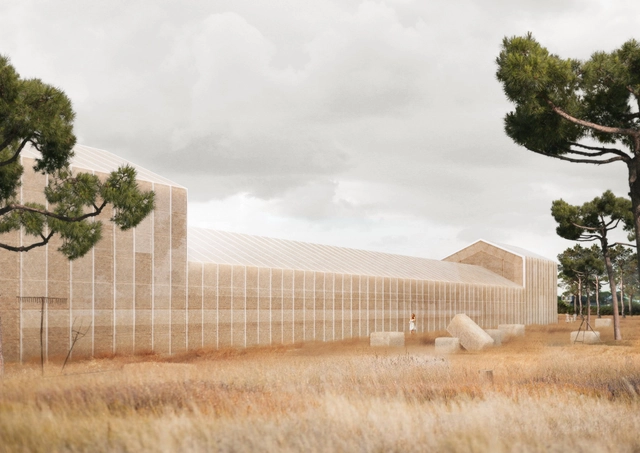
A proposal from George Batzios Architects for the Konaki Averof Cultural Center in Greece uses a cutting edge, sustainable approach to revive a deeply historical site. The design intertwines elements of architecture and agriculture to refit an existing structure with reference to the Thessalian plains on which it lies. The new architecture recreates the existing envelopes with straw cladding, regenerating the "golden environment" which defined the place in the late 19th century.

How Rammed Earth Walls Were Given a New Lease of Life in Vernacular Himalayan Buildings

Subscriber Access | 
How Rammed Earth Walls Were Given a New Lease of Life in Vernacular Himalayan Buildings - Featured Image
Courtesy of Archide

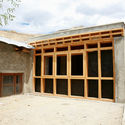
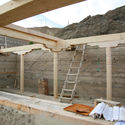
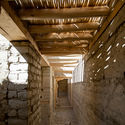
Located high in the Himalayan Mountains, the sparsely populated region of Ladakh is one of the more remote places on Earth. At over 3500 meters above sea level, the region includes terrain consisting of steep cliffs and wide valleys, and an extreme climate to match: temperatures often reach +30 degrees celsius in the summer months and drop to -30 degrees celsius in the winter. Severe weather patterns such as these typically require durable construction materials and technologies - yet with the region’s difficult-to-reach location and a construction season lasting only four to six months, importing materials becomes a costly, if not impossible task. Luckily, with help from Czech architecture firm Archide, residents were able to find that the best material for the job was one found right outside their doors: rammed earth.

How Rammed Earth Walls Were Given a New Lease of Life in Vernacular Himalayan Buildings - Image 1 of 4How Rammed Earth Walls Were Given a New Lease of Life in Vernacular Himalayan Buildings - Image 2 of 4How Rammed Earth Walls Were Given a New Lease of Life in Vernacular Himalayan Buildings - Image 3 of 4How Rammed Earth Walls Were Given a New Lease of Life in Vernacular Himalayan Buildings - Image 4 of 4How Rammed Earth Walls Were Given a New Lease of Life in Vernacular Himalayan Buildings - More Images+ 36

DETAIL Green Books: Passive House Design

Subscriber Access | 

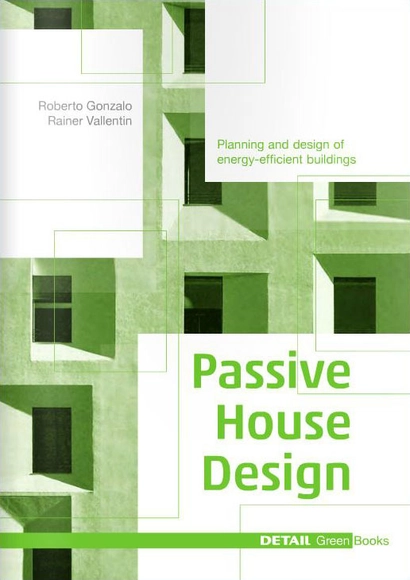
From the publisher. A compendium for architects

The passive house standard is developing more and more into the international key currency of energy-efficient construction. Passive houses are being erected in almost all parts of the world and for all types of users. “Plus energy” buildings and entire zero-energy districts show that the passive house standard is also a sound basis for advanced efficiency strategies. At the same time, many architects are unsure about the specifics: What do passive houses really deliver, and what errors need to be avoided during planning? 

Neutelings Riedijk Architects Begins Construction on Largest Passive Office Building in Belgium

Neutelings Riedijk Architects has begun construction on the Herman Teirlinck Building, which, when complete, will be the largest passive office building in Belgium, serving as a mixed-use center for the Flemish government.

The 66,500 square-meter building, located in Brussels, will be built along the canal on the site of Tour & Taxis, one of the last large-scale development locations in the heart of the city, in hopes that it will transform the area into “a new high-quality green urban district with mixed functions.”

Arthur Andersson on Timeless Materials & Building "Ruins"

Subscriber Access | 
Arthur Andersson on Timeless Materials & Building "Ruins" - Featured Image
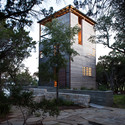
Tower House . Image © Art Gray

Material Minds, presented by ArchDaily Materials, is our new series of short interviews with architects, designers, scientists, and others who use architectural in innovative ways. Enjoy!

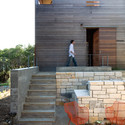
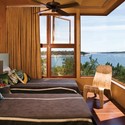
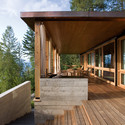
Arthur Andersson of Andersson-Wise Architects wants to build ruins. He wants things to be timeless - to look good now and 2000 years from now. He wants buildings to fit within a place and time. To do that he has a various set of philosophies, processes and some great influences. Read our full in-depth interview with Mr. Andersson, another revolutionary "Material Mind," after the break.

Arthur Andersson on Timeless Materials & Building "Ruins" - Image 1 of 4Arthur Andersson on Timeless Materials & Building "Ruins" - Image 2 of 4Arthur Andersson on Timeless Materials & Building "Ruins" - Image 3 of 4Arthur Andersson on Timeless Materials & Building "Ruins" - Image 4 of 4Arthur Andersson on Timeless Materials & Building Ruins - More Images+ 10