-
Architects: DUS Studio
- Area: 285 m²
- Year: 2021
-
Professionals: C.H.Y Shanghai Zeqin Interior Design Co. Ltd




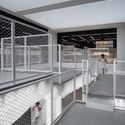
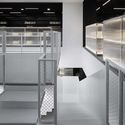
Fotografiska Museum has announced its expansion to three new locations in Berlin, Shanghai and Miami, to be housed within existing buildings redesigned by Herzog & De Meuron, Neri&Hu and Rockwell Group. A former department store in Berlin's Jewish Quarter, a 1946 factory building in Miami and a historically significant warehouse complex in Shanghai are the future Fotografiska venues set for completion in 2022 and 2023. Together with the existing locations in Stockholm, Tallin and New York, these will form the world's largest private art museum in terms of size, number of locations, and exhibitions per year.

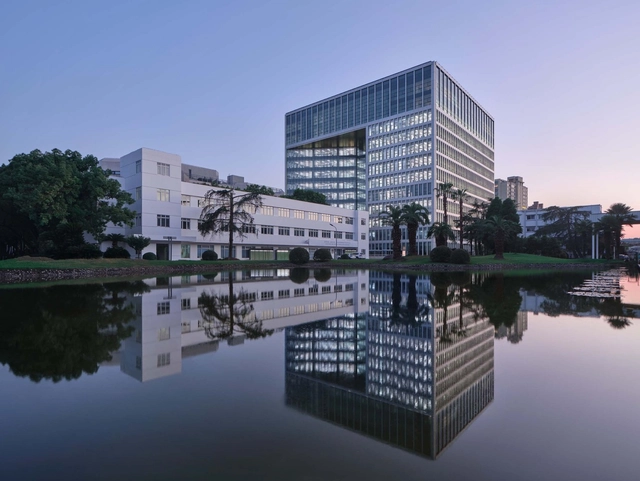

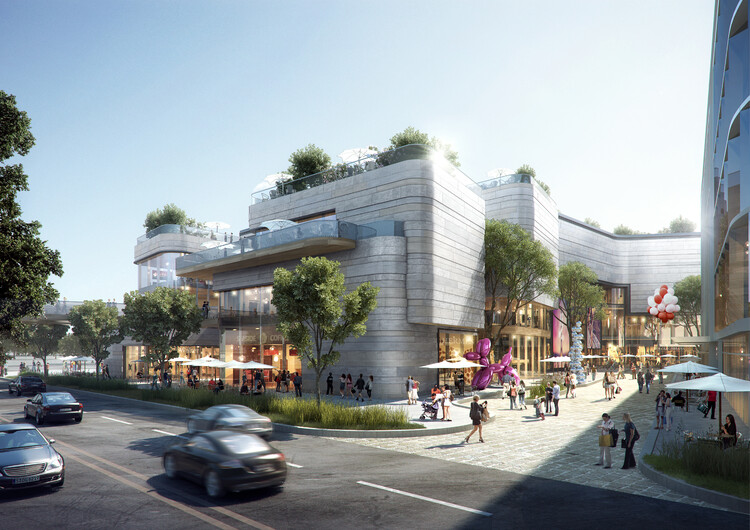
Aedas revealed its design for a mixed-use development in Shanghai, a mid-rise high-density scheme comprising several blocks of offices, retail spaces and a hotel linked by an extensive network of public spaces. A central circulation spine running across the site connects the various programs and, together with a series of green spaces, recreates the atmosphere of the organic urban fabric.


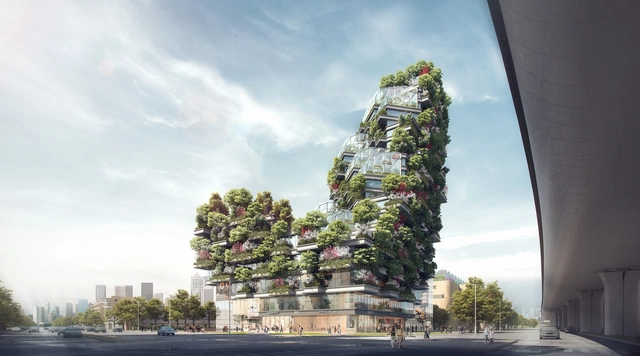
Stefano Boeri Architetti combined the concept of "Vertical Forest" and "Farm of agricultural industry" in its newly-unveiled urban vertical farm titled "Urban Vertical Farm of Brightfood". The project explored a new way of urban production in metropolitan areas by combining greenery, food production, and visual aesthetics in a 110,000 square-meter structure. In addition to its ecological features, the new urban agricultural complex offers commercial and office spaces in the vibrant city of Shanghai.
Saskia Sassen, the Robert S. Lynd Professor of Sociology at Columbia University, predicts in her co-authored book “The Quito Papers and the New Urban Agenda” that, in the future cities will become our crucial battlefield as we continue to fight against gentrification and growing degree of isolation in our communities. Sassen argues that, “Cities should be an inclusive space for both the affluent and the poor. Nevertheless, in reality our cities never achieved equality for all, because our cities were never designed that way. Still cities ought not to be a place that tolerates inequality or injustice”.






.jpg?1639538097 "west view. Image © Hao Chen")
.jpg?1639538002 "north view. Image © Hao Chen")
.jpg?1639538376 "north facade. Image © Hao Chen")
.jpg?1639538340 "multi-purpose hall. Image © Hao Chen")





__苏州昆仑绿建木结构科技股份有限公司.jpg?1636371249 "aerial view. Image © Suzhou Kunlun Green Construction Wood Structure Technology Co.")
__苏州昆仑绿建木结构科技股份有限公司.jpg?1636370949 "changeable mobile station 3. Image © Suzhou Kunlun Green Construction Wood Structure Technology Co.")
.jpg?1636371050 "basic mobile station. Image © Suzhou Kunlun Green Construction Wood Structure Technology Co.")
.jpg?1636371193 "basic mobile station. Image © Suzhou Kunlun Green Construction Wood Structure Technology Co.")












.jpg?1629725138 "© Qingyan Zhu")