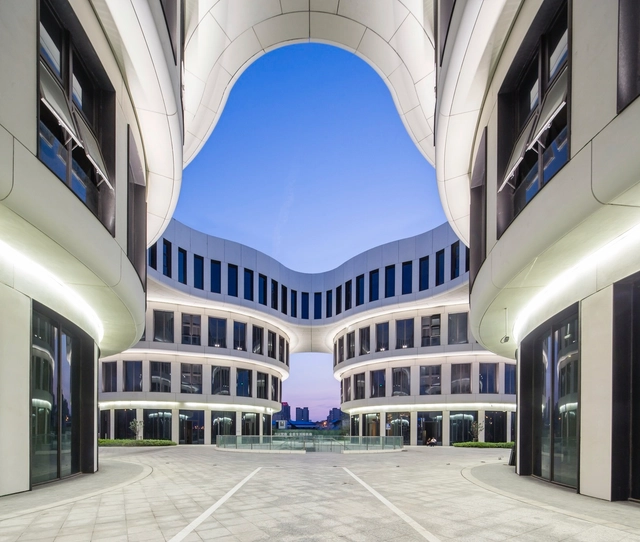
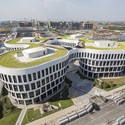
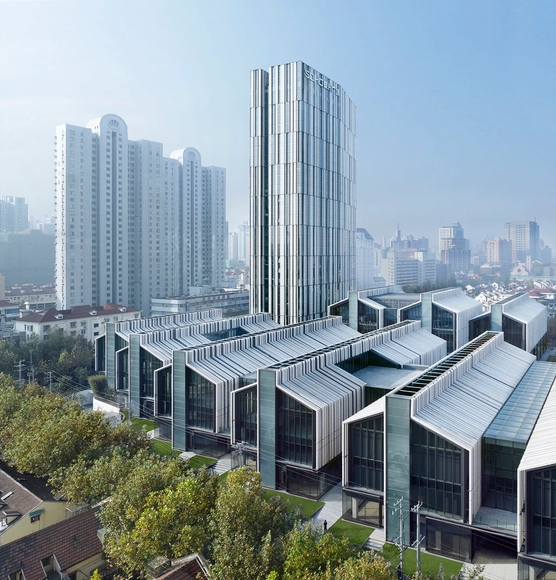
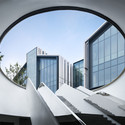
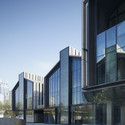
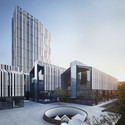
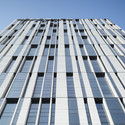
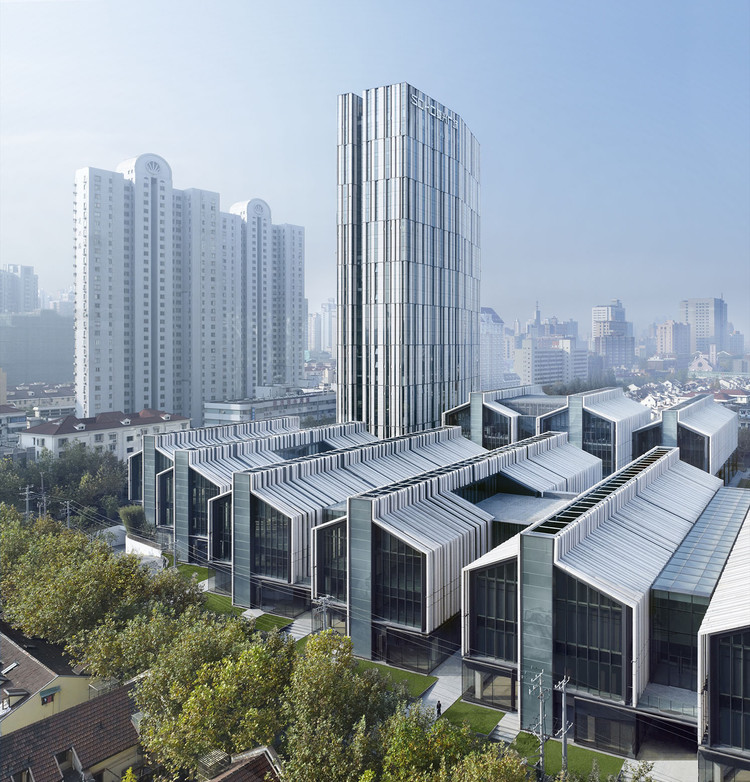
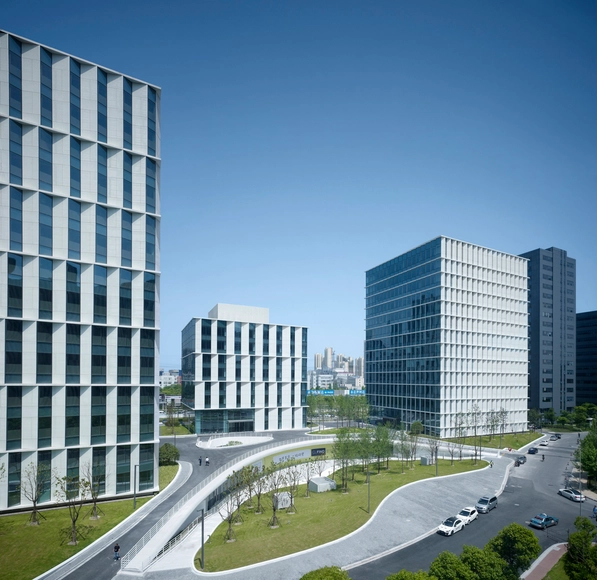
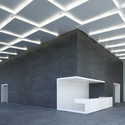
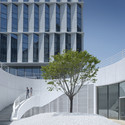
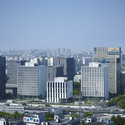
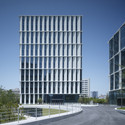
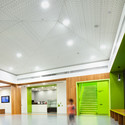
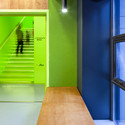
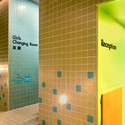
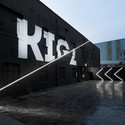
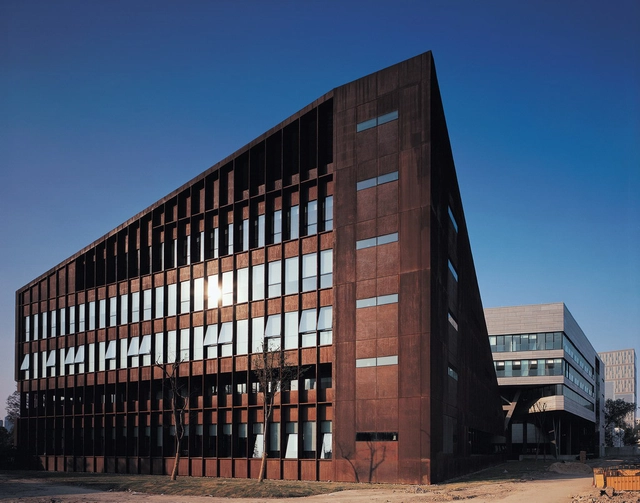
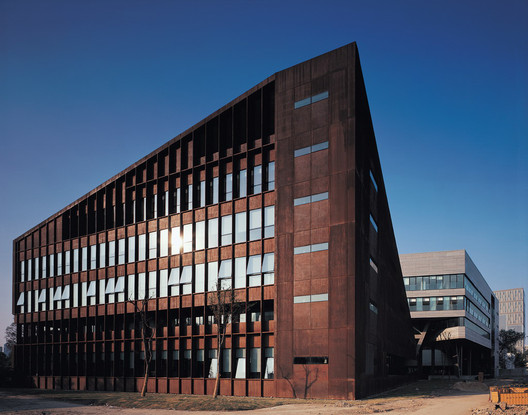
Aedas' Mapletree Business City Shanghai and VivoCity Shanghai has been named the "ultimate world's Best International Mixed-Use Architecture" of 2015, according to the International Property Awards that were announced in London. The mixed-use development merged retail, dining and entertainment with Grade A offices to "create a dynamic environment for both business and leisure." All facilities are seamlessly connected and share a number of amenities, thus providing a "new benchmark" of 'live, work and play' in Shanghai.
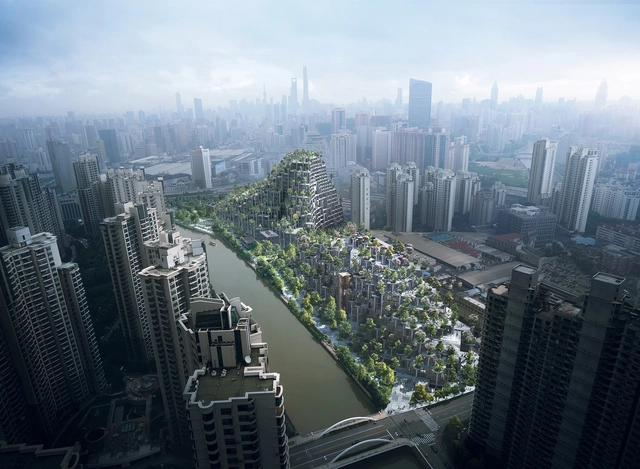
Heatherwick Studio has designed a mountainous mixed use plan for Shanghai's main arts district. Named M50, the 300,000-square-meter project was conceived as "a piece of topography" that takes the shape of "two tree-covered mountains" populated by "400 terraces" and "1000 structural columns."
“Normally, the large-scale projects that we are quite used to seeing have big boxes, and the role of the designer is figuring out what pattern of architectural wrapping paper to put on these boxes,” said Thomas Heatherwick, according to Architectural Digest. “We wondered if there was a way to make better working spaces by also making access to outdoors.”
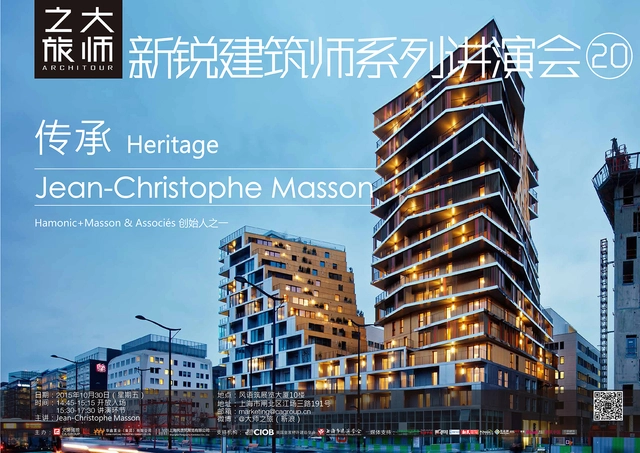
Jean-Christophe Masson, co-founder of Hamonic+Masson & Associés, to give Architour lecture in Shanghai. The subject of the lecture will be heritage in architecture.
As part of the CA Group’s lecture series, “Architour”, co-founder of Hamonic+Masson & Associés, Jean-Christophe Masson, will give a lecture at 15:30 on October 30th at the Ablues Design Exhibition Auditorium in Shanghai. For 2013 through 2015, “Architour” has as its theme “New Force of Architecture – Leading Young Architects”: each year, the CA Group will select nine young, global leaders in architecture (four from Asia and five from the West) to lecture on topics that cross typologies and disciplines, from architectural design, urban planning to interior design. Sou Fujimoto, Hirata Akihisa, Christian Kerez and Thomas Heatherwick were the series’ first speakers.
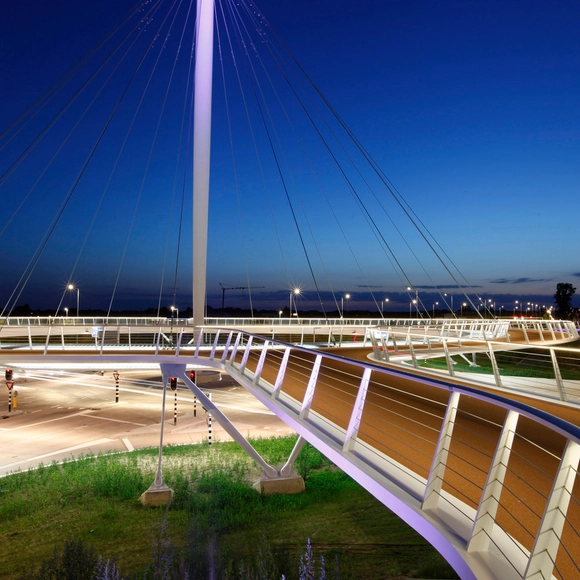
WIRED Magazine has created a list of Eight Cities That Will Show You What The Future Will Look Like in the latest edition of their design issue. In the relatively short span of time that humans have been planning cities, more and more decisions have been made that have shaped the path of new technologies and methods that will make cities better. Such projects—like new streetlights, bicycle infrastructure, and traffic-sensitive museums—highlight some of these advances in the urban lifestyle.
"The cities of tomorrow might still self-assemble haltingly, but done right, the process won’t be accidental. A city shouldn’t just happen anymore. Every block, every building, every brick represents innumerable decisions. Decide well, and cities are magic," writes Wired author Adam Rogers. Read on after the break to see how 8 different cities from around the world are implementing innovative projects.
Ennead Architects has designed a new research and development community for Shanghai. Located on the city's western edge, as part of a new district being planned around one of Shanghai’s largest future public parks, Taopu Sci-Tech City will be a vibrant and well connected research district that engages its context by establishing a multilayered pedestrian network.
“Our design goal was to create something greater than a single building; our goal was to create a memorable and connected civic district,” said Peter Schubert, a partner at Ennead International.
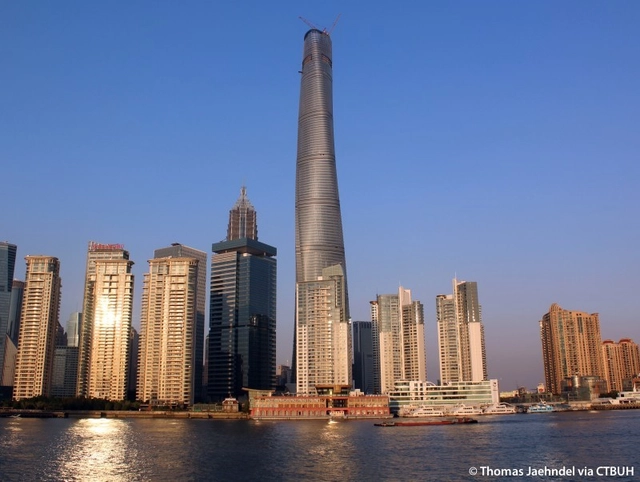
The Council on Tall Buildings and Urban Habitat (CTBUH) has announced the winner and finalists of its 2015 Urban Habitat Award. Launched in 2014, the Urban Habitat Award recognizes the contributions of tall buildings to the urban realm. The winners this year were chosen for influencing their environment and cultural context intelligently, adding social sustainability to their immediate site and wider context. See all of the finalists and the winner after the break.
This edition of Section D, Monocle 24's weekly review of design, architecture and craft, travels to Indonesia’s third city Bandung, where former architect and current Mayor Ridwan Kamil "is transforming public space." The show also takes a tour of three early 20th-century apartment buildings in Montreal, and hears from Neri & Hu Design and Research Office in Shanghai.
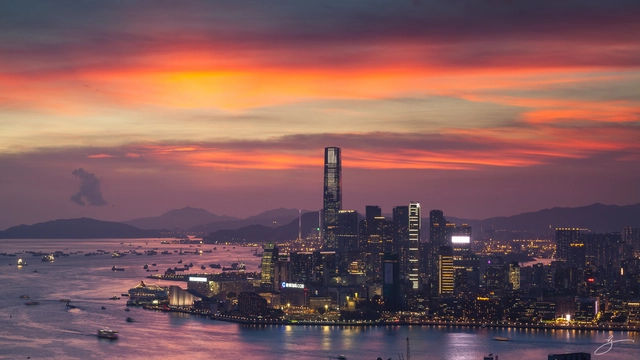
Emporis, a German company that collects and distributes information on construction and the built environment, has released a ranking of the world’s 100 most visually impactful skylines, using statistical analysis to address a topic often made frustratingly subjective by civic pride.
To create the rankings, Emporis used data from its archives to determine the number of high-rise buildings in the cities it studied, and applied a points system that gave each building a numerical value determined by the number of floors it has. To standardize their ranking process, the points system ignores spires and other ornament, and does not include television or antenna towers, masts, bridges, or similar architecture.
Of the top 10 most impactful skylines, seven are in Asia, while North and South America combined have the other three. Notably, cities filled with rich architectural history fail to make the list, or fall surprisingly low in the rankings; London is number 44, Paris is ranked 66, and Rome does not make the cut.
To see the top ten skylines, read on after the break, and click here to see Emporis' complete list.
"It’s really easy to build a building. From the very beginning to the realization; it’s very easy! You just give it an interesting form and you get approved. But the real issues are how to make it user-friendly and to enhance the quality of the life of the people trying to escape the influence of the “system”. That’s the challenge. In my experience […] I’ve learned that for architects, both Chinese and foreign, the use of form to create an object is easy but how to do the right thing is very challenging." - Zhang Bin, Shanghai, Sept 2013


.jpg?1451412237&format=webp&width=640&height=580)