"It’s really easy to build a building. From the very beginning to the realization; it’s very easy! You just give it an interesting form and you get approved. But the real issues are how to make it user-friendly and to enhance the quality of the life of the people trying to escape the influence of the “system”. That’s the challenge. In my experience […] I’ve learned that for architects, both Chinese and foreign, the use of form to create an object is easy but how to do the right thing is very challenging." - Zhang Bin, Shanghai, Sept 2013
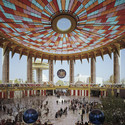
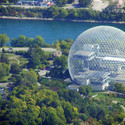
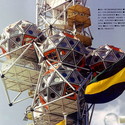
World Expos have long been important in advancing architectural innovation and discourse. Many of our most beloved monuments were designed and constructed specifically for world’s fairs, only to remain as iconic fixtures in the cities that host them. But what is it about Expos that seem to create such lasting architectural landmarks, and is this still the case today? Throughout history, each new Expo offered architects an opportunity to present radical ideas and use these events as a creative laboratory for testing bold innovations in design and building technology. World’s fairs inevitably encourage competition, with every country striving to put their best foot forward at almost any cost. This carte blanche of sorts allows architects to eschew many of the programmatic constraints of everyday commissions and concentrate on expressing ideas in their purest form. Many masterworks such as Mies van der Rohe’s German Pavilion (better known as the Barcelona Pavilion) for the 1929 Barcelona International Exposition are so wholeheartedly devoted to their conceptual approach that they could only be possible in the context of an Exposition pavilion.
To celebrate the opening of Expo Milano 2015 tomorrow, we’ve rounded up a few of history’s most noteworthy World Expositions to take a closer look at their impact on architectural development.
Witness the urban life of five stunning metropolises through the lens of Rob Whitworth with these "Vimeo Staff Pick" hyperlapse videos. From the unexplored urban life of the North Korean capital Pyongyang to the towering skyline of Dubai, each video explores an incredible sequence of daily living in cities across the planet. See more, including video from Kuala Lumpur and Shanghai, after the break.
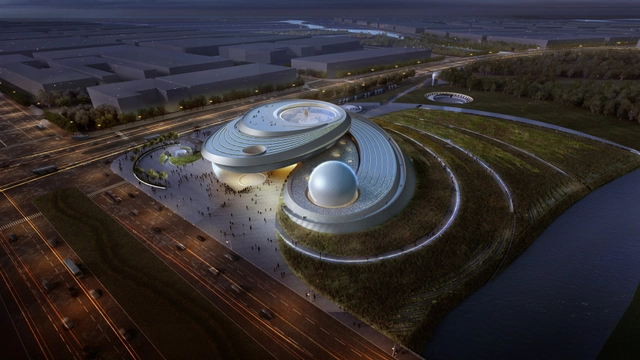
Ennead Architects has won an international competition to design the Shanghai Planetarium. The “celestial” design hopes to elevate the Shanghai Science and Technology Museum’s (SSTM) “scientific and technological capacity” while redefine the district Lingang upon its completion in 2018.
“Drawing inspiration form astronomical principles, our design strategy provides a platform for the experience of orbital motion, and utilizes that as a metaphorical reference and generator of form,” says Ennead Architects.
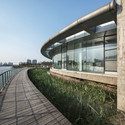
Aedas is nearing completion on the sales gallery for the mixed-use Shanghai Greenland Qingpu Xujing District complex. The gallery, shaped as a leaf, is designed to fit with the "clover leaf" concept of the nearby Qingpu Xujing Conference and Exhibition Centre, in which it will be connected with by a pedestrian bridge.








.jpg?1429675171&format=webp&width=640&height=580)
.jpg?1429674959 "Courtesy of Nacasa & Partners")
.jpg?1429675159 "Courtesy of Nacasa & Partners")
.jpg?1429675014 "Courtesy of Nacasa & Partners")
.jpg?1429675103 "Courtesy of Nacasa & Partners")
.jpg?1429675171)





















.jpg?1415924829&format=webp&width=640&height=580)
.jpg?1415924692 "Overview. Image Courtesy of Aedas")
.jpg?1415925026 "Shopping Mall. Image Courtesy of Aedas")
.jpg?1415924985 "Shopping Mall. Image Courtesy of Aedas")
.jpg?1415923076 "Hotel. Image Courtesy of Aedas")
.jpg?1415924829)