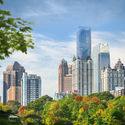
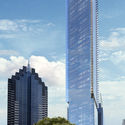
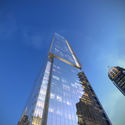
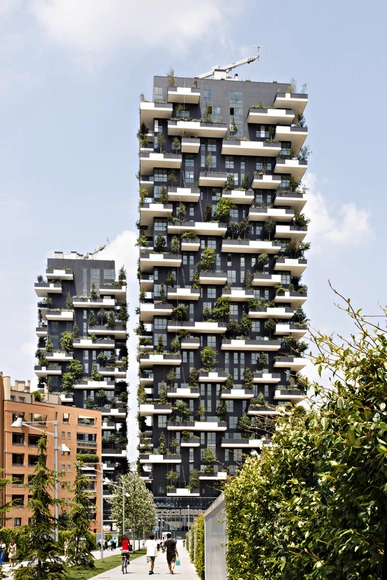
SkyCity is pleased to invite architects, designers, artists, engineers, scientists, conservationists, ambient warriors, tribesmen, digital nomads, craftsmen or basically anyone with great ideas from around the globe to take part in SkyCity Challenge 17. Our climate is changing, squalor, nationalism, and inequality are rising, people are constantly moving into cities and the demand for a better and more sustainable living in urban areas continues to grow. The current ways are very limited and outdated and with the modern technology available we are able to create far better and more sophisticated spaces that could affect the very way of our living in the future …
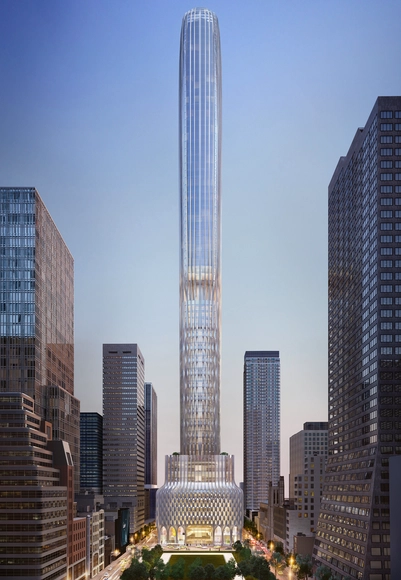
A 1,400-foot-tall mixed-use skyscraper by Zaha Hadid Architects may be the next supertall structure to hit midtown Manhattan. Located at 666 Fifth Avenue between 52nd and 53rd Street, the project is the brainchild of Kushner Properties, who currently co-own the existing 483-foot-tall building with Vornado Realty Trust.
Estimated to cost up to $12 billion, the company is currently negotiating a multi-billion dollar deal with Chinese holding company Anbang Insurance Group to finance the project. If plans to buy out the building go through, Kushner would be in the clear to begin construction on the ZHA-designed tower, which would rebrand the property as 660 Fifth Avenue and offer 464,000-square-feet of residential space, an 11-story hotel, and a 9-story retail podium.
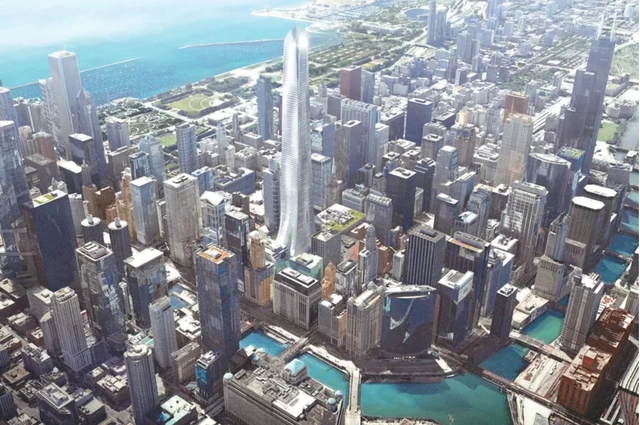
Chicago may be about to receive a new supertall skyscraper in the heart of the Loop – but it would require the demolition of one of the city’s most polarizing buildings, the James R. Thompson Center, designed by Chicago architect Helmut Jahn.
Owned by the state, the postmodernist Thompson Center and its colorful glass atrium have been the subject of both criticism and adoration since its opening in 1985. But wear on the building throughout the years has led to an estimated maintenance bill of $326 million, prompting the state government to find ways to rid itself of the potentially crippling costs.
Guangzhou CTF Finance Centre. Image Courtesy of K11 New World Development
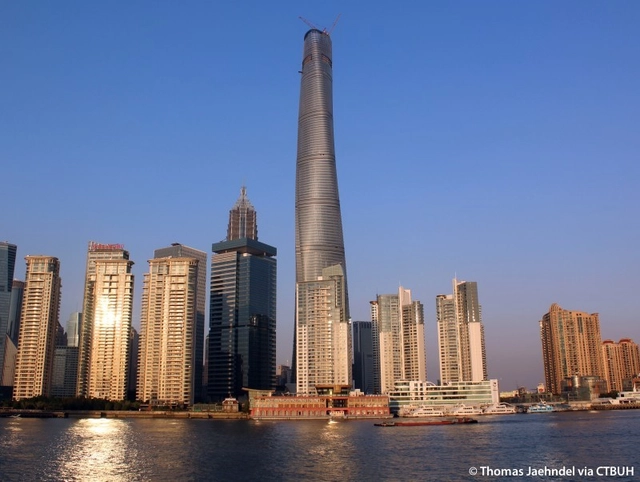
In its annual report, the 2016 Tall Building Year in Review, the Council on Tall Buildings and Urban Habitat (CTBUH) has announced that 2016 saw the completion of a record 128 buildings 200 meters or higher. This number surpasses the previous record of 114 completions set in 2015. Eighteen of these buildings became the tallest in their city, country, or region, and ten earned the designation of supertall, at 300 meters and above.
Many have walked by and wondered what purpose this vast, windowless skyscraper in the heart of Manhattan serves. 33 Thomas Street, also known as the "Long Lines Building" (LLB), is an impenetrable monolithic fortress amid canyons of glass and steel. Ostensibly an AT&T telecoms building, the New York Timeshave recently reported (based on investigative work by The Intercept) that this "blank face[d] monument to privacy" may in fact be a NSA (National Security Agency) listening post, hidden in plain sight.
https://www.archdaily.com/799980/monument-to-privacy-is-this-manhattan-skyscraper-a-nsa-listening-postAD Editorial Team
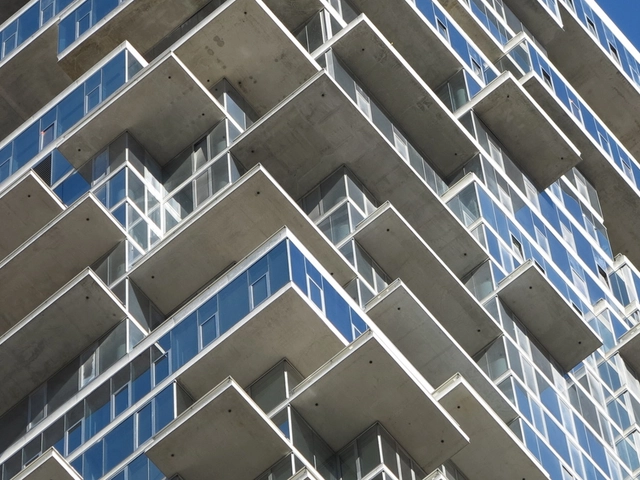
Photographer Paul Clemence of ARCHI-PHOTO has shared images of 56 Leonard Street by Herzog & de Meuron. Nearing completion, the 60-story residential tower will be the tallest structure in Tribeca when it opens later this year. The concept of 56 Leonard Street is to disrupt the monotony of typical high-rise city buildings with a more varied articulation achieved by stacking recognizable individual houses. Shifted floor slabs create differentiated corners, cantilever, and balcony conditions that provide apartments with their own unique characters. Developed from the inside out, the pixelated rooms are arranged such that the base of the tower reacts to the street conditions and ripples upward to merge with the sky.
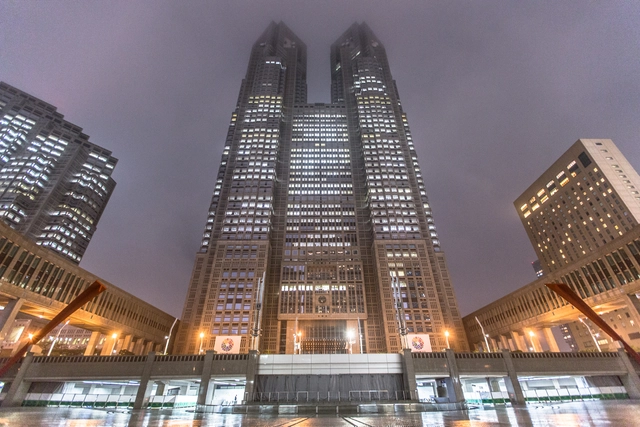
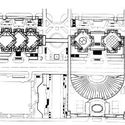
The career of Japanese architect Kenzō Tange features a curious anomaly: he received the same commission twice. In 1952, during the early stages of his career, Tange designed an administrative building in Yūrakuchō, Tokyo, for the city's metropolitan government. Over thirty years later, when the government relocated to Shinjuku, Tokyo, he again won the commission to design its administrative building. Completed in 1991, this would be one of his last, and most ambitious, projects. The second incarnation now dominates the city’s skyline, its highly distinctive design guaranteeing it landmark status. Nicknamed Tochō (an abbreviation of its Japanese name Tōkyō-to Chōsha), its architectural references to both tradition and modernity act as a visual metaphor for the eclectic city over which its inhabitants govern.
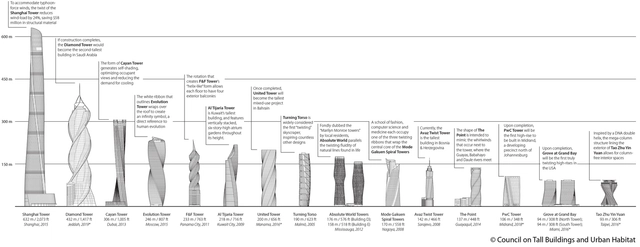
The past ten years have seen a new twist in tall building design: buildings that rotate as they rise, either for engineering or purely aesthetic purposes. Inspired by this recent trend, the Council on Tall Buildings and Urban Habitat (CTBUH) has produced a new graphic entitled Tall Buildings in Numbers “Twisting Tall Buildings” to analyze the “recent proliferation of twisting towers creating a new generation of iconic buildings throughout the world.”
The infographic compares the buildings by height, along with the tightness and total degrees of their rotation. Continue after the break for the full graphic and links to the projects on ArchDaily.
eVolo Magazine is pleased to invite architects, students, engineers, designers, and artists from around the globe to take part in the 2017 Skyscraper Competition. Established in 2006, the annual Skyscraper Competition is one of the world’s most prestigious awards for high-rise architecture. It recognizes outstanding ideas that redefine skyscraper design through the implementation of novel technologies, materials, programs, aesthetics, and spatial organizations along with studies on globalization, flexibility, adaptability, and the digital revolution. It is a forum that examines the relationship between the skyscraper and the natural world, the skyscraper and the community, and the skyscraper and the city.
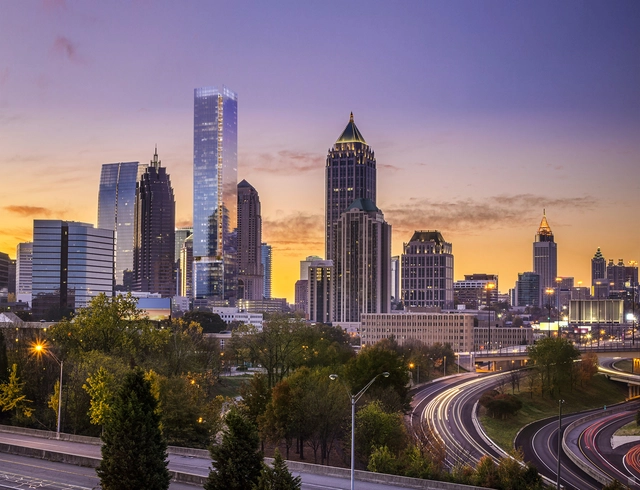
Perkins+Will has released plans for 98 Fourteenth Street, a 920 foot (280 meter) tall residential and commercial tower that, when complete, will become Atlanta’s second tallest building behind Pritzker Prize winning architect Kevin Roche’s Bank of America Plaza. The new tower is an integral piece of a planned development called the Midtown Art Walk, a half-mile pedestrian landscape featuring innovative architecture and interactive art elements between 2 transit stations in the district. The 74-story building will contain 382 luxury residential units and 180 corporate suites, as well as retail space on the ground level.
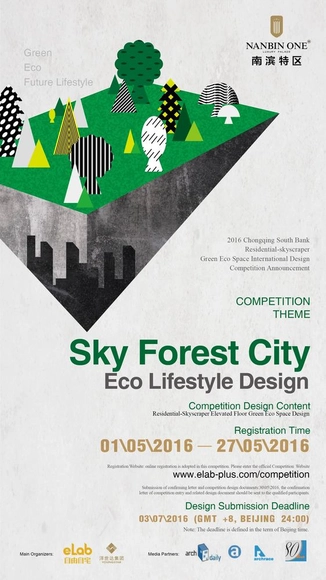
Competition Theme: Green – Eco - Future Building Systems and Lifestyle
The design intent is to create a system/network of eco-green elevated sky gardens within a soon to be realised super high-rise residential complex, with the aim of drastically improving the living environment and lifestyle of urban dwellers. This competition seeks young architects worldwide to provide innovative ideas to break the existing typology of the super high-rise and isolated lifestyles associated with high density urban living.
View of the southwest façade. Image Courtesy of Grupo Allard
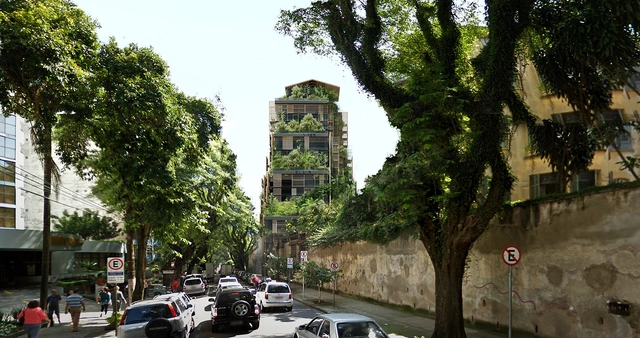
Jean Nouvel has unveiled the design of his latest project: a 22-story tower located near Avenida Paulista in São Paulo. The skyscraper, dubbed Rosewood Tower, is part of Cidade Matarazzo, a 27,000-square-meter site containing historic buildings that once made up the Filomena Matarazzo maternity hospital. A heritage-listed site, the Allard Group is restoring the buildings and creating a cultural center, of which Nouvel’s new tower will be a central component.
Set to contain a hotel as well as residential units, Nouvel’s tower is designed to be a vertical continuation of the local landscape. Thus, the nearly 100-meter-tall tower develops at different levels, forming terraces and large gardens with small and medium-sized trees.
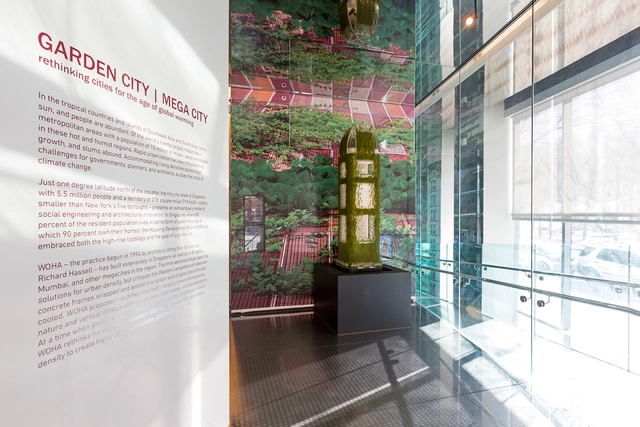
From commercial mixed-use to hospitality and social housing, Singapore-based WOHA reinterprets the skyscraper as a prototype for hyper-dense, green urban living. Their first major exhibition in the United States, GARDEN CITY MEGA CITY, opened on March 23rd, 2016 at The Skyscraper Museum, and unveiled twelve of their most recent vertical ecosystems.
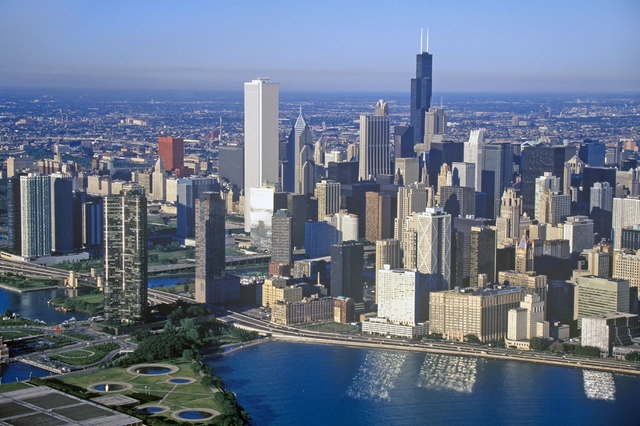
Chicago is one of the most architecturally rich cities in the world with the history of modernism embedded in its skyline. From the Willis Tower to the Aqua Tower, the skyscrapers of Chicago have led the development of tall buildings, the city becoming a breeding ground for innovations in structure and design. The Windy City has solidified itself among other metropolitan giants like New York and London as having one of the most recognizable skylines in the world.
This new infographic by Chicago Line Cruises offers a look at some of the most visible figures in Chicago’s skyline, with embedded information on each of the buildings. View the infographic after the break.
Mumbai, or erstwhile Bombay is the largest metropolis of India and an answer to the likes of Shanghai, London or New York. It is the financial capital and trade epicentre of the country, a city of lifestyles and narratives. The 'Maximum City' of Bombay is renowned all over the globe for the enormity and surrealism of BOLLYWOOD, which is the nickname given to the Hindi language Film Industry located in the city. The industry has come a long way and bloomed since its inception, to a multi-billion dollar industry, only second in capacity to its American cousin, Hollywood. Bollywood is a goliath in terms of revenue generation and employment, both direct and indirect, supporting a multitude of auxiliary industries like tourism, music, design and fashion. Bollywood's film production centre is a government-owned studio facility known as 'Film City' in the northern suburbs of Mumbai. It is an integrated film studio complex with several recording rooms, gardens, lakes, theatres and grounds that serve as the venue of many Bollywood film shootings. The aim of this competition is to design a 'Film City Tower' in Bombay and explore the possibility of a new vertical typology for a film city. The project resolves to put Bombay and Bollywood on the global map through a futuristic and contemporary landmark for the city. The participants are tasked with proposing a new holistic and integrated vision to inject a new sense of purpose in a Film City. The competition encourages participants to conceive and imagine additional innovative programming and integrate the functions of a film city with other auxiliary functions to increase the commercial, social and ethical viability of such facilities. The setting up of film cities require an enormous footprint on land, which is a scarce and vital resource in the case of Bombay. The proposal for the land intensive function of a film city is to be compacted and transformed into a vertical tower that would generate an exemplary urban form. The functions of a film city need to be optimised into vertical units through nesting, layering, stacking or overlapping onto one another in a legible fashion. The proposal should strive to create an iconic landmark representing Bollywood and its significant contribution to the cultural landscape of the subcontinent for over a hundred years. It should be styled according to the suitability of this enormous industry and transform the skyline of Bombay. The design for the tower should explore the insertion of alternative energy methods, responsive and adaptive design techniques and self regulatory systems to strike an equilibrium between the input-output energy cycle. The proposal should insert a variety of public functions in the tower that would greet the public with a panorama view of the city. The proposal should innovate and distribute the aspect of social and community spaces equally in a tower, which in most of the cases, is absent as the building rises up. The participants are asked to design a new island for the Film City tower in the 'Mahim Bay', across the Bandra-Worli Sea Link, in Mumbai. The site island is located at a distance of approximately 100 metres off the BWSL promenade in the Mahim Bay waters, adjoining the Western Express highway. It is bounded by the Bandra Reclamation area to its north and west, Mahim and Worli to the far east and south respectively.
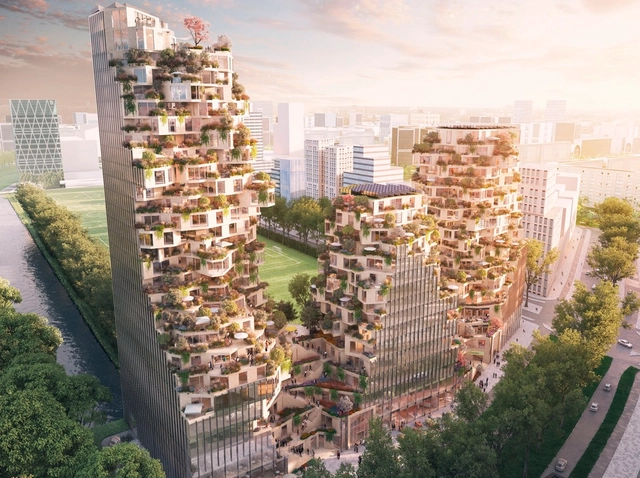
The City of Amsterdam has selected MVRDV and OVG Real Estate to realize a new mixed use development in its Zuidas Business District - "P15 Ravel Plaza." Chosen through an international competition, the design calls for three asymmetrical towers grounded by office and retail, topped with housing and intertwined by an expansive public green space that wraps itself in and around the building.
"This plan effectively increases the attractiveness of Zuidas," said Klaas de Boer, director of Zuidas, Amsterdam City Council.





K11-_New_World_Development.jpg?1484227242&format=webp&width=640&height=580)
K11-_New_World_Development.jpg?1484227242 "Guangzhou CTF Finance Centre. Image Courtesy of K11 New World Development")
Ningbo_Eastern_New_City_Development_Investment_Co._Ltd..jpg?1484227144 "Ningbo Bank of China. Image Courtesy of Ningbo Eastern New City Development")
UNK_Ghelamco.jpg?1484227122 "Warsaw Spire. Image Courtesy of UNK Ghelamco")
Cheng_Chen.jpg?1484227185 "Shenzhen CFC Changfu. Image © Cheng Chen")
K11-_New_World_Development.jpg?1484227242)