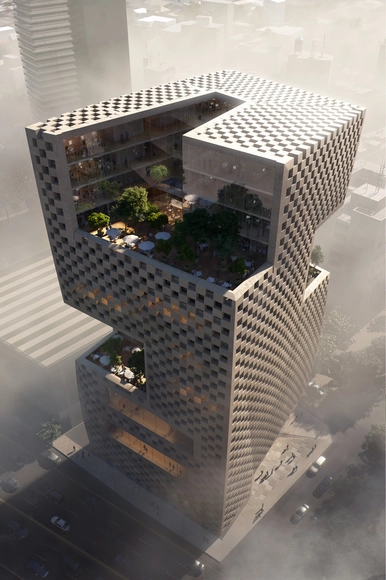
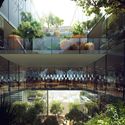
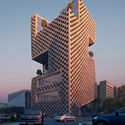
Snøhetta has won a competition to design the new headquarters for Banque Libano Francaise (BLF) in Beirut, Lebanon. The building will feature a geometric facade and several large outdoor terraces carved from the built volume to create a vibrant workplace community. The project marks Snøhetta’s first ever commission in Lebanon.
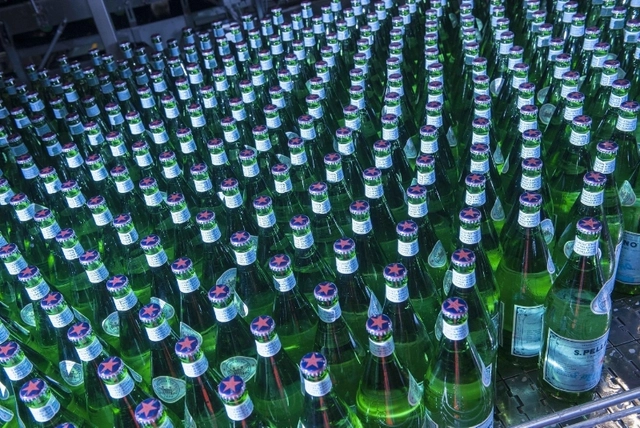
Sparkling Natural Mineral Water company San Pellegrino has announced an international competition between 4 top architecture firms for the redesign of its flagship factory and bottling plant, located at the source of the mineral water, San Pellegrino Terme, Italy.
“This exciting endeavor aims to celebrate the heritage, special source and terroir of S.Pellegrino, while also promoting new standards of efficiency, environmental sustainability and compliance. Further, this project will support the revitalization of the historic region, harkening back to the golden age of San Pellegrino Terme, at the height of the Belle Époque, when the town served as an exclusive destination for European aristocracy,” a spokesperson for San Pellegrino said in a press release.
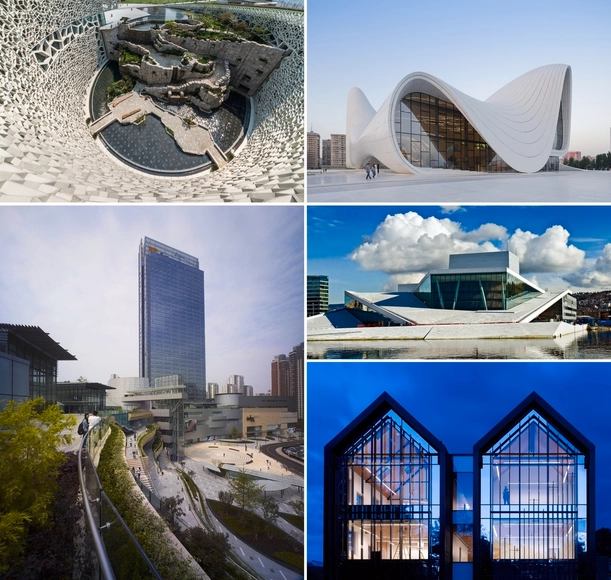
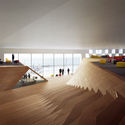
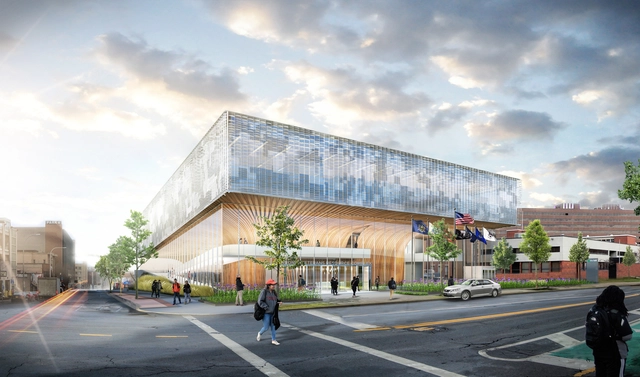
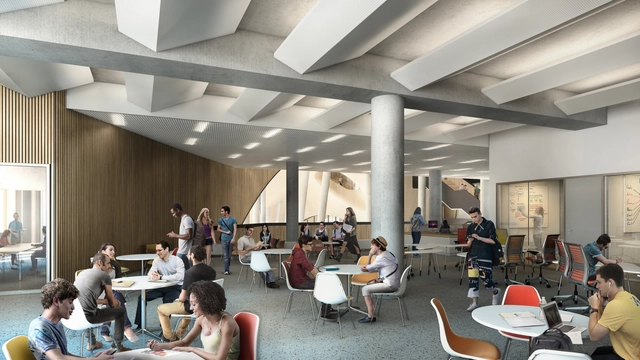
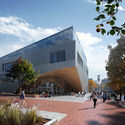
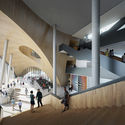
Temple University’s new library designed by Snøhetta, in collaboration with Stantec, is now under construction after a groundbreaking ceremony in April. The 21,000 square meter (225,000 square foot) building is adjacent to what will become a future campus quadrangle that is currently occupied by other buildings slated for demolition. The library sits at the intersection of two major pedestrian pathways, Polett Walk and Liacouras Walk, attesting to the University’s hope that the facility will be a new social and academic heart for 37,800 students.
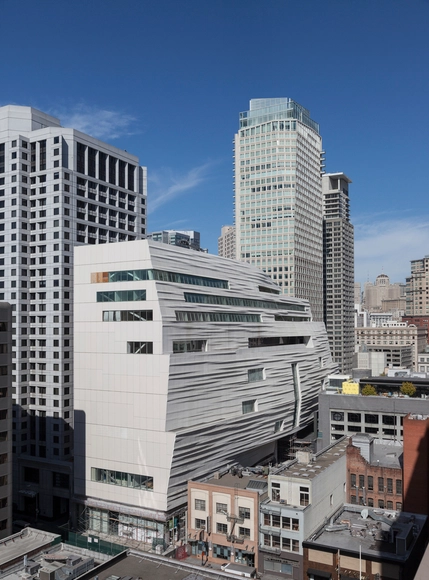
The story of the new Museum of Modern Art in San Francisco combines a number of compelling storylines: the expansion of a major museum to become the biggest space dedicated to modern art in the country; a new headline project for the much-lauded architectural firm Snøhetta; and the alteration (or lobotomization, depending on who you ask) of a modern classic in Mario Botta's original 1995 building. As such, it's been a big talking point recently, as the museum plans to reopen this Sunday.
However, while the media has talked a lot about galleries, external appearances and staircases, much less has been said of the project's innovative combined lighting and HVAC system, efficient six-layer windows and unprecedented use of fiber-reinforced-plastic on a building so tall. Enter WIRED, whose impressive article on the building takes us on a guided tour of the more technical aspects of the project, using a 3D model as a guide. Read their article in full here.
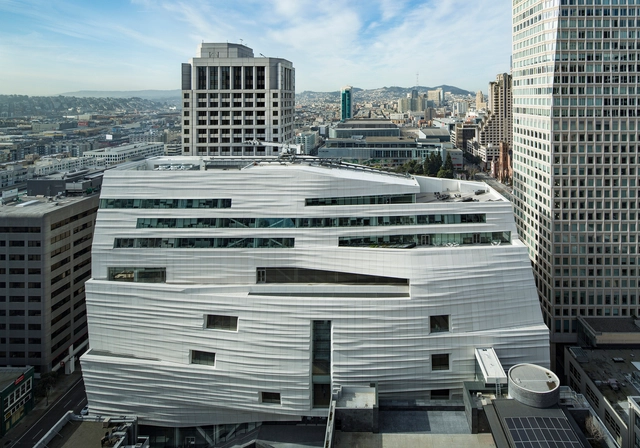
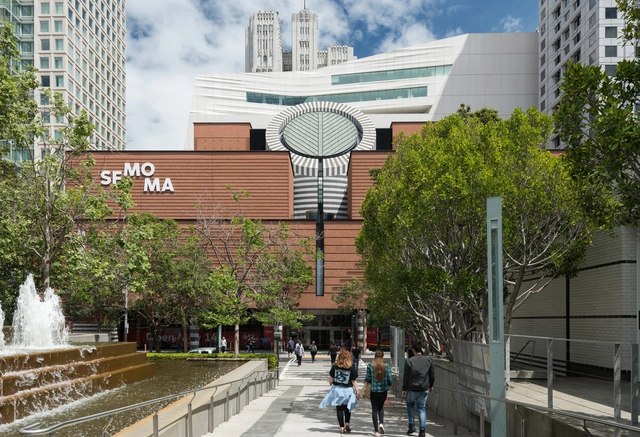
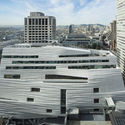
Shoehorned into the narrow space behind Mario Botta’s 1995 building, the Snøhetta-designed new wing of the SFMOMA was forced to go where few museums have gone before: up. Rising 10 stories into the San Francisco skyline, the new building nearly triples the amount of existing gallery space and adds a new entrance into what is now one of the world’s largest buildings dedicated to modern art. As the museum is set to reopen to the public May 14th, the critics' takes are rolling in. Did the restrictive site inspire a unique design solution or limit the creative possibilities of the project? Read on to find out.
The After Belonging Agency, the curatorial team behind the 2016 Oslo Architecture Triennale (OAT), have revealed sixteen speakers who will present at the event's central conference at the Oslo Opera House this coming September. Atelier Bow-Wow, Snøhetta alongside a number of other academics, practitioners and decision-makers will come together to "address architecture’s relation to current pressing questions such as refugeeism, migration and homelessness, new mediated forms of domesticity and foreignness, environmental displacements, tourism, and the technologies and economies of sharing."
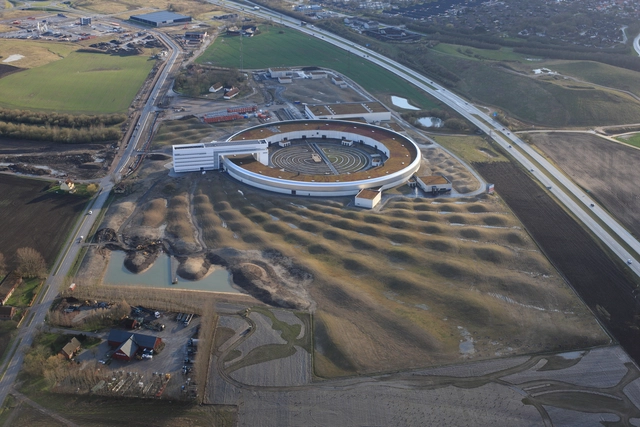
Snøhetta’s MAX IV Laboratory Landscape Design will open in June on the edge of Lund, Sweden. Selected for the project in 2011, Snøhetta’s design fills 47-acres (19 hectares) of formerly agricultural lands northeast of the city, and is the first project in a larger masterplan to transform the Brunnshög area into a “Science City.” The MAX IV national laboratory is a synchrotron facility with two electron storage rings, and is jointly operated by the Swedish Research Council and Lund University.
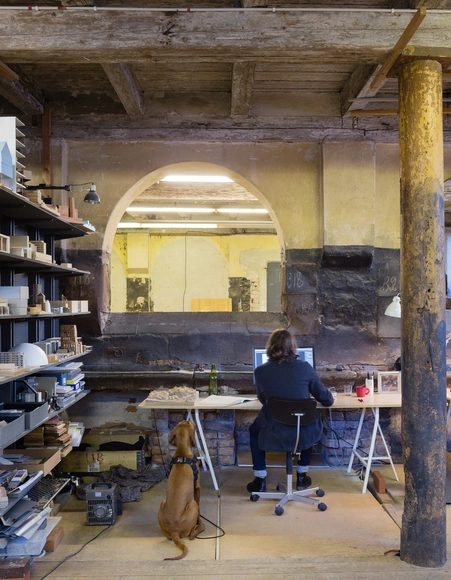
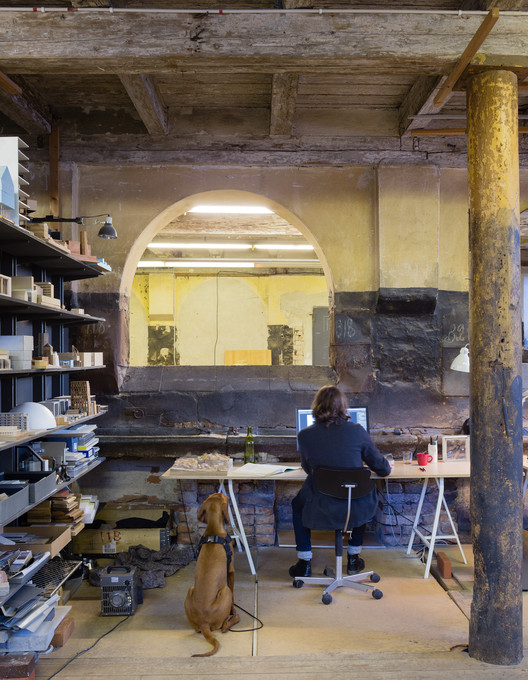
Architectural photographer Marc Goodwinhas recently completed "the ultra-marathon of photoshoots:" twenty-eight architectural offices in twenty-eight days, spread across four capital cities – Oslo, Stockholm, Copenhagen, and Helsinki. His aim was to understand what sort of spaces architects in the Nordic countries operate in, and how they differ between each respective country. From former boathouses to stables and coal deposits, Goodwin has captured some of the most unique working environments the profession has to offer.
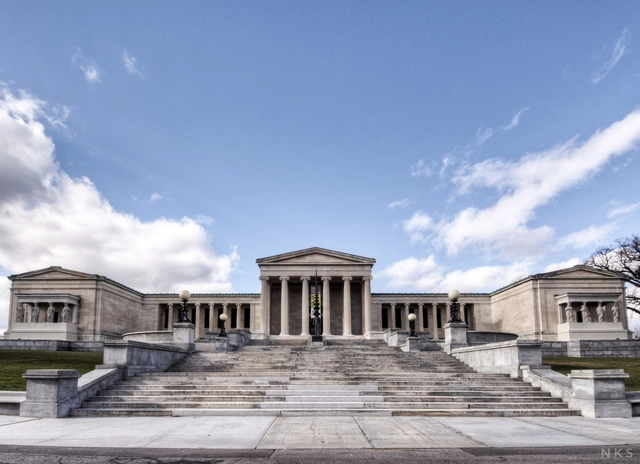
Five major firms have been shortlisted for the Albright-Knox Art Gallery's $80 million expansion in Buffalo, New York. Chosen for their "design intellect" and ability to collaborate, the competing firms will envision ways to expand the gallery's exhibition space and create a new public urban area that maximizes the site's potential, as the Albright-Knox campus is located on the edge of Delaware Park - one of Frederick Law Olmsted’s major works.
“The selection of the architects reflects that malleability, because none of them has a fingerprint style,” Albright-Knox director Janne Sirén said. “All of them, almost, specialize in an ability to build for a given context.”
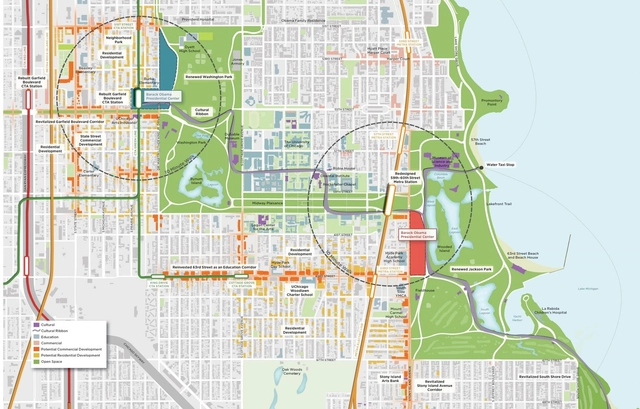
“The three finalist firms and their teams are outstanding,” says Thorne. “I have no doubt they will propose ideas that go beyond traditional academic buildings and make the NVRC a pioneering facility that will contribute to the University, as well as the broader community.”
“These finalists offer a variety of backgrounds and styles, and any one of them would be an excellent choice,” Obama Foundation chairman Martin Nesbitt, according to CBS Chicago. “We are excited to see this process moving forward because the Obama Presidential Center will be so much more than a library – this facility will seek to inspire citizens across the globe to better their communities, their countries, and their world.”
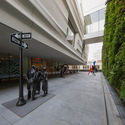
Snøhetta's 10-story expansion of the San Francisco Museum of Modern Art (SFMOMA) is nearing completion. As announced by SFMOMA, the "transformed" museum will reopen to the public on Saturday, May 14, 2016. Its new 235,000-square-foot addition (that nearly tripled SFMOMA's gallery space) was designed by Snøhetta to "weave" into the city and connect "seamlessly" to the museum's existing 225,000-square-foot building designed by Mario Botta.
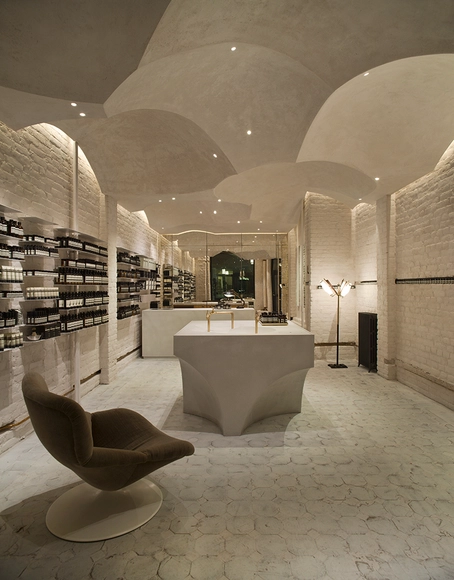
To pay "tribute to the creative processes, materials and features" that characterize each of its store designs, Aesop has a launched a new website called Taxonomy of Design. Inspired by the compendium, we’ve rounded up some of the best Aesop store designs, each of which is distinctly developed, largely by local designers who are inspired by the location of the store. Read on for nine Aesop shops that revitalize architectural simplicity.
Often, all that is needed for that big break in your career is getting experience at the right firm. But getting your foot in the door is daunting, especially if your ideal firm is one where thousands of other architects are applying constantly, regardless of whether a vacancy has been advertised. In this article originally posted on The Architect's Guide, Brandon Hubbard reaches out to some of the world's top architecture firms (Zaha Hadid Architects, Snøhetta, Perkins+Will, BDP and Callison) to find out how you can maximize your chances in the application process.
I recently reached out to several of the world’s top architecture firms and asked them a series of questions on what they look for in potential architecture job applicants.
After my discussions with these firms I discovered a common theme in how they acquire many new hires. As I covered in a previous article, Want a Great Architecture Job? Don't Send a Resume, many new employees are found through personal references and word of mouth. Developing these relationships within the architecture community is essential for a successful career.
The questions are structured to cover the various steps of the architecture job application process, from the first point of contact to the interview.
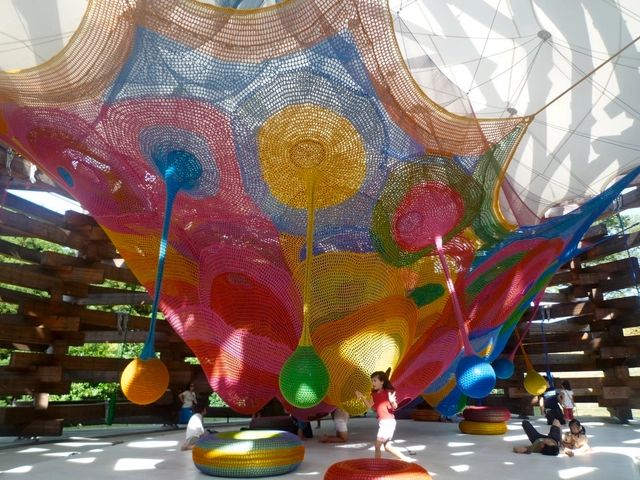
Former US President Theodore Roosevelt once said that play is a fundamental need — so much so that playgrounds should be provided for every child, just as schools are.
In countries around the world, architects are becoming increasingly innovative to create environments where children can explore their imaginations.
Today, playgrounds can float entirely on the ocean, or take the shape of an enormous, colorful crocodile.
Keep scrolling to see some of the best playground designs around the world that will make you want to be a kid again.









_on_view_in_the_Evelyn_and_Walter_Haas__Jr._Atrium_at_the_new_SFMOMA__photo_%C2%A9_Iwan_Baan__courtesy_SFMOMA.jpg?1462453791 "© Iwan Baan")