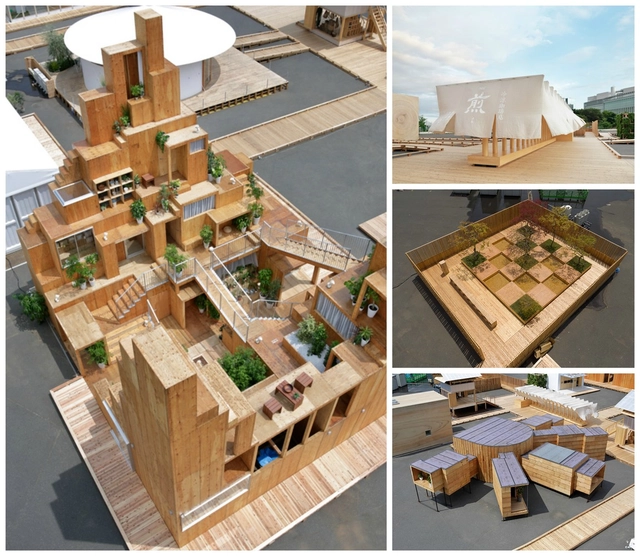
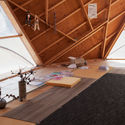
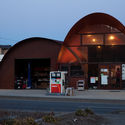
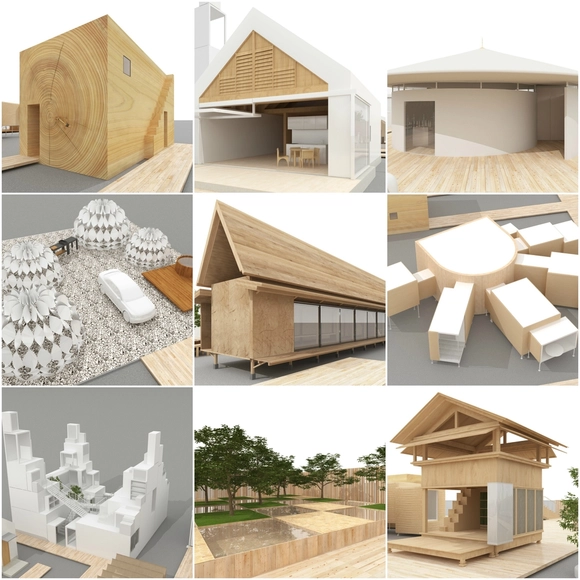
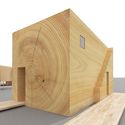
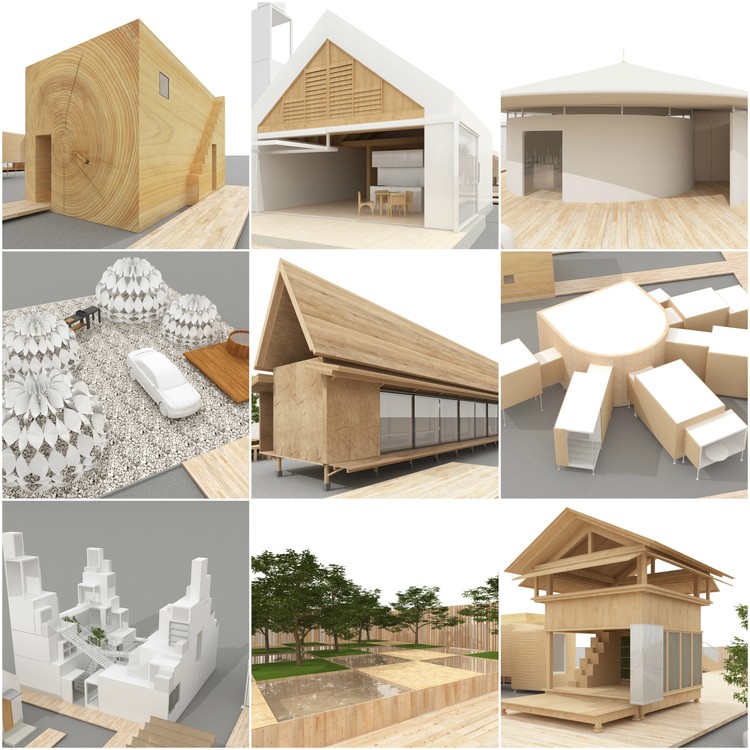
New images from HOUSE VISION Tokyo 2016 have been released as the event opened to the public this past weekend. This year’s theme, “Co-Dividual: Split and Connect / Separate and Come Together,” explores how architecture can create new connections between individuals, and the ways Japanese housing can adapt to cultural shifts through the implementation of technology.
This year’s exhibition features house designs by top Japanese architects including Sou Fujimoto, Kengo Kuma, Shigeru Ban and Atelier Bow-Wow, each paired with a leading company to envision and implement new strategies in housing design.
Continue after the break to see images from the event and the pavilions.
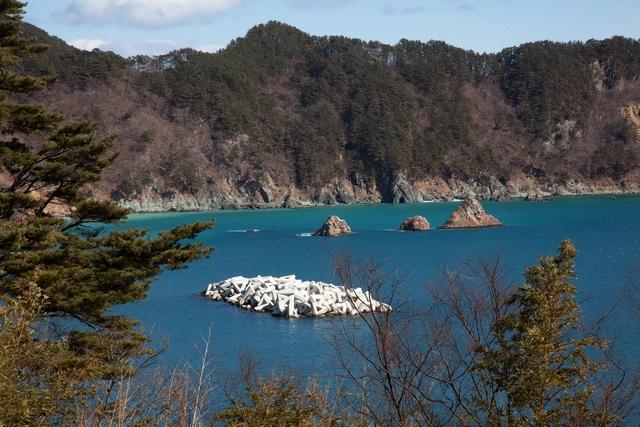
In this article, written by Christian Dimmer and illustrated with photographs by Max Creasy, the post-earthquake and tsunami coastal architectural landscape of the Japanese Prefectures of Aomori, Iwate and Miyagi are presented and studied.
Few disasters were as complex and their implications as hard to grasp as the compound calamity of earthquake, tsunami, nuclear meltdown that hit the North-East of Japan on March 11, 2011. While over 500 kilometers of coastline were devastated, the disaster unfolded in each of the hundreds of towns affected differently depending on local topographies, urban morphologies, existing landscape formations, collective memory of past disasters and preparedness, and the social ties within the communities.
Following the success of the inaugural HOUSE VISION Tokyo in 2013, the exhibition is set to return again this summer under the theme of “Co-Dividual: Split and Connect / Separate and Come Together.” Once again curated by Kenya Hara, designer and creative director for minimalist housewares retailer Muji, the month-long event will tackle the objective of “thinking about how to create new connections between individuals,” as well as build upon the topics explored by its previous edition, namely the ways in which Japanese housing can adapt to recent demographic, technological and cultural shifts, and the vision of the house as the intersection between industries.
This year’s exhibition will feature house designs by top Japanese architects such as Sou Fujimoto, Kengo Kuma, Shigeru Ban and Atelier Bow-Wow, each paired with a leading company to envision and implement new strategies in housing design. The houses will be constructed at full-scale, allowing event-goers to fully experience and reflect upon each design.
With the 2016 Salone del Mobile now behind us, Romanian photographer Laurian Ghinitoiu has shared his photos from Milan Design Week, along with his ranking of the top five architectural installations. Read on to see his exceptional collection of images accompanied by short descriptions of each project.
"In this installation for COS, I envisage to make a forest of light," said Fujimoto. "A forest which consists of countless light cones made from spotlights above. These lights pulsate and constantly undergo transience of state and flow. People meander through this forest, as if lured by the charm of the light. Light and people interact with one another, its existence defining the transition of the other."
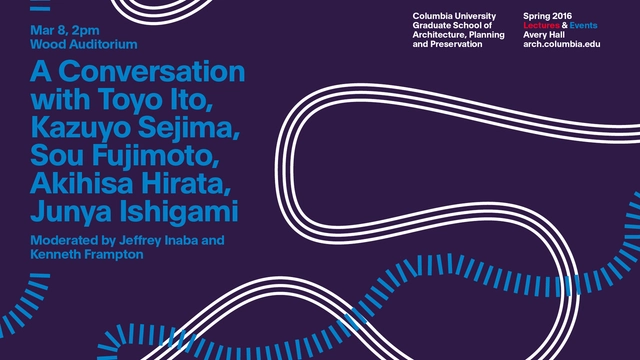
Columbia University Graduate School of Architecture, Planning and Preservation (GSAPP) hosts a conversation among five of the most influential contemporary Japanese architects: Toyo Ito, Kazuyo Sejima, Sou Fujimoto, Akihisa Hirata and Junya Ishigami. Moderated by Columbia GSAPP professors Jeffrey Inaba and Kenneth Frampton, the conversation aims to explore the relationships and creative exchanges among this prominent group of architects and designers.
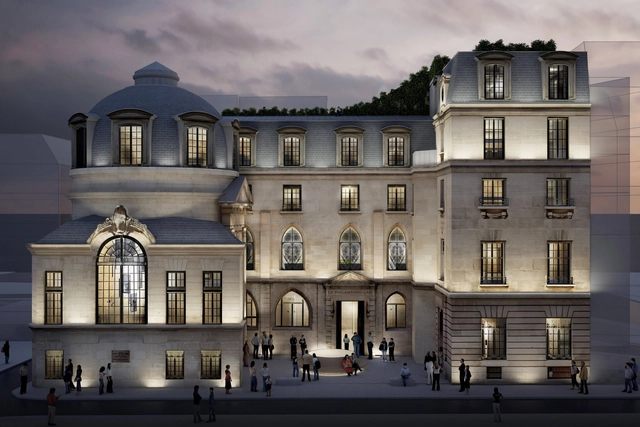
Hotel particulier (5e) by Perrot & Richard Architects. Image Courtesy of réinventer.paris
Réinventer.paris has announced the 23 winners chosen to develop architectural projects in Paris, including designs by Sou Fujimoto, David Chipperfield, and DGT Architects. Réinventer.paris is an urban initiative launched to give designers the power to rethink and reshape the way that Parisians live, work, and play. Located on various sites chosen by Mayor Anne Hidalgo, each project successfully creates a sense of liveliness and embodies what the future of Paris might be. The call for submissions was answered with ideas about innovation, cutting edge-solutions to environmental problems, and intelligent design.
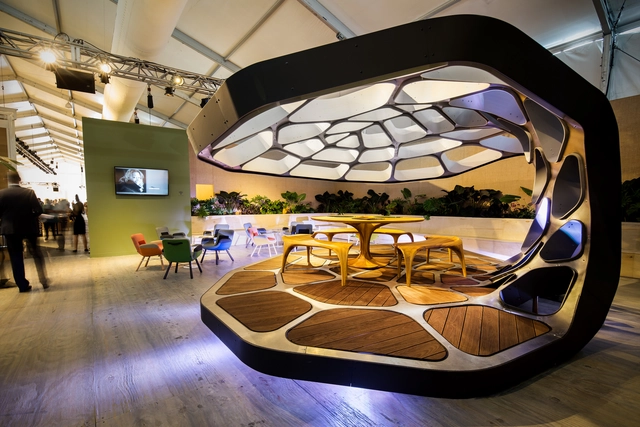
With recent advancements in building technology, Revolution Pre-Crafted hopes to democratize the design of pre-fab structures, offering a line of products that incorporate the distinct spatial and social brands of the designers. See a selection of the Revolution Precraft line after the break.
Sou Fujimoto Architects' "Architecture is Everywhere" was among the ArchDaily editors' favorite exhibitions in the Chicago Architecture Biennial. The thought-provoking, entertaining collection of mundane objects truly embraced the idea that the public—not solely architects—should be included in the Biennial's celebration of architecture.
Before the fruits of architectural labor are realized, we rarely revel in the seeds cultivated in the minds of architects. It's hard to capture these formative ideas, much less present them in a way that seizes the satisfying moment in which architecture is "found."
The deceiving simplicity of displaying "found architecture" actually imparts a deeper, thoughtful lesson, which Fujimoto has inscribed on an accompanying placard "Architecture could come into being from anywhere. I believe fostering that architecture-to-be into real architecture itself is also architecture."
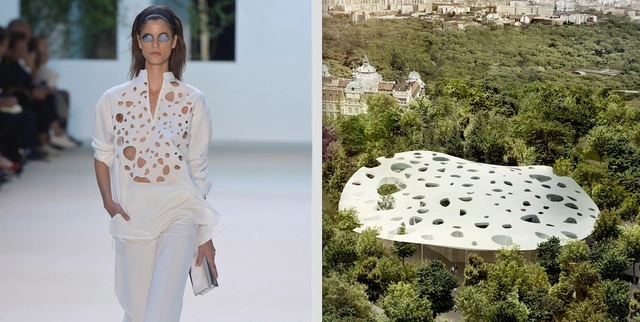
At this year’s Paris Fashion Week, Switzerland-based fashion house Akris showed its 2016 Spring/Summer Collection -- an assembly of garments based on the work of Japanesearchitect Sou Fujimoto.
Akris’ creative director, Albert Kriemler, was introduced to Fujimoto by photographer Iwan Baan while working on the Université Paris-Saclay. From a stance of admiration, Kriemler was thus influenced by Fujimoto’s work: "We share a vision to create an effortless relation between the body and the environment with utmost simplicity. Sou Fujimoto is an architect who understands that we have more senses than just the eye," said Kriemler.
Panelists: Sou Fujimoto, Japanese architect, renowned for his synthesis of nature and architecture & Walter Hood, landscape architect, specializing in the public realm and urban environment
Moderator: Reed Kroloff, architect and urban designer, former director of Cranbrook Academy of Art
Last month, as part of their Park Nights event series, COS assembled Spanish architects José Selgas and Lucía Cano (SelgasCano) at their new pavilion for the Serpentine Gallery in London's Hyde Park to discuss the concepts behind their design and the history of the Pavilion Commission with Serpentine directors Julia Peyton-Jones and Hans Ulrich Obrist. They were joined by Chilean architect Smiljan Radić, designer of the 2014 pavilion, and Japanese architect Sou Fujimoto, designer of 2013's, in an hour long conversation moderated by Sarah Ichioka.
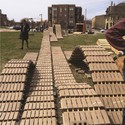
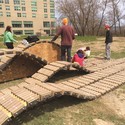
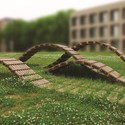
With the award of the $100,000 Marcus Prize to Sou Fujimoto in 2013, graduate students at the University of Wisconsin-Milwaukee’s School of Architecture were offered the rare opportunity to learn from one of Japan's most respected architectural practitioners. Through a semester-long connection to the studio - which he led alongside University of Wisconsin-Milwaukee Associate Professor Mo Zell - Fujimoto and his students have realized a small architectural installation on an unused lot in Milwaukee's East side entitled faBRICK.
In this interview conducted in Tokyo last year, University of Wisconsin-Milwaukee student Robert Guertin speaks with Fujimoto about the ideas and themes of his work. In an attempt to shed light on the influence he had in the design of faBRICK, his answers are presented alongside images of the resulting installation.
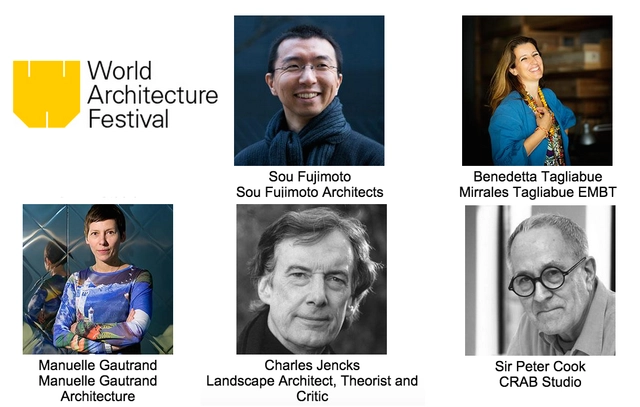
All entries must be submitted by May 22nd to be considered for the WAF awards. Shortlisted projects will compete for category prizes on the first two days of the festival. On the third (and last) day, the category winners will present their projects to the “super-juries,” which will select the World Landscape, Future Project and Completed Building of the Year.
Tokyo-based French architect and filmmaker Vincent Hecht has captured the opening of Sou Fujimoto’s polyhedral Naoshima Pavilion on the Kagawa shoreline in Japan. The inhabitable, seven-meter, white stainless steel structure is part of the 2016 Setouchi Triennale. Watch the video above for a closer look.
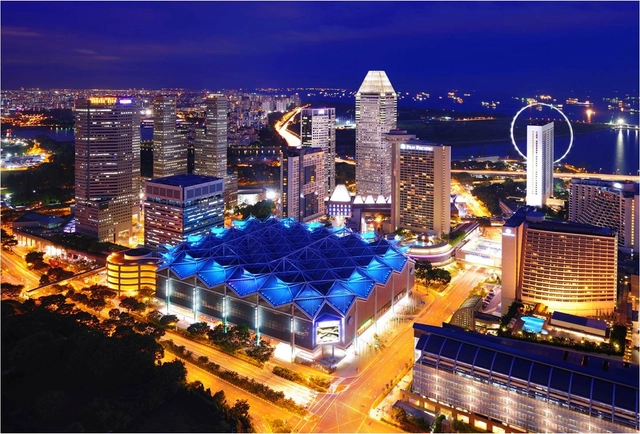
WAF 2015: Suntec Singapore Convention Centre, Singapore
Now in its eighth year, the forthcoming 2015 World Architecture FestivalAwards (WAF) will take place in Suntec in central Singapore following three days of intensive live presentations and judging. Following a $180 million modernisation programme, the redesigned space will host WAF’s soundproofed crit rooms, auditorium and Festival Hall Stage. Entries are now invited from architects and designers for the 2015 edition of what is described as "the biggest architectural awards programme in the world." The awards are expected to attract more than 750 entries, around half of which will be shortlisted into thirty categories. The closing date for entries is the end of May, and shortlisting will take place in early June.
Taichung Mayor Lin Chia-lung has temporarily “pulled the plug” on Sou Fujimoto’s ambitious Taiwan Tower, saying he would rather pay a penalty for breaking the contract than spend an estimated NT$15 billion to realize the “problematic” project.
The Banyan tree-inspired tower was hoped to become the “Taiwanese version of the Eiffel Tower,” as well as a model for sustainable architecture by achieving LEED Gold with its energy producing features. Its steel superstructure, which proposed to hoist a triangular section of the Taichung Gateway Park’s greenbelt 300-meters into the air, intentionally had “no obvious form” and was to be perceived as a natural phenomenon.






.jpg?1461272817&format=webp&width=640&height=580)
.jpg?1460544765&format=webp&width=640&height=580)
.jpg?1460544765 "COS × SOU FUJIMOTO. Image © Laurian Ghinitoiu")
.jpg?1460544778 "COS × SOU FUJIMOTO. Image © Laurian Ghinitoiu")
.jpg?1460544788 "COS × SOU FUJIMOTO. Image © Laurian Ghinitoiu")
.jpg?1460544802 "COS × SOU FUJIMOTO. Image © Laurian Ghinitoiu")
.jpg?1460544765)