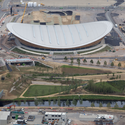
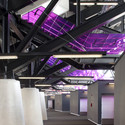
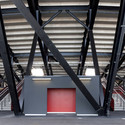
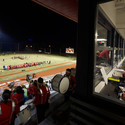
LOOK Architects, in collaboration with Surbana International Consultants, has put forth the winning design proposal for Singapore University of Technology and Design’s (SUTD) new student housing and sports facilities, envisioning a spatial framework that embraces creative liberty and possibilities. Drawing a parallel to traditional Chinese painting (empty space being regarded as a spatial element sharing equal if not greater importance as solid figuration), voids are seen as spaces for imagination to thrive. More images and architects’ description after the break.
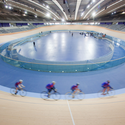
Presented at the bike festival of Gothenburg just about a week ago, the Cycling Center by We Are You + Erik Hallberg aims to promote cycling and bring together different cycling communities in the city. With Gothenburg being a city strongly dominated by cars, more than other large Swedish cities, this project has started to turn this around and make Gothenburg a ‘bike city’ with role models such as Amsterdam and the neighboring and great example Copenhagen. In this work of switching over from cars to bikes, their proposed cycling stadium would act as a catalyst. To become a ‘bike city’, the perception of the bike and the cyclist among city inhabitants is crucial. More images and architects’ description after the break.
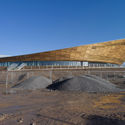
LAVA, the Laboratory for Visionary Architecture, and Designsport collaborated with local Ethiopian firm JDAW to win the international architecture competition for a national stadium and sports village, held by the Federal Sport Commission, Ethiopia. Now, football and athletics-loving Ethiopians will have a new FIFA and Olympic-standard 60,000 seat stadium in Addis Ababa thanks to a design that combines local identity with new technology. More images and architects’ description after the break.
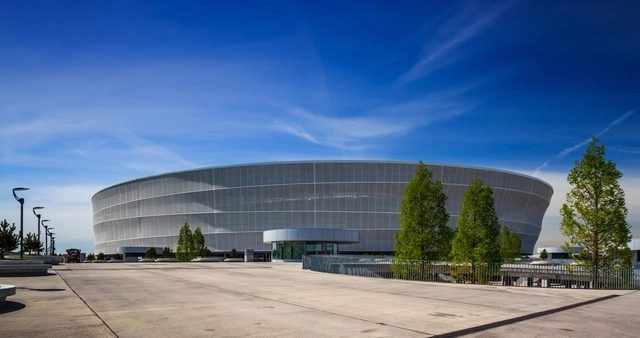
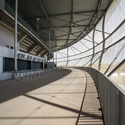
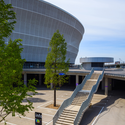
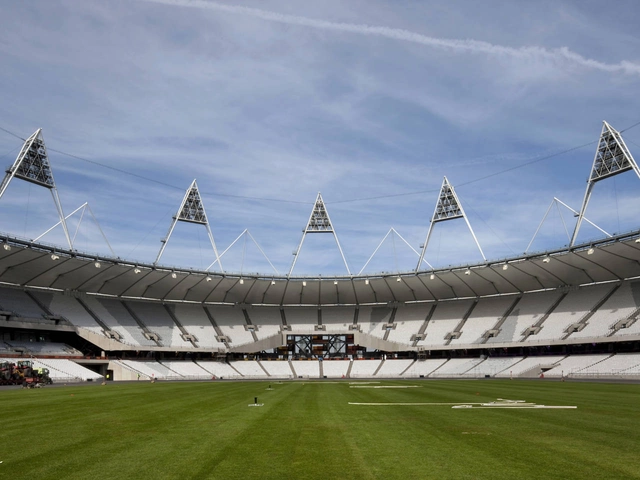
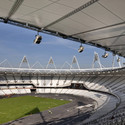
Designed by gmp Architekten, Warsaw’s National Stadium prevailed against international competition and won the World Stadium Award in the best multifunctional stadium design and most innovative use of technology categories in stadium design. On the occasion of the 2012 UEFA European Football Championship, the stadium was reconstructed on top of the existing – but since 1988 no longer used and dilapidated – earth wall stadium (Stadion Dziesieciolecia), and re-opened in January of this year. More images and architects’ description after the break.
















_(Copiar).jpg?1436801757&format=webp&width=640&height=580)
_(Copiar).jpg "© Stéphane Chalmeau")
_(Copiar).jpg "© Stéphane Chalmeau")
_(Copiar).jpg "© Stéphane Chalmeau")
_(Copiar).jpg "© Stéphane Chalmeau")
_(Copiar).jpg)