


-
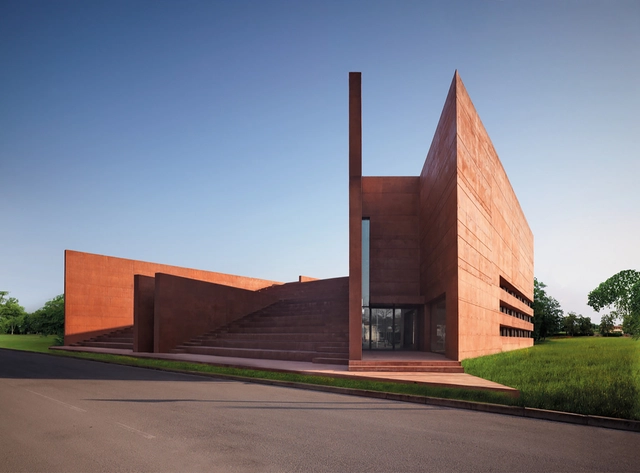
Architects: peter haimerl.architektur
- Area: 560 m²
- Year: 2014
-
Manufacturers: Akustik & Raum
-
Professionals: Thomas Beck, A.K.A. Ingenieure, Müller-BBM GmbH, Planungsbüro Stefan Schmid


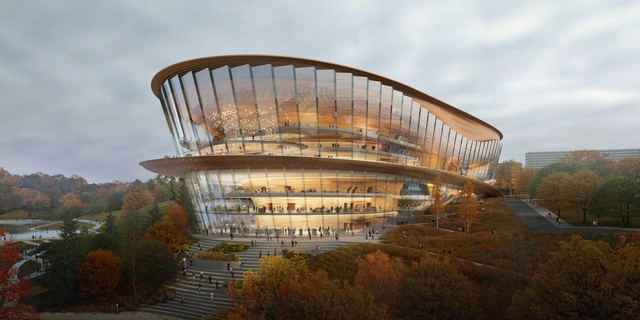
The City Council of Perm, the planning commission, and members of the public gave their approval for a wHY-designed theater at the center of a major cultural revitalization initiative, led by the city’s mayor. The project will be a collaboration between wHY’s New York office and Buildings Workshop, and wHY’s Landscape Workshop, in order to generate a landmark for the emerging arts district.
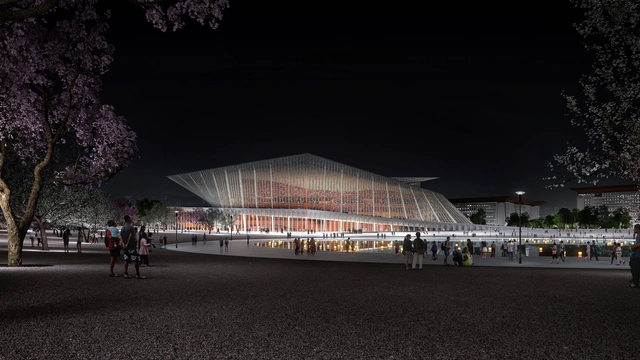
Snøhetta was selected to design the latest landmark of Xingtai, one of China’s oldest cities that is undergoing rapid urban development. The Grand Theater, integrated into the master plan of the central and southern parts of the Hebei province, will become a new cultural monument.
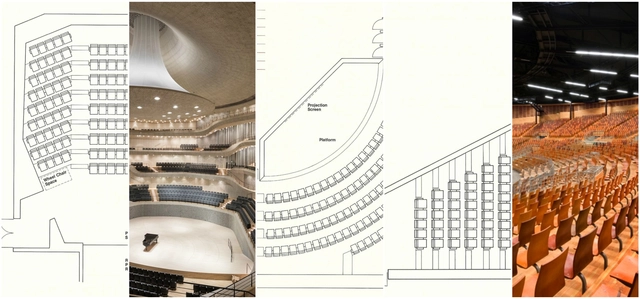
Audience sightlines, accessibility and acoustics all make theater seating a hugely precise art. As part of their set of online resources for architects and designers, the team at Theatre Solutions Inc (TSI) have put together a catalog of 21 examples of theater seating layouts. Each layout is well detailed, with information on the number of seats, the floor seating area and row spacing. These layouts fall under three general forms; to supplement this information, alongside TSI's diagrams we've included the pros and cons of each type, as well as examples of projects which use each format. Read on for more.
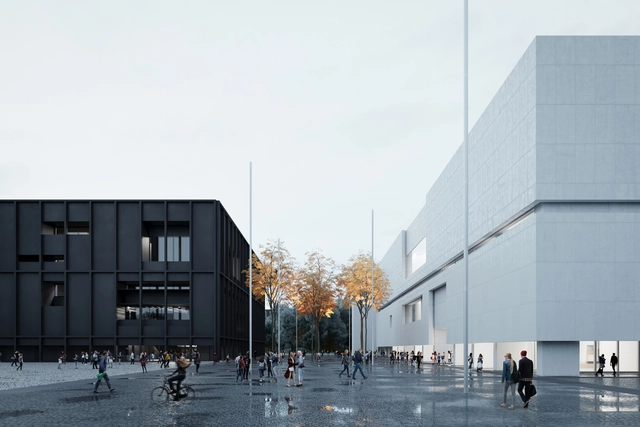
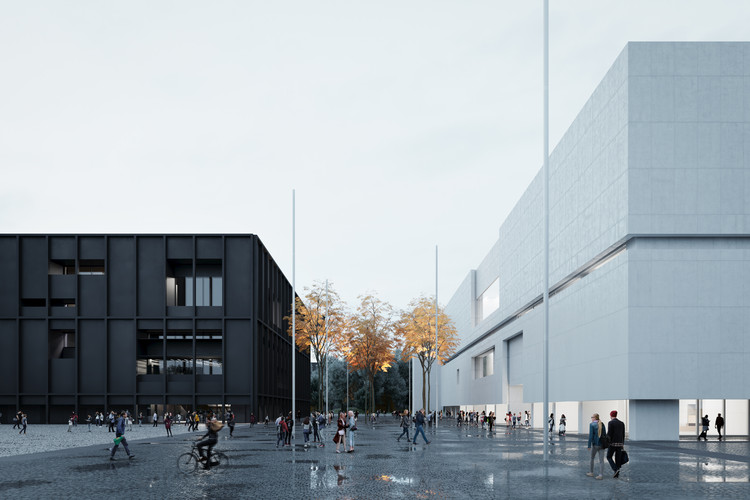
Expected to be completed by 2022, The Museum of Modern Art Warsaw and the TR Warszawa Theatre will put in place a new art hub for Warsaw, Poland. The two new cultural entities will add a modern vibe to the rich heritage of the city. Designed by the New York-based studio Thomas Phifer and Partners, the new center of the arts will occupy a 22-acre site.
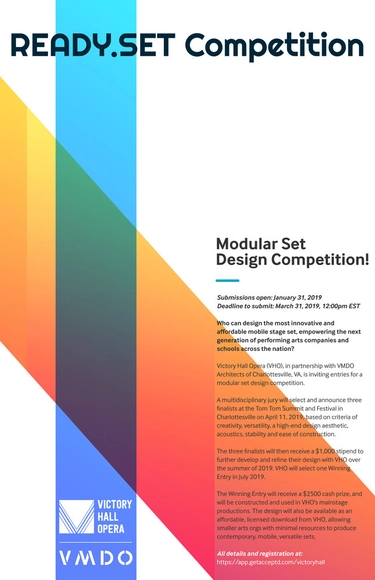
Victory Hall Opera [VHO]—in partnership with VMDO Architects of Charlottesville, Virginia—is inviting entries for a modular set design competition. VHO challenges all assumptions about the presentation and interpretation of opera, and is seeking a set design that will rethink what a set can be.

What do Kanye West and Frank Gehry have in common?
As a first impression, not much. However, they have both engaged on stages with striking design details: the use of exaggerated scale and dimensions to manipulate visual perception, bulky concrete walls and slabs to emphasize heavyweight and grandiosity, visible scaffolding to create an industrial, unfinished feel... Sounds familiar, doesn’t it?
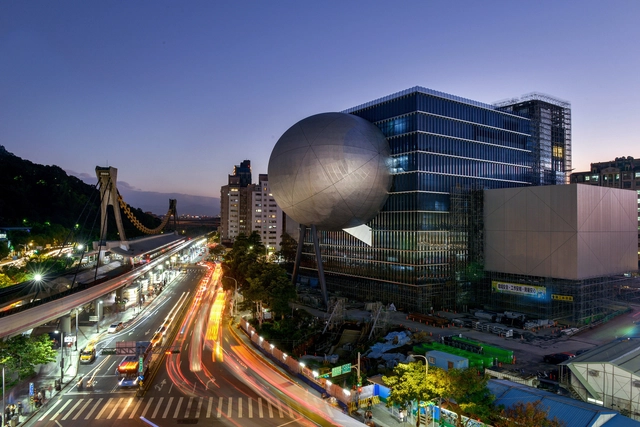
New photographs have been released of OMA’s Taipei Performing Arts Center (TPAC), as construction continues in Taiwan. Consisting of three theaters, each functioning autonomously of each other, the OMA scheme seeks to depart from the traditional consensus of performing arts centers as simply containing a large auditorium, medium-sized theater, and small-size black box.
OMA sees “no excuse for contemporary stagnation,” using the TPAC as an opportunity to experiment with the inner workings of theaters, leading to a dynamic external presence. Hence, the TPAC’s three theaters plug into a central cube combining stages, backstages, and support spaces into a single, efficient entity, allowing stages to be modified or merged for unforeseen scenarios.
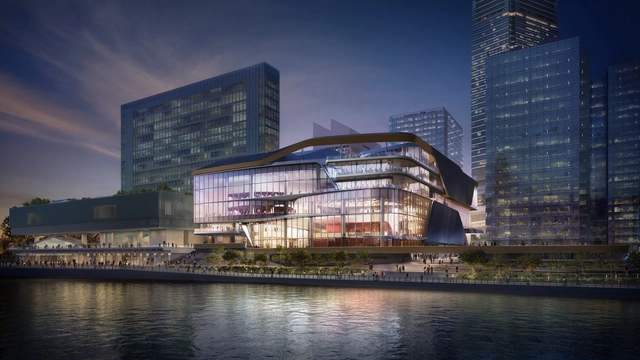
UNStudio has released images of their proposed Lyric Theatre complex in the West Kowloon Cultural District of Hong Kong. Intended as a “celebration of the world of theater,” the mixed-use scheme will house three theaters, rehearsal room, and dining, retail, and entertainment functions.
Designed to be open, inclusive, and welcoming, the compact scheme is comprised of a series of stacked transparent elements making the arts accessible to the general public. Open displays draw visitors inside from a series of reactivated plazas surrounding the scheme, supported by “an additional programme for the public to enjoy that is independent of performance timetable.”

Steven Chilton Architects has released details of their proposed Puzzle Ball Theatre in the Huadu District of Guangzhou, China. The 2000-seat spherical scheme is influenced by the ancient art of puzzle balls; “intricately carved sculptural ornaments consisting of several concentric spheres, each freely rotating with the next and traditionally formed from a single block of material.”
The Chilton scheme, along with the original Yue-inspired show it will contain, seeks to evoke the characteristics and qualities of the ancient art, through a spherical massing, asymmetric overlapping patterns, and a complex surface geometry.
This article was originally published on July 29, 2016. To read the stories behind other celebrated architecture projects, visit our AD Classics section.
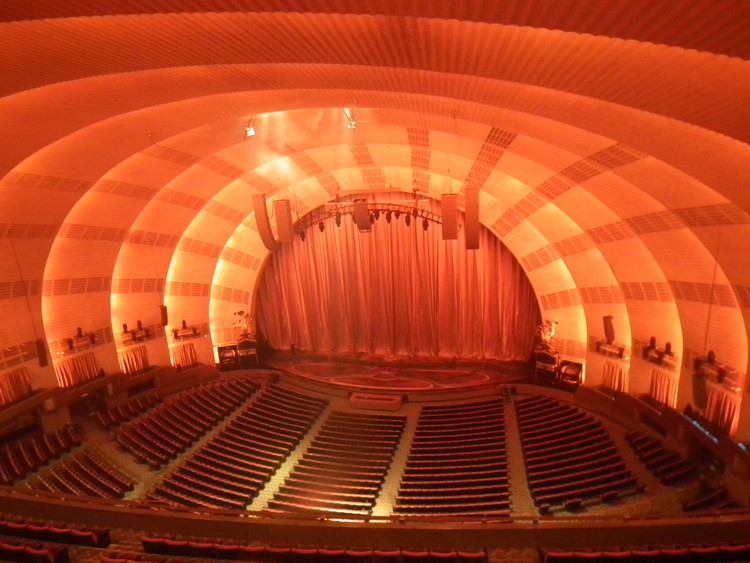
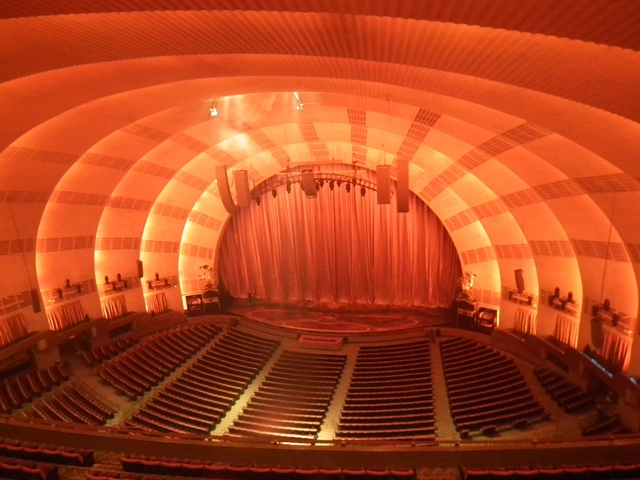
Upon opening its doors for the first time on a rainy winter’s night in 1932, the Radio City Music Hall in Manhattan was proclaimed so extraordinarily beautiful as to need no performers at all. The first built component of the massive Rockefeller Center, the Music Hall has been the world’s largest indoor theater for over eighty years. With its elegant Art Deco interiors and complex stage machinery, the theater defied tradition to set a new standard for modern entertainment venues that remains to this day.
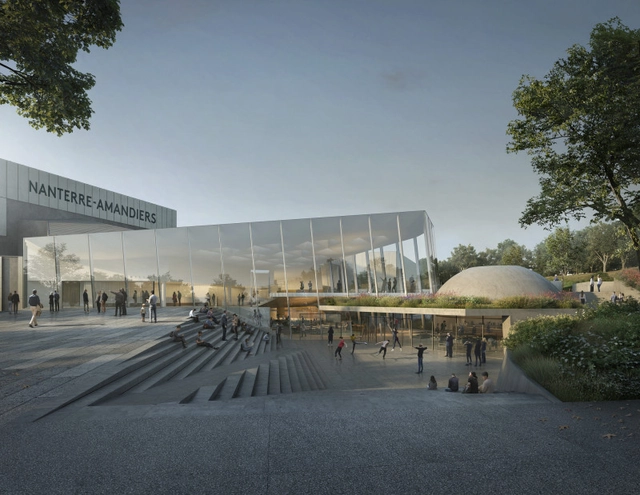
Snøhetta has been announced as the winner of a design competition for the renovation of the avant-gardist Théâtre Nanterre-Amandiers in Nanterre, France. The renovation seeks to breathe new life into the 1960s theater, known for its high-quality performances and global collaborations.
The renovations will include the addition of a 200-seat theater, and the reconfiguration of the building’s restaurant, bookshop, and atrium space, with an emphasis on flexibility and natural light.

The City of Poznań invites to participate in an open international architectural competition on development of architectural conception for seat of the Musical Theatre in Poznan.
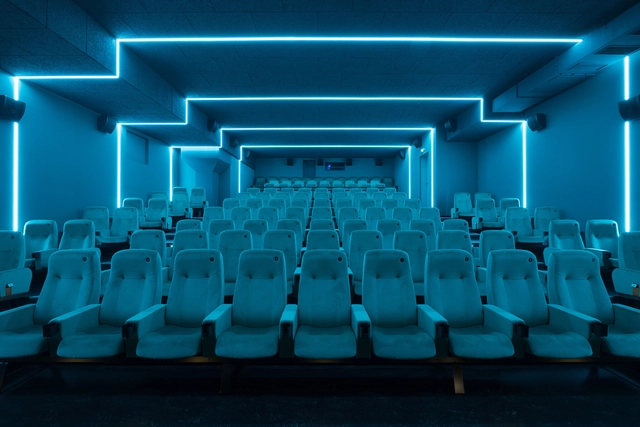
The link between architecture and cinema is unquestionable, as is the magic of seeing a film in a place structured specifically for this contemplative activity. The design requires architectural solutions that not only respond to the distribution of seats and visibility of movie-goers but also to acoustics and lighting.
Various projects published on our site highlight how architects have responded to this challenge in innovative ways. Below, stunning 10 movie theaters with their plans and drawings.
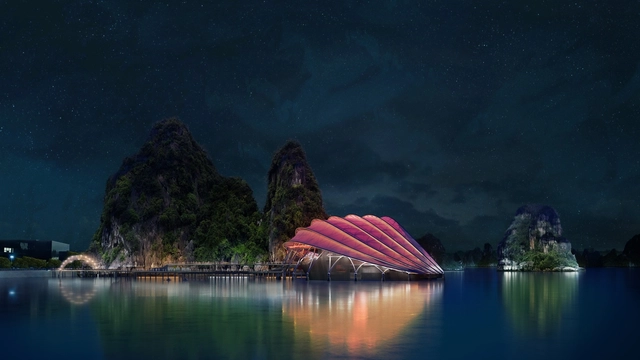
Sceno Light Architecture has released new images of their Ha Long Impression Theater, situated in the idyllic Ha Long Bay in North Vietnam. Drawing inspiration from various mythological and natural features, the soon-to-be-built scheme intends to offer a panoramic backdrop for visitors.
The theater is conceived as a “floating skin” intended to host 2600 people at a time, for two shows per day.
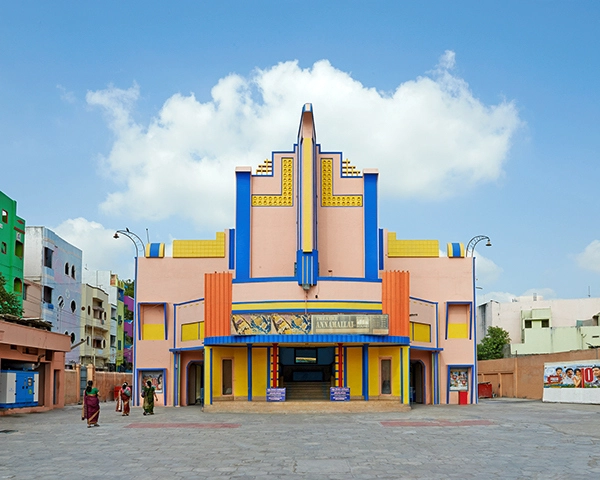
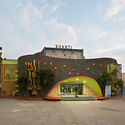
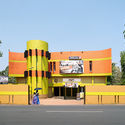
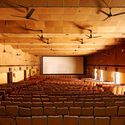
Photographer Stefanie Zoche of Haubitz-Zoche has captured a series of vibrant images showcasing the “hybrid modernist” movie theaters of Southern India. The images below, also available on the artist’s website, capture the large number of cinemas built in both rural and urban areas of South India in the 1950s, 60s, and 70s, all conveying an “unconventional mix of local building styles and Western influences."
As Zoche describes, the colorful facades, “suggestive of theatrical sets, provide a foretaste of the cinematic experience in the hall itself, in which extravagant shapes and ornamentation are continued and put the viewer in the right mood for the cinematic world before the screening itself.”