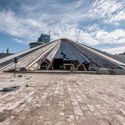
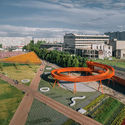
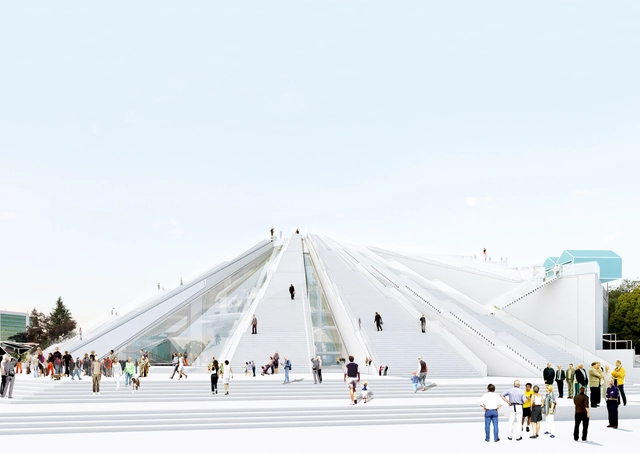
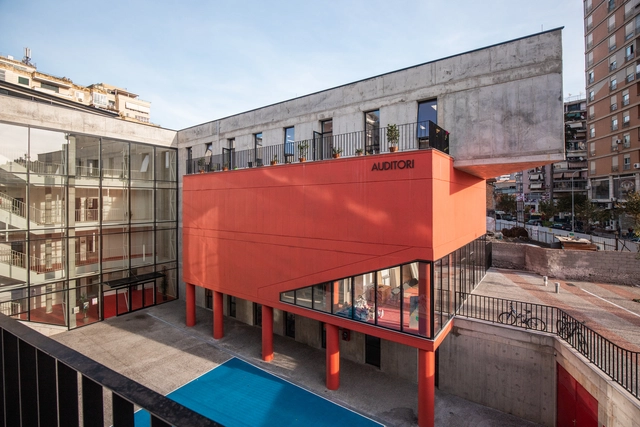
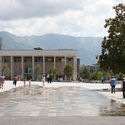
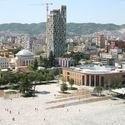
Construction has begun on MVRDV’s project for the Pyramid of Tirana in Albania, as of February 4th, 2021. Rehabilitating what was once a communist monument, the proposal transforms the brutalist structure into a new hub for Tirana's cultural life. Preserving the concrete shell, the intervention will open the atrium and the surroundings, while a small village of cafes, studios, workshops, and classrooms will permeate the site.
Remnants of the Socialist era, the large-scale architecture and urban spaces of the Eastern European Bloc still constitute a challenging legacy, at odds with contemporary urban environments and the values shaping cities today. This ideologically charged architecture is being reclaimed either through the reconciliation of the public opinion with this part of history, adaptive re-use, renovation, or through its re-contextualization as architectural heritage. By (re)introducing the human scale within these monumental architecture projects and public spaces, these entities are being restored to the urban and cultural life of cities.
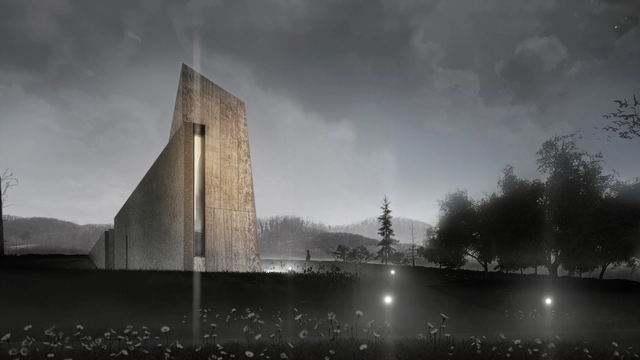
Zovik Chapel and Cemetery. Image Courtesy of Nenad Fabijanić
10 projects, 10 functions. Featuring a multitude of different programs, this week's curated selection of Best Unbuilt Architecture highlights diverse and innovative conceptual approaches. Submitted by our readers, this variety of proposals includes sports, religious, cultural, educational, and social purposes.
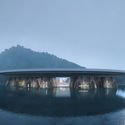
Compiling projects from all over the world, this article puts together a Buddhist temple in Bangkok, Thailand, a ring-shaped experience center and eco-tourism catalyst for Latvia, a cemetery in Bosnia and Herzegovina, and the biggest extreme sports park in Russia. Moreover, unconventional office spaces are underlined with an innovation start-up center in Vietnam, headquarters in Shenzhen, and Tirana's new municipality building.
Stefano Boeri Architetti has unveiled its recent scheme for Tirana Riverside, in the Albanian capital. Tackling post-COVID 19 needs, the imagined neighbourhood, a first of its kind in Europe, is a technologically-advanced, green and sustainable novelty, designed in agreement with the Government and the City Authorities.
Albania's architecture is tied to the sea and the country's cultural heritage. Bordered by Montenegro, Kosovo, North Macedonia and Greece, the republic spans both the Adriatic and Ionian Sea as it connects to the Mediterranean. Over time, Albania has seen a confluence of different civilizations and cultures, each shaping the built environment as we experience it today.
Mario Cucinella Architects (MC A) has just received the go-ahead for the Ekspozita Building, an urban oasis in the center of Tirana, Albania. Comprising commercial, residential and public amenity spaces, the 93m tall mixed-use statement building is scheduled for completion by 2023.
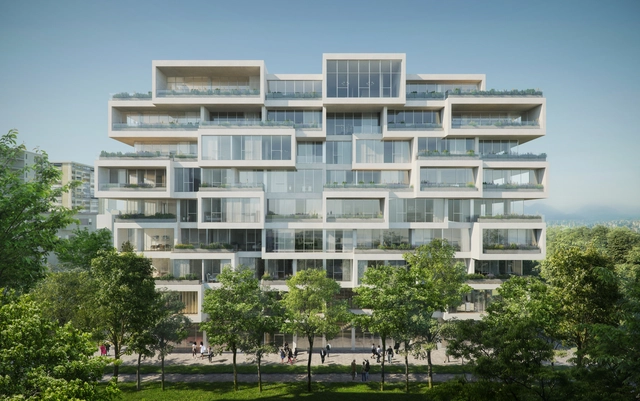
Stefano Boeri Architetti has designed a new offset multi-family housing complex in Albania. In conjunction with the opening of a new studio in Tirana, Boeri announced the start of construction on the new housing complex near the Albanian Presidential Palace. Designed as overlapped cubes, the project occupies a narrow lot on an important boulevard. The project's facade opens onto a large public space within the urban fabric of Tirana to put the housing complex in direct connection with the city.
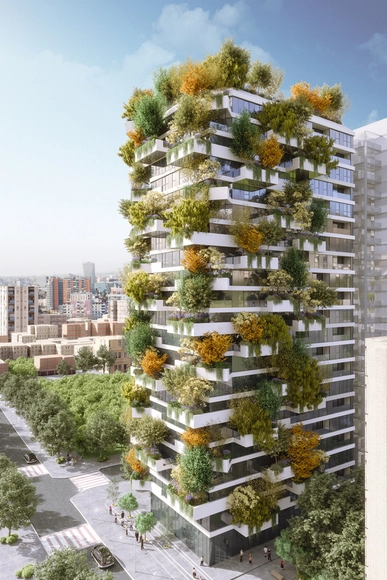
Albania’s capital city, Tirana, is slated to receive the country’s first Vertical Forest in a scheme designed by Milanese architecture firm, Stefano Boeri Architetti. Originating as part of the city’s new development master plan completed by the firm 3 years ago, the building will greatly increase the amount of greenery within and around the metropolitan area. Tirana’s Vertical Forest will contain 21 floors above ground with 4 more below and will be populated by 105 apartment units above a primarily commercial ground floor.
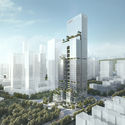
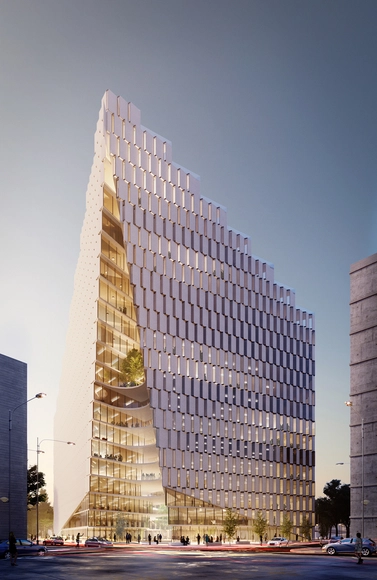
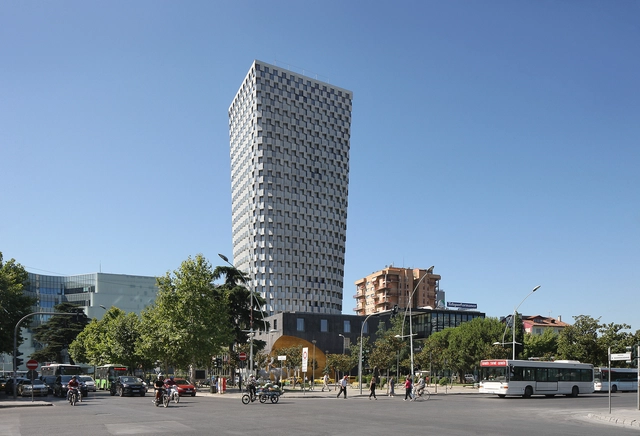
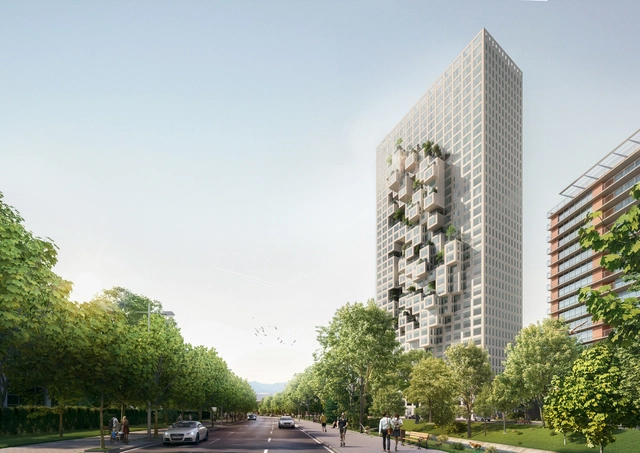
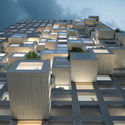
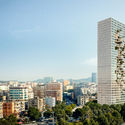
Construction has begun on MVRDV’s “Downtown One,” a 140-meter-tall mixed-use skyscraper for the Albanian capital city of Tirana. Set to become Albania’s tallest building, the 37-story scheme is defined by its “relief of cantilevered houses and offices, which form a pixelated map of Albania, each representing a town or city.”
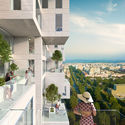
Situated in the center of the city, on the Bajram Curri Boulevard, the scheme intends to boost the economy of the capital through a mix of apartments, shops, offices, and restaurants. In addition to manifesting as a map of Albania when viewed from afar, the iconic cantilevers also generate spectacular panoramic views of the city and mountains, and create a connection between residents of this “vertical village.”
https://www.archdaily.com/911557/mvrdvs-tirana-tower-forms-a-pixelated-map-of-albaniaNiall Patrick Walsh
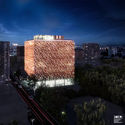
Blloku Cube. Image Courtesy of Stefano Boeri Architetti
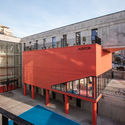
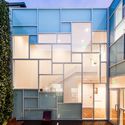
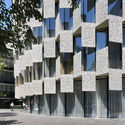
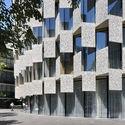
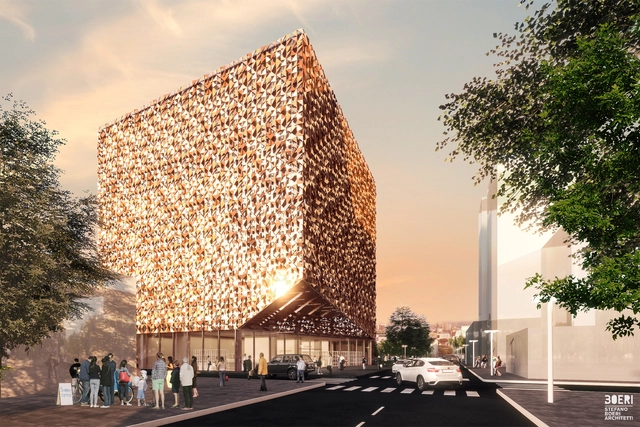
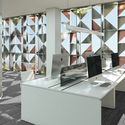
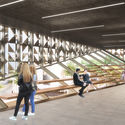
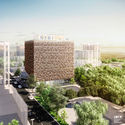
Work has started on Stefano Boeri Architetti's multifunctional building Blloku Cube, the first element of a larger masterplan in Tirana. Located at the intersection of Pjeter Bogdani and Vaso Pasha streets, the project is sited in a up-and-coming center of city life in Blloku district. Taking cues from the Albanese capital, the design combines a multifunctional program of commercial, office and rooftop garden space. The project features an anodized aluminum double-skin cladding, a pattern facade that becomes a signature piece of architecture within the surrounding post-communist developments.
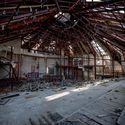
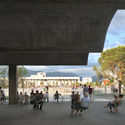
MVRDV has unveiled its vision for transforming the Communist-era “Tirana Pyramid” in Albania into a center for technology, art, and culture. Under the plans, the abandoned structure will be revitalized as a multifunctional technology education center for Tirana’s youth, with the existing dark interior becoming open, bright, and green.
The Tirana Pyramid was opened in 1988 as the Enver Hoxta Museum, designed in honor of Albania’s former communist leader. Since then, the building has transitioned into a NATO base during the Balkan Wars, a nightclub, and an event space. Though now in decay, the building remains a popular spot for young people keen to climb on its roof. As a nod to this unique appropriation, MVRDV has made the roof officially available for all visitors.
https://www.archdaily.com/894779/mvrdv-to-transform-communist-era-pyramid-into-center-for-art-and-technology-in-albaniaNiall Patrick Walsh
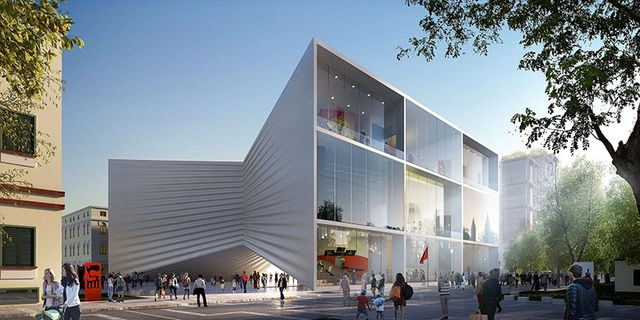
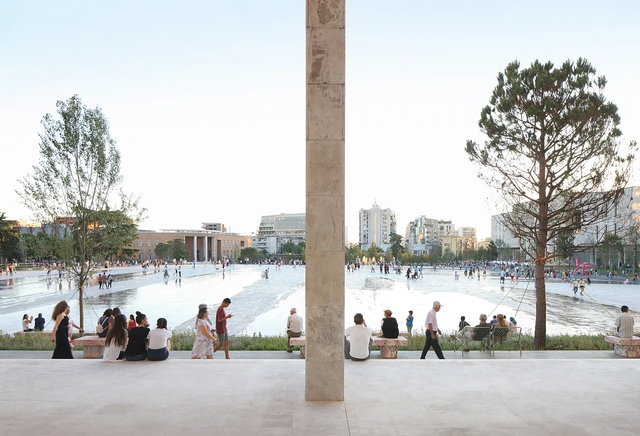
Bjarke Ingels Group (BIG) has released images of its bow-shaped National Theatre of Albania, responding to a thriving performance art scene in the nation’s capital. Situated in the cultural heart of downtown Tirana, the scheme seeks to create new urban gathering places for a pedestrian-focused district, while casting the theater as a performer in its own right.
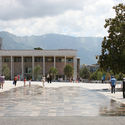
Situated on a cultural axis, adjacent to public landmarks such as Skanderbeg Square, the National Opera, and the National Art Gallery, BIG’s scheme will replace the existing theater while adding three new performance spaces, a rooftop amphitheater, and a covered public space underneath the building.
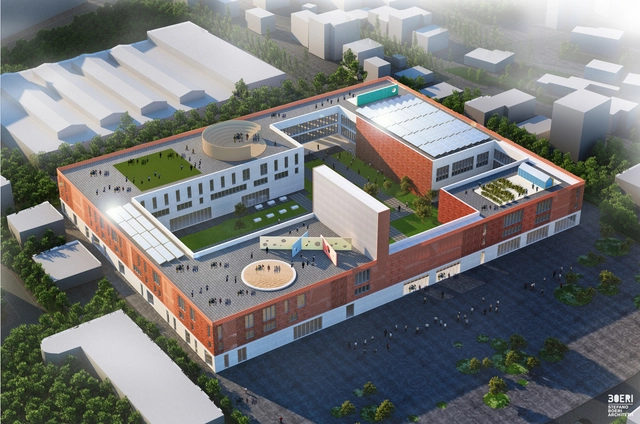
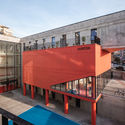
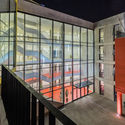
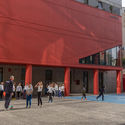
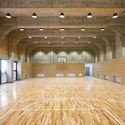
Stefano Boeri Architetti has revealed the design of three new innovative schools to be built in Tirana, Albania, that will be open 24 hours a day, everyday of the year, transforming them into essential social centers for residents of all ages.
The three new structures will be integrated into Stefano Boeri Architetti’s competition-winning masterplan for Tirana, positioned within key social nodes of the Albanian capital’s northwest quarter: the neighborhoods of Don Bosco, Kodër-Kamëz and Shqiponja Square. Multiple schools will be housed within each of the three structures, which will also contain meeting and social spaces open and available to the entire community.
Videos
Bird's eye view of the regenerated city centre. Image Courtesy of Attu Studio
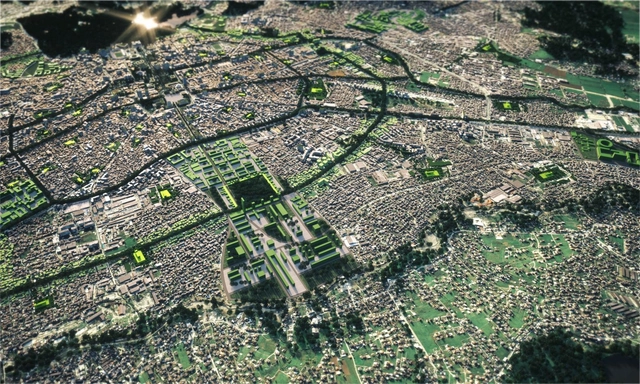
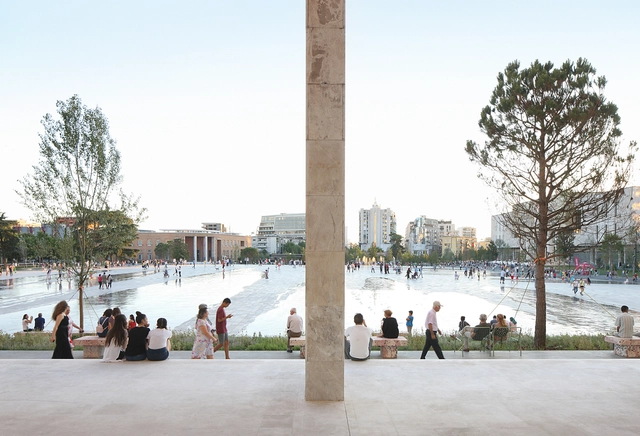
In 1925, Italian designer Armando Brasini created a sweeping masterplan to transform the Albanian capital city of Tirana. Almost one hundred years later, the Tirana 2030 (TR030) Local Plan by Italian firm Stefano Boeri Architetti has been approved by Tirana City Council. Collaborating with UNLAB and IND, Boeri seeks to define a new era in the country’s capital, incorporating controlled development, advanced infrastructure, green corridors, and an enhancement of the city’s architectural heritage.





.jpg?1613644686&format=webp&width=640&height=580)
.jpg?1613644756 "Courtesy of MVRDV")
.jpg?1613644713 "Courtesy of MVRDV")
.jpg?1613644686)
_Gent_Onuzi.jpg?1603920105 "The Pyramid in Tirana. Image © Gent Onuzi")



.jpg?1591114518&format=webp&width=640&height=580)






Stefano_Boeri_Architetti_tre_nuove_scuole_per_tirana_Scuola_3_total.jpg?1552748138 "24-hour school in Tirana. Image © Stefano Boeri Architetti")

StefanoBoeriArchietti_URBAN_SYSTEM_agriculture.jpg?1552748062 "Tirana 2030 - Agriculture. Image © Stefano Boeri Architetti")


.jpg?1550236481 "© MVRDV / REDVERTEX")


_MVRDV.jpg?1526659703)
_MVRDV.jpg?1526659742 "Courtesy of MVRDV")
_Gent_Onuzi.jpg?1526659725 "© Gent Onuzi")
_MVRDV.jpg?1526659753 "Courtesy of MVRDV")
_MVRDV.jpg?1526659703 "Courtesy of MVRDV")
_MVRDV.jpg?1526661234)