Ananya Nayak

Architect and writer, whose work explores the convergence of design, sustainability, and building physics. With a B.Arch from Bengaluru and an MSc in Advanced Sustainable Design from the University of Edinburgh, she practiced in Scotland as a Building Performance Consultant. Currently runs her design studio, across multiple cities in India. Her approach integrates technical research with architectural thinking, examining how buildings perform within their environmental and cultural contexts.

BROWSE ALL FROM THIS AUTHOR HERE

PREVI Lima and the Politics of Resident Authorship in Social Housing

Subscriber Access | 

Architects are accustomed to being credited for buildings long after construction ends. Names remain attached to projects through photographs, publications, and histories, often decades after the original drawings were produced. Buildings, on the other hand, rarely remain faithful to that narrative for long. Families grow, technologies change, businesses emerge, and daily life introduces demands that no plan can fully anticipate. Over time, architecture accumulates modifications, repairs, additions, and improvisations that gradually distance it from its original form.

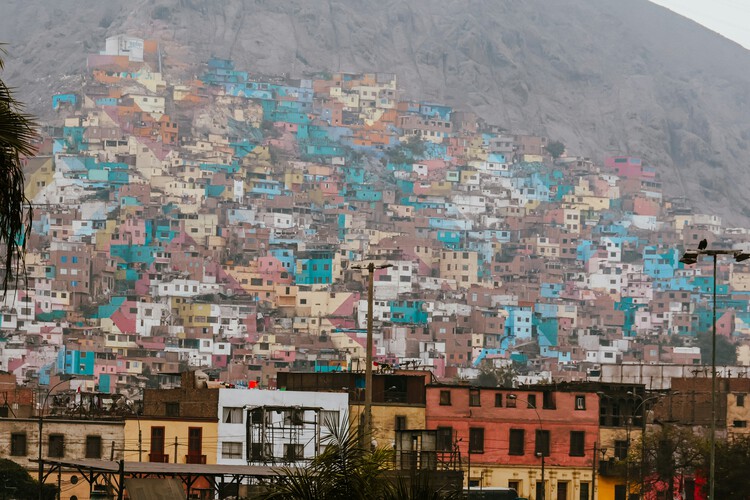
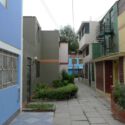
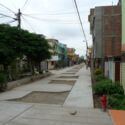
Few projects confront this question as directly as PREVI Lima. Conceived in the late 1960s as Peru's Experimental Housing Project, PREVI invited an international group of architects to develop housing prototypes capable of accommodating growth over time. The project is often remembered for its ambitious roster of designers, which included figures such as James Stirling, Aldo van Eyck, and Christopher Alexander. More than fifty years later, the neighborhood has become a record of resident decisions, revealing a form of architecture designed to remain unfinished.
PREVI Lima and the Politics of Resident Authorship in Social Housing - Image 1 of 4PREVI Lima and the Politics of Resident Authorship in Social Housing - Image 2 of 4PREVI Lima and the Politics of Resident Authorship in Social Housing - Image 3 of 4PREVI Lima and the Politics of Resident Authorship in Social Housing - Image 4 of 4PREVI Lima and the Politics of Resident Authorship in Social Housing - More Images+ 14

Designed to Repeat, Forced to Adapt: The Parallel Architecture of Socialist Housing

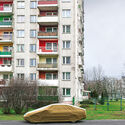
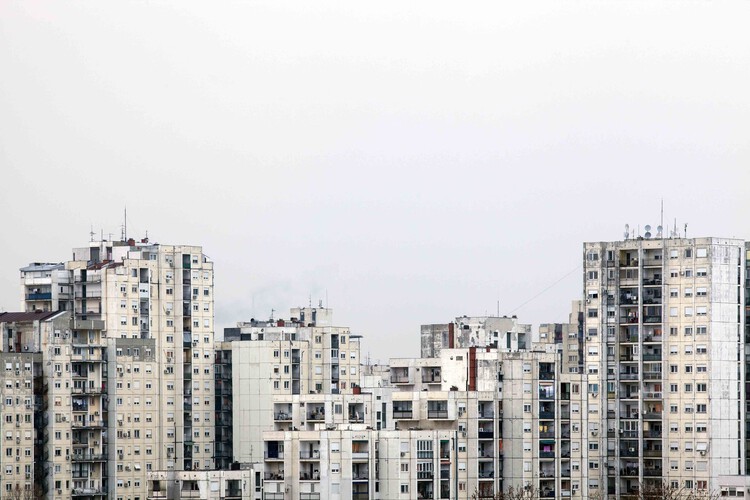
A housing block in New Belgrade appears orderly from a distance. Concrete slabs repeat with disciplined consistency, windows align into measured grids, and balconies stack with the confidence of a system certain of itself. However, proximity changes the reading. One balcony is enclosed in aluminum glazing, another softened with improvised shading. Insulation thickens part of a façade while laundry frames another edge like an accidental elevation study. The district still reads as planned, though occupation has made its order less uniform. Within that order, repetition has gradually been rewritten through occupation.

Designed to Repeat, Forced to Adapt: The Parallel Architecture of Socialist Housing - Image 1 of 4Designed to Repeat, Forced to Adapt: The Parallel Architecture of Socialist Housing - Image 2 of 4Designed to Repeat, Forced to Adapt: The Parallel Architecture of Socialist Housing - Image 3 of 4Designed to Repeat, Forced to Adapt: The Parallel Architecture of Socialist Housing - Image 4 of 4Designed to Repeat, Forced to Adapt: The Parallel Architecture of Socialist Housing - More Images+ 10

Climate, Culture, and Modernism: The Postcolonial Campus as Architectural Laboratory

In the decades following independence, some of the most ambitious architectural experiments in the world did not emerge through museums, monuments, or government palaces. They emerged through universities. Across South Asia and Africa, newly formed nations turned campuses into testing grounds for entirely new ways of imagining collective life. These campuses functioned as more than educational institutions. They became territories where states tested how modernity might be organized, for citizens to gather, institutions to function, climate to shape architecture, and imported ideas to transform local realities.

Climate, Culture, and Modernism: The Postcolonial Campus as Architectural Laboratory - Image 1 of 4Climate, Culture, and Modernism: The Postcolonial Campus as Architectural Laboratory - Image 2 of 4Climate, Culture, and Modernism: The Postcolonial Campus as Architectural Laboratory - Image 3 of 4Climate, Culture, and Modernism: The Postcolonial Campus as Architectural Laboratory - Image 4 of 4Climate, Culture, and Modernism: The Postcolonial Campus as Architectural Laboratory - More Images+ 7

Oil, Glass, and Identity: Gulf Modernism Between Global Image and Local Climate

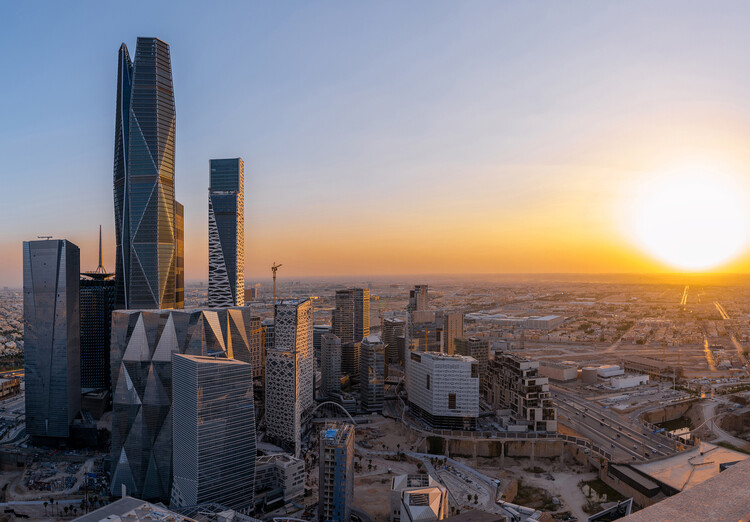
Step from the heat of Dubai into the lobby of a glass tower, and the desert seems to disappear. Outside, temperatures climb past 45 degrees Celsius; inside, the air is cold, sealed, and perfectly controlled. For decades, this contrast became the defining image of Gulf modernity. Architecture became less a negotiation with climate, and more a demonstration that climate could be overcome. Towers of reflective glass rose from the desert as symbols of arrival, projecting financial power, technological confidence, and global ambition. Beneath this urban image sat an infrastructure built on oil, cheap energy, and the continuous mechanical suppression of heat.

Oil, Glass, and Identity: Gulf Modernism Between Global Image and Local Climate - Image 1 of 4Oil, Glass, and Identity: Gulf Modernism Between Global Image and Local Climate - Image 2 of 4Oil, Glass, and Identity: Gulf Modernism Between Global Image and Local Climate - Image 3 of 4Oil, Glass, and Identity: Gulf Modernism Between Global Image and Local Climate - Image 4 of 4Oil, Glass, and Identity: Gulf Modernism Between Global Image and Local Climate - More Images+ 8

Furniture as Architecture: Micro-Modernisms Inside the Home

Modernism is often encountered through built form, photographed facades, canonical plans, concrete manifestos. For most people, its first encounter was far more immediate. It was a chair in an office, a shelf in a living room, a compact unit that reorganized how one sat, stored, or slept. Long before modern architecture could be widely commissioned, it was furniture that entered everyday space, carrying with it a new logic of living. Modernism's promise of transforming life was often delivered through these smaller, repeatable objects.

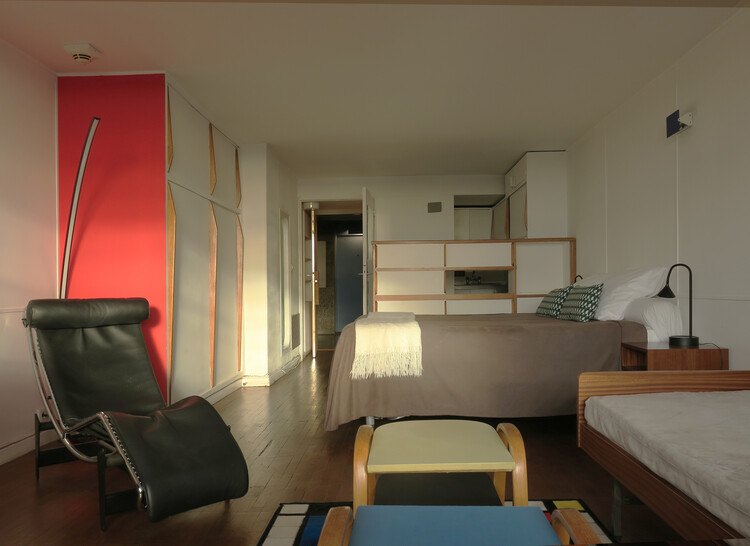
To understand this shift, furniture has to be read as a condensed form of architecture rather than decoration. Early twentieth-century designers treated it precisely this way. Le Corbusier described furniture as équipement de l'habitation (equipment of living), placing it within the operational system of the building rather than outside it. Similarly, the Bauhaus approached chairs and tables as industrial prototypes, embedding principles of standardization, efficiency, and mass production into their design. As architectural historian Beatriz Colomina has argued, modern architecture did not circulate only through buildings, but through media and objects that translated its ideas into everyday life. Furniture became architecture in miniature: portable, reproducible, and capable of reorganizing space without reconstructing it.

Furniture as Architecture: Micro-Modernisms Inside the Home - Image 1 of 4Furniture as Architecture: Micro-Modernisms Inside the Home - Image 2 of 4Furniture as Architecture: Micro-Modernisms Inside the Home - Image 3 of 4Furniture as Architecture: Micro-Modernisms Inside the Home - Image 4 of 4Furniture as Architecture: Micro-Modernisms Inside the Home - More Images+ 6

Tropical Modernism Beyond Aesthetics: The Politics of Shade and Air

The image is familiar, a façade layered with brise-soleil, light softened into a patterned shadow, interiors kept cool without machines. It appears as intelligence made visible, architecture that understands the sun. This image is rarely examined closely. The same devices that temper heat also organize access, distribute comfort, and depend on particular forms of labor. What looks like a climatic response is also a decision about who gets relief from heat, and how. Tropical modernism, often reduced to a visual language of shade and porosity, emerges instead as a set of situated practices where climate, labor, and power are negotiated differently across contexts.

At the scale of the element, tropical modernism begins as a technical problem. In hot climates, solar radiation is not incidental but constant, requiring buildings to mediate light, heat, and air before they reach the interior. Architects like Maxwell Fry and Jane Drew approached this with a level of precision that resists any reading of these elements as decorative. Shading devices are calibrated according to solar angles, orientation, and seasonal variation. Brise-soleil are dimensioned to block high-angle sun while admitting diffuse light; overhangs extend just enough to prevent direct gain at peak hours; openings are aligned to encourage cross-ventilation. Mid-century research further tested these strategies, measuring temperature reductions and airflow improvements. In this sense, the language of tropical modernism is not symbolic. It is performative: each projection, void, and screen is part of an environmental system.

Tropical Modernism Beyond Aesthetics: The Politics of Shade and Air  - Image 1 of 4Tropical Modernism Beyond Aesthetics: The Politics of Shade and Air  - Image 2 of 4Tropical Modernism Beyond Aesthetics: The Politics of Shade and Air  - Image 3 of 4Tropical Modernism Beyond Aesthetics: The Politics of Shade and Air  - Image 4 of 4Tropical Modernism Beyond Aesthetics: The Politics of Shade and Air  - More Images+ 7

The Courtyard as Architecture’s Lightest Cooling System

The courtyard is often remembered as a figure from the past, an inward-looking space of nostalgia, culture, and domestic ritual. But this framing misses its primary role. Before it was symbolic, the courtyard was operational. It organized air, moderated light, and absorbed heat. It did not decorate architecture; it made it habitable. In contemporary housing, these functions are normally delegated to mechanical systems, applied after form is fixed. In courtyard houses, they are resolved spatially, before a wall is even built.

What appears as a recurring typology across regions is, in fact, a set of highly specific responses to climate. The courtyard in Egypt does not behave like the courtyard in Morocco, nor like the courtyard in India. Each is calibrated to a different environmental problem, using the same spatial device. To read them as a single type is to flatten their intelligence. To compare them is to understand how climate can be embedded directly into form.

The Courtyard as Architecture’s Lightest Cooling System - Image 1 of 4The Courtyard as Architecture’s Lightest Cooling System - Image 2 of 4The Courtyard as Architecture’s Lightest Cooling System - Image 3 of 4The Courtyard as Architecture’s Lightest Cooling System - Image 4 of 4The Courtyard as Architecture’s Lightest Cooling System - More Images+ 10

Jaali, Mashrabiya, Cobogó: The Lightest Skins in Architecture

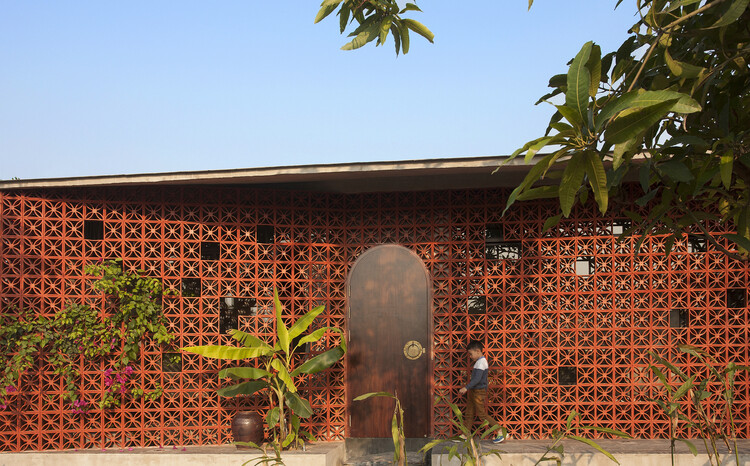
A perforated screen is often treated as an afterthought, something applied to soften light, to decorate a façade, or to add texture where a wall might otherwise feel flat. It is photographed as a surface, drawn as a pattern, and discussed as a craft. But in many buildings across the Indian subcontinent and the Islamic world, the screen was never an addition. It was the wall itself. Remove it, and the building does not simply change in appearance; it loses its ability to regulate heat, move air, and mediate between inside and outside.

This misreading reveals more about contemporary habits than about the screen itself. Architectural thinking has long separated structure from envelope, performance from expression. Within that framework, elements like the jaali or mashrabiya are easy to categorize as ornamental, visually rich but technically secondary. Yet these screens were conceived as integrated systems, where geometry, material, and climate operate together. Their intelligence lies in what they do.

Jaali, Mashrabiya, Cobogó: The Lightest Skins in Architecture - Image 1 of 4Jaali, Mashrabiya, Cobogó: The Lightest Skins in Architecture - Image 2 of 4Jaali, Mashrabiya, Cobogó: The Lightest Skins in Architecture - Image 3 of 4Jaali, Mashrabiya, Cobogó: The Lightest Skins in Architecture - Image 4 of 4Jaali, Mashrabiya, Cobogó: The Lightest Skins in Architecture - More Images+ 11

Elevated Infrastructure and Public Space: Reclaiming the Ground Below

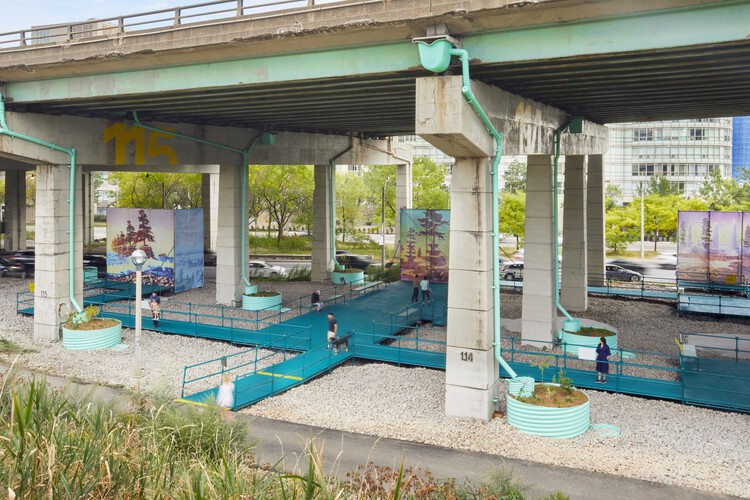
Elevation is often framed as progress, lifting movement above the friction of the city and smoothing circulation into uninterrupted flow. Every act of lifting produces a secondary condition in its wake. Beneath flyovers, metro lines, and railway viaducts, a second ground emerges as shaded, ambiguous, and rarely planned with the same intent as what moves above. These spaces are not incidental leftovers. They are the spatial consequence of a design decision that privileges speed, clearance, and efficiency, redistributing value and visibility across the city in the process.

What lies below is not empty. It is structured, constrained, and defined by infrastructure, left without a clear role. Studies on elevated highways consistently describe these undercroft zones as residual spaces, formed when transport systems are conceived independently of the ground they pass through. An Arup report on spaces beneath viaducts notes how they often disrupt pedestrian continuity while remaining outside formal planning frameworks. Similarly, recent academic reviews of under-flyover environments highlight that these areas are rarely integrated into urban design strategies at all. The result is a peculiar condition: space that is physically present and structurally determined, but programmatically undefined.

Elevated Infrastructure and Public Space: Reclaiming the Ground Below - Image 1 of 4Elevated Infrastructure and Public Space: Reclaiming the Ground Below - Image 2 of 4Elevated Infrastructure and Public Space: Reclaiming the Ground Below - Image 3 of 4Elevated Infrastructure and Public Space: Reclaiming the Ground Below - Image 4 of 4Elevated Infrastructure and Public Space: Reclaiming the Ground Below - More Images+ 16

Building Light in a Flood Zone: Architecture for Seasonal Inundation

The flood does not arrive as a surprise. It returns, following the same swollen rivers and monsoon skies, loosening the ground and entering homes that were never meant to resist it. Walls are untied before they are lost, materials are gathered before they drift, and structures are rebuilt with a familiarity that suggests this is not destruction, but sequence. In landscapes where water returns each year, survival is defined by the ability to begin again.

Across the floodplains of Bangladesh, the Brahmaputra basin, and the Mekong Delta, inundation is a seasonal certainty. Reports by institutions such as the World Bank and the Intergovernmental Panel on Climate Change often frame floods through exposure and damage, measuring success through resistance and durability. Yet in territories that are submerged annually, such metrics only partially describe the problem. The ground itself oscillates between solid and liquid states. To build as if it were fixed is to design against the very condition that defines it.

Building Light in a Flood Zone: Architecture for Seasonal Inundation - Image 1 of 4Building Light in a Flood Zone: Architecture for Seasonal Inundation - Image 2 of 4Building Light in a Flood Zone: Architecture for Seasonal Inundation - Image 3 of 4Building Light in a Flood Zone: Architecture for Seasonal Inundation - Image 4 of 4Building Light in a Flood Zone: Architecture for Seasonal Inundation - More Images+ 6

Logistics Landscapes: The Architecture of the 24-Hour Supply Chain

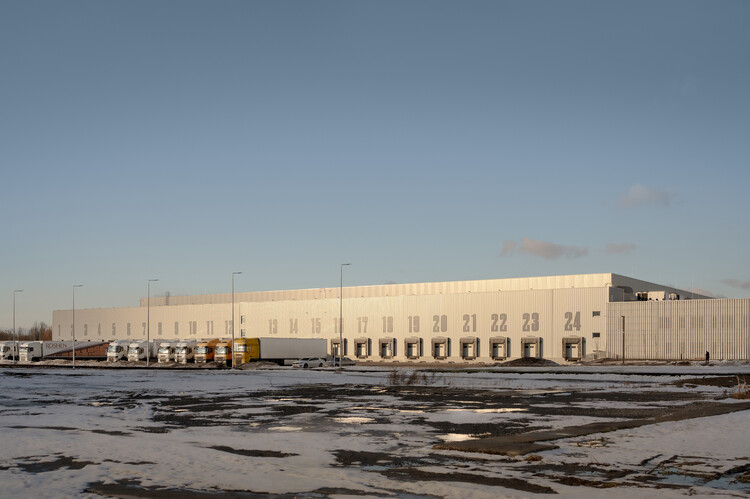
At the edge of most cities, beyond the ring roads and interchanges, a different kind of architecture is taking shape. It is not designed to be seen, visited, or remembered. It does not gather people; it moves things. Inside, thousands of parcels travel continuously, being sorted, lifted, scanned, and dispatched with minimal interruption. These buildings rarely enter architectural discourse, yet they are among the most consequential spaces of our time. The defining typology of the 21st century is increasingly the warehouse.

The scale of this transformation is difficult to grasp because it unfolds horizontally, across territories rather than skylines. Global warehouse space now exceeds tens of billions of square feet, expanding rapidly alongside the rise of e-commerce. During the COVID-19 pandemic, demand for logistics infrastructure accelerated by several years, compressing future growth into an already strained present. In India, the warehousing sector continues to grow at double-digit rates, reshaping peri-urban land into storage and distribution corridors. Logistics is no longer a background system; it is a territorial condition.

Logistics Landscapes: The Architecture of the 24-Hour Supply Chain - Image 1 of 4Logistics Landscapes: The Architecture of the 24-Hour Supply Chain - Image 2 of 4Logistics Landscapes: The Architecture of the 24-Hour Supply Chain - Image 3 of 4Logistics Landscapes: The Architecture of the 24-Hour Supply Chain - Image 4 of 4Logistics Landscapes: The Architecture of the 24-Hour Supply Chain - More Images+ 9

Jahad Metro Plaza in Tehran: Reclaiming Infrastructure as Civic Space

Subscriber Access | 

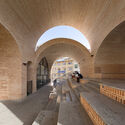
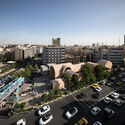
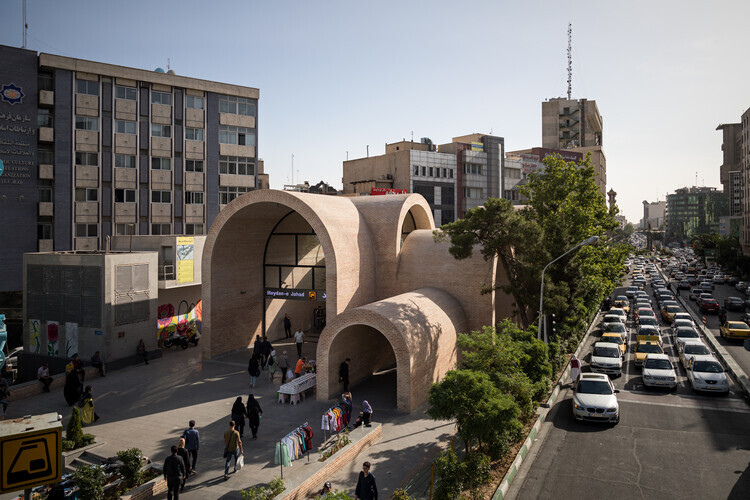
In Iran's capital, Tehran, movement defines the city. Each day, millions navigate a landscape shaped by highways, traffic corridors, and dense urban blocks. Over decades of rapid expansion, infrastructure has become the dominant language of development. Streets prioritize vehicles, sidewalks function as narrow conduits, and many public spaces operate primarily as passages rather than places of gathering. Across parts of West Asia, ongoing conflict has also reshaped the region's urban landscapes, where significant architectural environments have been damaged or transformed. Within this broader context, the preservation and creation of everyday civic space becomes increasingly meaningful. Recognized with the Aga Khan Award for Architecture, the Jahad Metro Plaza project, designed by KA Architecture Studio, demonstrates how modest infrastructural interventions can reshape the civic life of a city.

The metro network plays a central role in Tehran's daily life. It connects distant districts and sustains the rhythms of the metropolis. Yet the places where the underground city meets the surface are rarely conceived as civic environments. Metro entrances typically appear as fragments of infrastructure: stairs descending below ground, surrounded by railings, kiosks, and improvised circulation paths. They function efficiently as thresholds, but seldom as places to remain.

Jahad Metro Plaza in Tehran: Reclaiming Infrastructure as Civic Space - Image 1 of 4Jahad Metro Plaza in Tehran: Reclaiming Infrastructure as Civic Space - Image 2 of 4Jahad Metro Plaza in Tehran: Reclaiming Infrastructure as Civic Space - Image 3 of 4Jahad Metro Plaza in Tehran: Reclaiming Infrastructure as Civic Space - Image 4 of 4Jahad Metro Plaza in Tehran: Reclaiming Infrastructure as Civic Space - More Images+ 10

Designing the Sensory City: Architecture, Light Pollution, and Urban Noise

For most of human history, night arrived as a planetary certainty. Darkness spread across landscapes, and the sky revealed thousands of stars. Today, that sky is disappearing. Artificial light spills upward from cities, scattering through the atmosphere and turning night into a permanent haze. Research mapping global sky brightness shows that more than 80 percent of humanity now lives under light-polluted skies, and the Milky Way has vanished from view for over a third of the world's population. The disappearance of dark skies is usually discussed within astronomy, but the sources of that change are deeply embedded in the built environment. Buildings emit light, reflect it through glass façades, and extend illumination far beyond their walls. In the technosphere, the vast system of infrastructures and materials humans have constructed, architecture now shapes both physical space and the sensory conditions surrounding it.

Designing the Sensory City: Architecture, Light Pollution, and Urban Noise - Image 1 of 4Designing the Sensory City: Architecture, Light Pollution, and Urban Noise - Image 2 of 4Designing the Sensory City: Architecture, Light Pollution, and Urban Noise - Image 3 of 4Designing the Sensory City: Architecture, Light Pollution, and Urban Noise - Image 4 of 4Designing the Sensory City: Architecture, Light Pollution, and Urban Noise - More Images+ 8

Mapping Space Without Sight: Inside SEAlab’s Sensory Architecture

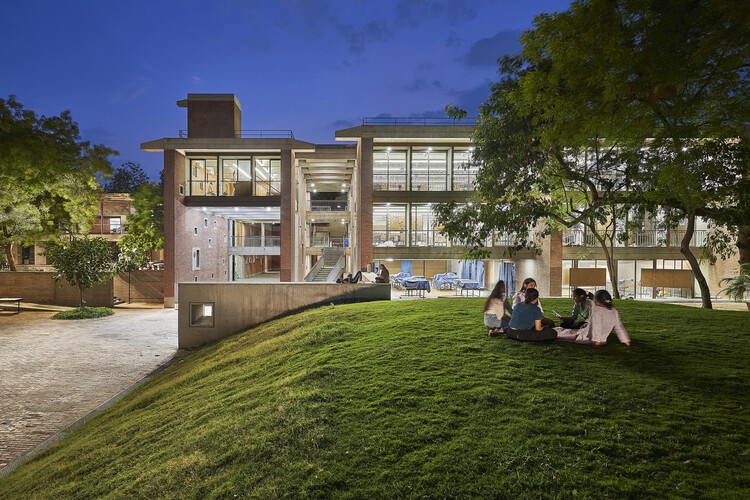
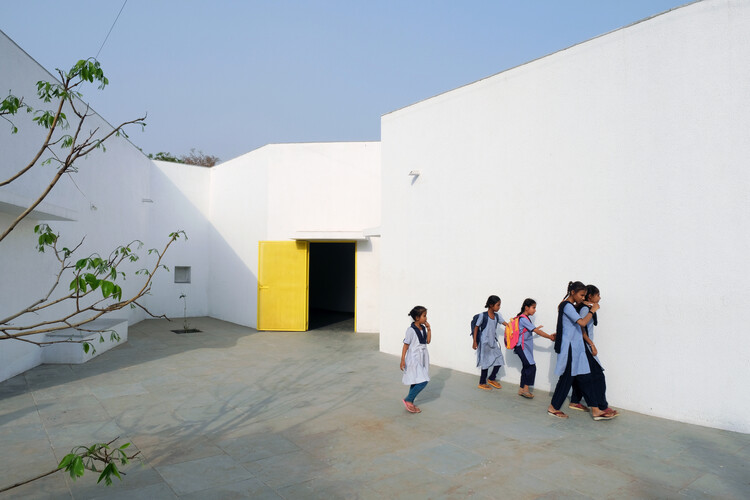
Founded in 2015 in Ahmedabad by Anand Sonecha, SEAlab is a practice shaped by a slow, contemplative engagement with place, proportion, and participation. Recognized as one of the winners of the ArchDaily 2025 Next Practices Awards, the studio builds with simple materials and local techniques, pursuing environments that are experienced as much as they are seen. This ethos became particularly tangible in Gandhinagar, where the School for Blind and Visually Impaired Children did not begin as a purpose-built institution. The school had been operating from an existing primary school building, with classrooms stacked above dormitories and twelve children sharing a single room. Space was limited, and so were growth opportunities. The new academic building was required to expand capacity, improve living conditions, and support greater student independence.

Mapping Space Without Sight: Inside SEAlab’s Sensory Architecture - Image 1 of 4Mapping Space Without Sight: Inside SEAlab’s Sensory Architecture - Image 2 of 4Mapping Space Without Sight: Inside SEAlab’s Sensory Architecture - Image 3 of 4Mapping Space Without Sight: Inside SEAlab’s Sensory Architecture - Image 4 of 4Mapping Space Without Sight: Inside SEAlab’s Sensory Architecture - More Images+ 33

Thermal Memory: How Climate Shapes Architectural Heritage

On a hot afternoon in May, when the air over western India turns metallic with heat, no one remembers façade composition. They remember where the shade falls. They remember which corridor breathed. They remember the house that was cooler than the street. What stays in memory is comfort beyond the form. Repeated thermal preference stabilizes into spatial configuration, and over time, those configurations become building types.

Heritage is usually catalogued by what can be drawn, not by what changed temperature. In heat, buildings are learned first through skin, only later through sight. Generations learn, through their bodies, what works. Shade reduces glare and radiant heat. Air movement shifts perception by several degrees. Thick walls slow temperature swings. Over time, these experiences accumulate into a spatial preference. What feels right is repeated. What is repeated stabilizes into type.

Thermal Memory: How Climate Shapes Architectural Heritage - Image 1 of 4Thermal Memory: How Climate Shapes Architectural Heritage - Image 2 of 4Thermal Memory: How Climate Shapes Architectural Heritage - Image 3 of 4Thermal Memory: How Climate Shapes Architectural Heritage - Image 4 of 4Thermal Memory: How Climate Shapes Architectural Heritage - More Images+ 8

Heritage Without Permanence: When Architecture Endures by Disappearing

​​A Gothic cathedral can take centuries to complete. A world exposition pavilion may stand for six months. A ritual structure in Kolkata rises and vanishes within five days. Yet each draws pilgrimage, shapes collective memory, and reorganizes urban life. If heritage has long been defined by what endures, architecture repeatedly shows that cultural authority can also belong to what gathers people.

For much of the twentieth century, conservation frameworks privileged permanence. The Venice Charter, adopted by the International Council on Monuments and Sites, focused on safeguarding monuments and their material authenticity. Cultural value was tied to physical fabric such as stone, brick, and timber. To protect heritage was to preserve what stood. The logic felt stable, even self-evident.


Heritage Without Permanence: When Architecture Endures by Disappearing - Image 1 of 4Heritage Without Permanence: When Architecture Endures by Disappearing - Image 2 of 4Heritage Without Permanence: When Architecture Endures by Disappearing - Image 3 of 4Heritage Without Permanence: When Architecture Endures by Disappearing - Image 4 of 4Heritage Without Permanence: When Architecture Endures by Disappearing - More Images+ 8

When Do Buildings Begin to Matter? Rethinking Heritage in Local Time

A building still being adjusted, repaired, and debated is declared World Heritage. Another, equally influential, must survive five centuries before anyone considers protecting it. This is not an anomaly in the heritage system; it is the system. Across the world, architecture does not age at the same pace because time itself is not neutral. It is cultural, political, and deeply uneven. What we call "heritage" is not simply old architecture; it is architecture that has reached the right moment in a particular place.

When Do Buildings Begin to Matter? Rethinking Heritage in Local Time - Image 1 of 4When Do Buildings Begin to Matter? Rethinking Heritage in Local Time - Image 2 of 4When Do Buildings Begin to Matter? Rethinking Heritage in Local Time - Image 3 of 4When Do Buildings Begin to Matter? Rethinking Heritage in Local Time - Image 4 of 4When Do Buildings Begin to Matter? Rethinking Heritage in Local Time - More Images+ 6

Rooms as Heritage: How Interior Typologies Carry Cultural Memory

For decades, heritage has been easiest to recognize from the street. We protect facades, skylines, and monuments because they are visible, stable, and legible as cultural assets. Yet most of what we remember about living is how we eat together, withdraw, argue, care, and rest, which happen far from view. It happens inside rooms. As open plans quietly give way to thresholds, corridors, and enclosures, a deeper question emerges: what if cultural memory survives not in what architecture shows, but in how it is lived?

Rooms as Heritage: How Interior Typologies Carry Cultural Memory - Image 1 of 4Rooms as Heritage: How Interior Typologies Carry Cultural Memory - Image 2 of 4Rooms as Heritage: How Interior Typologies Carry Cultural Memory - Image 3 of 4Rooms as Heritage: How Interior Typologies Carry Cultural Memory - Image 4 of 4Rooms as Heritage: How Interior Typologies Carry Cultural Memory - More Images+ 7