Paul Yakubu

Architect and Researcher with a Master's Degree in "Architecture and Urbanism" from the Architectural Association, London. Interested in housing, culture, semiotics, social boundaries of space, and the stories behind a city’s morphology. Based in London.

BROWSE ALL FROM THIS AUTHOR HERE

Cross-Cultural Collaboration: A Tool for Imagining Africa's Future

As Venice Architecture Biennale presents its 18th edition titled "The Laboratory of the Future", it centers on Africa as a place of exploration that will offer a template for solutions to the world. According to its curator Lesley Lokko, the Biennale explores entrenched concepts such as climate, land rights, decolonization, and cultures. It challenges us to question how Africa's history can be a radical tool for imagination and reminds us of Stephen Covey's statement: “Live out of your imagination, not just your history.” The biennale's title is probably the most ambitious question in years. It forces us to revisit all boundaries of the continent's historical societies, explore the influence of imposed colonial borders on them, and examine the dual identities they gave birth to. We must consider how these identities can be instruments of creativity, and, more importantly, recognize that every African society has a unique point of view. This viewpoint yearns for cross-cultural collaboration as a powerful tool for imagination.

Cross-Cultural Collaboration: A Tool for Imagining Africa's Future - Image 1 of 4Cross-Cultural Collaboration: A Tool for Imagining Africa's Future - Image 2 of 4Cross-Cultural Collaboration: A Tool for Imagining Africa's Future - Featured ImageCross-Cultural Collaboration: A Tool for Imagining Africa's Future - Image 3 of 4Cross-Cultural Collaboration: A Tool for Imagining Africa's Future - More Images+ 2

What are the Spatial Possibilities for Enclosures Within the Highway Interchange?

Subscriber Access | 

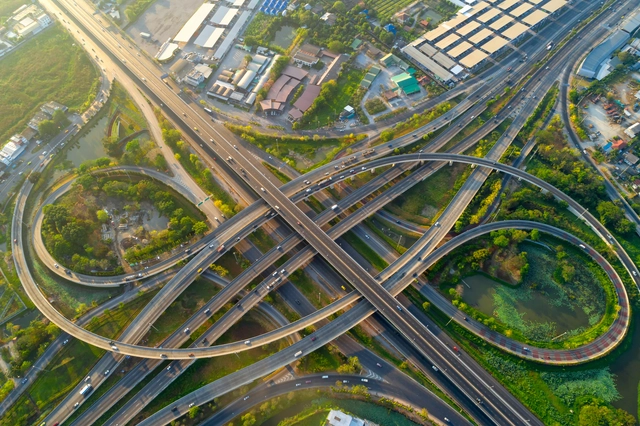
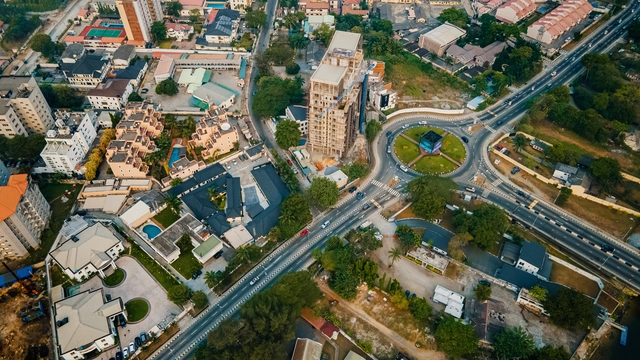
Highway interchanges have evolved from important infrastructures that help distribute traffic to unique landmarks that define cities. As multiple road networks embrace and form distinctive sculptures, these road intersections range from singular bridge connections and roundabouts to numerous, layered and multi-layered interchanges. They twist, turn, loop, and wrap around sparse land, vegetation, or existing structures in a bid to transfer travelers from one roadway to another. However, they also create a moment of enclosure, forming partially bounded areas and a sense of space. These spaces could be viewed as liminal and transitional, with no fixed typology able to be hosted. But that blurring character calls for ideas of urban intervention to disrupt the notion of what these spaces can be. They can be readapted from car-dominant sculptures into more human-friendly places and re-integrated as extended schemes of the city's architecture.  

What are the Spatial Possibilities for Enclosures Within the Highway Interchange? - Image 1 of 4What are the Spatial Possibilities for Enclosures Within the Highway Interchange? - Image 2 of 4What are the Spatial Possibilities for Enclosures Within the Highway Interchange? - Image 3 of 4What are the Spatial Possibilities for Enclosures Within the Highway Interchange? - Image 4 of 4What are the Spatial Possibilities for Enclosures Within the Highway Interchange? - More Images+ 9

The Floating Village of Ganvie: A Model for Socio-Ecological Urbanism

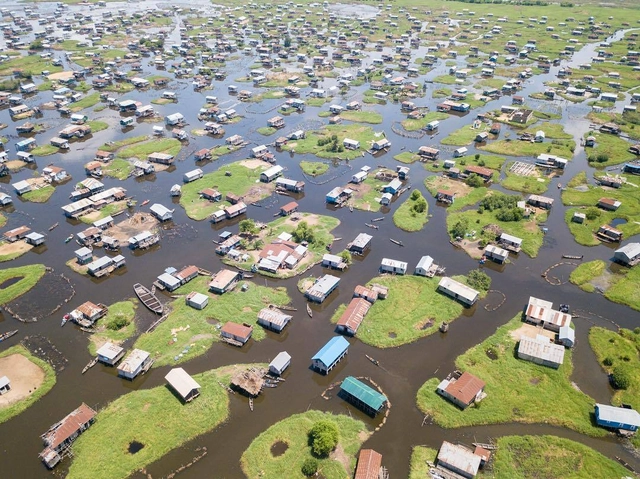
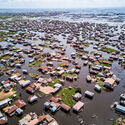
Located in the southern part of Benin-Republic, near the port city of Cotonou, is Ganvie; the largest floating village in Africa. It is situated in the middle of Lake Nokoué and is characterized by colorful wooden stilt houses arranged around artificial islands dating back to the 17th century.

This unique architecture was born from the history of the Tofinu tribe, who built it as a refuge from the slave trade. It has been sustained over time by their communal socio-ecological aquacultural systems and has now become a global tourist attraction for the country. The village was recognized as a world cultural heritage site by UNESCO in 1996, attracting up to 10,000 visitors annually. However, this influx of tourists has impacted the locals and their socio-ecological practices that sustain this water environment. Aquaculture has become increasingly challenging to maintain as the village struggles to retain its economic foundation. Additionally, traditional building practices have given way to modern ones, and the village faces ongoing environmental challenges. Nevertheless, the unique lifestyle of the locals around the water still offers many lessons for the design of prospective floating cities.

The Floating Village of Ganvie: A Model for Socio-Ecological Urbanism - Image 1 of 4The Floating Village of Ganvie: A Model for Socio-Ecological Urbanism - Image 2 of 4The Floating Village of Ganvie: A Model for Socio-Ecological Urbanism - Image 3 of 4The Floating Village of Ganvie: A Model for Socio-Ecological Urbanism - Image 4 of 4The Floating Village of Ganvie: A Model for Socio-Ecological Urbanism - More Images+ 5

Minimaforms “The Order of Time” Installation Reveals Constructed Relationships in the Ordering of Space

Subscriber Access | 

Minimaforms Presents The Order of Time at the Architectural Association School of Architecture Gallery. It is an immersive installation aimed to connect the preoccupations of physics, art, and architecture by revealing the ordering of spaces and constructed relationships through direct experience.

Three Sculptural installations are the highlight of the exhibition. Spherical organizations deployed through mathematical logic and designed to extend space within reflective light boxes, gifting its viewer a new immersive moment at every turn. ArchDaily had the chance to engage in a conversation with Theodore Spyropoulos; Artist & Architect at Minimaforms and Director of the Architectural Association’s Design Research Lab, on issues that tackled the interdisciplinary nature of architecture, the creative process of the installation, and how it influences the creation of spaces, buildings & cities.

Minimaforms “The Order of Time” Installation Reveals Constructed Relationships in the Ordering of Space - Image 1 of 4Minimaforms “The Order of Time” Installation Reveals Constructed Relationships in the Ordering of Space - Featured ImageMinimaforms “The Order of Time” Installation Reveals Constructed Relationships in the Ordering of Space - Image 2 of 4Minimaforms “The Order of Time” Installation Reveals Constructed Relationships in the Ordering of Space - Image 3 of 4Minimaforms “The Order of Time” Installation Reveals Constructed Relationships in the Ordering of Space - More Images+ 6

How Can Informal Retail Preserve Pedestrian Zones as Car Dependency Increases in African Cities?

Subscriber Access | 

African cities are expected to experience a significant increase in population over the next 30 years. According to United Nations projections, these cities will welcome an additional 900 million inhabitants by 2050. This demographic shift will create both opportunities and challenges that will reshape the nature and structure of these cities. These challenges include the need for economic growth, increased demand for housing and infrastructure, and the development of supplementary transportation systems. So far, most African cities have responded to this rapid population growth with sprawling horizontal development patterns that expand the fringes of the city, increase social fragmentation, and ultimately lead to greater car dependency.

How Can Informal Retail Preserve Pedestrian Zones as Car Dependency Increases in African Cities? - Image 1 of 4How Can Informal Retail Preserve Pedestrian Zones as Car Dependency Increases in African Cities? - Image 2 of 4How Can Informal Retail Preserve Pedestrian Zones as Car Dependency Increases in African Cities? - Image 6 of 4How Can Informal Retail Preserve Pedestrian Zones as Car Dependency Increases in African Cities? - Image 3 of 4How Can Informal Retail Preserve Pedestrian Zones as Car Dependency Increases in African Cities? - More Images+ 4