Can architecture be built from food? Between the fire that warms, the aromas that spread, and the bodies that gather around the table, the apparent banality of cooking and eating reveals itself as a choreographed dance of spatial appropriation and belonging. These are gestures that organize routines, forge bonds, and transform the built environment into a lived place. The kitchen—whether domestic, communal, or urban—thus ceases to be merely a functional space, asserting itself instead as a territory for connection.


From Service Space to Social Hub: Reconfiguring the Kitchen
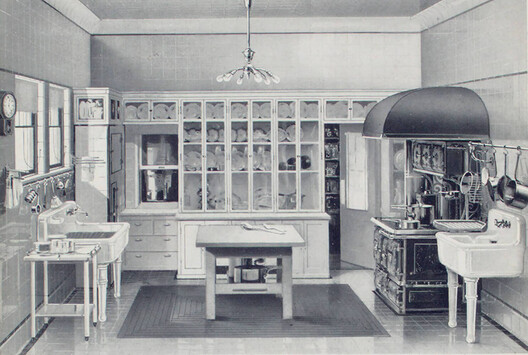
Since the dawn of humanity, fire has acted as a gathering element around which daily life was organized, incorporating food preparation as part of collective rituals. Over the centuries, this fire—initially kept outdoors—came to be sheltered and progressively domesticated through various inventions, rendering the act of cooking increasingly automated and efficient.
Through this process, the cooking area was gradually relegated to secondary zones of the home, conceived purely as a technical environment. Two milestones of this period are the studies by Americans Christine Frederick and Mary Pattison in 1922, which analyzed circulation and furniture layout as central factors in optimizing time, and the development of the Frankfurt Kitchen by architect Margarete Schütte-Lihotzky in Germany in 1926, inspired by German warship galleys. Unsurprisingly, both projects were designed by women in a historical context where domestic labor was socially assigned to them.
The kitchen, however, evolves in direct relation to prevailing social models. From a space once destined exclusively for women and domestic workers, in the contemporary context it has transformed into a shared environment inhabited by everyone, thus placed at the very heart of the home. In this configuration, the kitchen becomes a space for gathering and lingering, now free of social or economic barriers, where cooking is understood as a relational practice.
Daily Rituals and the Construction of Place
Food preparation, sitting at the table, and sharing meals constitute daily rituals that play a structuring role in social life. Far more than biological functions, these repeated gestures forge and strengthen bonds.
Recent empirical data shows that sharing meals at home remains a predominant habit in many contemporary contexts, despite shifts in lifestyles. In countries like the United States, about nine in ten adults report eating home-cooked meals at least a few times a week, with a large majority indicating that dinners at home occur on most days of the week. In a global survey, the average number of home-cooked meals per week sits around 7.7; despite regional variations, this remains higher than dining out. Additionally, across vast regions of Latin America, more than 80% of the population cooks at home daily, with a significant majority regularly having both lunch and dinner at home.
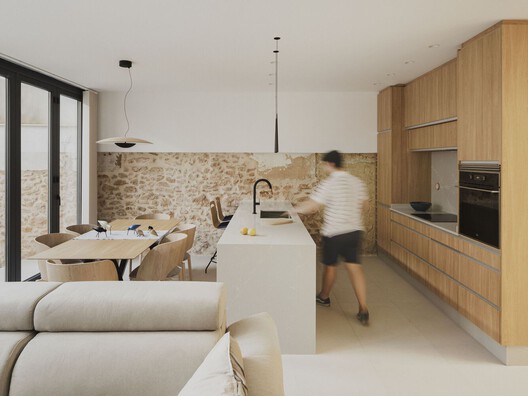
Beyond the economic and social factors that often make home cooking the only viable choice, these figures are also supported by the contemporary trend of home cooking, which champions preparing meals at home as a healthier lifestyle choice. Within this framework, domestic kitchens play an even more prominent role. This is architecture that acknowledges daily rituals through scales that foster encounters, smooth spatial transitions, flexibility, and informality, enhancing the construction of place and lived experience. In contemporary Spain, as well as in Brazil, for instance, the frequent integration of the kitchen with the living and dining rooms responds to lifestyles marked by strong domestic sociability and lingering at the table, where eating and being together are central to family and community culture.
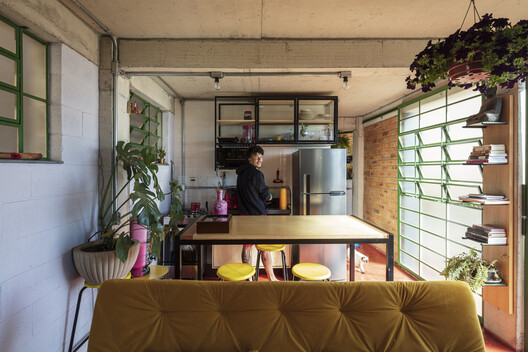
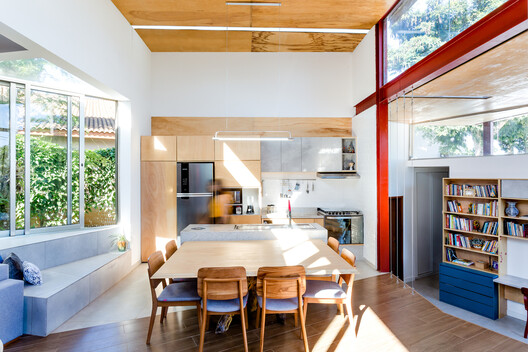
Rather than relying on iconic forms, these meaningful places emerge from subtle spatial gestures that gently accommodate shared social practices. Consequently, architectural quality is expressed in the ability to host these rituals—whether through tactile materials or a privileged layout within the home that offers ample sunlight and ventilation—reaffirming the kitchen and adjacent living areas as fundamental devices for belonging and well-being.
From Stove to City: Food as Urban Infrastructure
Food transcends the domestic sphere when the act of cooking is configured as a collective practice capable of structuring urban life. From community kitchens to shared dining halls, food activates public space based on everyday needs, fostering encounters and exchange.
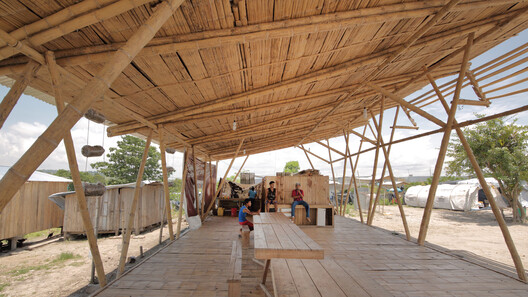
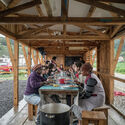
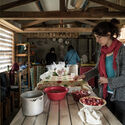
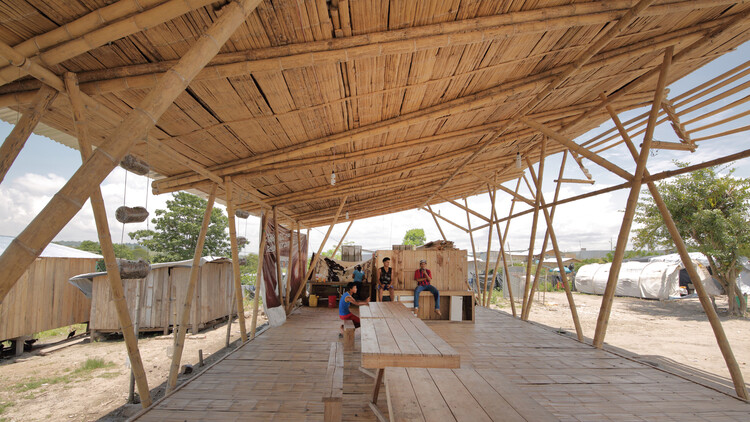
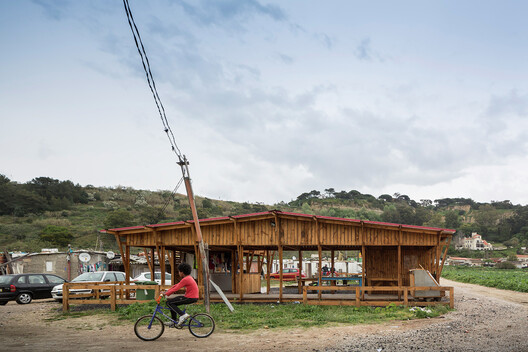
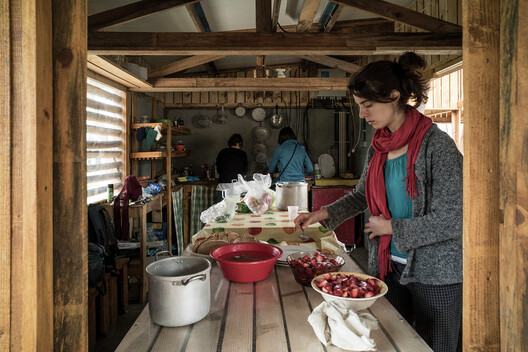
An emblematic example is the Terras da Costa Community Kitchen in Costa da Caparica, Portugal, built in an informal settlement where nearly 500 people lived without water or proper sanitation. Developed through a participatory process with residents, this kitchen became a shared, self-managed space that provides basic conditions for gathering and cooking collectively, equipped with water access and minimal infrastructure for food preparation.
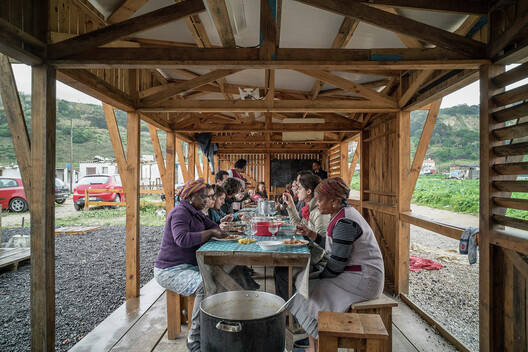
Furthermore, in times of crisis—such as forced displacement—food infrastructure takes on an even more essential role in mutual care and the shaping of new forms of belonging. Displacement entails the loss of community ties and daily practices, including cooking and sharing meals, which are vital to reclaiming routines and a sense of normalcy. In this light, collective kitchens, such as the Renascer de Chamanga Community Center in Ecuador, built after an earthquake, emerge as architectural and social responses. They do not merely meet basic nutritional needs but also serve as catalysts for belonging and rebuilding social networks.
Architecture, therefore, does not act merely as an isolated object, but as active support for dynamic urban uses: providing shelter and the physical conditions for rituals to endure, regardless of the circumstances.
Food Culture as Territory: Where Flavors Meet Matter
The kitchen is where territory manifests through the senses. Ingredients, seasonings, and culinary techniques carry the climate and history of a place, just as materials and textures shape the space where we cook.
This is an urban terroir: a relational field where flavor meets matter. In Mediterranean kitchens, the aroma of heating olive oil and dried herbs dialogues with mineral surfaces, pale ceramics, and sunlit spaces. In Asian contexts, intense steam and slow-simmering broths find resonance in ventilated courtyards, earthy tones, and fluid transitions between indoors and outdoors. In community kitchens, the mingled aromas—carrying different recipes and life histories—rest upon durable surfaces and spaces open to collective appropriation.
Whether in domestic, communal, or urban kitchens, what is revealed is a sensitive architecture that does not precede rituals, but is born from them, showing that designing is also about turning aromas and flavors into built space.
This article is part of the ArchDaily Topics: Building Gathering Places. Every month we explore a topic in-depth through articles, interviews, news, and architecture projects. We invite you to learn more about our ArchDaily Topics. And, as always, at ArchDaily we welcome the contributions of our readers; if you want to submit an article or project, please contact us.
This article was written by Camilla Ghisleni. The translation is powered by AI.


