Negotiating Boundaries: Climate and the Building Envelope in Central American Architecture

5:22

Subscriber Access

In temperate and cold climates, architecture typically begins with a defensive gesture. The building envelope is a sealed boundary designed to resist the exterior environment through insulation, vapor barriers, and mechanical control. In cold countries like Canada, where winter temperatures can plunge well below freezing, airtightness is not a luxury. In this context, buildings must resist the exterior environment entirely to maintain interior comfort. However, in Central America, a region spanning from Belize to Panama, architectural logic shifts from exclusion to negotiation. In this region, the envelope is not a wall of defense but a specialized filter.
Negotiating Boundaries: Climate and the Building Envelope in Central American Architecture - Image 2 of 11Negotiating Boundaries: Climate and the Building Envelope in Central American Architecture - Image 3 of 11Negotiating Boundaries: Climate and the Building Envelope in Central American Architecture - Image 4 of 11Negotiating Boundaries: Climate and the Building Envelope in Central American Architecture - Image 5 of 11Negotiating Boundaries: Climate and the Building Envelope in Central American Architecture - More Images+ 6

Content Loader

Image gallery

See allShow less
About this author
Cite: Moises Carrasco. "Negotiating Boundaries: Climate and the Building Envelope in Central American Architecture" 25 Mar 2026. ArchDaily. Accessed . <https://www.archdaily.com/1039856/negotiating-boundaries-climate-and-the-building-envelope-in-central-american-architecture> ISSN 0719-8884
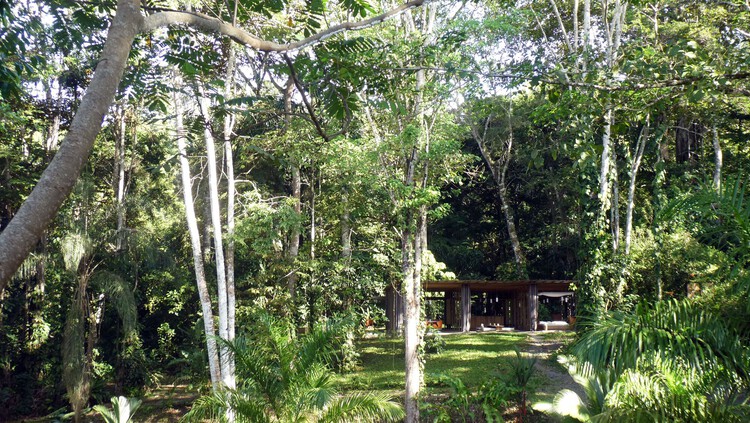
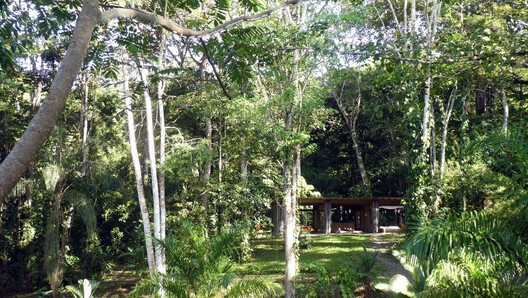
Open House in the Jungle by  Ksymena Borczynska hiding among the trees. Image © Ksymena Borczynska

调和边界:中美洲建筑中的气候与建筑外围护结构

You've started following your first account!

Did you know?

You'll now receive updates based on what you follow! Personalize your stream and start following your favorite authors, offices and users.