1. ArchDaily
  2. Contemporary Architecture

Contemporary Architecture: The Latest Architecture and News

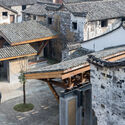
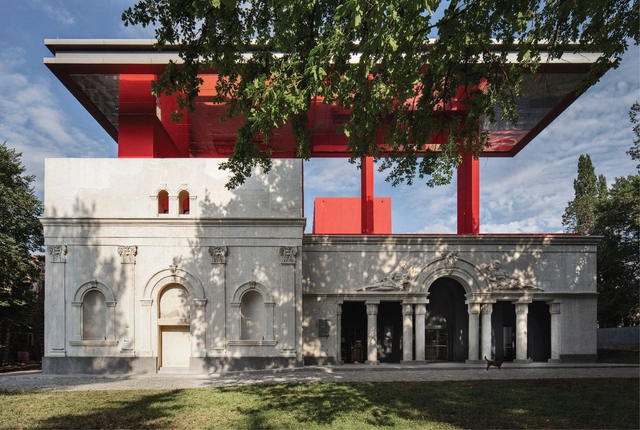
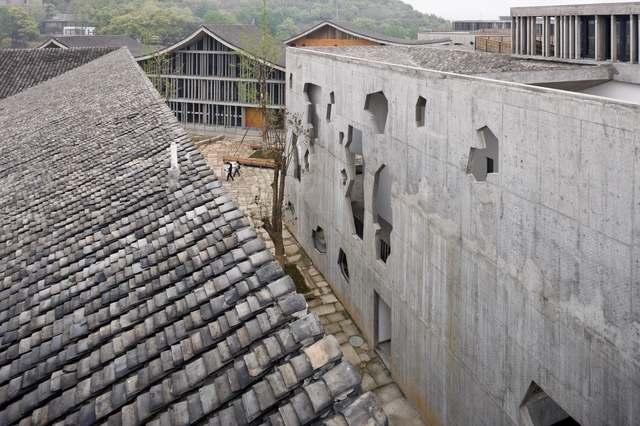
On the Work of Three Pioneering Chinese Architects: Wang Shu, Yung Ho Chang, and Liu Jiakun

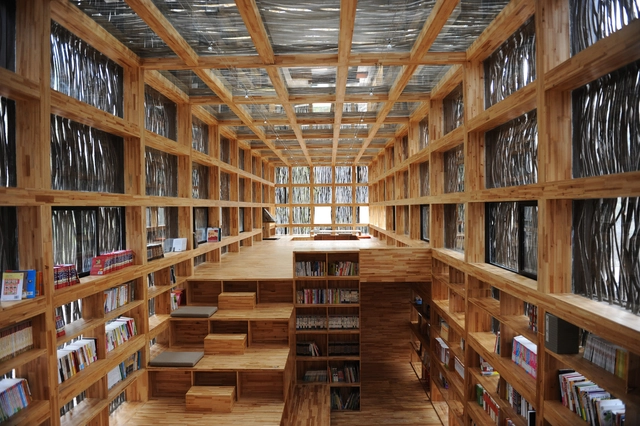
I first went to China in 2002, a year after the International Olympic Committee awarded the 2008 Summer Games to Beijing. That initial trip was about exploring nature, cuisine, ancient temples, archeological sites, and, in general, experiencing lifestyles in China, mainly outside of its major cities. I was motivated by the pure curiosity of a Western tourist driven to an Eastern country in search of the old world, the exotic, hoping to catch a glimpse of a rich traditional culture on the cusp of its inevitable radical transformation. At the time, there was no modern, or rather contemporary, architecture in China to speak of. There were only the promising first hints of the development of a potentially new architectural language being undertaken by just a handful of independent architects almost entirely under the radar.

On the Work of Three Pioneering Chinese Architects: Wang Shu, Yung Ho Chang, and Liu Jiakun - Image 1 of 4On the Work of Three Pioneering Chinese Architects: Wang Shu, Yung Ho Chang, and Liu Jiakun - Image 2 of 4On the Work of Three Pioneering Chinese Architects: Wang Shu, Yung Ho Chang, and Liu Jiakun - Image 3 of 4On the Work of Three Pioneering Chinese Architects: Wang Shu, Yung Ho Chang, and Liu Jiakun - Image 4 of 4On the Work of Three Pioneering Chinese Architects: Wang Shu, Yung Ho Chang, and Liu Jiakun - More Images+ 19

Finding the Indian in Contemporary Residential Architecture

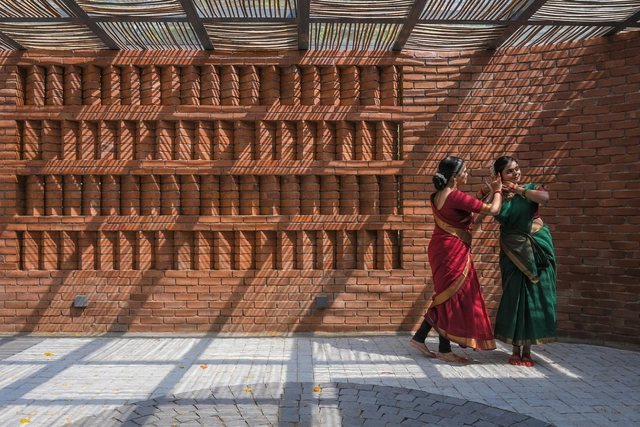
Contemporary Indian design culture can aptly be described with one word - fusion. A close look at the trends in fashion, cinema, music, and art soon reveals the country’s aspirations as a globalized nation. Reveling in a new era, India’s art and design appear as a combination of influences from traditional life and the Western world. A “neo-Indian” image informs multiple forms of cultural expression, including architecture and interior design. As Indians and Indian architecture carve the country's place in the world, a new design trend flourishes - one that is driven by modern lifestyles, international influences, a colonial past, and a desire to stay connected to its roots.

Finding the Indian in Contemporary Residential Architecture - Image 1 of 4Finding the Indian in Contemporary Residential Architecture - Image 2 of 4Finding the Indian in Contemporary Residential Architecture - Image 3 of 4Finding the Indian in Contemporary Residential Architecture - Image 4 of 4Finding the Indian in Contemporary Residential Architecture - More Images+ 2

Disruptive Materials and Finishes for Future Home Interiors

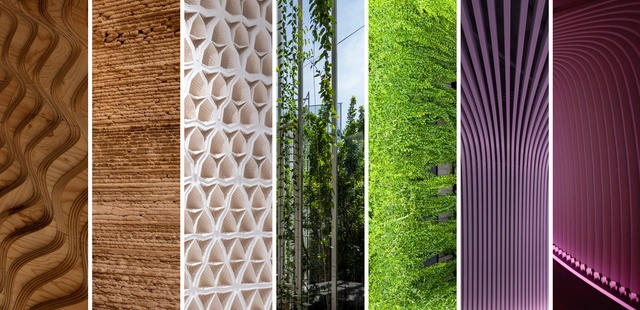
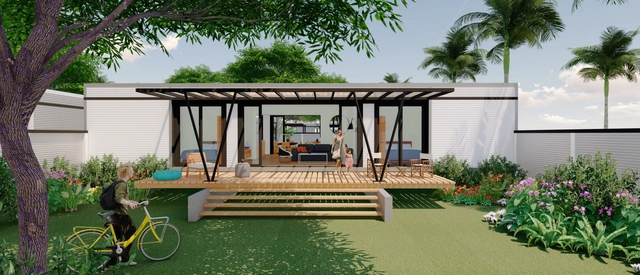
How are contemporary homes pushing the boundaries of innovation for the future? Currently, these spaces tend towards clean lines, neutral colors and flexible spaces, with the integration of technological features and automation. But even though there are certain timeless features that define neutral contemporary interiors, we can begin to identify future trends by analyzing architectural projects that differ from the traditional, recognizing disruptive interior materials and finishes guided by technological advances that are shaping complex and changing homes of the future. The selection of these innovative materials conveys a meticulous decision process in building the structure and identity of a space. Depending on the context and typology of a space, there is a growing awareness of how materials impact an environment, and how new technologies are creating smart solutions that can mitigate their effects indoors.

Artificial intelligence (AI) is playing a key role in visualizing the interiors of the homes of the future, and together with the exploration of biophilic, intelligent and 3D-printed materials, is stimulating new ways of approaching how we will live indoors moving forward.

Exploring Contemporary Guatemalan Architecture

Subscriber Access | 

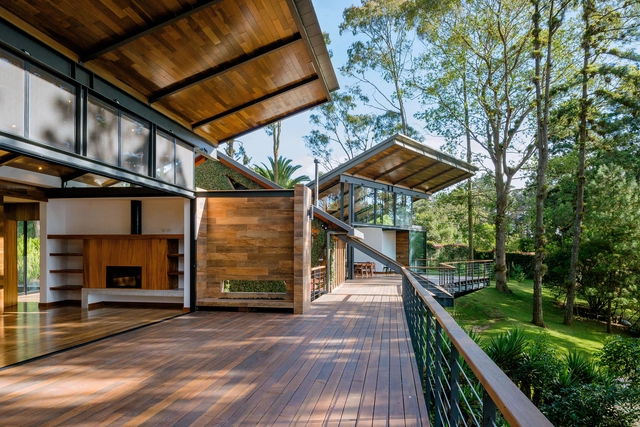
Guatemala is a country located in Central America that is organized into 22 departments, its capital and most populated city is Guatemala City. Mexico forms the geographic borders that contain this territory to the north and west, Belize and Honduras to the east, and El Salvador to the south. In addition, it faces the Pacific Ocean and the Gulf of Honduras. It is located in Mesoamerica, home to the Mayan culture, which extended to what we know today as Mexican territory. It is for this reason and for some other reasons related to migration issues that these two countries share similar traits in terms of climate and culture, which is highly enriching when we explore the development of the territory.

Tham & Videgård Celebrates Two Decades in Practice with Exhibition in Stockholm, Sweden

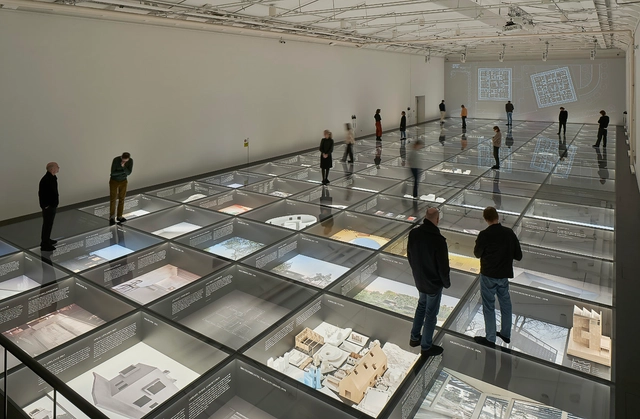
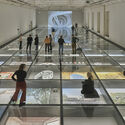
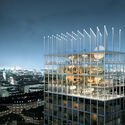
The Swedish architecture firm Tham & Videgård exhibits a broad selection of projects celebrating over twenty years in practice at the ArkDes—Centre for Architecture and Design in Stockholm, Sweden. For the first time, the studio’s work is being presented in its entirety, displaying in detail acclaimed buildings like the winning proposal for the Denfert art center in Paris and the 150-meter-tall +One Tower for the Swedish Exhibition in Gothenburg. From November 2022 to August 27, 2023, On: Architecture offers visitors a full-scale spatial experience involving models, new photography, and films – all set within a glass ground showroom.

Tham & Videgård Celebrates Two Decades in Practice with Exhibition in Stockholm, Sweden - Image 1 of 4Tham & Videgård Celebrates Two Decades in Practice with Exhibition in Stockholm, Sweden - Image 2 of 4Tham & Videgård Celebrates Two Decades in Practice with Exhibition in Stockholm, Sweden - Image 3 of 4Tham & Videgård Celebrates Two Decades in Practice with Exhibition in Stockholm, Sweden - Image 4 of 4Tham & Videgård Celebrates Two Decades in Practice with Exhibition in Stockholm, Sweden - More Images+ 2

The Future of Chinese Contemporary Architecture: How is China Creating a Civic Culture For a New Society?

A new kind of architecture distinguished by unique regional characteristics emerged in the mid-1990s when in China, architects started practicing independently from government-run design institutes. The leading Chinese architects of this time succeeded collectively in producing a unique architectural body of work when so many buildings built around the world were no longer rooted in their place and culture.

In China Dialogues, Vladimir Belogolovsky charts a panorama of Chinese architecture through the words of its main participants, lifting the veil on a prolific new generation of designers, each sharing a highly intellectualized and conceptual understanding of architecture. Following the course of 21 interviews accompanied by over 120 photographs and drawings of beautifully executed projects uprooted throughout the country since the early 2000s, China Dialogues opens up the thinking process of the country's top architects, providing an insight into their ideas, intentions, and visions in unusually revealing and candid ways.

The Future of Chinese Contemporary Architecture: How is China Creating a Civic Culture For a New Society? - Image 1 of 4The Future of Chinese Contemporary Architecture: How is China Creating a Civic Culture For a New Society? - Image 2 of 4The Future of Chinese Contemporary Architecture: How is China Creating a Civic Culture For a New Society? - Image 3 of 4The Future of Chinese Contemporary Architecture: How is China Creating a Civic Culture For a New Society? - Image 4 of 4The Future of Chinese Contemporary Architecture: How is China Creating a Civic Culture For a New Society? - More Images+ 7

A General Agreement for the Practice of Contemporary Architecture

This article was originally published on Common Edge.

In this week's reprint, author Andrés Duany presents a series of statements from today's architectural world. He considers that these understandings are the product of our times, a direct reaction and a consequence of the observed patterns.

The 2022 Edition of the EU Mies van der Rohe Award Reveals Final List of Works Competing

The European Commission and the Fundació Mies van der Rohe have announced the second list of 85 works competing for the 2022 European Union Prize for Contemporary Architecture – Mies van der Rohe Award. Joining the batch of first nominations announced in February 2021, the full list comprises now of 532 competing works for the EU Mies Award 2022. The shortlist of 40 will be announced in January 2022, the winners in April 2022, and the Award ceremony will take place in May 2022.

The 2022 Edition of the EU Mies van der Rohe Award Reveals Final List of Works Competing - Image 1 of 4The 2022 Edition of the EU Mies van der Rohe Award Reveals Final List of Works Competing - Image 2 of 4The 2022 Edition of the EU Mies van der Rohe Award Reveals Final List of Works Competing - Image 3 of 4The 2022 Edition of the EU Mies van der Rohe Award Reveals Final List of Works Competing - Image 4 of 4The 2022 Edition of the EU Mies van der Rohe Award Reveals Final List of Works Competing - More Images+ 5

The 2022 Edition of the EU Mies van der Rohe Award Reveals First 449 Nominated Works

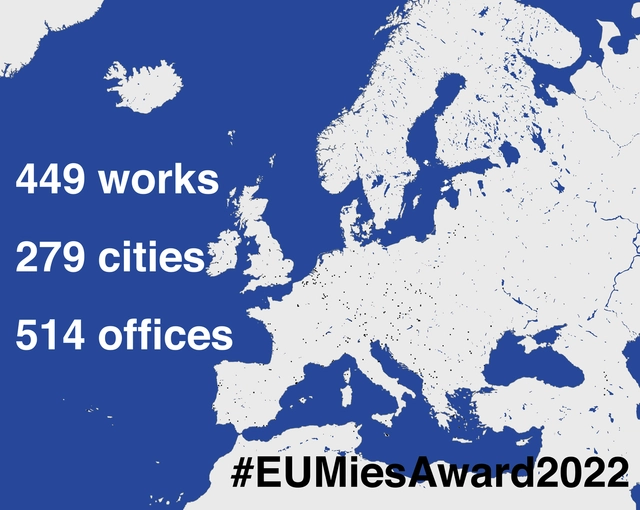
The European Union Prize for Contemporary Architecture, the Mies van der Rohe Award has just announced the first 449 works competing in its 2022 edition. Selected from 279 cities in 41 countries, the projects have been nominated by European independent experts, the national architecture associations, and the Prize Advisory Committee.

The 2022 Edition of the EU Mies van der Rohe Award Reveals First 449 Nominated Works - Image 1 of 4The 2022 Edition of the EU Mies van der Rohe Award Reveals First 449 Nominated Works - Image 2 of 4The 2022 Edition of the EU Mies van der Rohe Award Reveals First 449 Nominated Works - Image 3 of 4The 2022 Edition of the EU Mies van der Rohe Award Reveals First 449 Nominated Works - Image 4 of 4The 2022 Edition of the EU Mies van der Rohe Award Reveals First 449 Nominated Works - More Images+ 10

The Contemporary Approach to Rebuilding Cities Post-Disaster: The Case of Beirut

Almost 6 months ago, on August 4th, 2020, the city of Beirut was shaken by one of the biggest non-nuclear blasts in history. Leaving the northern side of the capital in ruins, the explosion damaged around 40,000 buildings. New contemporary structures completed recently by local international architects are now facing reconstruction dilemmas, raising existential questions such as: How should reconstruction efforts of “new” damaged buildings look like? Should architects rebuild them as they were before the blast, erasing what has happened or should they leave scars and portray new realities?

In order to explore ideas and highlight different perspectives, ArchDaily had the chance to sit with three architects whose buildings were impacted by the blast. Bernard Khoury, Paul Kaloustian, and Lina Ghotmeh talked about their projects and their vision of the reconstruction of Beirut with ArchDaily's Managing Editor, Christele Harrouk, alongside Architectural Photographer Laurian Ghinitoiu, who documented in a featured photo series the extent of the destruction.

The Contemporary Approach to Rebuilding Cities Post-Disaster: The Case of Beirut - Image 1 of 4The Contemporary Approach to Rebuilding Cities Post-Disaster: The Case of Beirut - Image 2 of 4The Contemporary Approach to Rebuilding Cities Post-Disaster: The Case of Beirut - Image 3 of 4The Contemporary Approach to Rebuilding Cities Post-Disaster: The Case of Beirut - Image 4 of 4The Contemporary Approach to Rebuilding Cities Post-Disaster: The Case of Beirut - More Images+ 15

The 5 Points of Modern Architecture in Contemporary Projects

In 1926, Le Corbusier developed the five points that would become the foundations for modern architecture. Once materialized in 1929 in the iconic Villa Savoye project, Le Corbusier's principles - pilotis, free design of the ground plan, free design of the facade, horizontal window, and roof garden - have been extensively explored in modern architecture and continue to influence the most diverse contemporary architectural projects to this day.

The five points became a kind of guideline for the New Architecture, as Corbusier used to call it. Even after decades, new technologies, materials, and demands of society have continued to update those architectural solutions, announced almost a century ago as the basis for a new architecture.

The 5 Points of Modern Architecture in Contemporary Projects - Image 1 of 4The 5 Points of Modern Architecture in Contemporary Projects - Image 6 of 4The 5 Points of Modern Architecture in Contemporary Projects - Image 21 of 4The 5 Points of Modern Architecture in Contemporary Projects - Image 24 of 4The 5 Points of Modern Architecture in Contemporary Projects - More Images+ 26

Scary People in Architectural Photography

Subscriber Access | 

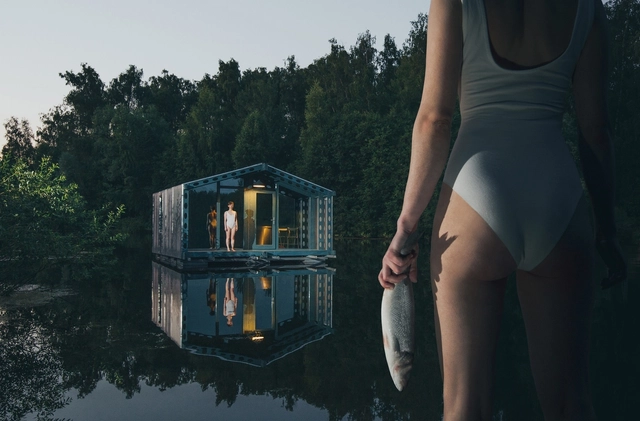
Halloween. A day plagued by ghost, ghouls, and goblins. Historically, on All Hallows' Evening, many believed that spirits could return to the earthly world. On this frightful occasion, we’re highlighting phantoms from the beyond that have entered the architectural realm. Below, 13 hellish projects and their supernatural counterparts. Scroll down if you dare. 

Scary People in Architectural Photography - Image 1 of 4Scary People in Architectural Photography - Image 2 of 4Scary People in Architectural Photography - Image 3 of 4Scary People in Architectural Photography - Image 4 of 4Scary People in Architectural Photography - More Images+ 10

Architecture in Black: A Selection of The Best Dark Interiors

Subscriber Access | 

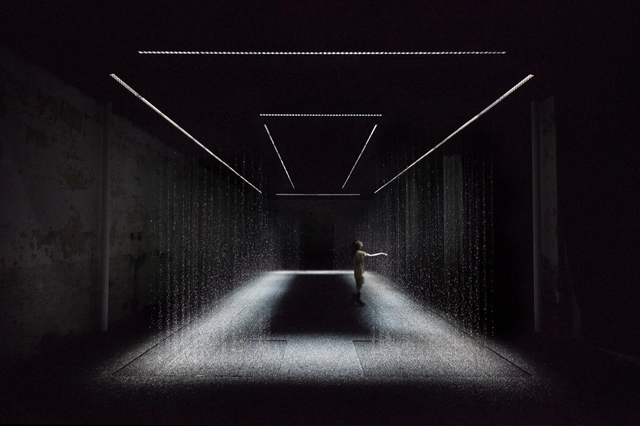
The use of light and shadow in architecture can have several nuances. The traditional Japanese culture stands out for working with spaces of dim light, kind of dull. On the other hand, modern architecture and minimalism work along with illuminating spaces through the use of white spaces and reflection of light as a recurring resource.

Even so, black, dark spaces and minimalism also converse in the same language that provides new possibilities for lighting design and use of new materials. We now present you a selection of the best contemporary interior spaces that use black as the protagonist element, generating introspective but dramatic environments at the same time.

"I Identify Forms with Energy": Li Xiaodong of Li Xiaodong Atelier

One of the immediate impressions that I formed of the Beijing-based architect and Tsinghua University Professor Li Xiaodong (b. 1963) is his reassuring self-confidence. Following our interview, Professor Li asked me a question of his own - would I like to teach at his school? “I never taught in my life,” I replied. He quickly countered, “I know. You can teach. Yes or no?” If I have learned anything about life, it is that when opportunities come you should grab them first and think later. "If he is so confident in me, why shouldn’t I trust him?” I reasoned.

"I Identify Forms with Energy": Li Xiaodong of Li Xiaodong Atelier - Arch Daily Interviews"I Identify Forms with Energy": Li Xiaodong of Li Xiaodong Atelier - Arch Daily Interviews"I Identify Forms with Energy": Li Xiaodong of Li Xiaodong Atelier - Arch Daily Interviews"I Identify Forms with Energy": Li Xiaodong of Li Xiaodong Atelier - Arch Daily InterviewsI Identify Forms with Energy: Li Xiaodong of Li Xiaodong Atelier - More Images+ 19

Contemporary Religious Architecture That Rethinks Traditional Spaces for Worship

Subscriber Access | 
Contemporary Religious Architecture That Rethinks Traditional Spaces for Worship - Image 4 of 4
© Fabrice Fouillet

Constructing places of worship has always been an intricate practice, managing to detach the human, and release the boundary between body, mind, and spirit. Holy presence has been crucial in designing and constructing sacred places, which is why almost all religious building possessed similar characteristics: grandiosity, monolithic material, natural elements, and a plan that compliments an individual’s circulation through the space. Contemporary religious structures, however, found a way to adapt to the evolution of architecture. Unlike the Gothic or Baroque periods, modern-day architecture does not have a dominant identity. It is, in fact, a combination of postmodernism, futurism, minimalism, and everything in between. Architects have found a way to transform these exclusive, religion-devoted places into structures of spirituality, manifestation, and fascination.

Here is a selection of contemporary religious buildings that prove once again that architects are breaking all boundaries of creativity.

Contemporary Religious Architecture That Rethinks Traditional Spaces for Worship - Image 1 of 4Contemporary Religious Architecture That Rethinks Traditional Spaces for Worship - Image 2 of 4Contemporary Religious Architecture That Rethinks Traditional Spaces for Worship - Image 3 of 4Contemporary Religious Architecture That Rethinks Traditional Spaces for Worship - Featured ImageContemporary Religious Architecture That Rethinks Traditional Spaces for Worship - More Images+ 19