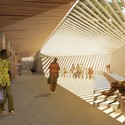
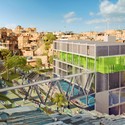
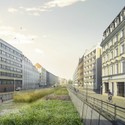
The built environment shapes all our lives. It is also largely responsible for human-made alterations to our planet’s ecosystems. So, to allow all life on earth to be sustained, we must urgently transform the way we build – at pace and at scale. As a non-profit organization deeply committed to enabling this change, the Holcim Foundation has reshaped its flagship Holcim Awards competition to focus on bringing to light and rewarding real-world case studies that exemplify the most innovative practice in sustainable construction.
Led by American Lebanese architect Hashim Sarkis, the jury of the global Holcim Awards for Sustainable Construction has announced the winners of the sixth edition of the global competition at a handover ceremony at the 2021 Venice Biennale in Italy.
Emerging from over 6,000 entries, three winners of the fourth Global Holcim Awards for Sustainable Construction have been selected. The international competition, occurring every three years, recognizes designs that provide sustainable solutions to local issues faced by communities throughout the world. This year's winning projects addressed sites in Colombia, Sri Lanka, and the United States and will receive monetary prizes ranging from $50,000 to $200,000.
Videos
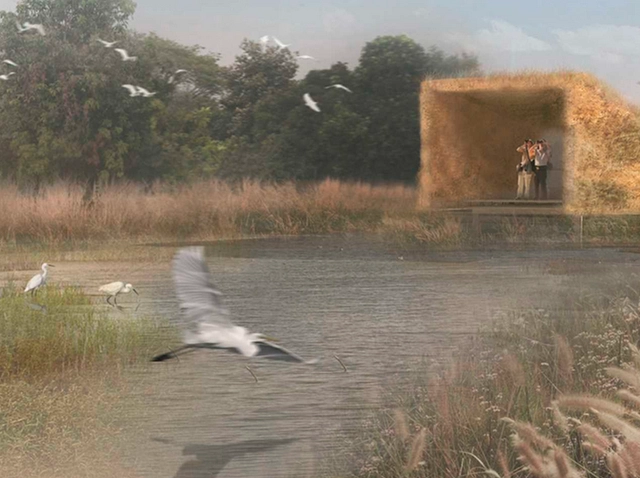
GOLD: “Protective Wing” Bird Sanctuary . Image Courtesy of Holcim Foundation
Teams from Thailand and New York have received top honors in the 2014 regional Holcim Awards for Asia Pacific, an award which recognizes the most innovative and advanced sustainable construction designs. Among the top three winners are the “Protective Wing” bird sanctuary and a locally-adapted orphanage and library in Nepal.
The 13 recognized projects will share over $300,000 in prize money, with the top three projects overall going on to be considered for the global Holcim Awards, to be selected in 2015.
The full list of Asia Pacific winners, after the break…
Videos
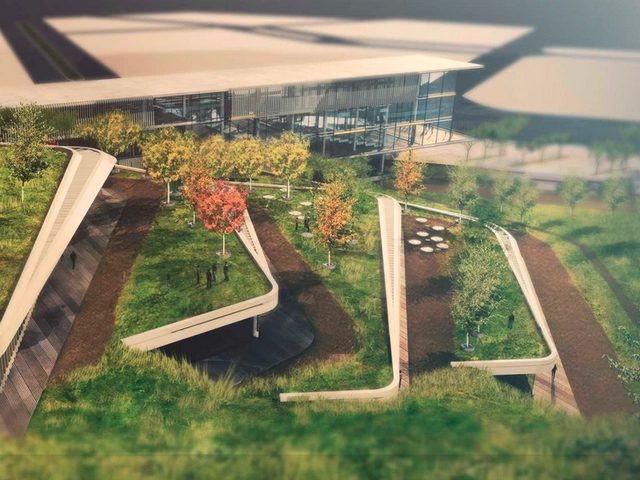
GOLD: Eco-Techno Park: Green building showcase and enterprise hub. Image Courtesy of Holcim Foundation
Teams from Turkey and Lebanon have received top honors in the 2014 regional Holcim Awards for Africa Middle East, an award which recognizes the most innovative and advanced sustainable construction designs. Among the top three winners is an “Eco-Park” sustainable research and technology center embedded within the terraced, industrial landscape of Ankara.
The 12 recognized projects will share over $300,000 in prize money, with the top three projects overall going on to be considered for the global Holcim Awards, to be selected in 2015.
Videos
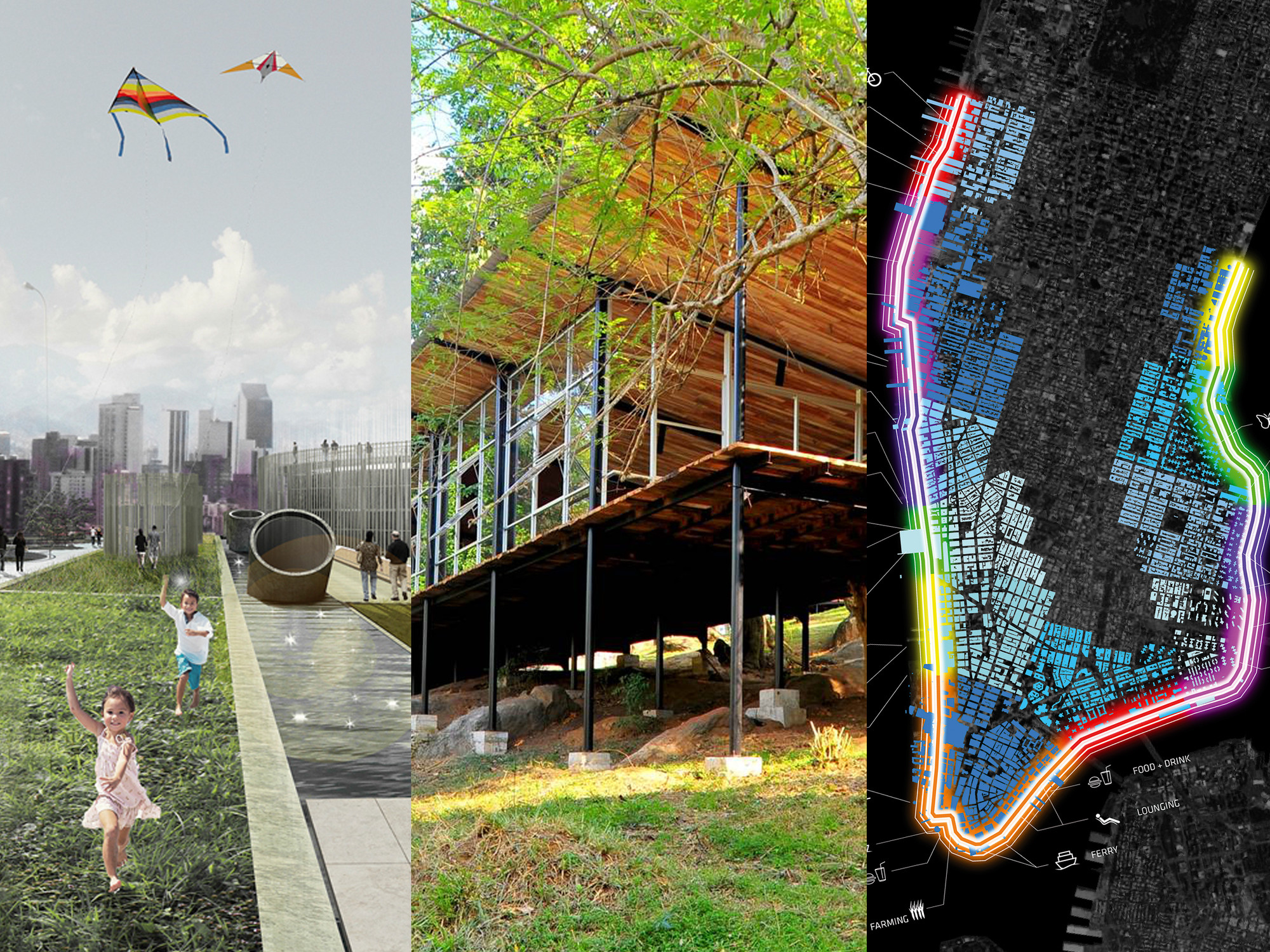
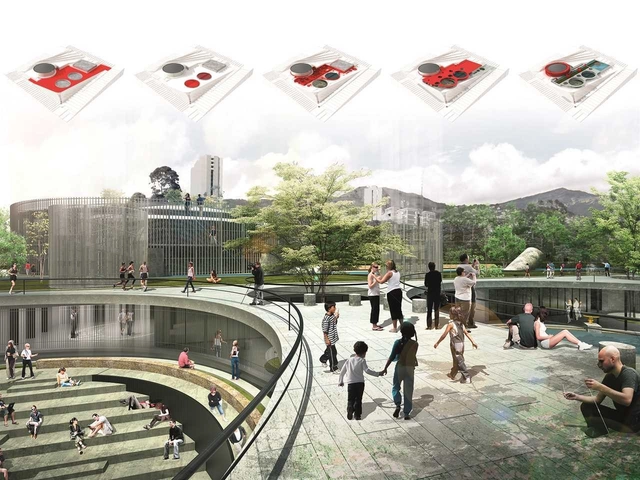
GOLD: Articulated Site: Water reservoirs as public park (Medellin, Colombia) . Image Courtesy of the Holcim Foundation
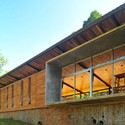
Teams from Mexico and Colombia have received top honors in the 2014 regional Holcim Awards for Latin America, an award which recognizes the most innovative and advanced sustainable construction designs. Among the top three winners is a Colombian water reservoir turned public park and low-impact timber rainforest center in Costa Rica.
The 12 recognized projects will share over $300,000 in prize money, with the top three projects overall going on to be considered for the global Holcim Awards, to be selected in 2015.
The full list of Latin American winners, after the break…
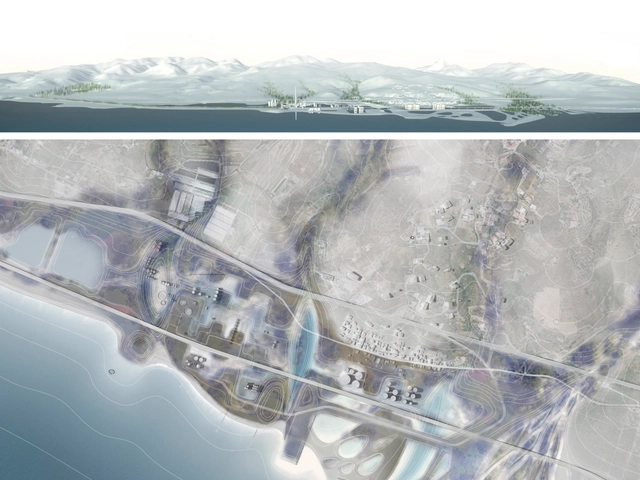
Anthropic Park: Freshwater ecological reserve and remediation - Saline Joniche, Italy. Image Courtesy of Grupo Aranea
The Holcim Foundation has announced the European winners of its 2014 Holcim Awards for exemplary sustainable design and construction. In light of the complex and interdisciplinary challenges facing the building industry today, the Jury identified target issues of environmental, social, and economical performance alongside architectural excellence and high transferability as intrinsic objectives in the winning projects.
Teams from Italy, France, and Austria were all selected for approaching the challenges of sustainable construction with innovative creativity and social ethos. Each will share over $300,000 in prize money and will be considered for the global awards.
Read more about the winning schemes after the break...
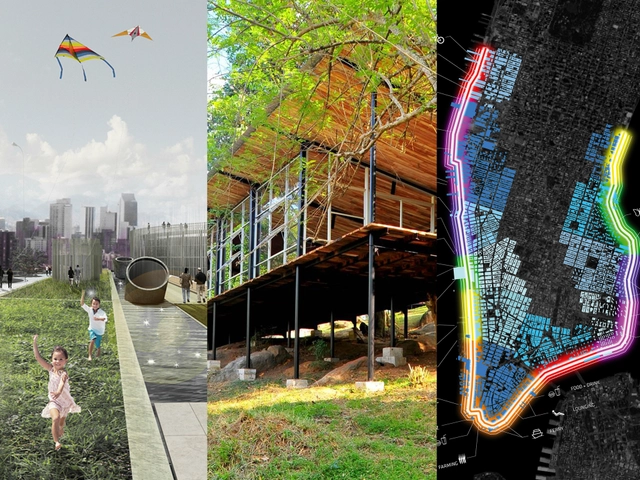
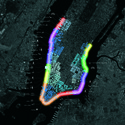
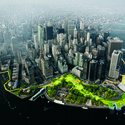
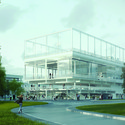
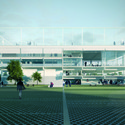
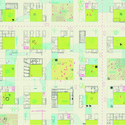
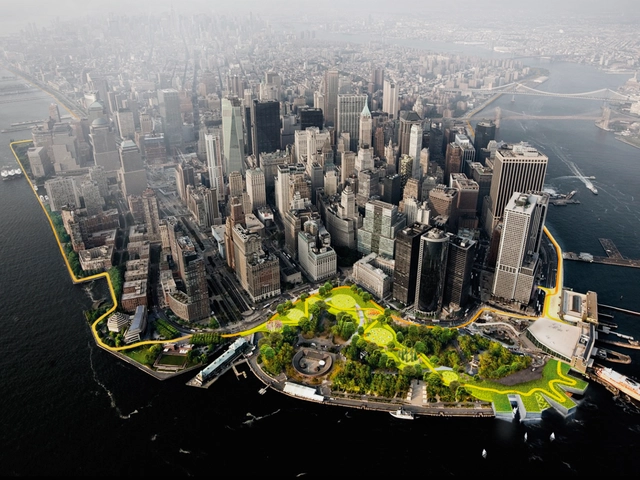
The Holcim Foundation has announced the Winners of the Holcim Awards 2014 for North America, the award which recognizes the most innovative and advanced sustainable construction designs. Among the winners are BIG and The Living, with designs which the jury stated showed "sophisticated and multi-disciplinary responses to the challenges facing the building and construction industry."
The ten recognized projects share over $300,000 in prize money, with the top three projects overall going on to be considered for the global Holcim Awards awards, to be selected in 2015.
Read on after the break for the full list of winners
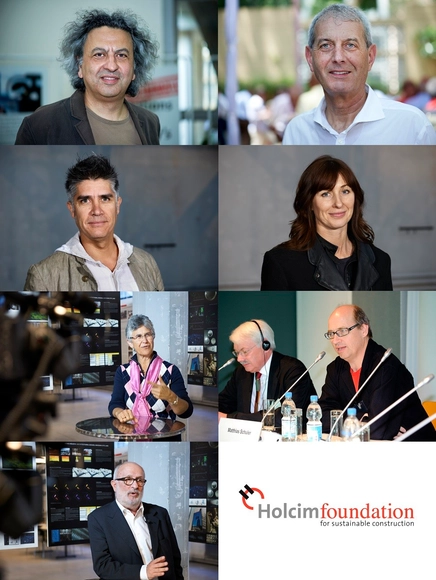
The Holcim Foundation has announced the global jury for the 2015 Holcim Awards, its triennial prize which encourages architects, planners, engineers, project owners and students to share their projects and visions that "go beyond conventional notions of sustainable construction."
The 2015 prize is the Holcim Foundation's fourth cycle, and this year will feature a total prize fund of $2 million - a significant increase on their 2012 prize fund of $300,000. To oversee the awards, they have recruited independent experts of international stature, including the Deans of the Harvard Graduate School of Design and ETH Zurich, and Alejandro Aravena of Chilean practice Elemental.
Read on after the break for the full list of jurors and more on the prize
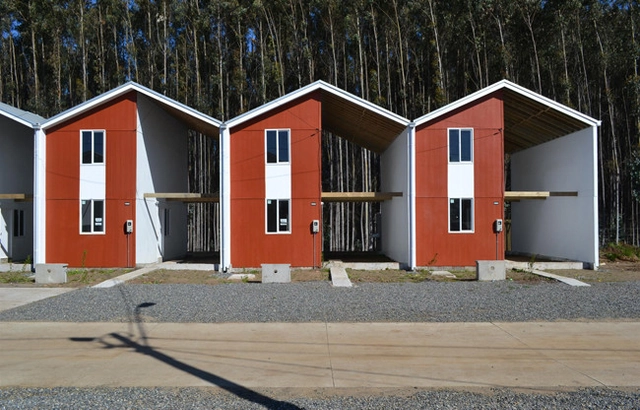
Elemental ultimately developed a system in which half of each building would be constructed in a first phase – and the other half in a later second phase: allowing residents to incrementally invest in their own homes, made possible through public funding. Photo: Elemental.
There are very few sceptics who would question the importance of increasing sustainability in architecture. The enhanced social value through better living conditions, physical value in a healthier and less-polluted environment, long-term monetary value via reduced operating and maintenance costs, and ethical value through fairness to future generations are self-evident.
But despite this agreement, the inertia of decision makers in finance and politics who are preoccupied with short-term cycles has slowed the pace of change, and distracts architects and engineers from focussing upon ways to integrate greater sustainable performance into their designs and projects.
As part of an extensive urban integration project in a huge informal settlement in Medellín, Colombia, the recently-constructed system of escalators with public squares and balconies addresses serious problems regarding connectivity, security and coexistence.
Since 2005 more than 150 projects advancing sustainability of the built environment haven been celebrated in the Holcim Awards as outstanding, innovative and inspiring examples of sustainable construction. Winning a prize in this international competition has sign-posted professional success for the project teams; highlighted sustainability on the public agenda; accelerated tangible change for urban poor; and secured funding for environmental recovery and research. Beyond holding a trophy aloft, the momentum of sustainable construction has continued for the architects behind projects in locations as diverse as Burkina Faso, Spain, India, and Canada.
At a lecture he delivered in April this year at the 4th Holcim Forum 2013 in Mumbai, Pritzker Jury member and Chilean architect Alejandro Aravena approached sustainability from an unconventional angle. The key to achieving the "Economy of Sustainable Construction" (the title of this year's Holcim Forum), Aravena claims, requires two things: "in this generation, more psychiatrists; in the next generations, more breasts."
The Holcim Awards is one of the most significant competitions in its field in terms of reputation and international scope. The fourth cycle of the competition offering a total of USD 2 million in prize money is now open for entries. The competition seeks leading projects from industry professionals and bold ideas from the “Next Generation” that contribute to sustainability within architecture, building, civil engineering, landscape and urban design, as well as construction materials and technologies. Entries must be submitted online at www.holcimawards.org by March 24, 2014.
A secondary school project in Gando, Burkina Faso, a community center project in São Paulo, Brazil, and an urban renewal plan in Berlin, Germany are the winners of the Global Holcim Awards for 2012. These leading sustainable construction projects were selected from 15 finalist submissions by a jury of independent experts led by Enrique Norten. The finalists were the regional Holcim Awards 2011 winning projects that had been selected from more than 6,000 entries in 146 countries.
All 53 prize-winning projects at the regional level also competed for further prizes based on their contributions to sustainable construction through innovative building materials and construction technologies. The Global Holcim Innovation prizes conferred by a jury of materials and industry experts led by Harry Gugger went to projects in Switzerland, Germany and the United Kingdom.
Continue after the break to view the winning proposals!
Selecting the most outstanding projects in sustainable construction from several thousand submissions will be the challenging task of more than fifty leading experts on sustainability. The jury members for the 3rd International Holcim Awards competition include architects Bjarke Ingels (Denmark), Keller Easterling (USA) and Michel Rojkind (Mexico) – all independent experts of international stature engaged in the sustainable development of society, building processes, construction materials, and building projects.
Entries in the USD 2 million competition are evaluated using five “target issues” to define sustainable construction. Three of these stem from the triple bottom line of balanced social, environmental and economic performance. The two remaining issues pay homage to contextual and aesthetic impact, along with innovation and transferability. A series of five jury panels will meet in June/July 2011 in each of the five world regions: Europe, North America, Latin America, Africa Middle East, and Asia Pacific.
Sustainable development typically looks at the “triple bottom line” of economic, ecological and social factors and has become the Zeitgeist of the industry. In the context of the built environment, innovative and contextual impacts must also be factored into any calculation of sustainability. With such broad elements to be considered, it’s no wonder that exemplary projects in sustainable construction are rarely the work of one single person or profession, but combine the expertise of several fields: architecture, engineering, research, biology and sociology.
To bring the concept of broad sustainability for the building industry to life, the 3rd International Holcim Awards for Sustainable Construction identify and recognize the cutting-edge of sustainability – propelling more widespread and consequential adoption of approaches to build a more sustainable future. The Holcim Awards competition also includes a category for the “Next Generation” of university students to share their concepts for the sustainable projects of the future.
The second cycle of the Holcim Awards competition has reached its pinnacle: the top sustainable construction projects out of thousands of submissions from all continents have been selected. THOLChe four winning entries are a river remediation scheme in Morocco, a greenfield university campus in Vietnam, a rural planning strategy in China, and a shelter for day laborers in the USA. A series of prize-handovers will be held at the site of each project to celebrate the winners and their highly-acclaimed examples of sustainable construction.
Almost 5,000 sustainable construction projects and visions from 121 countries entered the five regional Holcim Awards competitions in 2008. Winners of the Gold, Silver and Bronze Awards in each region automatically qualified for the Global Holcim Awards competition in 2009. The global jury was headed by Charles Correa (architect, India) and included Peter Head (structural engineer, UK), Enrique Norten (architect, Mexico/USA), Saskia Sassen (sociologist, USA), Hans-Rudolf Schalcher (civil engineer, Switzerland), and Rolf Soiron (economist, Switzerland).
More images and description of the winning projects, after the break.





.jpg?1381430654&format=webp&width=640&height=580)