1. ArchDaily
  2. Pedro Ramírez Vázquez

Pedro Ramírez Vázquez: The Latest Architecture and News

Mexico City Architecture City Guide: 38 Projects From Tenochtitlan to the 21st Century

Subscriber Access | 

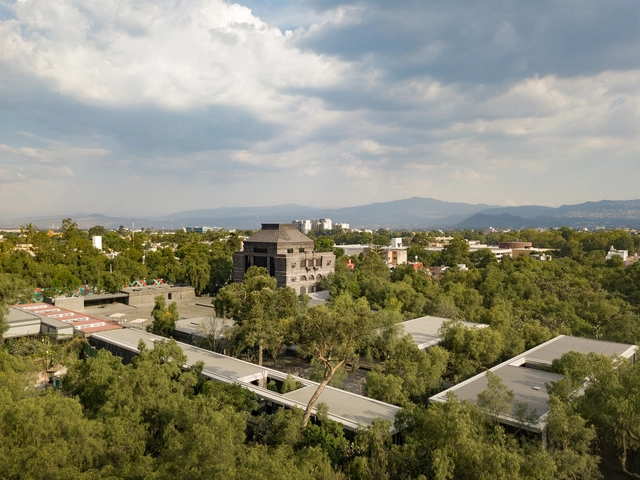
Mexico City is a sprawling metropolis of layered temporalities, where architecture operates as a continuous negotiation between deep-seated history and intense urban mutation. Built over the aquatic traces of Tenochtitlan, the city's fabric is an ongoing dialogue between eras: the monumental scale of the Pre-Hispanic Templo Mayor and the Viceroyalty architecture of the Catedral Metropolitana coexist with the modern and contemporary impulses that define its skyline. This dense juxtaposition creates a unique urban canvas where sacred geography, colonial imposition, and 20th-century ambition intersect.

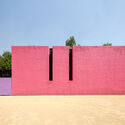
The mid-century marked a definitive era of experimentation, forging a Mexican Modernism that masterfully synthesized international structural rationalism with local identity and materiality. This synthesis is epitomized by the sweeping, plastic integration of art and architecture at the Ciudad Universitaria, the structural poetry of Félix Candela's hyper-parabolic shells, and the raw, monumental brutalism of Teodoro González de León and Abraham Zabludovsky. Parallel to this, the intimate, introspective mastery of Luis Barragán and Juan O'Gorman redefined domestic space, experimenting with light, vernacular color, and tectonic honesty to create spaces of profound spatial stillness.
Mexico City Architecture City Guide: 38 Projects From Tenochtitlan to the 21st Century - Image 1 of 4Mexico City Architecture City Guide: 38 Projects From Tenochtitlan to the 21st Century - Image 2 of 4Mexico City Architecture City Guide: 38 Projects From Tenochtitlan to the 21st Century - Image 3 of 4Mexico City Architecture City Guide: 38 Projects From Tenochtitlan to the 21st Century - Image 4 of 4Mexico City Architecture City Guide: 38 Projects From Tenochtitlan to the 21st Century - More Images+ 53

Discover the Full List of Stadiums Hosting the 2026 FIFA World Cup in the United States, Mexico, and Canada

Subscriber Access | 

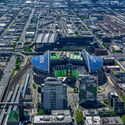
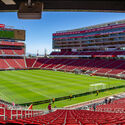
The FIFA World Cup 2026 will take place from June 11 to July 19, 2026, across North America, with matches hosted at 16 venues in Canada, Mexico, and the United States. For the first time, the tournament is being co-hosted by three countries: 11 venues in the United States, 3 in Mexico, and 2 in Canada. Since the 2018 FIFA Congress selected the venues to host the 2026 World Cup, the three North American countries have been working to deliver the tournament. This edition will be the first to feature 48 competing teams, expanded from 32. Unlike the 2022 Qatar World Cup, which required the construction of entirely new stadiums, the three host countries already have the necessary infrastructure in place, though several venues are taking the opportunity to upgrade their facilities, including Mexico City's Estadio Azteca, Arlington's AT&T Stadium, and Toronto's BMO Field.

Discover the Full List of Stadiums Hosting the 2026 FIFA World Cup in the United States, Mexico, and Canada - Image 1 of 4Discover the Full List of Stadiums Hosting the 2026 FIFA World Cup in the United States, Mexico, and Canada - Image 2 of 4Discover the Full List of Stadiums Hosting the 2026 FIFA World Cup in the United States, Mexico, and Canada - Image 3 of 4Discover the Full List of Stadiums Hosting the 2026 FIFA World Cup in the United States, Mexico, and Canada - Image 4 of 4Discover the Full List of Stadiums Hosting the 2026 FIFA World Cup in the United States, Mexico, and Canada - More Images+ 13

Beyond the Shell: Félix Candela’s Palacio de los Deportes for the 1968 Mexico Olympics

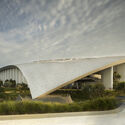
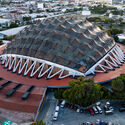
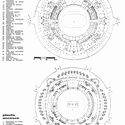
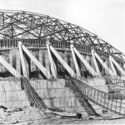
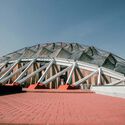
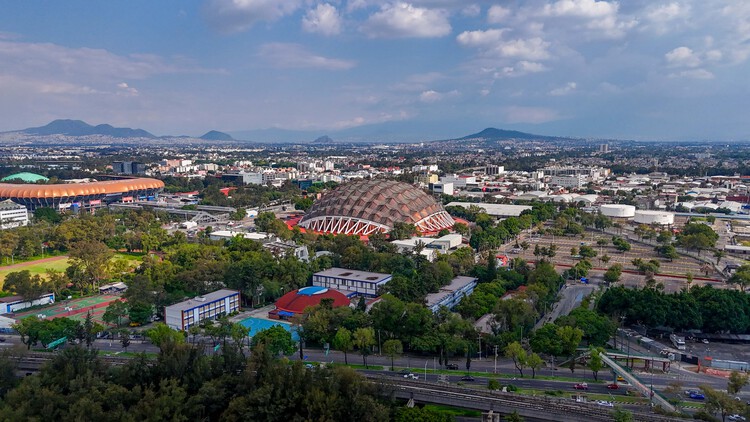
When Mexico City hosted the Olympics in 1968, it was the first time the Games had been awarded to a Latin American country as well as the first time for a Spanish-speaking nation to host them. This made the games a good opportunity to project Mexico and its culture internationally, thus prompting the government to constitute an organizing committee with prominent local talent. They appointed Pedro Ramírez Vázquez as its president, a Mexican architect who held significant influence over the state's mid-century building program. His approach was explicit: architecture as a synthesis of international modernist technique with Pre-Columbian references and local material culture. Under his direction, the committee would oversee the construction and adaptation of venues distributed across the southern districts of Mexico City, nearly all designed and built by local architects, engineers, and technicians.

Beyond the Shell: Félix Candela’s Palacio de los Deportes for the 1968 Mexico Olympics - Image 1 of 4Beyond the Shell: Félix Candela’s Palacio de los Deportes for the 1968 Mexico Olympics - Image 2 of 4Beyond the Shell: Félix Candela’s Palacio de los Deportes for the 1968 Mexico Olympics - Image 3 of 4Beyond the Shell: Félix Candela’s Palacio de los Deportes for the 1968 Mexico Olympics - Image 4 of 4Beyond the Shell: Félix Candela’s Palacio de los Deportes for the 1968 Mexico Olympics - More Images+ 7

Transmitting Local Culture: 15 Contemporary Museums and Cultural Spaces in Mexico City

Subscriber Access | 

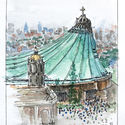
Mexico City is renowned for its abundant museums, heritage sites, and cultural richness. In fact, the capital has over 173 museums, big and small spread out through its 16 alcaldías or burroughs. The presence of these cultural spaces injects and intensifies the artistic appeal and aspect of the vibrant city. With many pioneering Mexican architects having intertwined modern art and architecture, this gave rise to iconic museums and classics of Mexican modernist architecture.
Transmitting Local Culture: 15 Contemporary Museums and Cultural Spaces in Mexico City - Image 1 of 4Transmitting Local Culture: 15 Contemporary Museums and Cultural Spaces in Mexico City - Image 2 of 4Transmitting Local Culture: 15 Contemporary Museums and Cultural Spaces in Mexico City - Image 3 of 4Transmitting Local Culture: 15 Contemporary Museums and Cultural Spaces in Mexico City - Image 4 of 4Transmitting Local Culture: 15 Contemporary Museums and Cultural Spaces in Mexico City - More Images+ 29

From Borderlines to Blurred Boundaries: San Diego-Tijuana as the World Design Capital 2024

Subscriber Access | 

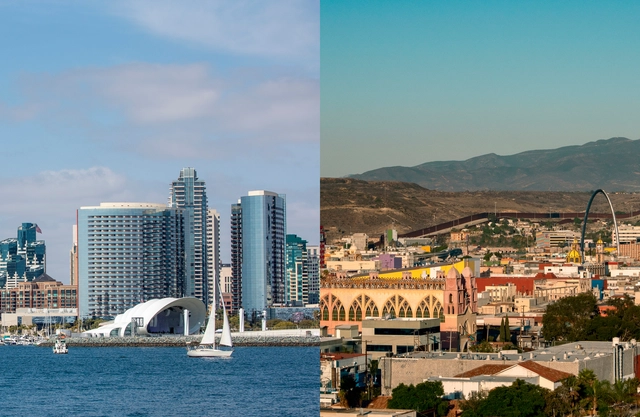
When drawing, lines are fundamental elements of composition. They delineate space, outline structures, and define boundaries. When it comes to maps and borders, the line acquires a particular meaning, as this "simple" graphic expression marks a powerful division between regions, setting the beginning or the end of a territory. This line has a profound meaning at the limit between Mexico and the United States, where it constantly blurs and questions the border. In these places, multiculturalism is a daily occurrence, with a continuous negotiation of boundaries present in all aspects of life. The dynamic of these borders involves design and the generation of a complex network of interactions and collaborations.

Rather than being divided into Tijuanenses on one side and San Diegans on the other, this particular region stands out as a community whose essence harmonizes with a deep legacy of cross-border collaboration, rather than being seen as cities separated by a line. As the first binational designation in the history of the World Design Capital (WDC) program, the Tijuana-San Diego region shares a common interest in addressing urban, social, and economic issues through design. Thus, via conferences, policy summits, and workshops, the region seeks to enhance the catalyzation of ideas through its designation.

Tijuana City Guide: 9 Projects to Explore in the 2024 World Design Capital

Subscriber Access | 

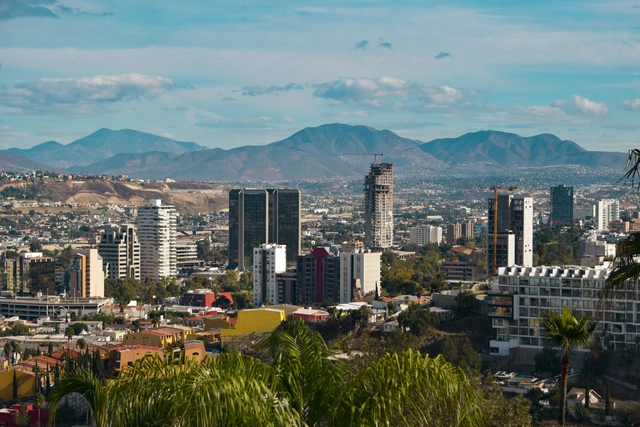
The U.S.-Mexico border is a region of vast historical, cultural, and economic significance, where cities of fundamental importance to North America have emerged. Tijuana—located in northeastern Mexico—, is one of these cities. Since its earliest beginnings in the 18th century, it has experienced exponential urban growth, closely linked to its northern neighbor, San Diego. Understanding Tijuana in its entirety is only possible by mentioning this connection. For this reason, along with San Diego, it was selected as the World Design Capital 2024, celebrating the interaction and cultural exchange between the two cities.

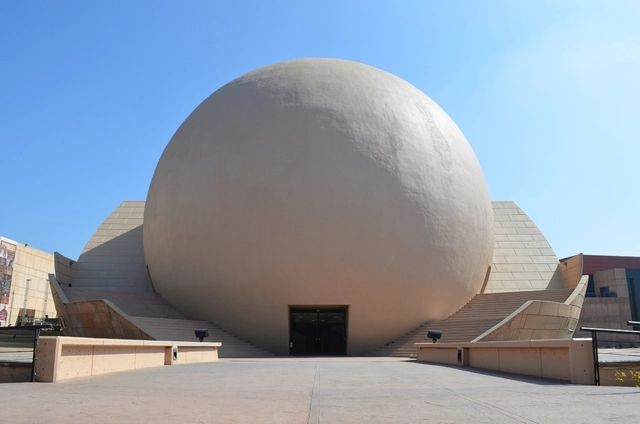
Historically, the city has been a melting pot of nuances reflected in its urban landscape. Examples such as the Tijuana Cultural Center, designed by Pedro Ramírez Vázquez and Manuel Rosen, show the city's search for a modern style. In parallel, the OTAY Cross Border Xpress Building illustrates the relationship between countries in a complex whose architectural program spans both sides of the border. Additionally, contemporary projects contribute to developing a new stage in the city's life by creating public spaces.

Tijuana City Guide: 9 Projects to Explore in the 2024 World Design Capital - Image 1 of 4Tijuana City Guide: 9 Projects to Explore in the 2024 World Design Capital - Image 2 of 4Tijuana City Guide: 9 Projects to Explore in the 2024 World Design Capital - Image 3 of 4Tijuana City Guide: 9 Projects to Explore in the 2024 World Design Capital - Image 4 of 4Tijuana City Guide: 9 Projects to Explore in the 2024 World Design Capital - More Images+ 5

Urban Sketchers Mexico Pays Tribute to Pedro Ramírez Vázquez

Subscriber Access | 

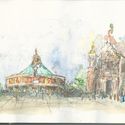
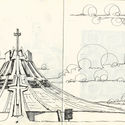
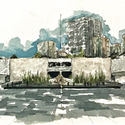
Urban Sketchers Mexico Pays Tribute to Pedro Ramírez Vázquez - Image 1 of 4Urban Sketchers Mexico Pays Tribute to Pedro Ramírez Vázquez - Image 2 of 4Urban Sketchers Mexico Pays Tribute to Pedro Ramírez Vázquez - Image 3 of 4Urban Sketchers Mexico Pays Tribute to Pedro Ramírez Vázquez - Image 4 of 4Urban Sketchers Mexico Pays Tribute to Pedro Ramírez Vázquez - More Images+ 18

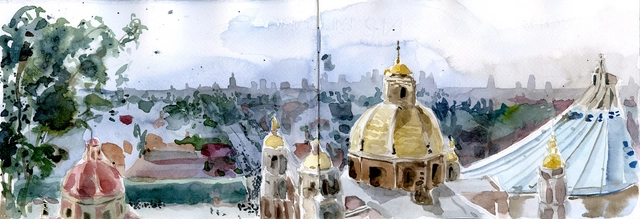
Urban Sketchers is an international non-profit organization dedicated to fostering a global community of artists who practice on-site drawings to enhance the artistic, narrative, and educational value of drawing. Connecting people from all over the world, the organization brings people in touch with their environment to illustrate drawings of their lived experiences. 

AD Classics: Tijuana Cultural Center / Pedro Ramírez Vázquez + Mánuel Rosen Morrison

Designed by architect Pedro Ramírez Vázquez and Manuel Rosen Morrison, the buildings that make up the Tijuana Cultural Center constructed at the end of the 20th century, are now an urban landmark with a singularity so evident that it could only be understood in a city as peculiar as the one that houses it. We present to you on this occasion an approach to architecture with modern, nationalist, and iconic touches that at some point were part of the national emblem within the horizons of a Mexico like that of 1982.

In October 1982 in the city of Tijuana, Baja California, the facilities of what we now know as the Tijuana Cultural Center (Cecut) were inaugurated. That moment could probably evoke scenes inspired by movies like 'The Belly of an Architect', where examples of 18th-century Parisian architecture by Étienne-Louis Boullée are revisited in modern times. The shapes, scale, and arrangement of the volumes of the complex recall in the construction of the Cecut, how modern anti-historicism opened the possibility for a construction like this one, almost reaching the 21st century.

AD Classics: Tijuana Cultural Center / Pedro Ramírez Vázquez + Mánuel Rosen Morrison - Image 1 of 5AD Classics: Tijuana Cultural Center / Pedro Ramírez Vázquez + Mánuel Rosen Morrison - Image 2 of 5AD Classics: Tijuana Cultural Center / Pedro Ramírez Vázquez + Mánuel Rosen Morrison - Image 3 of 5AD Classics: Tijuana Cultural Center / Pedro Ramírez Vázquez + Mánuel Rosen Morrison - Image 4 of 5AD Classics: Tijuana Cultural Center / Pedro Ramírez Vázquez + Mánuel Rosen Morrison - More Images+ 31

Mexican Architect Pedro Ramírez Vázquez Dies at 94

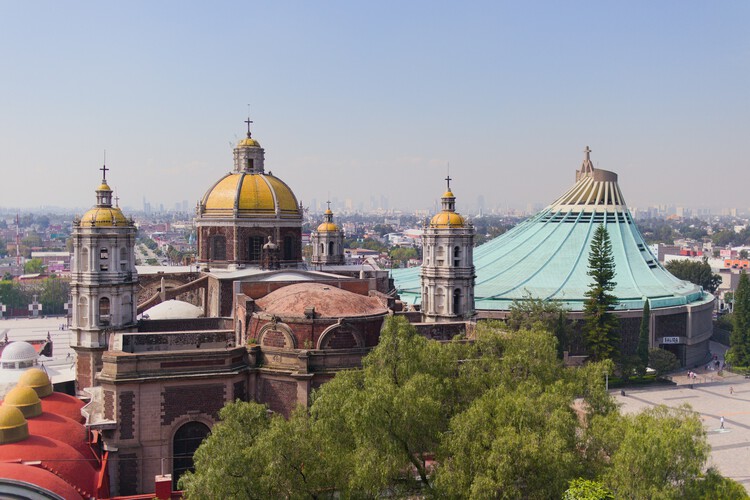
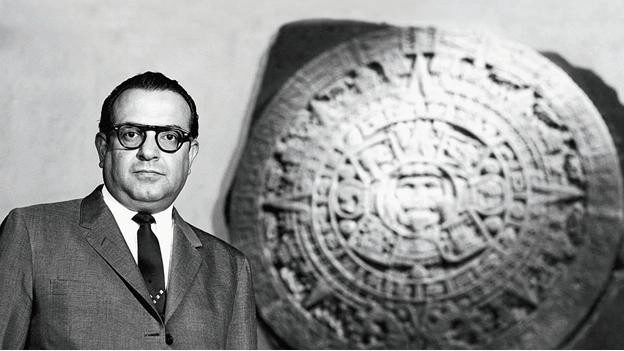
Pedro Ramírez Vázquez, one of the most important Mexican architects of the 20th century, died yesterday on his 94th birthday in Mexico City. Ramírez headed the construction of many of Mexico's modernist landmarks including several museums, the nation's largest sports stadium and a shrine that attracts the most pilgrimages in the country.

Read more on Pedro Ramírez Vázquez and his architectural legacy after the break.