1. ArchDaily
  2. AD Beyond Necessity

AD Beyond Necessity: The Latest Architecture and News

Overprovision: Exploring Purposefully Wasteful Spaces in Residential Design

Overprovision can be seen as an architecture strategy through the lens of resilience—making spaces adaptable to changes, reinterpretations, and future needs. However, could overprovision also offer a productive lens for rethinking spatial design? Are there parallels in architectural theory or practice that align with this concept, as explored by notable figures in the discourse on space?

This question becomes particularly relevant in residential design, especially in regions like Hong Kong or Tokyo, where the demand to maximize space is a cultural and practical norm. Designers are frequently tasked with "making use of every inch" for storage or function, reflecting a tendency among residents to accumulate belongings disproportionate to their living spaces. 

Overprovision: Exploring Purposefully Wasteful Spaces in Residential Design - Image 1 of 4Overprovision: Exploring Purposefully Wasteful Spaces in Residential Design - Image 2 of 4Overprovision: Exploring Purposefully Wasteful Spaces in Residential Design - Image 3 of 4Overprovision: Exploring Purposefully Wasteful Spaces in Residential Design - Image 4 of 4Overprovision: Exploring Purposefully Wasteful Spaces in Residential Design - More Images+ 12

How Not to Build: Architecture by the Absence of Intervention

Subscriber Access | 

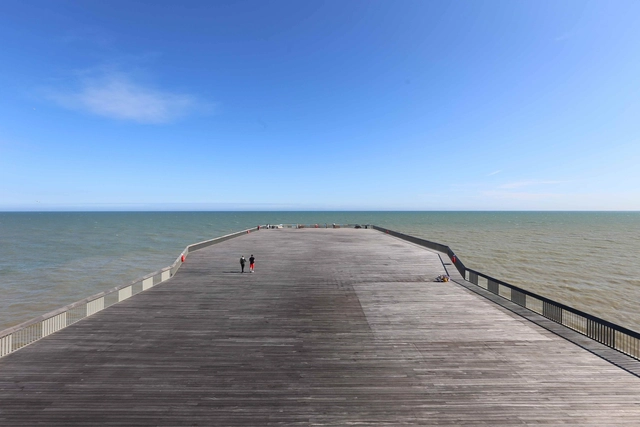
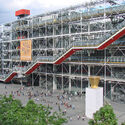
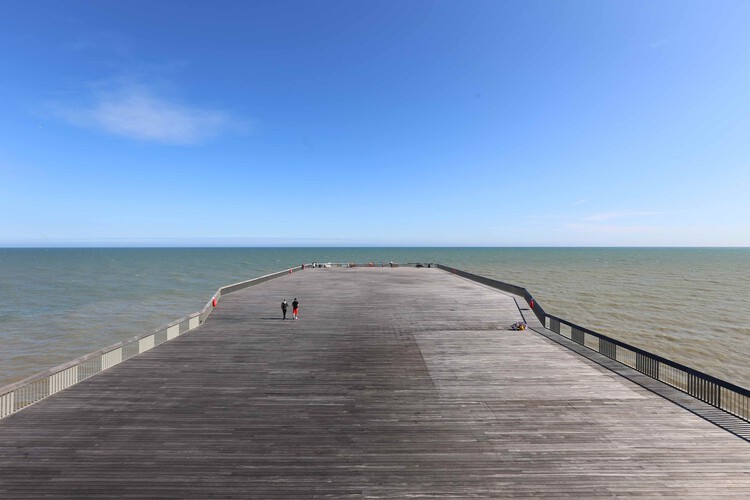
Whether for design competitions or architectural awards, buildings are often judged for what they offer–the programmed functions, the form, or the visual delight. In a minority of cases, it is the absence or the reduction of intervention that made a project successful. In 1971, a high-profile architectural competition in Paris was won by a proposal that only utilized half the available site, giving the rest as an urban space to the city. In London, a proposal to convert a disused power station with minimal additions, leaving large spaces untouched, won a design competition in 1994. The Stirling Prize, the UK's most prestigious architectural award, in 2017 was won by a proposal that was little more than an empty platform. These examples of cultural buildings from Northwestern Europe illustrate how the absence of intervention can provide more.

How Not to Build: Architecture by the Absence of Intervention - Image 1 of 4How Not to Build: Architecture by the Absence of Intervention - Image 2 of 4How Not to Build: Architecture by the Absence of Intervention - Image 3 of 4How Not to Build: Architecture by the Absence of Intervention - Image 4 of 4How Not to Build: Architecture by the Absence of Intervention - More Images+ 14

What is Over-Providing? A Strategy for Resilient Architecture

Subscriber Access | 

Over-providing traditionally implies offering more than is necessary, often carrying a negative connotation due to the potential for excess and waste. However, could there be scenarios within the built environment where over-providing proves advantageous? The question critically examines how overprovisioning might enhance a building's flexibility and adaptability to diverse and evolving conditions.

The underlying assumption of accurately providing what is needed for a building is that stakeholders—including owners, architects, and designers—can accurately predict and cater to a structure's current and future needs. This assumption, however, is challenging to realize, as societal, economic, and cultural shifts frequently occur in unpredictable ways. In this context, over-providing emerges as a counterintuitive yet potentially beneficial strategy. As buildings and structures inevitably transform, those designed with inherent adaptability reduce the need for costly renovations or complete rebuilds.

What is Over-Providing?  A Strategy for Resilient Architecture - Image 1 of 4What is Over-Providing?  A Strategy for Resilient Architecture - Image 2 of 4What is Over-Providing?  A Strategy for Resilient Architecture - Image 3 of 4What is Over-Providing?  A Strategy for Resilient Architecture - Image 4 of 4What is Over-Providing?  A Strategy for Resilient Architecture - More Images+ 7