1. ArchDaily
  2. Agro-Based

Agro-Based: The Latest Architecture and News

Urban Agriculture in the United States: Revitalizing Neighborhoods

Subscriber Access | 

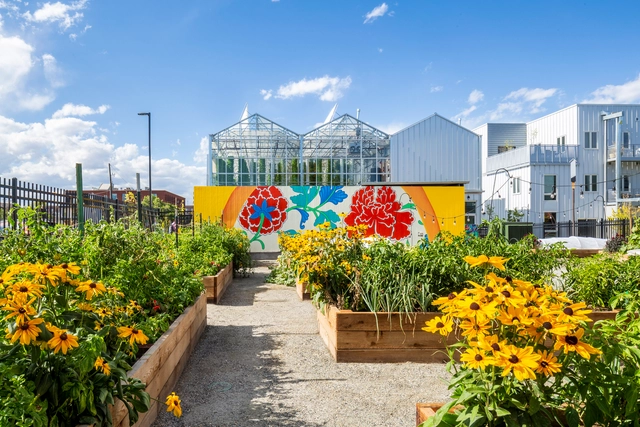
The UN Food and Agriculture Organization (UNFAO) accounts for over one-tenth of the global population, approximately 800 million people, practicing urban agriculture worldwide. In the United States, millions of citizens lack access to supermarkets. Urban farmers play a crucial role in addressing food security issues in American cities.

Historically, the distance between rural and urban areas has never been greater, making traditionally rural food sources widely inaccessible. Cities initially would develop around centralized markets that brought produce from farmlands to urban centers. Today, urban agriculture is revitalizing this connection between city dwellers and agricultural products.

Urban Agriculture in the United States: Revitalizing Neighborhoods  - Image 1 of 4Urban Agriculture in the United States: Revitalizing Neighborhoods  - Image 2 of 4Urban Agriculture in the United States: Revitalizing Neighborhoods  - Image 3 of 4Urban Agriculture in the United States: Revitalizing Neighborhoods  - Image 4 of 4Urban Agriculture in the United States: Revitalizing Neighborhoods  - More Images+ 1

Turning Corn Waste Into an Innovative Bio-Based Material

Subscriber Access | 

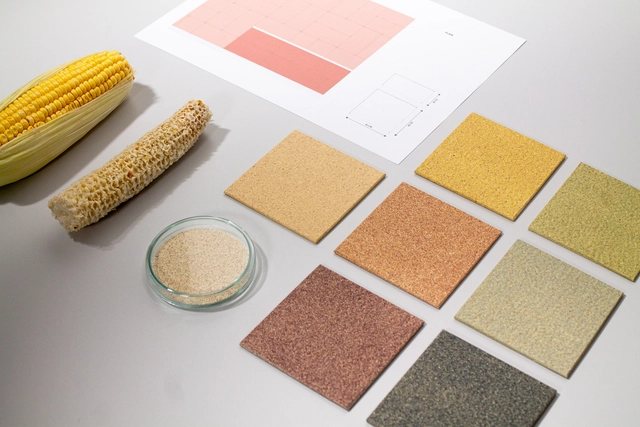
The practice of upcycling –present in a variety of industries from fashion to construction– not only revitalizes discarded items, adding new values and functions, but also contributes to turning them into valuable resources. Adopting the spirit of the circular economy by harnessing agricultural waste such as corn cobs, rice straw, and sugar cane bagasse for building materials marks a fundamental shift towards sustainable practices, promoting a closed-loop system that minimizes waste and optimizes resource efficiency.

CornWall®, developed by StoneCycling, is a pioneering innovation in this regard. Inspired by the need to shift to a bio-based economy, it incorporates a transformative solution that addresses the pressing concerns of the construction industry's environmental impact. It is a wall-finishing material made from plant biomass, obtained mainly from the cores of regionally sourced corn cobs. This organic waste is widely available and is usually destined for fermentation, burning as biomass, or becoming simple organic waste. We spoke to Ward Massa from StoneCycling to better understand this material.

Willow Technologies Transforms Agricultural By-Products Into Building Materials in Ghana

Willow Technologies is a material research and building technology practice that has been selected as part of ArchDaily's 2023 Best New Practices. Founded by Ghanaian-Filipino designer and architectural scientist Mae-Ling Lokko, it operates in the gap between research, development, and diffusion of bio-based building materials. Working with agro-waste and bio-based materials usually incurs technical questions regarding scalability, industrial production, standardization, fireproofing, and mechanical strength. Exploring this data is where Willow Technologies situates itself, but peculiarly through the lens of developing regions in West Africa. Through comprehensive works with coconuts, moringa, rice, and other indigenous crops, Lokko’s practice has been able to investigate and catalog the material character of various crops, their possible by-products, local transformation techniques, and the prospect and challenges of scalability as building materials.

Willow Technologies Transforms Agricultural By-Products Into Building Materials in Ghana - Image 1 of 4Willow Technologies Transforms Agricultural By-Products Into Building Materials in Ghana - Image 2 of 4Willow Technologies Transforms Agricultural By-Products Into Building Materials in Ghana - Image 3 of 4Willow Technologies Transforms Agricultural By-Products Into Building Materials in Ghana - Image 4 of 4Willow Technologies Transforms Agricultural By-Products Into Building Materials in Ghana - More Images+ 9