1. ArchDaily
  2. American Society of Landscape Architects

American Society of Landscape Architects: The Latest Architecture and News

How Flood Defenses Can Enhance the Public Realm

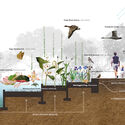
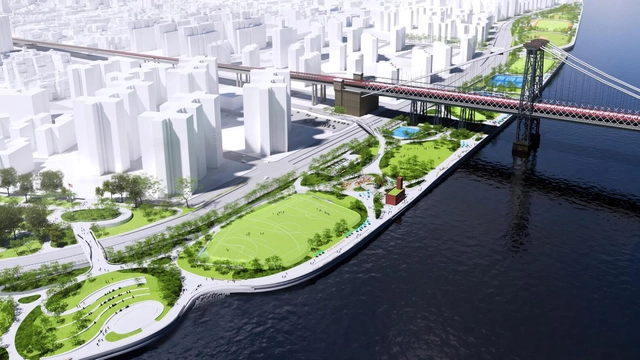
Superstorm Sandy inundated Lower Manhattan, causing billions in property and infrastructure damage. To protect against future flooding, storm surges, and sea level rise, landscape architects are developing an innovative mix of green and grey solutions along the southern coast of Manhattan.

These are not nature-based solutions but forms of armor. And designers are showing how this armature can be woven into the public realm, creating new kinds of infrastructure. Smart design is resulting in retractable gates and walls, landscaped berms, and raised platforms. No concrete walls separating communities from each other or the waterfront here.

How Flood Defenses Can Enhance the Public Realm - Image 1 of 4How Flood Defenses Can Enhance the Public Realm - Image 2 of 4How Flood Defenses Can Enhance the Public Realm - Image 3 of 4How Flood Defenses Can Enhance the Public Realm - Image 4 of 4How Flood Defenses Can Enhance the Public Realm - More Images+ 11

Simple Design Strategies for Extreme Heat

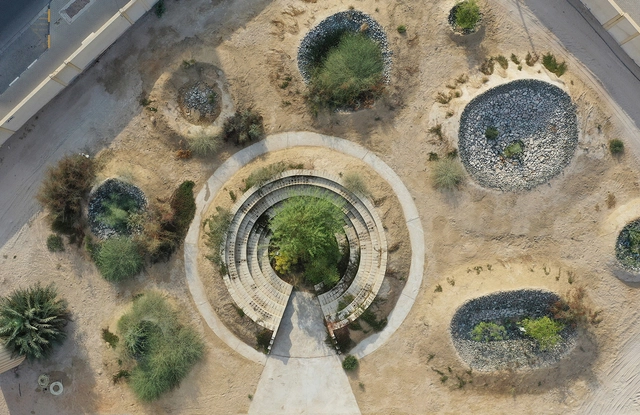
Anyone who walks during the summer in a city like Boston knows that a significant amount of time is spent charting routes with shade. But I can’t use that as my only excuse for being off-task. Honestly, I’m distracted. The swirling headlines of the U.S. presidential election, an unprecedented UN climate conference looming, and the phrase “decade of decisive action” weighs heavy on my shoulders. While it’s easy to get caught up in current events, those of us with solutions must stay focused.

A perhaps helpful Japanese phrase to call upon is “kotsu kotsu,” essentially meaning to slow down and focus on the task at hand, and do it well. Temperatures are soaring, people are suffering. As a recent UN COP letter stated, “time lost is lives, livelihoods, and the planet lost.” Cooling our cities and communities is more important than ever.

Simple Design Strategies for Extreme Heat - Image 1 of 4Simple Design Strategies for Extreme Heat - Image 2 of 4Simple Design Strategies for Extreme Heat - Image 3 of 4Simple Design Strategies for Extreme Heat - Image 4 of 4Simple Design Strategies for Extreme Heat - More Images+ 4

Climate Action Is About Choosing Local, Low-Carbon Materials

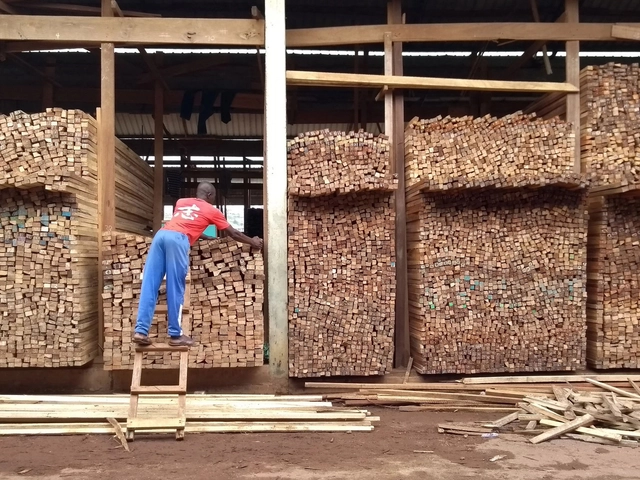
Embodied carbon accounts for 75 to 95 percent of the greenhouse gas emissions from landscape architecture projects,” said Chris Hardy, ASLA, PLA, senior associate at Sasaki, during the third in a series of webinars organized by the ASLA Biodiversity and Climate Action Committee. But by selecting locally made low-carbon materials, landscape architects can significantly reduce the climate impacts of their work.

Embodied carbon emissions are generated from the extraction, manufacturing, transportation, and construction of landscape materials. The other share of project emissions come from operating and maintaining a landscape.

Climate Action Is About Choosing Local, Low-Carbon Materials - Image 1 of 4Climate Action Is About Choosing Local, Low-Carbon Materials - Image 2 of 4Climate Action Is About Choosing Local, Low-Carbon Materials - Image 3 of 4Climate Action Is About Choosing Local, Low-Carbon Materials - Image 4 of 4Climate Action Is About Choosing Local, Low-Carbon Materials - More Images

New Constitution Gardens Will Be a Biodiversity Mecca

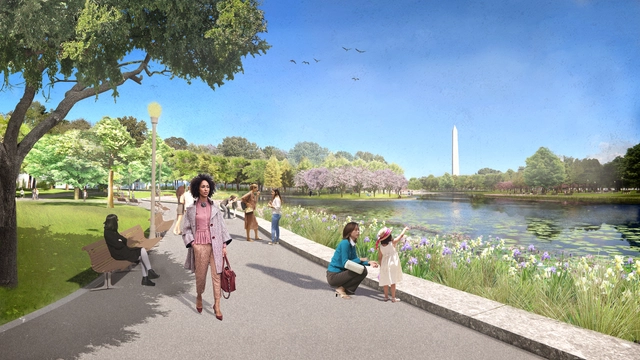
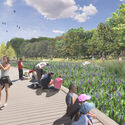
“Constitution Gardens will become a biodiversity hotspot on the National Mall,” said Adam Greenspan, FASLA, design partner at PWP Landscape Architecture. “We will create a garden, based in nature, while respecting the historic design.” Constitution Gardens in Washington, D.C. opened in 1976 to commemorate the bicentennial of the American revolution. Concepts outlined in the McMillan Plan and designs by Dan Kiley and SOM shaped the landscape.
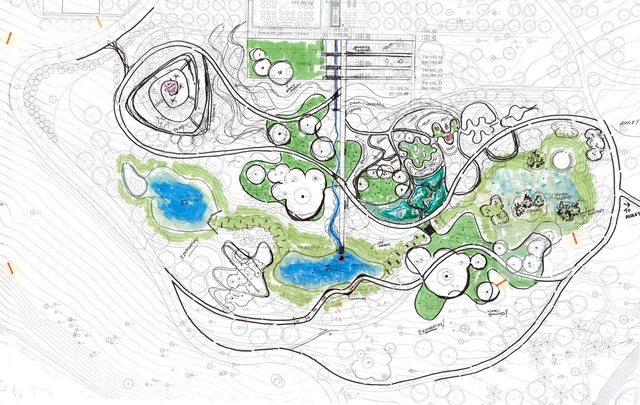
But over the past forty years, the gardens fell into disrepair and became a pass-through site on the way to other more popular destinations on the mall. Now, the second phase of a three-phase plan to revitalize the garden has been approved by the Commission of Fine Arts and National Capital Planning Commission. The design by PWP Landscape Architecture and Rogers Partners Architects will create a “new ecological landscape” designed for people and hundreds of plant and animal species.

New Constitution Gardens Will Be a Biodiversity Mecca - Image 1 of 4New Constitution Gardens Will Be a Biodiversity Mecca - Image 2 of 4New Constitution Gardens Will Be a Biodiversity Mecca - Image 3 of 4New Constitution Gardens Will Be a Biodiversity Mecca - Image 4 of 4New Constitution Gardens Will Be a Biodiversity Mecca - More Images+ 2

Landscape Architects Lead Bhutan’s Mindfulness City

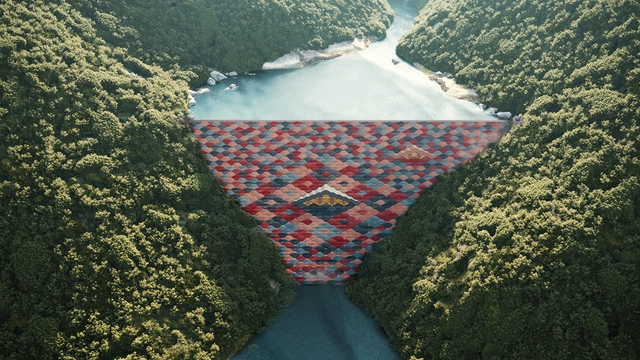
“The Mindfulness City will be a sustainable city. To be mindful is to be aware — to perform best,” said Giulia Frittoli, partner and head of landscape at BIG. The Kingdom of Bhutan is a landlocked Buddhist country in the eastern Himalayas, nestled between China and India. It covers 14,000 square miles and has a population of nearly 800,000.

The Royal Office of Bhutan asked BIG, Arup, and Cistri to develop a plan for a new Mindfulness City in Gelephu in southern Bhutan, near the border with India. The city will span 386 square miles and include a new international airport, railway connections, hydroelectric dam, university, spiritual center, and public spaces.

Landscape Architects Lead Bhutan’s Mindfulness City - Image 1 of 4Landscape Architects Lead Bhutan’s Mindfulness City - Image 2 of 4Landscape Architects Lead Bhutan’s Mindfulness City - Image 3 of 4Landscape Architects Lead Bhutan’s Mindfulness City - Image 4 of 4Landscape Architects Lead Bhutan’s Mindfulness City - More Images+ 3

Interview with Sadafumi Uchiyama: Designing Peace and Harmony

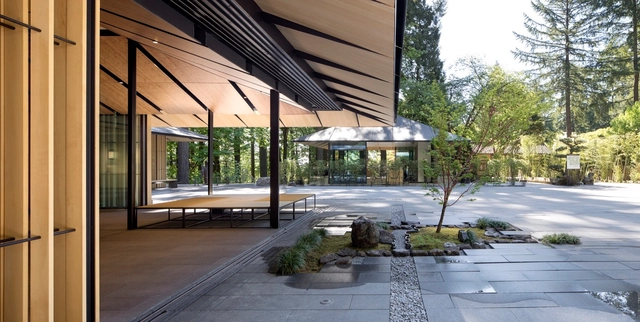
Sadafumi (Sada) Uchiyama, ASLA, is Curator Emeritus of Portland Japanese Garden. Before his retirement, Uchiyama served as Chief Curator from 2021 to 2023. Uchiyama is a third-generation Japanese gardener from southern Japan, where his family has been involved in gardening for over a century. In addition to his background as a gardener born and trained in Japan, Uchiyama is also a registered landscape architect in Oregon and California, with Bachelor’s and Master’s of Landscape Architecture degrees from the University of Illinois. This interview was conducted at the ASLA 2021 Conference on Landscape Architecture in Nashville.

Interview with Sadafumi Uchiyama: Designing Peace and Harmony - Image 1 of 4Interview with Sadafumi Uchiyama: Designing Peace and Harmony - Image 2 of 4Interview with Sadafumi Uchiyama: Designing Peace and Harmony - Image 3 of 4Interview with Sadafumi Uchiyama: Designing Peace and Harmony - Image 4 of 4Interview with Sadafumi Uchiyama: Designing Peace and Harmony - More Images+ 5

How Landscape Architects are Taking on Embodied Carbon

Landscape architects have started conversations about embodied carbon. There is a realization that we can no longer ignore the grey parts,” said Stephanie Carlisle, Senior Researcher, Carbon Leadership Forum and the University of Washington, during the first in a series of webinars organized by the ASLA Biodiversity and Climate Action Committee.

The grey parts are concrete, steel, and other manufactured products in projects. And the conversations happening are laying the foundation for a shift away from using these materials. The landscape architect climate leaders driving these conversations are offering practical ways to decarbonize projects and specify low-carbon materials.

How Landscape Architects are Taking on Embodied Carbon - Image 1 of 4How Landscape Architects are Taking on Embodied Carbon - Image 2 of 4How Landscape Architects are Taking on Embodied Carbon - Image 5 of 4How Landscape Architects are Taking on Embodied Carbon - Image 3 of 4How Landscape Architects are Taking on Embodied Carbon - More Images+ 1

Suburban Sprawl Increases the Risk of Future Pandemics

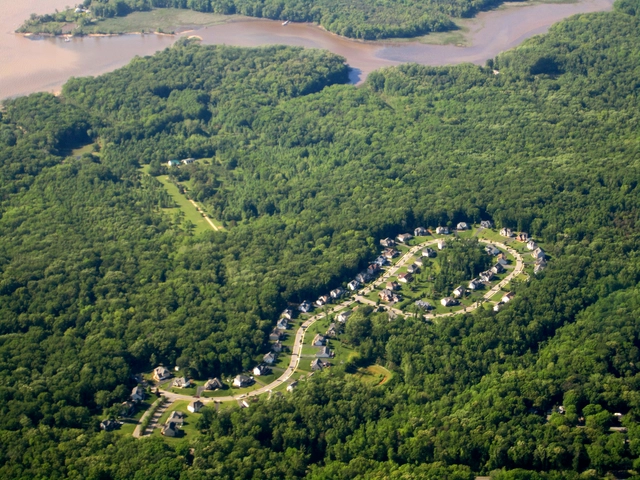
The export of American culture is one of the most influential forces in our interconnected world. From Dakar to Delhi, American pop music, movies, and artery-clogging cuisine are ubiquitous. However, one of the most damaging exports is the American suburb. When the 20th century model for housing the swelling populations of Long Island and Los Angeles translates to 21st century Kinshasa and Kuala Lumpur, the American way of life may very well be our downfall.

ASLA Publishes New Guide to Universal Design

The American Society of Landscape Architects has published a new Guide to Universal Design. According to the ASLA, one billion people, or 15 percent of the global population, experience some form of disability. The new guide explores the ways in how Universal Design means that everyone, regardless of ability or age, can access and participate in public life.