1. ArchDaily
  2. Architectural Language

Architectural Language: The Latest Architecture and News

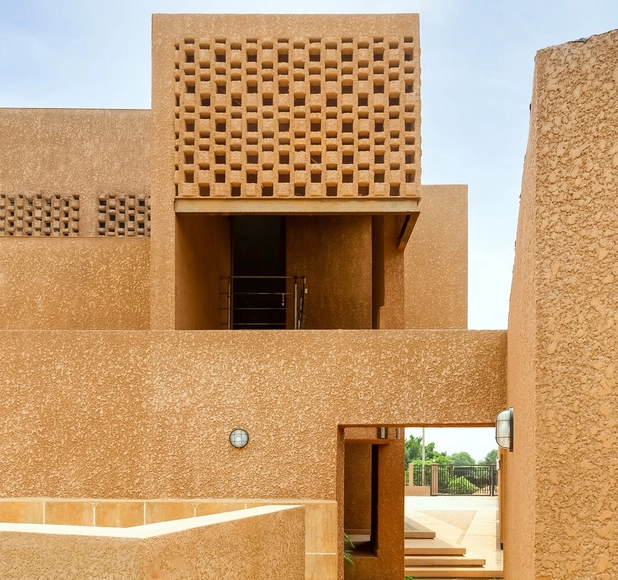
Exploring Local Material in Contemporary Architecture: PWDC Transforms Building Surfaces in Nigeria

Subscriber Access | 

In Lagos, a city with a complex urban fabric that includes historical buildings and vast interpretations of contemporary architecture, lies PatrickWaheed Design Consulting (PWDC). This design practice, Co-led by Adeyemo Shokunbi, aims to contribute to a Nigerian architectural language through the renaissance of local materials. Through explorations anchored in local laterite, they have developed the material as a modern finishing technique, investigated its potential as a natural dye, discovered new ways to employ its thermal properties, and now build the research prospect of other local materials. I had the opportunity to speak with Architect Shokunbi, who discussed the initial inspirations and investigations during the construction of two building projects (Mad House & Abijo Mosque) in Lagos. These projects brought the Laterite finishing technique to life and now help build the case for a Nigerian architectural language.

Exploring Local Material in Contemporary Architecture: PWDC Transforms Building Surfaces in Nigeria - Image 1 of 4Exploring Local Material in Contemporary Architecture: PWDC Transforms Building Surfaces in Nigeria - Image 2 of 4Exploring Local Material in Contemporary Architecture: PWDC Transforms Building Surfaces in Nigeria - Image 3 of 4Exploring Local Material in Contemporary Architecture: PWDC Transforms Building Surfaces in Nigeria - Image 4 of 4Exploring Local Material in Contemporary Architecture: PWDC Transforms Building Surfaces in Nigeria - More Images+ 15

The Architectural Language of Scaffoldings in Cityscapes: Exploring the Impact of These Temporary Structures

Subscriber Access | 

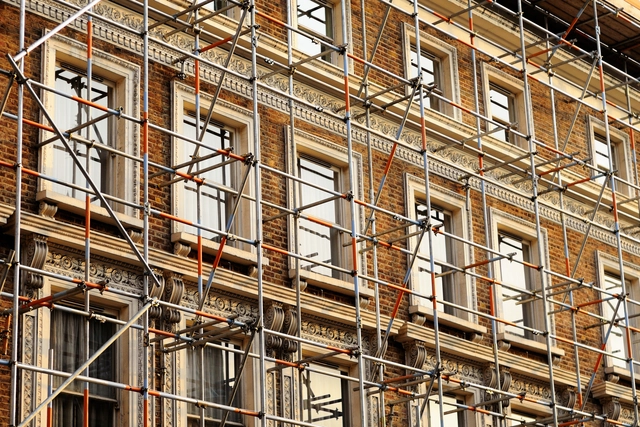
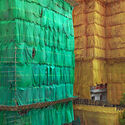
As one takes a visual tour through the city, one might spot structures that break the rhythm of finished architectural products. These are buildings encased in grids of metal or wooden sections, sometimes wrapped in colored nets, that communicate a moment of construction, repair, renovation, or demolition. They are called scaffolding systems, temporary structures built in the city to aid in the erection or maintenance of buildings. However, they have evolved to speak their own architectural language. As city-making is a continuous process, scaffolds serve as beacons, proposing silhouettes of the height, shape, or forms of new buildings. They step into the sidewalks, acting as shade or obstructions to the flow of human and vehicular traffic. In contrast to the permanence of architecture, they exhibit a sense of temporality that helps communicate time, the growth of neighborhoods, and the evolution of a city.

The Architectural Language of Scaffoldings in Cityscapes: Exploring the Impact of These Temporary Structures - Image 1 of 4The Architectural Language of Scaffoldings in Cityscapes: Exploring the Impact of These Temporary Structures - Image 2 of 4The Architectural Language of Scaffoldings in Cityscapes: Exploring the Impact of These Temporary Structures - Image 3 of 4The Architectural Language of Scaffoldings in Cityscapes: Exploring the Impact of These Temporary Structures - Image 4 of 4The Architectural Language of Scaffoldings in Cityscapes: Exploring the Impact of These Temporary Structures - More Images+ 9