1. ArchDaily
  2. architectural surfaces

architectural surfaces: The Latest Architecture and News

Ceramics Forged in Light: A Spatial Translation of Circular Material Processes

 | In Collaboration

Can one of architecture's oldest materials still inform how sustainability and manufacturing are approached today? What shifts when ceramic is viewed beyond its surface, as a process shaped by light, water, and clay? At Milan Design Week 2026, VitrA, a brand producing bathroom and ceramic surfaces and working across sanitaryware and tiles, and international design practice Snøhetta explore these questions through Ceramics Forged in Light, an immersive installation created for the INTERNI MATERIAE exhibition. Positioned within a broader discourse on material experimentation and circular production, the project treats ceramic as an architectural material defined by continuous transformation, shaped through light, water, heat, reflection, and reuse.

Fired clay has been used in construction for over 9,000 years, evolving from vernacular craft into one of the most widely applied materials in the built environment. Its durability, water resistance, thermal performance, and adaptability have made it a staple for facades, sanitaryware, flooring, architectural surfaces, and structural systems. Today, new manufacturing technologies are extending these possibilities as architects and manufacturers confront the environmental implications of material extraction and production.

Rethinking Interior Surfaces, From Finishes to Frameworks

 | Sponsored Content

Designing an interior is, in many ways, an exercise in orchestration. Just as a conductor coordinates instruments, timbres, rhythms, and intensities to compose a coherent piece, the architect brings together materials, color, light, texture, and proportion to define the spatial quality and atmosphere of an environment. None of these decisions operates in isolation: the choice of a surface influences how light is reflected; a given material can shape how a room ages over time; color, in turn, directly affects the perception of scale.

Wood-based materials such as decorative particleboards, MDF boards or laminates can therefore be understood as more than simple finishes. Industrially produced, they combine decor selection, surface texture, and technical substrate, defining both their appearance and the way a space responds to use, light, and time. Factors such as dimensional stability, ease of maintenance, and resistance to wear become integral to design decisions, particularly in interiors subject to intensive use.

A Responsible Addition: HIMACS Shapes Achieve SCS Certification for Recycled Content

 | Sponsored Content

In a balance of aesthetics, performance, and versatility, HIMACS shows a solid surface material of choice for many architects and designers. Taking a further step forward, the entire range of standard HIMACS sinks and basins is now officially SCS certified, containing a minimum of 8% pre-consumer recycled content. This certification enhances the material's technical and visual appeal by providing a more sustainable option without compromising quality or functionality.

From bathroom vanities with integrated basins to kitchen islands with flush-mounted sinks, HIMACS shapes offer a seamless balance of style and function. Each component integrates effortlessly with the surrounding HIMACS surface, creating a continuous, grout-free finish that is both elegant and easy to maintain.

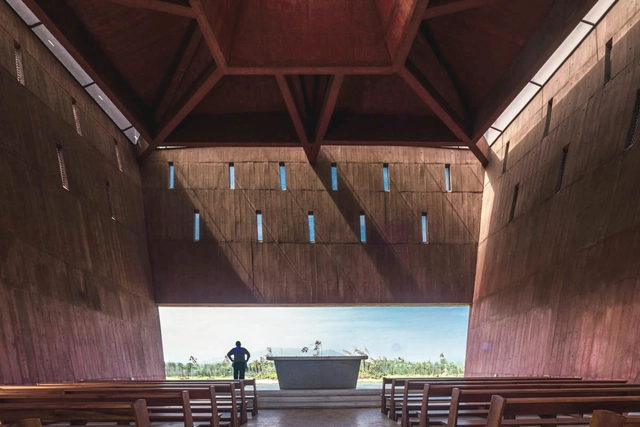
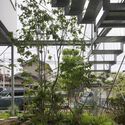
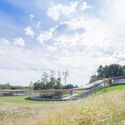
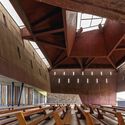
Touching the Earth Lightly: How Freeing the Ground Plane Shapes Architectural Atmosphere

Architecture and its atmospheric qualities have long been a subject of discussion, yet reaching a consensus on the matter remains elusive. This is largely because spatial experience is deeply personal—rooted in emotions, sensory perceptions, and individual preferences that are difficult to articulate in words alone. The way one perceives, feels, and interacts with a space adds another layer of complexity, making it challenging to define and agree upon its atmospheric impact. Nevertheless, architects and designers continuously strive to shape environments that are not only functional and comfortable but also capable of evoking emotions and leaving a lasting impression on their occupants.

Touching the Earth Lightly: How Freeing the Ground Plane Shapes Architectural Atmosphere  - Image 5 of 4Touching the Earth Lightly: How Freeing the Ground Plane Shapes Architectural Atmosphere  - Image 1 of 4Touching the Earth Lightly: How Freeing the Ground Plane Shapes Architectural Atmosphere  - Image 2 of 4Touching the Earth Lightly: How Freeing the Ground Plane Shapes Architectural Atmosphere  - Image 3 of 4Touching the Earth Lightly: How Freeing the Ground Plane Shapes Architectural Atmosphere  - More Images+ 36

Custom Surface Solutions for Community-Inspired Architectural Design

 | Sponsored Content

Customization, within the context of interior architectural design, is a resurfacing topic among cross-disciplined design firms focused on interior architecture. Since the reemergence of the Localism trend, individuals and organizations increasingly seek one-of-a-kind experiences, objects, and spaces that can help deepen their connections to their communities.