1. ArchDaily
  2. Astronauts

Astronauts: The Latest Architecture and News

Gateway in Lunar Orbit: Extending Architecture Beyond Earth

The concept of the technosphere provides a framework for understanding the scale of human impact on Earth. The term was coined by Peter K. Haff, and it is defined as the global network of human-made artifacts: a physical layer of infrastructure, buildings, vehicles, and machinery that functions alongside the biosphere and atmosphere. Currently estimated at 30 trillion tons, this human-constructed mass is dominated by the built environment. In this context, architecture serves as the primary interface, shaping how technology interacts with local ecologies. However, it seems that soon, the Technosphere will no longer be confined to the terrestrial surface. Through NASA's Artemis program, this network of human-made mass is expanding beyond Earth's atmosphere and is looking to establish new orbital infrastructure that represents the first permanent off-world extension of this man-made system.

Gateway in Lunar Orbit: Extending Architecture Beyond Earth - Image 1 of 4Gateway in Lunar Orbit: Extending Architecture Beyond Earth - Image 2 of 4Gateway in Lunar Orbit: Extending Architecture Beyond Earth - Image 3 of 4Gateway in Lunar Orbit: Extending Architecture Beyond Earth - Image 4 of 4Gateway in Lunar Orbit: Extending Architecture Beyond Earth - More Images+ 3

9 m³ of Survival: Inside the Orion Spacecraft and the Architecture of Space Travel

Subscriber Access | 

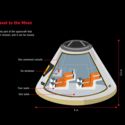
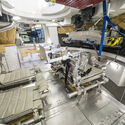
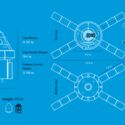
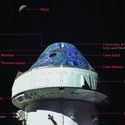
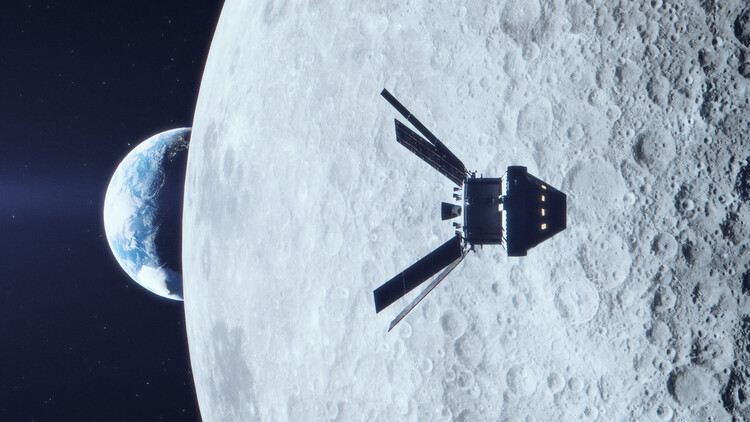
It was July 1969, and people on planet Earth were about to witness a historical moment for humanity: the first time a human being stepped on the surface of the Moon aboard the Apollo 11 mission. After this event, NASA landed five more times on the lunar surface, with the last one being Apollo 17 in 1972. Since then, humans have not attempted to return to the Moon until this year, 2026, when they will launch the Orion spacecraft as part of the Artemis II Mission. Planned to set off between February and April 2026, Orion will not yet land people on the Moon, instead it will make a flyby, in order to allow testing of the software and systems. This will set the base for an actual human landing on the Moon's South Pole as part of Artemis III sometime between 2027 and 2028, eventually opening a brand new era in Extraterrestrial architectural design.

9 m³ of Survival: Inside the Orion Spacecraft and the Architecture of Space Travel - Image 5 of 49 m³ of Survival: Inside the Orion Spacecraft and the Architecture of Space Travel - Image 1 of 49 m³ of Survival: Inside the Orion Spacecraft and the Architecture of Space Travel - Image 6 of 49 m³ of Survival: Inside the Orion Spacecraft and the Architecture of Space Travel - Image 4 of 49 m³ of Survival: Inside the Orion Spacecraft and the Architecture of Space Travel - More Images+ 6

Designing the Final Frontier

Subscriber Access | 

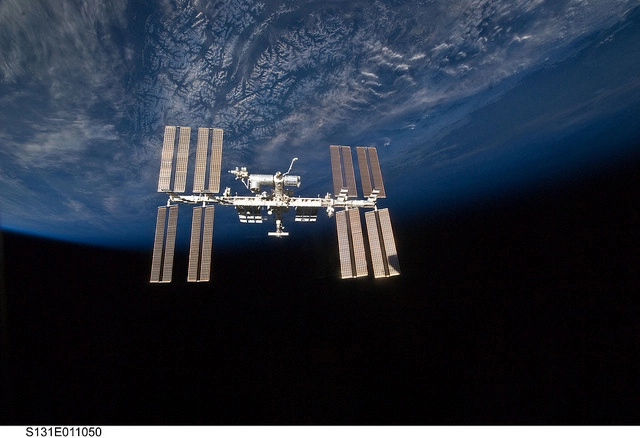
Three months ago, Commander Chris Hadfield captured the attention of millions by recording a cover of David Bowie's Space Oddity - entirely on board the International Space Station. The video was the culmination of five months of social media efforts to raise awareness and interest in current space programs worldwide, and it certainly seems that Hadfield succeeded in piquing the interest of at least a few future astronauts.

But for architects, something else probably stands out in the video: the ISS seems an extremely clinical and uncomfortable environment to live in for five months. The reasons for this are obvious: it is a highly controlled engineered environment; sending luxuries into orbit is expensive; the astronauts are there to work, and after all they are trained to cope in stressful and uncomfortable environments. However, with proposals for longer missions, such as a manned trip to Mars, as well as the continued promise of commercial spaceflight on the horizon, the design of living spaces outside of our own planet may soon become an issue which architects must get involved in.

Read on to find out about the challenges of architecture in space, after the break.

Architecture in Space: NASA Seeks Architect's Opinion on Habitat Design for Astronauts

Currently in the California State Polytechnic University, Pomona, Interim Design Center parking lot, students are constructing a 30 foot experimental structure that expands on the notion of housing astronauts in space. Funded by the National Aeronautics and Space Administration (NASA), the year-long research and experimentation project challenges students to design a vertical habitat capable of housing four astronauts in space for a period of 60 days. Not only is this an extreme case of micro-living, but to design a living quarters with no orientation, where walls, floors and ceilings are non-existent, is unworldly.

More after the break...