1. ArchDaily
  2. Beaux Arts Architecture

Beaux Arts Architecture: The Latest Architecture and News

Designs Unveiled for New York City's Penn Station by PAU and HNTB-HOK

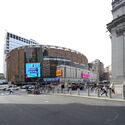
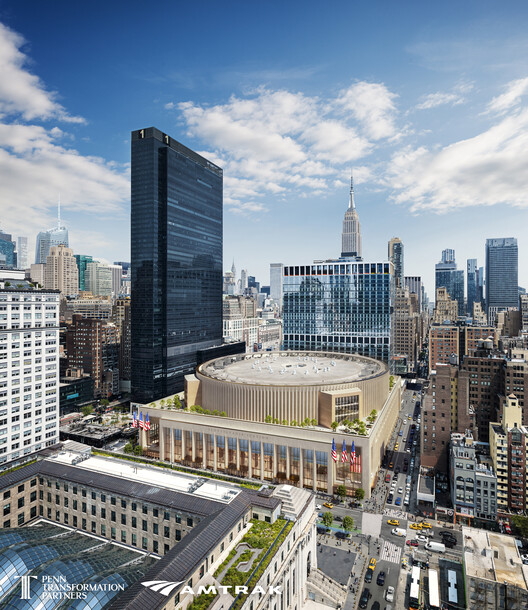
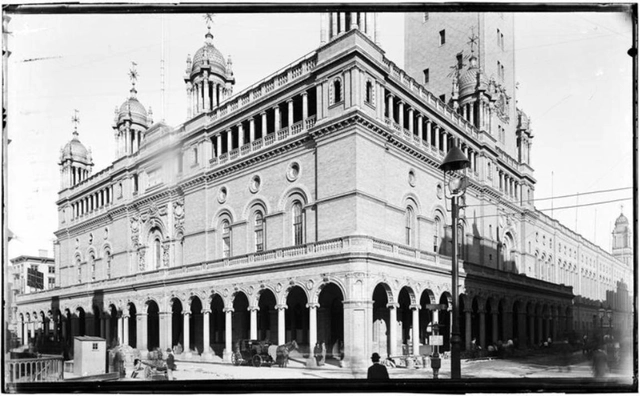
The Practice for Architecture and Urbanism (PAU), in collaboration with HNTB and HOK, has been selected as the design team for the redevelopment of New York City's Penn Station. The project is part of an ongoing effort to reorganize and expand one of the busiest rail transportation hubs in North America, aiming to improve passenger circulation, increase capacity, and upgrade the station's existing infrastructure. Design and development work is currently underway, with construction anticipated to begin in 2027. Located in Midtown Manhattan, Penn Station occupies the site of the original Pennsylvania Station, designed by McKim, Mead & White and completed in 1910.
Designs Unveiled for New York City's Penn Station by PAU and HNTB-HOK - Image 1 of 4Designs Unveiled for New York City's Penn Station by PAU and HNTB-HOK - Image 2 of 4Designs Unveiled for New York City's Penn Station by PAU and HNTB-HOK - Image 3 of 4Designs Unveiled for New York City's Penn Station by PAU and HNTB-HOK - Image 4 of 4Designs Unveiled for New York City's Penn Station by PAU and HNTB-HOK - More Images+ 8

A World in Between: The Role of Hybrid Forms in Contemporary Bathrooms

 | In Collaboration

When is a form still circular or rectangular? In twentieth-century modernism, this question was largely absent. Architecture was built on clarity, reduction, and formal purity. Influenced by architects such as Le Corbusier and Ludwig Mies van der Rohe, modernist design established a visual order based on rational geometry, industrial materials, and the rejection of ornament. Circle and square, function and expression, were kept strictly apart—a logic that dictated the rigid, modular layouts of traditional bathrooms for decades.

Elements of a Complete Architecture: The Furniture of Louis I. Kahn

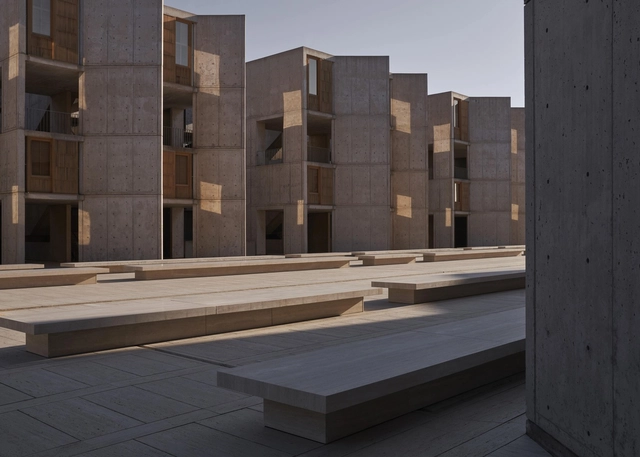
In the history of modern architecture, Louis I. Kahn is regarded as the undisputed master of monumentality in the United States. At the height of his career, Kahn managed to create a unique type of architecture, often awe-inspiring, but avoiding overdone grandiosity, expressing its constructive system, yet avoiding structural exhibitionism, steeped in history but developed with a new language and system of forms. His interest in light as a functional element and the specific qualities of materials extended beyond his buildings, in all the objects he created to populate them following their intrinsic spirit. To celebrate this legacy, Form Portfolios has now launched "Monumental Modernism," the first collection of lighting, objects, and furniture modeled after those discovered in Louis I. Kahn's buildings.

Elements of a Complete Architecture: The Furniture of Louis I. Kahn - Image 1 of 4Elements of a Complete Architecture: The Furniture of Louis I. Kahn - Image 2 of 4Elements of a Complete Architecture: The Furniture of Louis I. Kahn - Image 3 of 4Elements of a Complete Architecture: The Furniture of Louis I. Kahn - Image 4 of 4Elements of a Complete Architecture: The Furniture of Louis I. Kahn - More Images+ 18

The Revival of Terracotta in New York's Architecture: 4 Contemporary Projects in the City's Skyline

Subscriber Access | 

New York City’s skyline tells the tale of the region’s dated relationship with architectural innovation and style. Among the many materials that cloak the city’s built environment, terracotta has a distinct significance. The clay-based material was a prominent feature in buildings from the late 1800s to the 1920s and, after a brief pause, is experiencing a resurgence with contemporary design. The revival pays homage to The Big Apple’s architectural heritage while leading a movement for sustainable materials in the city.

The Revival of Terracotta in New York's Architecture: 4 Contemporary Projects in the City's Skyline  - Image 1 of 4The Revival of Terracotta in New York's Architecture: 4 Contemporary Projects in the City's Skyline  - Image 2 of 4The Revival of Terracotta in New York's Architecture: 4 Contemporary Projects in the City's Skyline  - Image 3 of 4The Revival of Terracotta in New York's Architecture: 4 Contemporary Projects in the City's Skyline  - Image 4 of 4The Revival of Terracotta in New York's Architecture: 4 Contemporary Projects in the City's Skyline  - More Images+ 6

SOM's 30th Street Station Redevelopment in Philadelphia Breaks Ground

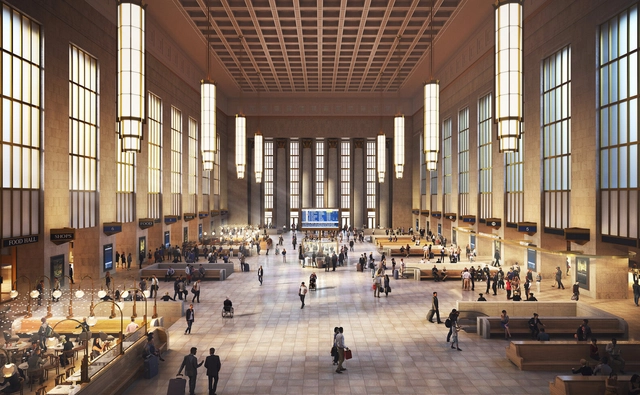
This month, Skidmore, Owings, and Merril's (SOM) $550 million William H. Gray III 30th Street Station broke ground in Philidelphia. Initially proposed in 2016, the scheme involves a new mixed-use urban district with an emphasis on transit for the 30th Street Station Precinct. Boasting a vibrant public realm, the initial phase of the plan focuses extensively on renovating the historic station. Designed in collaboration with Gilbane, Amtrak, Plenary, Vantage, and Johnson Controls, the overarching goal is to position the station for sustained growth over the next five decades and enhance the travel experience for millions of annual visitors.

SOM's 30th Street Station Redevelopment in Philadelphia Breaks Ground - Image 1 of 4SOM's 30th Street Station Redevelopment in Philadelphia Breaks Ground - Image 2 of 4SOM's 30th Street Station Redevelopment in Philadelphia Breaks Ground - Image 3 of 4SOM's 30th Street Station Redevelopment in Philadelphia Breaks Ground - Image 4 of 4SOM's 30th Street Station Redevelopment in Philadelphia Breaks Ground - More Images+ 5

6 Schools That Defined Their Own Architectural Styles

Subscriber Access | 

Architectural education has always been fundamentally influenced by whichever styles are popular at a given time, but that relationship flows in the opposite direction as well. All styles must originate somewhere, after all, and revolutionary schools throughout centuries past have functioned as the influencers and generators of their own architectural movements. These schools, progressive in their times, are often founded by discontented experimental minds, looking for something not previously nor currently offered in architectural output or education. Instead, they forge their own way and bring their students along with them. As those students graduate and continue on to practice or become teachers themselves, the school’s influence spreads and a new movement is born.

6 Schools That Defined Their Own Architectural Styles - Image 1 of 46 Schools That Defined Their Own Architectural Styles - Image 2 of 46 Schools That Defined Their Own Architectural Styles - Image 3 of 46 Schools That Defined Their Own Architectural Styles - Image 4 of 46 Schools That Defined Their Own Architectural Styles - More Images+ 9

Foster + Partners Open Apple Champs-Élysées Store by Transforming Parisian Apartment

The latest Apple Store designed by Foster + Partners has opened on the Champs-Élysées in Paris, occupying the grounds and courtyard of a historic Parisian apartment. The ornate Beaux-Art building has been appropriated by “carefully interweaving several layers of history with contemporary, light-filled and inviting spaces.”

The design is the result of a close collaboration by Foster + Partners and Apple’s chief design officer Sir Jonathan Ive, which has produced Apple Stores around the world including Piazza Liberty in Milan, Michigan Avenue in Chicago and Regent Street in London.

Foster + Partners Open Apple Champs-Élysées Store by Transforming Parisian Apartment - Image 1 of 4Foster + Partners Open Apple Champs-Élysées Store by Transforming Parisian Apartment - Image 2 of 4Foster + Partners Open Apple Champs-Élysées Store by Transforming Parisian Apartment - Image 3 of 4Foster + Partners Open Apple Champs-Élysées Store by Transforming Parisian Apartment - Image 4 of 4Foster + Partners Open Apple Champs-Élysées Store by Transforming Parisian Apartment - More Images+ 3

AD Classics: World's Columbian Exposition / Daniel Burnham and Frederick Law Olmsted

The United States had made an admirable showing for itself at the very first World’s Fair, the Crystal Palace Exhibition, held in the United Kingdom in 1851. British newspapers were unreserved in their praise, declaring America’s displayed inventions to be more ingenious and useful than any others at the Fair; the Liverpool Times asserted “no longer to be ridiculed, much less despised.” Unlike various European governments, which spent lavishly on their national displays in the exhibitions that followed, the US Congress was hesitant to contribute funds, forcing exhibitors to rely on individuals for support. Interest in international exhibitions fell during the nation’s bloody Civil War; things recovered quickly enough in the wake of the conflict, however, that the country could host the Philadelphia Centennial Exhibition in 1876. Celebrating both American patriotism and technological progress, the Centennial Exhibition was a resounding success which set the stage for another great American fair: the World’s Columbian Exposition of 1893.[1]

AD Classics: World's Columbian Exposition / Daniel Burnham and Frederick Law Olmsted - Temporary Installations, ArchAD Classics: World's Columbian Exposition / Daniel Burnham and Frederick Law Olmsted - Temporary Installations, FacadeAD Classics: World's Columbian Exposition / Daniel Burnham and Frederick Law Olmsted - Temporary InstallationsAD Classics: World's Columbian Exposition / Daniel Burnham and Frederick Law Olmsted - Temporary InstallationsAD Classics: World's Columbian Exposition / Daniel Burnham and Frederick Law Olmsted - More Images+ 11

The Characteristics of 12 Architectural Styles From Antiquity to the Present Day

Subscriber Access | 

History has often been taught in a linear way. This way of teaching has often left out grand historical narratives, and focused primarily on the occidental world. 

A Murdered Architect and Our Obsession With Cladding the Truth

Subscriber Access | 

In 1906, American architect Stanford White was murdered on the roof of a building he had designed sixteen years earlier. The now well-known story goes like this:

White, a founding partner at the celebrated firm of McKim, Mead & White, met the beloved model and actress Evelyn Nesbit when he was forty-seven and she sixteen. The first time Nesbit visited White’s now-demolished apartment building on Twenty-fourth street in Manhattan, he fed her lunch from Delmonico’s before guiding her up to a room housing what Nesbit described as a “gorgeous swing with red velvet ropes around which trailed green similax, set high in the ceiling.” From there, he took Nesbit to his bedroom, the walls of which were covered in mirrors, where he drugged her. Nesbit recalled, "When I woke up, all my clothes were pulled off me." Years later, Nesbit’s husband, Harry Kendall Thaw, shot White at a rooftop performance at Madison Square Garden. As the New York Times reported the next morning, witnesses overheard Thaw saying of White, “he ruined my wife.”

The Work of Victor Horta, Art Nouveau's Esteemed Architect

Subscriber Access | 
The Work of Victor Horta, Art Nouveau's Esteemed Architect  - Image 4 of 4
© Henry Townsend

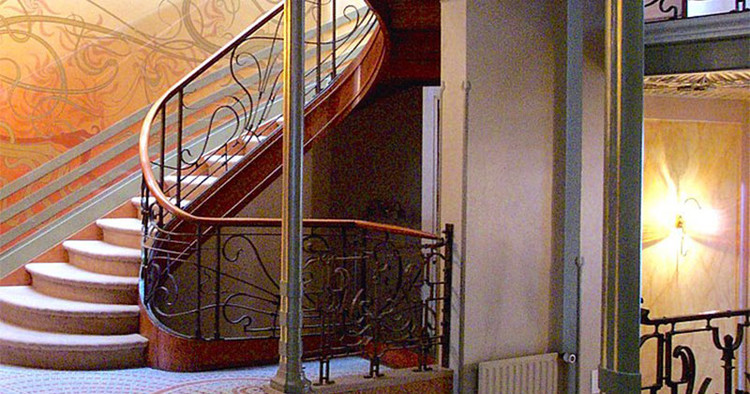
Situated throughout Brussels, Victor Horta's architecture ranges from innocuous to avant-garde. While many of his buildings were completed in the traditional Beaux Arts style, it is Horta’s Art Nouveau works—most of them built as townhouses for the Belgian elite—that are most beloved. Emerging from the decorative arts tradition and, in some ways, anticipating the coming onslaught of modernism, Horta’s Art Nouveau buildings were erected during a fleeting decade: roughly 1893 to 1903.

The Work of Victor Horta, Art Nouveau's Esteemed Architect  - Image 5 of 4The Work of Victor Horta, Art Nouveau's Esteemed Architect  - Image 6 of 4The Work of Victor Horta, Art Nouveau's Esteemed Architect  - Image 1 of 4The Work of Victor Horta, Art Nouveau's Esteemed Architect  - Image 2 of 4The Work of Victor Horta, Art Nouveau's Esteemed Architect  - More Images+ 14