1. ArchDaily
  2. Boats

Boats: The Latest Architecture and News

Why Sit by the Dock of the Bay? Designing Thresholds to the Water

Subscriber Access | 

Boat docks and harbors are liminal spaces where the shore marks the meeting of land and water, and serve as a space for the convergence of culture, industry, and community. For those who work at sea, from commercial fishers to marine freight operators, the dock is a threshold between labor and rest, between oceanic uncertainty and terrestrial stability. For others, the dock serves as a gateway to recreation, sport, and adventure, accommodating everything from rowing clubs to family sailing trips. And for many who never board a vessel, the dock offers a powerful connection to the marine environment where one can pause, observe, and engage with the rhythmic tides.


Why Sit by the Dock of the Bay? Designing Thresholds to the Water - Image 1 of 4Why Sit by the Dock of the Bay? Designing Thresholds to the Water - Image 2 of 4Why Sit by the Dock of the Bay? Designing Thresholds to the Water - Image 3 of 4Why Sit by the Dock of the Bay? Designing Thresholds to the Water - Image 4 of 4Why Sit by the Dock of the Bay? Designing Thresholds to the Water - More Images+ 48

Navigating Boundaries: The Architectural Legacy of Lighthouses

Lighthouses have stood along the margins of continents and islands for centuries as points of light in vast maritime territories. Rising in solitude from rocky cliffs, reefs, and headlands, these towers were tools for navigation and instruments of spatial clarity, shaping coastlines and marking the boundary between land and sea. Built to guide, warn, and locate, they constituted a global network of visibility long before the advent of digital mapping. Yet as maritime technologies evolved, many of these structures lost their original purpose. The typology, once essential, now stands at the edge of obsolescence. What remains is not merely an architectural relic, but a powerful spatial form — resilient, symbolic, and increasingly open to reinterpretation.

Navigating Boundaries: The Architectural Legacy of Lighthouses - Image 1 of 4Navigating Boundaries: The Architectural Legacy of Lighthouses - Image 2 of 4Navigating Boundaries: The Architectural Legacy of Lighthouses - Image 3 of 4Navigating Boundaries: The Architectural Legacy of Lighthouses - Image 4 of 4Navigating Boundaries: The Architectural Legacy of Lighthouses - More Images+ 26

Indonesia Pavilion Opens at Expo 2025 Osaka with Boat-Inspired Design

The Indonesia Pavilion at Expo 2025 Osaka, open to visitors from April 13 to October 13, 2025, showcases a combination of tradition and forward-looking vision in alignment with the Expo's theme, "Designing Future Society for Our Lives." Symbolizing the philosophy of "Diversity in Unity," the pavilion draws inspiration from Indonesia's rich maritime history. Its structure takes the form of a stylized boat hull, representing progress and resilience. The rising shape of the design reflects Indonesia's optimistic outlook, moving forward, facing challenges with determination, and striving to achieve ambitious goals.

Indonesia Pavilion Opens at Expo 2025 Osaka with Boat-Inspired Design - Image 1 of 4Indonesia Pavilion Opens at Expo 2025 Osaka with Boat-Inspired Design - Image 2 of 4Indonesia Pavilion Opens at Expo 2025 Osaka with Boat-Inspired Design - Image 3 of 4Indonesia Pavilion Opens at Expo 2025 Osaka with Boat-Inspired Design - Image 4 of 4Indonesia Pavilion Opens at Expo 2025 Osaka with Boat-Inspired Design - More Images+ 54

Architects and Boats: A Love Affair

The relationship between architecture and naval design has been a fascinating interplay of form and function that has evolved significantly. Both disciplines have a shared history of innovation, aesthetics, and functionality that have informed and inspired each other. This "love affair" has seen architects drawing inspiration from boats, particularly in the modernist era when ships' streamlined, efficient designs influenced the aesthetic of buildings. Conversely, architectural principles have also been adapted to enhance the functionality and form of boats, demonstrating a reciprocal exchange that continues to shape both disciplines.

Architects and Boats: A Love Affair - Image 1 of 4Architects and Boats: A Love Affair - Featured ImageArchitects and Boats: A Love Affair - Image 2 of 4Architects and Boats: A Love Affair - Image 3 of 4Architects and Boats: A Love Affair - More Images+ 29

Zaha Hadid Architects Reveals Design for Hydrogen Refueling Stations Across the Italian Marina

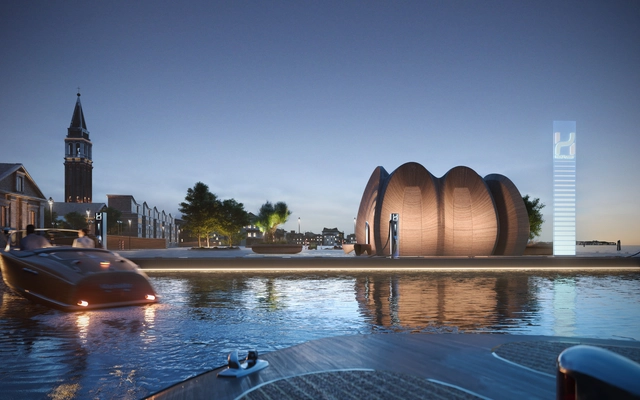
Zaha Hadid Architects have released images of their design for the world’s first hydrogen refueling infrastructure for recreational boating. Continuing ZHA’s experience in maritime designs, the stations are to be installed in 25 Italian marinas and ports. Launched by NatPower H, the stations will begin to be implemented in the summer of 2024, with plans to expand to over 100 locations throughout the Mediterranean Sea in the next six years.

Italian Government Officially Bans Cruise Ships in Venice

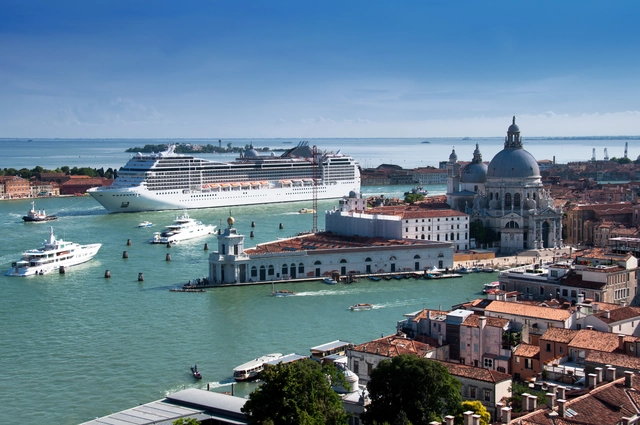
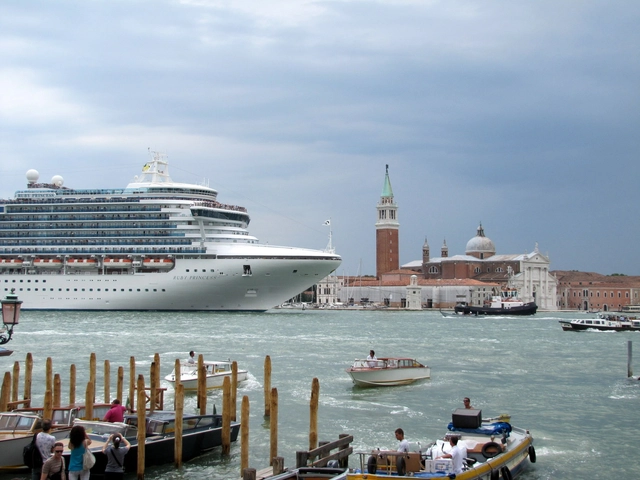
The Italian government has announced the permanent ban of large cruise ships in the Venetian lagoon, after several years of protests, petitions, and threats of being put on UNESCO’s endangered list. The ban will be effective as of August 1st, 2021, and will prohibit ships exceeding 180 meters in length or weighing 25,000 tons from entering the lagoon, hoping to sustain Venice's historic canals, waterways, and public squares.

Italians Ban Large Cruises from the Historical Center Of Venice

Starting September, all ships that exceed 1000 tonnes will be obliged to change their route, in order to prevent them from entering Venice’s lagoon. The Italian government took the decision after major protests due to many incidents, the latest being in June of 2019 where 5 people were injured from a collision between a cruise ship, the dock, and a small tourist boat.

Studio Komma Will Transform Former Dutch Cargo Ships Into Sustainable Homes

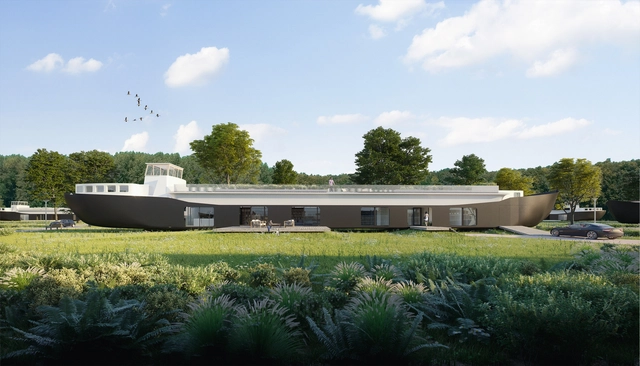
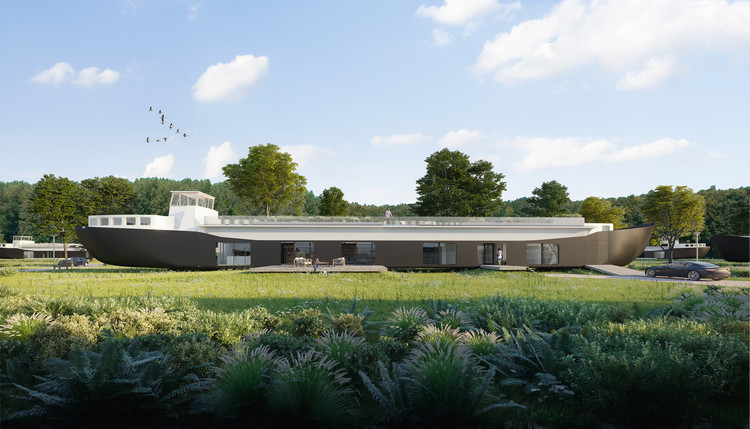
Adaptive reuse, the process of refashioning a defunct structure for a new purpose, is ubiquitous these days—so much so that hearing a phrase like “converted warehouse” or “repurposed factory” barely causes one to blink an eye. However, a new project from a cohort of Dutch architecture firms highlights the innovative nature of adaptive reuse with a scheme that reimagines disused cargo ships as houses. With their fully intact exterior shells, the ships remind residents and visitors of their industrial, seafaring past.

Studio Komma Will Transform Former Dutch Cargo Ships Into Sustainable Homes - Image 1 of 4Studio Komma Will Transform Former Dutch Cargo Ships Into Sustainable Homes - Image 2 of 4Studio Komma Will Transform Former Dutch Cargo Ships Into Sustainable Homes - Image 3 of 4Studio Komma Will Transform Former Dutch Cargo Ships Into Sustainable Homes - Image 4 of 4Studio Komma Will Transform Former Dutch Cargo Ships Into Sustainable Homes - More Images+ 5

An In-Depth Look at the Le Corbusier-Designed Barge Which Sank Last Month

This article was originally published by Metropolis Magazine as "The Fascinating History of Le Corbusier’s Lost Barge."

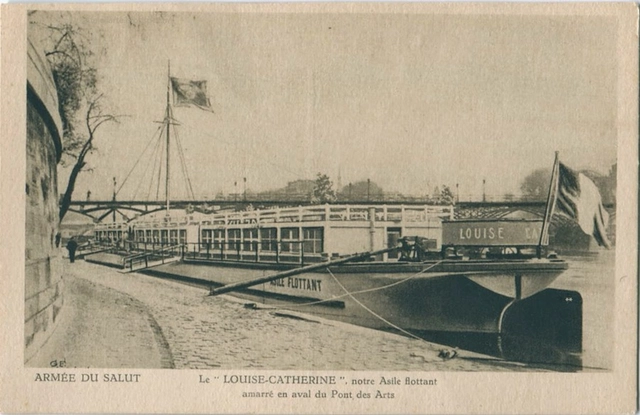
This winter, France experienced some of the heaviest rains it has seen in 50 years. In Paris, the Seine flooded its banks, submerging parks, streets, and disrupting metro service. The deluge also claimed an architectural curiosity. On February 8th the Louise-Catherine, a concrete barge renovated by Le Corbusier, slipped below the murky waters of the Seine and came to rest on the bottom of the river by Quai D’Austerlitz on the east side of Paris.

As the floodwaters receded, the 100-year-old barge’s bow became stuck on the wharf, tipping it into the river, according to Le Parisien. Though firefighters were present and attempted to save the historic vessel, it filled with water and sank in a matter of minutes.

Six "Miracle" Materials That Will Change Their Industries

Subscriber Access | 

The following six "miracle" materials could be headed straight into your home, office, car and more. Dina Spector at Business Insider recently rounded up the six most promising materials. As of now, their potential applications have just scratched the surface, but the possibilities are endless. Presented by AD Materials.

Scientists are constantly on the look out for lighter, stronger, and more energy-efficient materials. Here's a glance at some materials that will change the way we build things in the future.