1. ArchDaily
  2. Border

Border: The Latest Architecture and News

Escuelita Lochiel: An ArchDaily Student Project Awards Winner Reframing Education Through Adobe

Subscriber Access | 

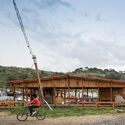
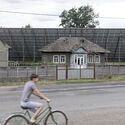
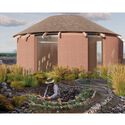
In the high desert of the San Rafael Valley, a few miles from the United States-Mexico border in Lochiel, Arizona, an adobe schoolhouse has stood for more than a century. Built before 1905, before Arizona was an incorporated state, the schoolhouse served generations of Mexican American students from Arizona and Sonora, cultivating shared cultural experiences, stories, and relationships that transcend physical and political boundaries. Over decades of education and shared histories, it became a place where language and narrative moved freely, even as geopolitical tensions continued to rise along the border. Today, it is one of the last remaining one-room adobe schoolhouses in the United States.

Adobe is among the oldest building technologies in the American Southwest, and among the most demanding to steward. In desert climates, earthen walls face intense weathering from temperature extremes, cracking due to seasonal shifts, and accelerated decay after storm events. These vulnerabilities require sustained and skilled maintenance over many seasons and compounding decades. After years of encroaching abandonment and structural threats, a twelve-year restoration effort by local community members who understood this building as critical cultural infrastructure brought the schoolhouse back from the edge of demolition. That the community chose to undertake this effort, given everything Adobe construction demands of those who care for it, is a statement about what the loss of this building would have cost. The result is a structure that now stands as a monument to Mexican American heritage and a living archive of rural border education.
Escuelita Lochiel: An ArchDaily Student Project Awards Winner Reframing Education Through Adobe - Image 1 of 4Escuelita Lochiel: An ArchDaily Student Project Awards Winner Reframing Education Through Adobe - Image 2 of 4Escuelita Lochiel: An ArchDaily Student Project Awards Winner Reframing Education Through Adobe - Image 3 of 4Escuelita Lochiel: An ArchDaily Student Project Awards Winner Reframing Education Through Adobe - Image 4 of 4Escuelita Lochiel: An ArchDaily Student Project Awards Winner Reframing Education Through Adobe - More Images+ 5

On International Migrants Day: A Look at Architectural Responses to Displacement

December 18 marks the United Nations' International Migrants Day, which aims to highlight the need for safer, fairer, and more inclusive migration systems. Proclaimed on December 4, 2000, the day seeks to recognize the multiple dimensions of migration beyond its economic and humanitarian aspects. According to the UN, mounting evidence indicates that international migration is beneficial for both countries of origin and destination. In this sense, International Migrants Day offers an opportunity to spotlight the value of the possibility to migrate and the contributions of millions of migrants worldwide to the cities and cultures in which they are integrated.

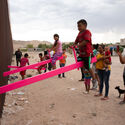
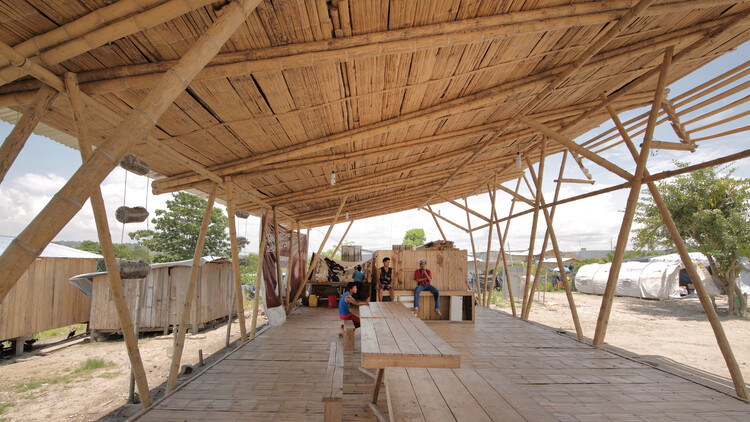
Aligned with this perspective, the UN's 2025 theme, "My Great Story: Cultures and Development," emphasizes how human mobility drives growth, enriches societies, and helps communities connect, adapt, and support one another. At the same time, International Migrants Day also acknowledges the increasingly complex environment in which migration occurs. Conflicts, climate-related disasters, and economic pressures continue to force millions of people from their homes in search of safety or opportunity. From both perspectives, it is essential to recognize the role of architecture in building integrated, multicultural communities and in responding to the conditions that lead people to migrate from their territories in the first place.

On International Migrants Day: A Look at Architectural Responses to Displacement - Image 1 of 4On International Migrants Day: A Look at Architectural Responses to Displacement - Image 2 of 4On International Migrants Day: A Look at Architectural Responses to Displacement - Image 3 of 4On International Migrants Day: A Look at Architectural Responses to Displacement - Image 4 of 4On International Migrants Day: A Look at Architectural Responses to Displacement - More Images+ 6

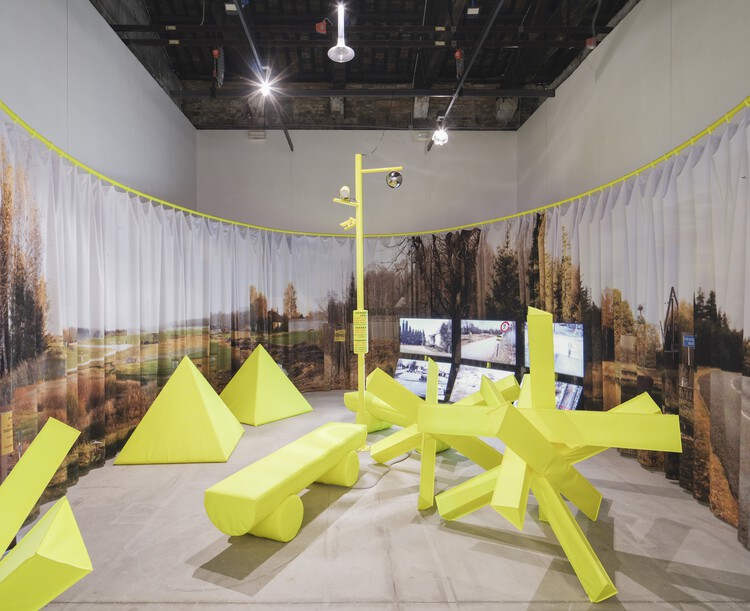
The Latvian Pavilion at the 2025 Venice Architecture Biennale Invites Critical Dialogue on the Spatial Impact of Conflict

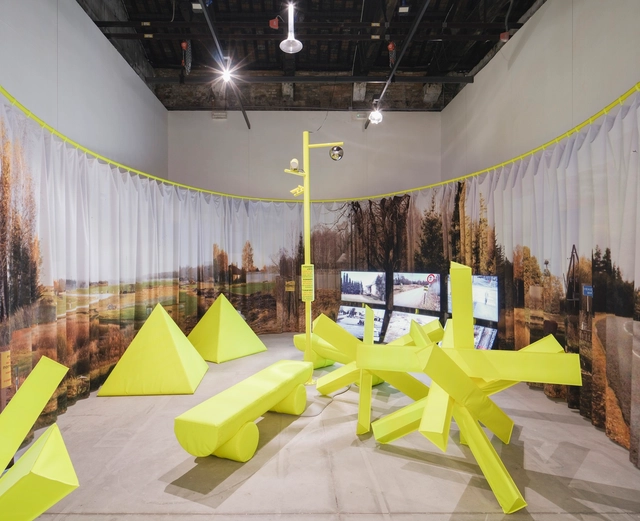
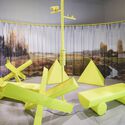
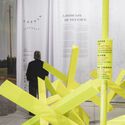
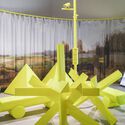
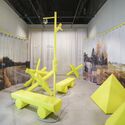
The Latvian Pavilion at the 19th International Architecture Exhibition – La Biennale di Venezia, commissioned by Jānis Dripe and curated by Liene Jākobsone and Ilka Ruby, explores the impact of military defense on the country's border landscape. The exhibition was designed by SAMPLING and Nomad Architects to highlight how geopolitical tensions shape both territory and daily life. In times of escalating international warfare, the curatorial team poses the question of what it means to live on NATO's external border in times of geopolitical conflict.

The Latvian Pavilion at the 2025 Venice Architecture Biennale Invites Critical Dialogue on the Spatial Impact of Conflict - Image 1 of 4The Latvian Pavilion at the 2025 Venice Architecture Biennale Invites Critical Dialogue on the Spatial Impact of Conflict - Image 2 of 4The Latvian Pavilion at the 2025 Venice Architecture Biennale Invites Critical Dialogue on the Spatial Impact of Conflict - Image 3 of 4The Latvian Pavilion at the 2025 Venice Architecture Biennale Invites Critical Dialogue on the Spatial Impact of Conflict - Image 4 of 4The Latvian Pavilion at the 2025 Venice Architecture Biennale Invites Critical Dialogue on the Spatial Impact of Conflict - More Images+ 14

"A Wall is A Political Statement": Karin Sander on Co-Curating the Swiss Pavilion at the 2023 Venice Biennale

At the 18th International Architecture Exhibition – La Biennale di Venezia, Karin Sander, and Philip Ursprung curated the Swiss Pavilion “Neighbors”. In her interview with Louisiana Channel, Karin Sander talks about expanding the understanding of the pavilion, reimagining the connected role of architecture and art, and explaining her artistic process. “Neighbors” was focused on spatial proximity between the Swiss Pavilion and its Venezuelan neighbor. Sander highlights also the conversation between the two structures, that became possible after the removal of a separating wall.

"A Wall is A Political Statement": Karin Sander on Co-Curating the Swiss Pavilion at the 2023 Venice Biennale - Image 1 of 4"A Wall is A Political Statement": Karin Sander on Co-Curating the Swiss Pavilion at the 2023 Venice Biennale - Image 2 of 4"A Wall is A Political Statement": Karin Sander on Co-Curating the Swiss Pavilion at the 2023 Venice Biennale - Image 3 of 4"A Wall is A Political Statement": Karin Sander on Co-Curating the Swiss Pavilion at the 2023 Venice Biennale - Image 4 of 4A Wall is A Political Statement: Karin Sander on Co-Curating the Swiss Pavilion at the 2023 Venice Biennale - More Images+ 1

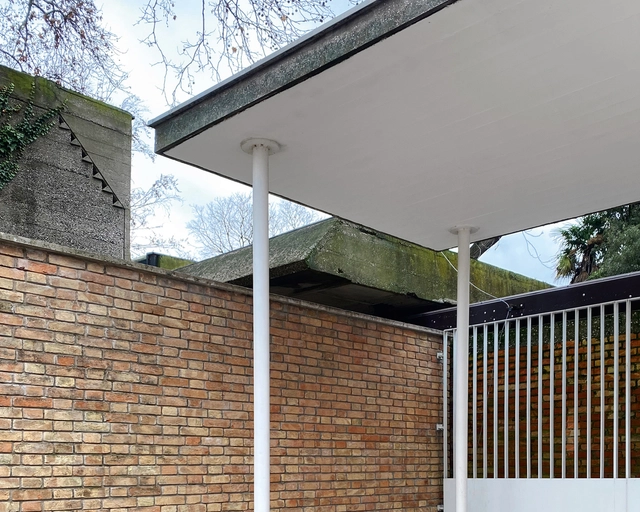
Exploring Territorial Relations: The Swiss Pavilion at the 2023 Venice Biennale is Curated by Karin Sander and Philip Ursprung

Switzerland’s project for its national pavilion at the 18th International Architecture Exhibition–La Biennale di Venezia will be curated by Karin Sander and Philip Ursprung to explore territorial relationships within the Giardini of La Biennale. Titled “Neighbours,” their project is focused on the spatial and structural proximity between the Swiss Pavilion and its Venezuelan neighbor. By turning architecture itself into the exhibit, the project also highlights the bond between the architects of the two structures: the Swiss Bruno Giacometti (1907 - 2012) and the Italian Carlo Scarpa (1906 - 1978). The exhibition will be on display from May 20 to November 26, 2023.

Exploring Territorial Relations: The Swiss Pavilion at the 2023 Venice Biennale is Curated by Karin Sander and Philip Ursprung - Image 1 of 4Exploring Territorial Relations: The Swiss Pavilion at the 2023 Venice Biennale is Curated by Karin Sander and Philip Ursprung - Image 2 of 4Exploring Territorial Relations: The Swiss Pavilion at the 2023 Venice Biennale is Curated by Karin Sander and Philip Ursprung - Image 3 of 4Exploring Territorial Relations: The Swiss Pavilion at the 2023 Venice Biennale is Curated by Karin Sander and Philip Ursprung - Image 4 of 4Exploring Territorial Relations: The Swiss Pavilion at the 2023 Venice Biennale is Curated by Karin Sander and Philip Ursprung - More Images+ 1

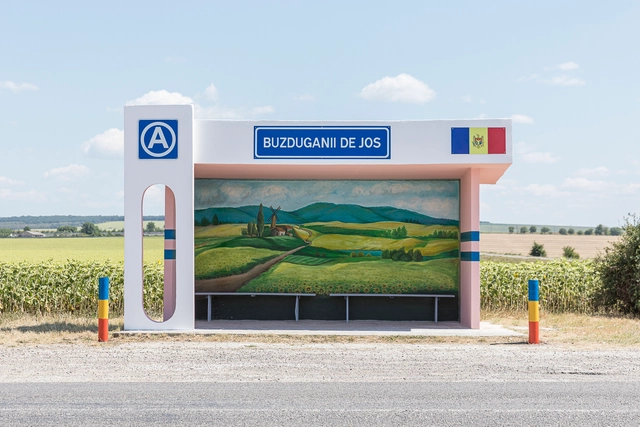
LINIA, a New Photographic Installation Looks at the Communities Living near Borders and the Lines that Separate Them

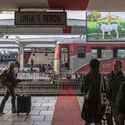
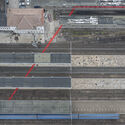
LINIA, a project signed by VICE VERSA Association, is a photographic installation exploring and documenting the stories, and the collective mindset of the territories near one of the most fragile, yet rigid lines in today’s context: the line separating NATO from non-NATO nations. The project, initiated by Dorin Ștefan Adam and Laurian Ghinițoiu, is on display at the Timișoara train station, in Romania, and it represents one of the main exhibitions of the Timișoara 2022 Architecture Biennale, which ran from 23 September to 23 October 2022. The schedule of LINIA has been extended however to remain open to the public until April 23.

LINIA, a New Photographic Installation Looks at the Communities Living near Borders and the Lines that Separate Them - Image 1 of 4LINIA, a New Photographic Installation Looks at the Communities Living near Borders and the Lines that Separate Them - Image 2 of 4LINIA, a New Photographic Installation Looks at the Communities Living near Borders and the Lines that Separate Them - Image 3 of 4LINIA, a New Photographic Installation Looks at the Communities Living near Borders and the Lines that Separate Them - Image 4 of 4LINIA, a New Photographic Installation Looks at the Communities Living near Borders and the Lines that Separate Them - More Images+ 6

Architecture as a Reflection of Migration Between Mexico and the United States

Subscriber Access | 

Architecture as a Reflection of Migration Between Mexico and the United States - Image 1 of 4Architecture as a Reflection of Migration Between Mexico and the United States - Image 2 of 4Architecture as a Reflection of Migration Between Mexico and the United States - Image 3 of 4Architecture as a Reflection of Migration Between Mexico and the United States - Image 4 of 4Architecture as a Reflection of Migration Between Mexico and the United States - More Images+ 14

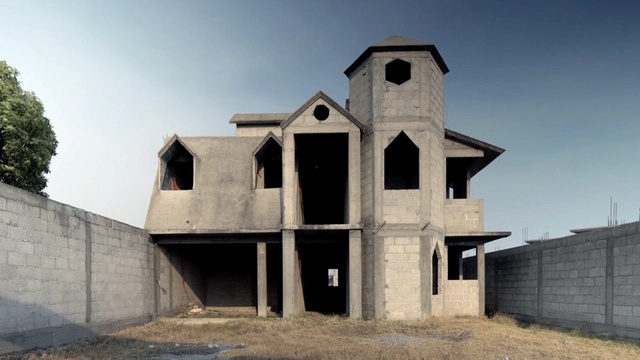
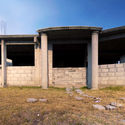
“Abandonment Copies” is a research project created between 2016 and 2018 by artist Sandra Calvo consisting of a film, archives, drawings, interviews, and a video display which was exhibited in the Mexican pavilion during the 2021 Biennial of Venice. The project highlights architecture as a reflection of the migration process between Mexico and the United States, comparing and contrasting the houses where migrants work in the US and the ones they build in Mexico with the remittances they send.