1. ArchDaily
  2. Brasil

Brasil: The Latest Architecture and News

Open-Air Chapels: Integrating Nature and Landscape into Religious Architecture in Latin America

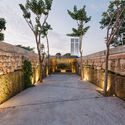
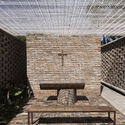
At a global level, contemporary architecture continues to explore tools and design methodologies to integrate nature into habitable spaces, given its proven benefits and contributions to improving people's quality of life. While there are diverse religious beliefs around the world, religious architecture generally expands beyond its uses and functions to connect with the sacred. Senses, memories, and emotions are transmitted in these spaces through the use of certain materials, spatial organizations, and even sounds and aromas that enhance experiences in atmospheres of spirituality, divinity, and reflection. In Mexico, Chile, Ecuador, Brazil, and Uruguay, projects for places of worship open to the outdoors reflect an architecture that adapts to different natural environments while maintaining the premise that each religion is tied to a social identity and requires a particular connection with its community and surrounding landscape.
Open-Air Chapels: Integrating Nature and Landscape into Religious Architecture in Latin America - Image 1 of 4Open-Air Chapels: Integrating Nature and Landscape into Religious Architecture in Latin America - Image 2 of 4Open-Air Chapels: Integrating Nature and Landscape into Religious Architecture in Latin America - Image 3 of 4Open-Air Chapels: Integrating Nature and Landscape into Religious Architecture in Latin America - Image 4 of 4Open-Air Chapels: Integrating Nature and Landscape into Religious Architecture in Latin America - More Images+ 20

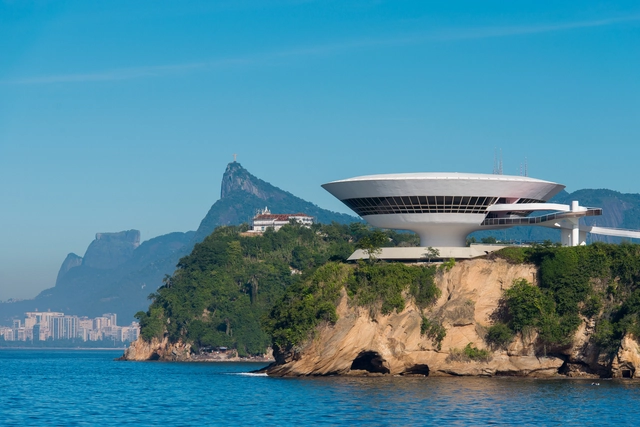
A Lighthouse in Rio de Janeiro's Landscape: the Niterói Contemporary Art Museum by Oscar Niemeyer

Located on the top of the Boa Viagem viewpoint in the city of Niterói, the Niterói Contemporary Art Museum - MAC was designed by architect Oscar Niemeyer. Inaugurated in 1996, it is a modern architectural masterpiece dedicated to housing a collection of Brazilian contemporary art from the 1960s to the 1990s. Rising above the cliff like a lighthouse, it appears to float in the air, resting on a water basin. Facing Rio de Janeiro’s Guanabara Bay in Brazil, its circular lines and revolutionary double-curved form stand out on the horizon, offering an open plaza of 2,500 square meters alongside a reflective pool that gives the structure a remarkable sense of lightness.

A Lighthouse in Rio de Janeiro's Landscape: the Niterói Contemporary Art Museum by Oscar Niemeyer - Image 1 of 4A Lighthouse in Rio de Janeiro's Landscape: the Niterói Contemporary Art Museum by Oscar Niemeyer - Image 2 of 4A Lighthouse in Rio de Janeiro's Landscape: the Niterói Contemporary Art Museum by Oscar Niemeyer - Image 3 of 4A Lighthouse in Rio de Janeiro's Landscape: the Niterói Contemporary Art Museum by Oscar Niemeyer - Image 4 of 4A Lighthouse in Rio de Janeiro's Landscape: the Niterói Contemporary Art Museum by Oscar Niemeyer - More Images+ 33

Following Oscar Niemeyer's Legacy: The Story Behind the Araras State Theater in Brazil

Inaugurated in 1991, the Maestro Francisco Paulo Russo State Theater in Araras is considered one of the city's and the region's main cultural venues. Designed by architect Oscar Niemeyer, one of the leading figures of the Modern Movement, the theater was equipped with all the necessary infrastructure to host local, national, and international cultural events between 1995 and 2005. Niemeyer left behind a legacy in which his signature free-form architectural style integrates influences from various sources while also engaging in a dialogue with the identity of a tropical country.

Following Oscar Niemeyer's Legacy: The Story Behind the Araras State Theater in Brazil - Image 1 of 4Following Oscar Niemeyer's Legacy: The Story Behind the Araras State Theater in Brazil - Image 2 of 4Following Oscar Niemeyer's Legacy: The Story Behind the Araras State Theater in Brazil - Image 3 of 4Following Oscar Niemeyer's Legacy: The Story Behind the Araras State Theater in Brazil - Image 4 of 4Following Oscar Niemeyer's Legacy: The Story Behind the Araras State Theater in Brazil - More Images+ 8

Cabins in Latin America: 12 Floor Plan Projects Under 50 m2

Subscriber Access | 

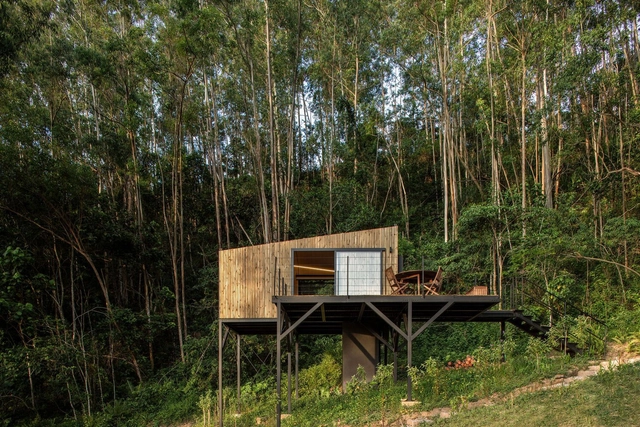
The Latin American territory encompasses a vast diversity of climates, atmospheres, and temperatures across its entire expanse. Amid forested landscapes, jungles, or coastal settings, many architects choose to design cabins immersed in natural surroundings, seeking to foster a deeper connection with nature by distancing themselves from the city. While experimenting with different materials and local techniques enhances a stronger bond with the site's traditions and creates a distinct architectural identity for each region, the integration of technological innovations and new construction materials can offer greater resilience to climate change, improve short- and long-term maintenance, optimize construction timelines, and address other key considerations.

Cabins in Latin America: 12 Floor Plan Projects Under 50 m2 - Image 1 of 4Cabins in Latin America: 12 Floor Plan Projects Under 50 m2 - Image 2 of 4Cabins in Latin America: 12 Floor Plan Projects Under 50 m2 - Image 3 of 4Cabins in Latin America: 12 Floor Plan Projects Under 50 m2 - Image 4 of 4Cabins in Latin America: 12 Floor Plan Projects Under 50 m2 - More Images+ 20

The History of the Copacabana Sidewalk: From Its Origin in Portugal to Burle Marx's Intervention

Subscriber Access | 

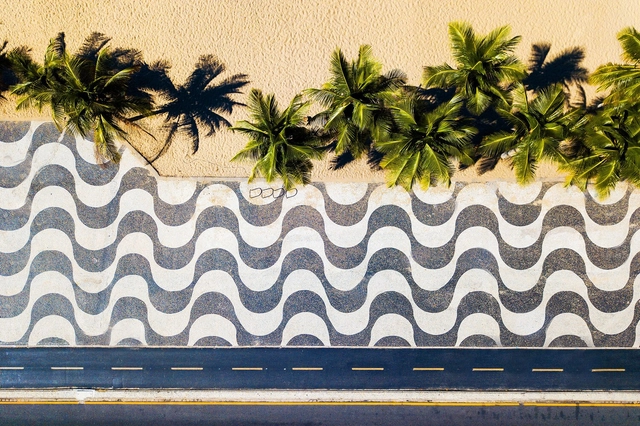
The Copacabana calçada (Copacabana sidewalk) is one of the greatest symbols in the stunning landscape of Rio de Janeiro. What not everyone knows is that its history (and design) precedes the intervention of Roberto Burle Marx in the 1970s. The origin of the design, as well as its stones, is Portuguese.

The History of the Copacabana Sidewalk: From Its Origin in Portugal to Burle Marx's Intervention - Image 1 of 4The History of the Copacabana Sidewalk: From Its Origin in Portugal to Burle Marx's Intervention - Image 2 of 4The History of the Copacabana Sidewalk: From Its Origin in Portugal to Burle Marx's Intervention - Image 3 of 4The History of the Copacabana Sidewalk: From Its Origin in Portugal to Burle Marx's Intervention - Image 4 of 4The History of the Copacabana Sidewalk: From Its Origin in Portugal to Burle Marx's Intervention - More Images+ 1

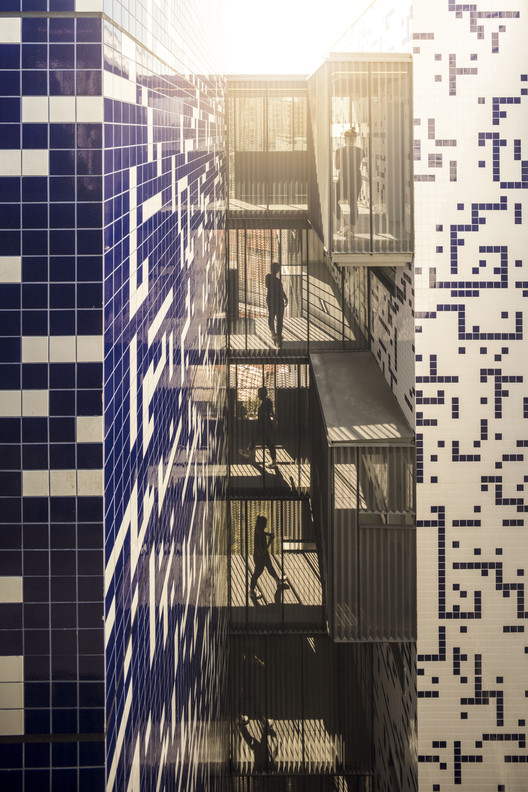
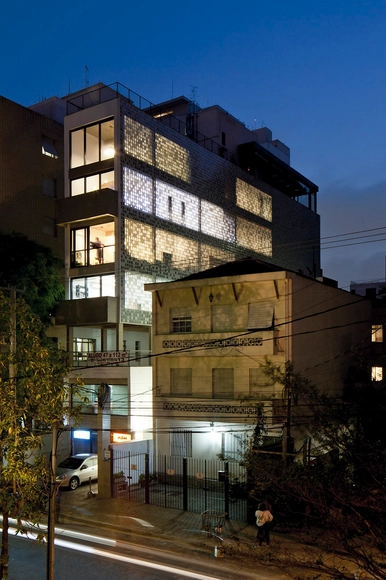
POP XYZ / TRIPTYQUE

POP XYZ  / TRIPTYQUE - Apartments
© Fernando Guerra | FG+SG

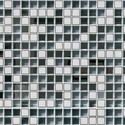
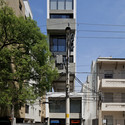
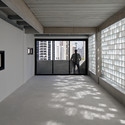
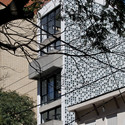
POP XYZ  / TRIPTYQUE - ApartmentsPOP XYZ  / TRIPTYQUE - ApartmentsPOP XYZ  / TRIPTYQUE - ApartmentsPOP XYZ  / TRIPTYQUE - ApartmentsPOP XYZ  / TRIPTYQUE - More Images+ 30

Vila Madalena, Brazil
  • Architects: Triptyque
  • Area Area of this architecture project Area:  8000
  • Year Completion year of this architecture project Year:  2016
  • Manufacturers Brands with products used in this architecture project
    Manufacturers:  Atlas Concorde, Braston, Concresteel, Conspem Revestimentos, Coral, +9

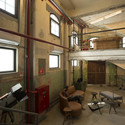
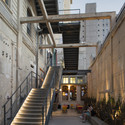
RedBull Station Sao Paulo / TRIPTYQUE

RedBull Station Sao Paulo / TRIPTYQUE - Adaptive ReuseRedBull Station Sao Paulo / TRIPTYQUE - Adaptive ReuseRedBull Station Sao Paulo / TRIPTYQUE - Adaptive ReuseRedBull Station Sao Paulo / TRIPTYQUE - Adaptive ReuseRedBull Station Sao Paulo / TRIPTYQUE - More Images+ 45

  • Architects: Triptyque
  • Year Completion year of this architecture project Year:  2013

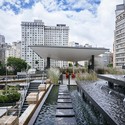
Leitão 653 / TRIPTYQUE

Leitão 653 / TRIPTYQUE - Commercial ArchitectureLeitão 653 / TRIPTYQUE - Commercial ArchitectureLeitão 653 / TRIPTYQUE - Commercial ArchitectureLeitão 653 / TRIPTYQUE - Commercial ArchitectureLeitão 653 / TRIPTYQUE - More Images+ 13

  • Architects: Triptyque
  • Year Completion year of this architecture project Year:  2012