1. ArchDaily
  2. Brise Soleil

Brise Soleil: The Latest Architecture and News

Designed Comfort, Purchased Comfort: Passive Design and Air Conditioning in Hong Kong

Subscriber Access | 

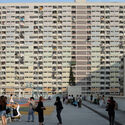
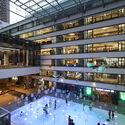
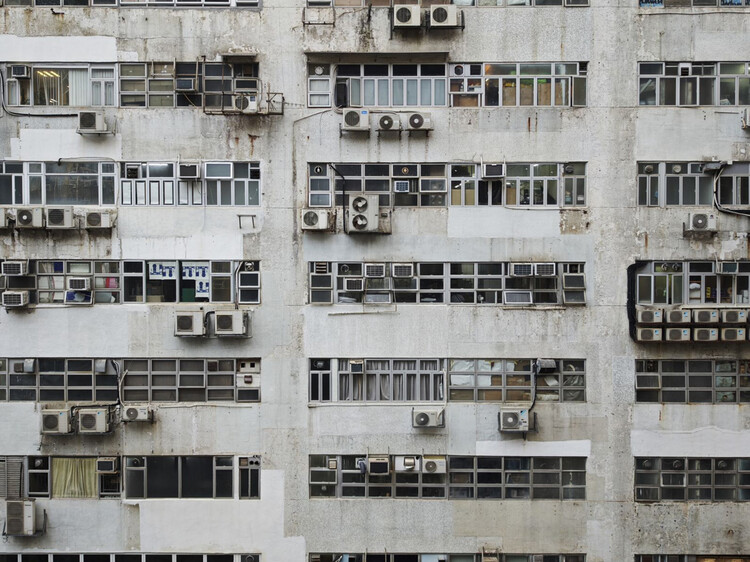
Establishing thermal comfort once demanded a far more deliberate and calibrated architectural intelligence—an interplay of orientation, massing, material behavior, ventilation potential, shading, and the ways daylight and surfaces absorb and release heat. This was not simply a matter of taste, but of necessity. When many of Hong Kong's post-war modernist buildings were constructed in the late 1960s and 1970s, forming a substantial portion of the city's public housing and broader residential stock, air-conditioning was not yet a ubiquitous, default service. Cooling, where present at all, was limited and unevenly distributed; comfort had to be negotiated through passive means, through section, façade depth, operable openings, and climatic detailing. It was only later, particularly through the 1970s and 1980s, as air-conditioning became increasingly standardized across the region, that mechanical cooling began to displace this earlier matrix of architectural decision-making.

Did air conditioning negatively affect architectural space, particularly in Hong Kong and the nearby region? The more precise claim is that widespread reliance on AC has profoundly rearranged the incentive structure of building design.

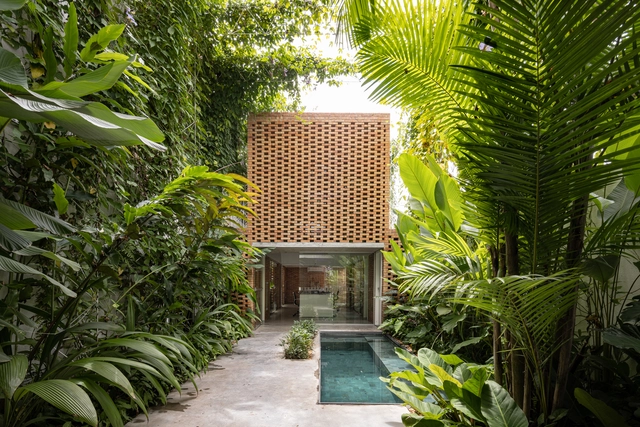
Designed Comfort, Purchased Comfort: Passive Design and Air Conditioning in Hong Kong - Image 1 of 4Designed Comfort, Purchased Comfort: Passive Design and Air Conditioning in Hong Kong - Image 2 of 4Designed Comfort, Purchased Comfort: Passive Design and Air Conditioning in Hong Kong - Image 3 of 4Designed Comfort, Purchased Comfort: Passive Design and Air Conditioning in Hong Kong - Image 4 of 4Designed Comfort, Purchased Comfort: Passive Design and Air Conditioning in Hong Kong - More Images+ 9

The Case for Local Modernism in Cairo: Egypt's Architectural Transformation During the 1950s

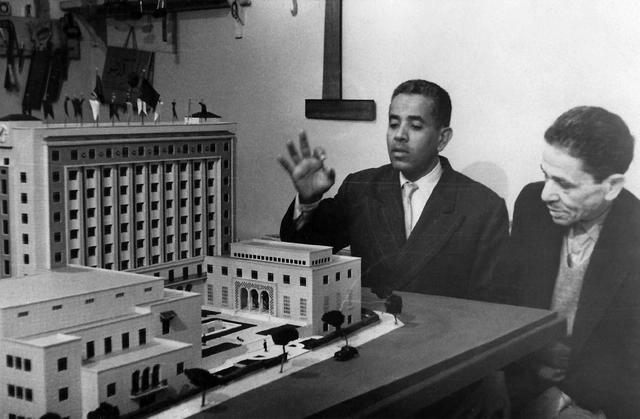
In the heart of Cairo, amid its historic landmarks and evolving urban fabric, a distinct modernist architectural movement took shape in the 1950s and 60s. It reflected the city's response to rapid political, economic, and social changes. When it arrived, modernism in Cairo was not just an imported style but a "pragmatic response to the needs of a growing city." Architects focused on functionality, efficiency, and adapting designs to the local climate and cultural context. Following the 1952 revolution, Egypt underwent significant transformations under President Gamal Abdel Nasser's leadership. In fact, the government sought to build a new national identity that reflected progress and the nation's self-sufficiency. Architecture played a crucial role in this effort, with a strong focus on modernization and development. The state invested in large-scale projects to accommodate the needs of a rapidly growing population and expanding industries. This period marked a shift from colonial-era influences toward a search for a distinct architectural identity that aligned with the political and social aspirations of the time.

The Case for Local Modernism in Cairo: Egypt's Architectural Transformation During the 1950s - Image 1 of 4The Case for Local Modernism in Cairo: Egypt's Architectural Transformation During the 1950s - Image 2 of 4The Case for Local Modernism in Cairo: Egypt's Architectural Transformation During the 1950s - Image 3 of 4The Case for Local Modernism in Cairo: Egypt's Architectural Transformation During the 1950s - Image 4 of 4The Case for Local Modernism in Cairo: Egypt's Architectural Transformation During the 1950s - More Images+ 5

7 Bioclimatic Façade Strategies for Tropical Architecture

Subscriber Access | 

When we think of the word "tropic," the image that typically comes to mind is an exotic space, characterized by perpetual warmth and humidity, with frequent and heavy rainfall nurturing lush vegetation. Throughout history, this tropical climate has been romanticized as a paradise and criticized for potentially fostering weakness due to its perceived clemency.

Thankfully, those judgments and associations have been relegated to the past, paving the way for theoretical and practical projects that outline the advantages and disadvantages of living in a tropical climate. These projects acknowledge the various strategies to enhance human adaptability within these distinctive climatic conditions.

7 Bioclimatic Façade Strategies for Tropical Architecture - Image 1 of 47 Bioclimatic Façade Strategies for Tropical Architecture - Image 2 of 47 Bioclimatic Façade Strategies for Tropical Architecture - Image 3 of 47 Bioclimatic Façade Strategies for Tropical Architecture - Image 4 of 47 Bioclimatic Façade Strategies for Tropical Architecture - More Images+ 15

Screened-In: Mastering the Brise-Soleil in France

Subscriber Access | 

The relationship between building envelope and structure remains a centerpiece of architecture. Understanding a building's skin is how designs become open or closed, controlling environmental conditions, light and views. Whether perforated, slotted or modular, brise-soleils are elegant envelopes that create new spatial conditions. This is especially true in France, where architects are rethinking tradition to bring new screened structures to life.

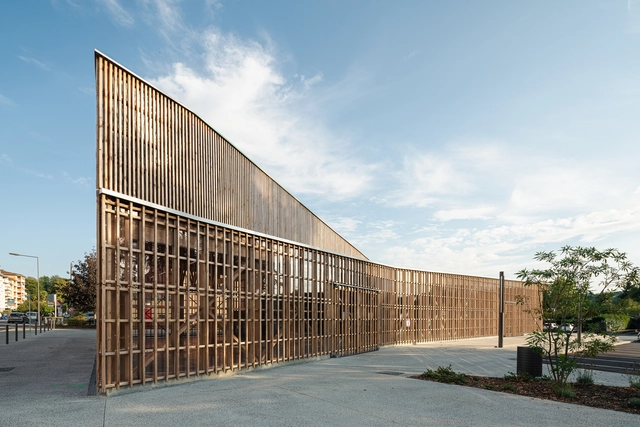
Screened-In: Mastering the Brise-Soleil in France - Image 1 of 4Screened-In: Mastering the Brise-Soleil in France - Image 2 of 4Screened-In: Mastering the Brise-Soleil in France - Image 3 of 4Screened-In: Mastering the Brise-Soleil in France - Image 4 of 4Screened-In: Mastering the Brise-Soleil in France - More Images+ 2

Residence ZB / PJV Arquitetura

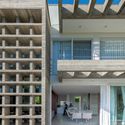
Residence ZB / PJV Arquitetura - Interior Photography, Houses, Facade
© Alexandre Zelinski

Residence ZB / PJV Arquitetura - Interior Photography, Houses, FacadeResidence ZB / PJV Arquitetura - HousesResidence ZB / PJV Arquitetura - Interior Photography, Houses, ChairResidence ZB / PJV Arquitetura - Interior Photography, Houses, FacadeResidence ZB / PJV Arquitetura - More Images+ 38

Jaraguá do Sul, Brazil
  • Architects: PJV Arquitetura
  • Area Area of this architecture project Area:  500
  • Year Completion year of this architecture project Year:  2018
  • Manufacturers Brands with products used in this architecture project
    Manufacturers:  Floricultura Gigante, JJG Marcenaria, Orli Pedras, Portobello, Possamai Madeiras, +4