1. ArchDaily
  2. Building Future

Building Future: The Latest Architecture and News

From Factories to Futures: Adaptive Reuse in the Post-Industrial City

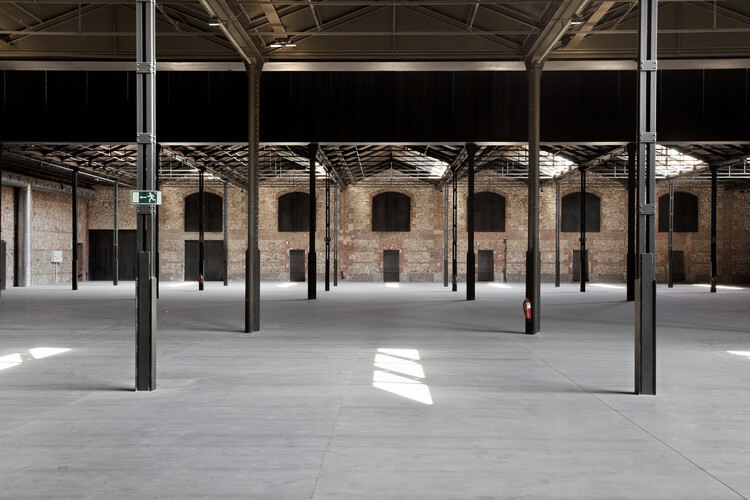
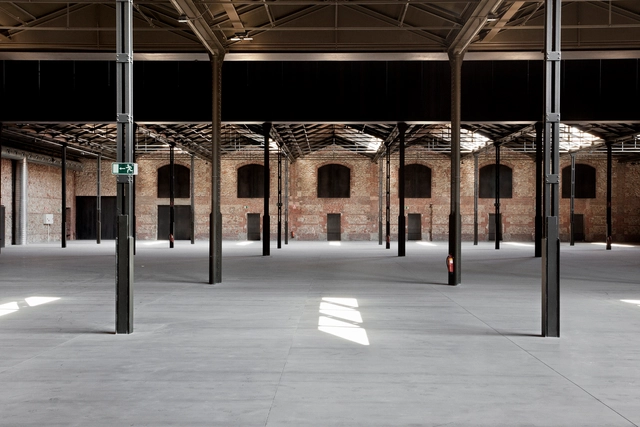
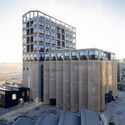
In cities across the world, the relics of industrial production have become the laboratories of a new urban condition. Warehouses, power plants, and shipyards, once symbols of labor and progress, now stand as vast empty shells, waiting to be reimagined. Rather than erasing these structures, architects are finding creative ways to adapt them to contemporary needs, transforming spaces of manufacture into spaces of culture, education, and community life.

This shift reflects a broader change in architectural priorities: building less and reusing more. The practice of adaptive reuse responds simultaneously to environmental urgency and to the need for cultural continuity in urban environments.

From Factories to Futures: Adaptive Reuse in the Post-Industrial City - Image 1 of 4From Factories to Futures: Adaptive Reuse in the Post-Industrial City - Image 2 of 4From Factories to Futures: Adaptive Reuse in the Post-Industrial City - Image 3 of 4From Factories to Futures: Adaptive Reuse in the Post-Industrial City - Image 4 of 4From Factories to Futures: Adaptive Reuse in the Post-Industrial City - More Images+ 17

Cities Need Care, Not Perfection: Rethinking How We Build the Urban Future

Subscriber Access | 

What does optimism feel like in cities that can no longer rely on perfection as their ultimate ambition? Across the world, urban environments bear the weight of overlapping pressures: climate volatility, spatial inequality, political fragmentation, public distrust, and chronic infrastructural disinvestment. These realities render the idea of an ideal city increasingly detached from lived experience. Yet the hope for building better systems persists. While utopian visions may seem like an escape from the growing complexities of the modern world, the greater challenge for contemporary city-making is to confront those complexities rather than avoid them.

Cities Need Care, Not Perfection: Rethinking How We Build the Urban Future - Image 1 of 4Cities Need Care, Not Perfection: Rethinking How We Build the Urban Future - Image 2 of 4Cities Need Care, Not Perfection: Rethinking How We Build the Urban Future - Image 3 of 4Cities Need Care, Not Perfection: Rethinking How We Build the Urban Future - Image 4 of 4Cities Need Care, Not Perfection: Rethinking How We Build the Urban Future - More Images+ 16

Creating Cities for Tomorrow: The Future of Sustainable Construction

 | Sponsored Content

Rapid urbanization, driven by population growth, is among the powerful megatrends transforming how cities are built. The world is adding a city the size of Madrid every single week and will do so for decades to come. To meet this demand sustainably, a collaborative, systems-thinking approach to construction is needed.

Architecture and Agency: Rethinking Authorship Through Participatory Design

Subscriber Access | 

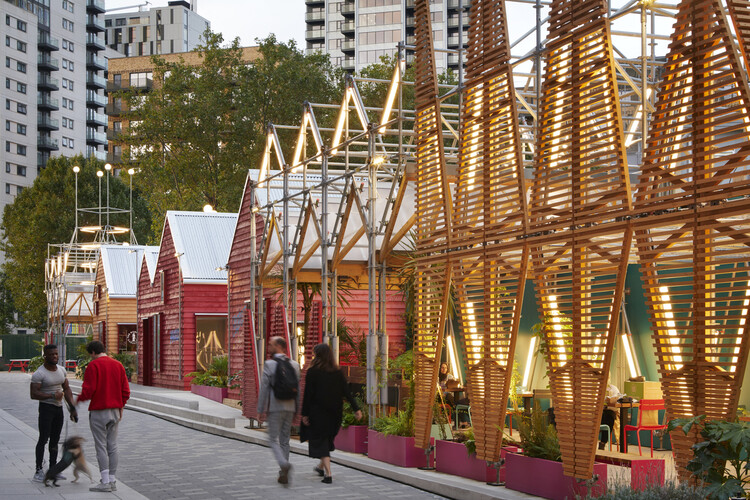
Architecture has historically produced many iconic buildings shaped by singular visions—often designed unilaterally for users, communities, and cities. While this top-down approach has enabled strong formal coherence and conceptual clarity, it has also prioritized authorship over engagement. The result: projects that may be celebrated as visionary, yet often feel disconnected from the everyday realities of those who inhabit them.
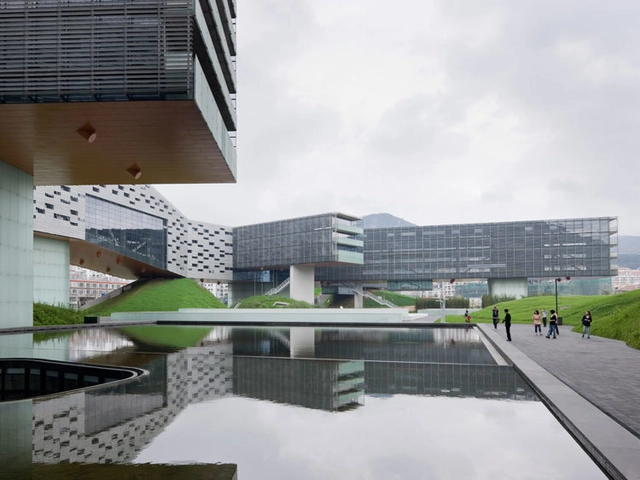
Designing for others is inherently complex. As architects, we are frequently tasked with creating environments for communities with whom we may have no personal or cultural familiarity. This distance, however, can offer valuable objectivity. It allows us to engage diverse perspectives with fresh eyes, critically analyzing the needs and constraints of multiple stakeholders. Through this process, the discipline of architecture has advanced—pushing boundaries in spatial thinking, material innovation, and structural experimentation.

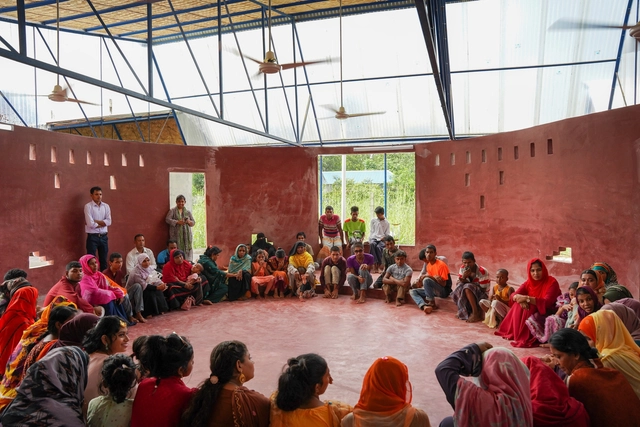
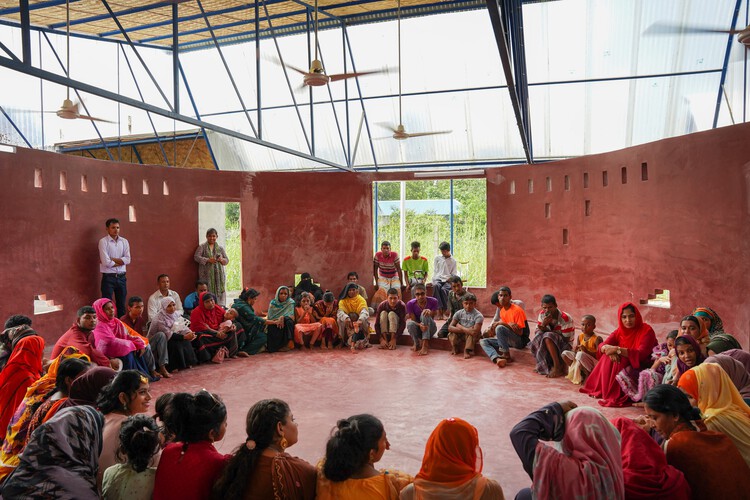
Architecture and Agency: Rethinking Authorship Through Participatory Design - Image 1 of 4Architecture and Agency: Rethinking Authorship Through Participatory Design - Image 2 of 4Architecture and Agency: Rethinking Authorship Through Participatory Design - Image 3 of 4Architecture and Agency: Rethinking Authorship Through Participatory Design - Image 4 of 4Architecture and Agency: Rethinking Authorship Through Participatory Design - More Images+ 29

How Will Transportation Work in the Future? A Look at the Rise of Electric Mobility in Cities

Subscriber Access | 

From greenhouse gas emissions and air pollution to deforestation, one of the leading contributors to global warming today is emissions from the transportation sector. Exploring its origins and evolution, as well as the major challenges it faces, the development of electric mobility in urban environments represents a global transition that requires a coordinated mix of policies and actions to achieve cleaner and more sustainable transportation systems. Designing safe and comfortable infrastructure for walking and cycling, promoting public transit and shared mobility, and designing more efficient streets that include electric vehicles, among other actions, are part of a growing worldwide effort to reduce carbon emissions.

How Will Transportation Work in the Future? A Look at the Rise of Electric Mobility in Cities - Image 1 of 4How Will Transportation Work in the Future? A Look at the Rise of Electric Mobility in Cities - Image 2 of 4How Will Transportation Work in the Future? A Look at the Rise of Electric Mobility in Cities - Image 3 of 4How Will Transportation Work in the Future? A Look at the Rise of Electric Mobility in Cities - Image 15 of 4How Will Transportation Work in the Future? A Look at the Rise of Electric Mobility in Cities - More Images+ 11

Between Algorithms and Ancestral Knowledge: Expanding the Concept of Architectural Intelligence

Artificial intelligence (AI) is no longer a futuristic idea in architecture — it is a concrete reality that is reshaping how we design. In seconds, computational systems can process and evaluate a wide range of variables — formal, programmatic, contextual, and regulatory — guiding architects toward highly optimized solutions. But as we embrace this algorithmic revolution, a critical question arises: can architectural intelligence be reduced to data-driven logic? In response, alternative approaches are gaining momentum — ones that value ways of building grounded in sensory experience, adaptation to place, and the intergenerational transmission of knowledge. In the exchange between artificial and ancestral forms of intelligence, a deeper understanding begins to take shape. Intelligence does not reside in the tools themselves, but in the intention and sensitivity with which we use them to navigate complex realities.

Between Algorithms and Ancestral Knowledge: Expanding the Concept of Architectural Intelligence - Image 1 of 4Between Algorithms and Ancestral Knowledge: Expanding the Concept of Architectural Intelligence - Image 2 of 4Between Algorithms and Ancestral Knowledge: Expanding the Concept of Architectural Intelligence - Image 3 of 4Between Algorithms and Ancestral Knowledge: Expanding the Concept of Architectural Intelligence - Image 4 of 4Between Algorithms and Ancestral Knowledge: Expanding the Concept of Architectural Intelligence - More Images+ 8

Simple Design Strategies for Extreme Heat

Anyone who walks during the summer in a city like Boston knows that a significant amount of time is spent charting routes with shade. But I can’t use that as my only excuse for being off-task. Honestly, I’m distracted. The swirling headlines of the U.S. presidential election, an unprecedented UN climate conference looming, and the phrase “decade of decisive action” weighs heavy on my shoulders. While it’s easy to get caught up in current events, those of us with solutions must stay focused.

A perhaps helpful Japanese phrase to call upon is “kotsu kotsu,” essentially meaning to slow down and focus on the task at hand, and do it well. Temperatures are soaring, people are suffering. As a recent UN COP letter stated, “time lost is lives, livelihoods, and the planet lost.” Cooling our cities and communities is more important than ever.

Simple Design Strategies for Extreme Heat - Image 1 of 4Simple Design Strategies for Extreme Heat - Image 2 of 4Simple Design Strategies for Extreme Heat - Image 3 of 4Simple Design Strategies for Extreme Heat - Image 4 of 4Simple Design Strategies for Extreme Heat - More Images+ 4

The Groundscraper: A Building Typology to Decentralize Cities

A ground scraper is essentially the opposite of a skyscraper - a large building that sprawls outward horizontally instead of soaring vertically into the sky. Though no strict definition exists, groundscrapers are generally described as extremely long but low-rise buildings with over 1 million square feet of space, sometimes called sidescrapers or landscrapers. The term came into the spotlight with Google's plans for their massive $1.3 billion London headquarters. Designed to be only 11 stories tall but over 1,000 feet long, this vast office block epitomizes using horizontal expansion to create immense space for thousands of employees.

The New Space Race: 6 Challenges for Extraterrestrial Architecture

The New Space Race: 6 Challenges for Extraterrestrial Architecture - Sustainability
© AI SpaceFactory

Up until now, space architecture has been mainly focused on engineering, centered on projects like orbital space stations or Martian exploration convoys, commissioned by world space agencies such as ESA (Europe) or NASA (USA). But in recent years, an increasingly broader spectrum of professionals (e.g. architects, sociologists) as well as entrepreneurs and investors (not all well intentioned) have joined the challenge of designing extraterrestrial built environments, the new space race of the 21st century.

The fast development of technology, the increase of world population and the climate change crisis create the perfect setting to think about life outside of our planet, and as these trends continue to evolve and converge, new opportunities to explore options beyond our traditional limits appear (NEOM), as well as new organizations which support this research (like SATC, SICSA). Even though no one is currently on Mars, many ongoing projects and simulations (MARS-ONE, Mars City Science) are already exploring how we will design, build and inhabit the new realms of humanity in outer space.

Building Future Podcast at the 2019 AIA Convention

Building Future Podcast at the 2019 AIA Convention - Image 1 of 4

During the 2019 AIA Convention in Las Vegas we invited a selected group of manufacturers and industry leaders to discuss the future of architecture and construction. Trends, technology, apps, BIM, customization, supply chain, and more insights on the first edition of Building Future featuring Morin Corp., Sto, Cosentino, panoramah!, Dri-Design, Graphisoft, Owens Corning, AkzoNobel, and C.R. Laurence.