1. ArchDaily
  2. Childhood

Childhood: The Latest Architecture and News

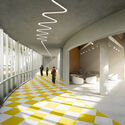
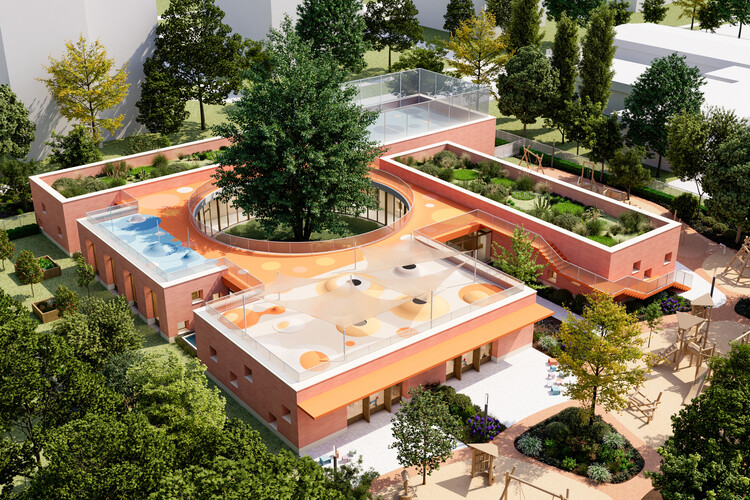
Beyond the Classroom: Six Unbuilt Projects Rethinking Educational Architecture

Subscriber Access | 

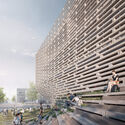
Educational architecture remains an exploratory ground for unbuilt exploration, offering insight into how learning environments can evolve alongside changing social, ecological, and pedagogical values. In this Unbuilt edition, submitted by the ArchDaily community, the selected projects bring together a range of proposals that examine schools, libraries, nurseries, and academic centers as spatial frameworks for care, knowledge, and collective growth. Rather than treating education as a fixed program housed within singular buildings, these projects approach learning spaces as adaptive environments shaped by landscape, climate, and human interaction.

Across varied geographies, from Mediterranean hillsides and Central European courtyards to tropical cities and distributed campus models, the proposals explore diverse architectural responses to contemporary education. They range from child-scaled kindergartens organized around trees and cloisters to libraries conceived as civic landscapes, biodiversity-centered academic buildings, and schools imagined as walkable urban systems.
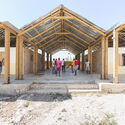
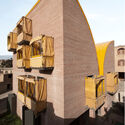
Beyond the Classroom: Six Unbuilt Projects Rethinking Educational Architecture - Image 15 of 4Beyond the Classroom: Six Unbuilt Projects Rethinking Educational Architecture - Image 21 of 4Beyond the Classroom: Six Unbuilt Projects Rethinking Educational Architecture - Image 34 of 4Beyond the Classroom: Six Unbuilt Projects Rethinking Educational Architecture - Image 29 of 4Beyond the Classroom: Six Unbuilt Projects Rethinking Educational Architecture - More Images+ 31

Buildner Announces Kinderspace 2025 Winners and Next Call for Entries

 | Sponsored Content

Buildner has announced the results of its Kinderspace Edition #2 Competition and launched the third annual Kinderspace Edition #3 with an upcoming registration deadline of 26 November 2025. Following its inaugural launch, this annual international competition once again invited architects, designers, and educators to explore new possibilities for early childhood learning environments.

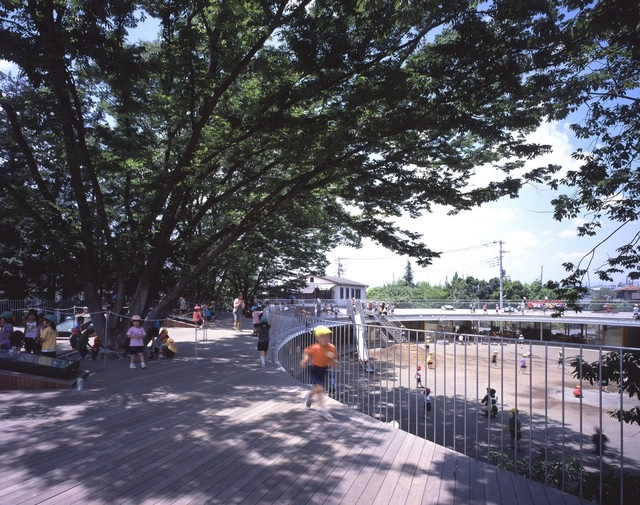
Participants were tasked with envisioning spaces that inspire discovery, foster imagination, and support the emotional and cognitive development of young children. The aim was to move beyond standardized classroom design and propose innovative, flexible, and nature-connected spaces that reflect a deeper understanding of how children interact with their surroundings.
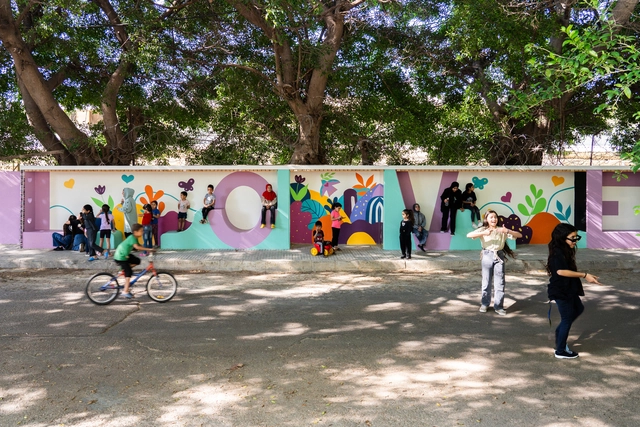
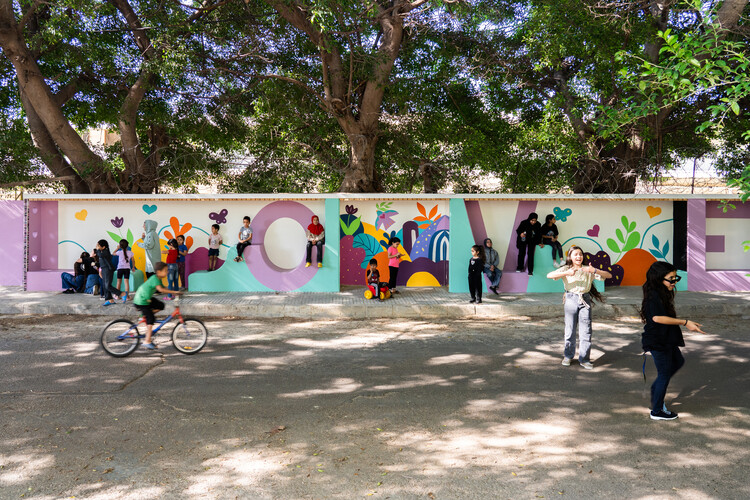
Make Space for Girls Launches Strategy for Gender-Inclusive Public Spaces

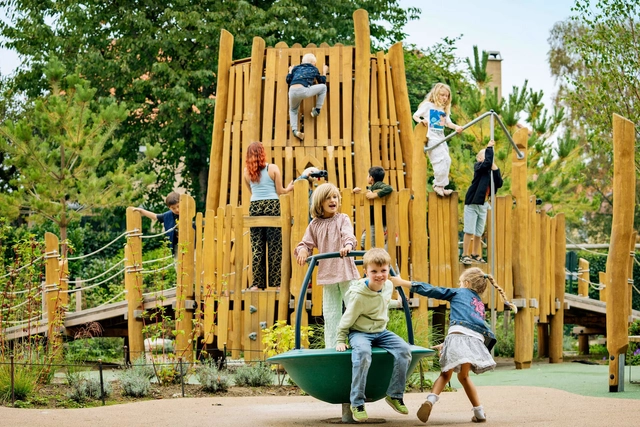
Make Space for Girls (MSFG) is a London-based charity that campaigns for public spaces and parks in the United Kingdom to be more inclusive of teenage girls. The organization conducts research on how public spaces are used and designed, raises awareness about perceived inequalities in their use, and collaborates with public and private institutions to promote the representation of teenage girls in the planning and design of outdoor environments. Their research indicates that their exclusion from the design of parks and public spaces often leaves them without places where they feel welcomed or valued, and that parks and public spaces for older children and teenagers are currently designed for the default male. From 8 to 15 October, the organization is running a fundraising campaign to support the implementation of its new three-year strategy aimed at promoting more inclusive public spaces.

Make Space for Girls Launches Strategy for Gender-Inclusive Public Spaces - Image 1 of 4Make Space for Girls Launches Strategy for Gender-Inclusive Public Spaces - Image 2 of 4Make Space for Girls Launches Strategy for Gender-Inclusive Public Spaces - Image 3 of 4Make Space for Girls Launches Strategy for Gender-Inclusive Public Spaces - Image 4 of 4Make Space for Girls Launches Strategy for Gender-Inclusive Public Spaces - More Images

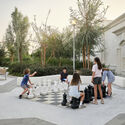
Unconventional Playgrounds: Built from Junk, Shaped by Concrete, Freed by Play

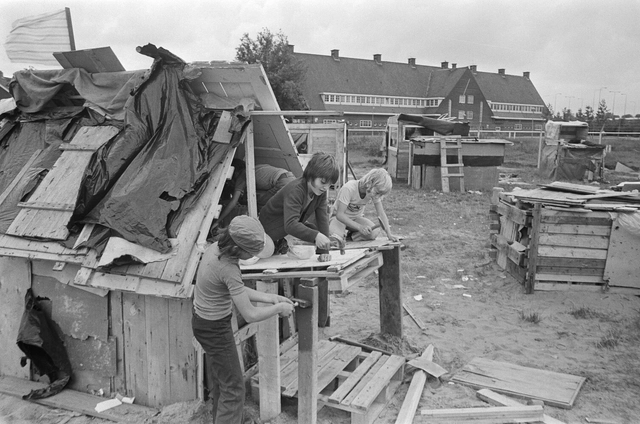
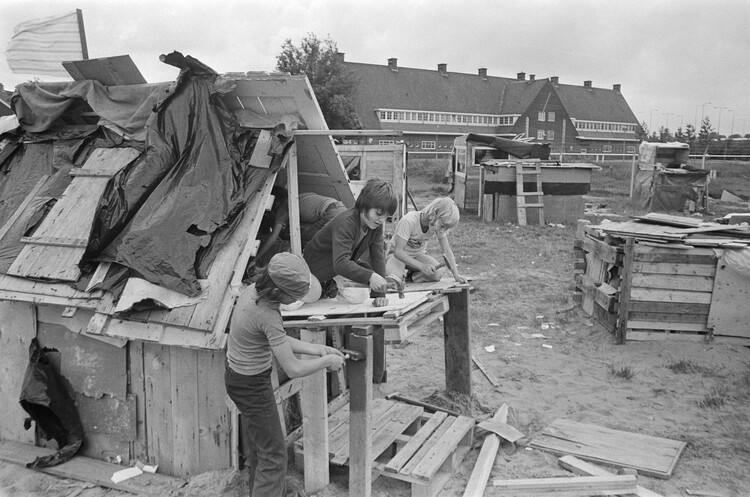
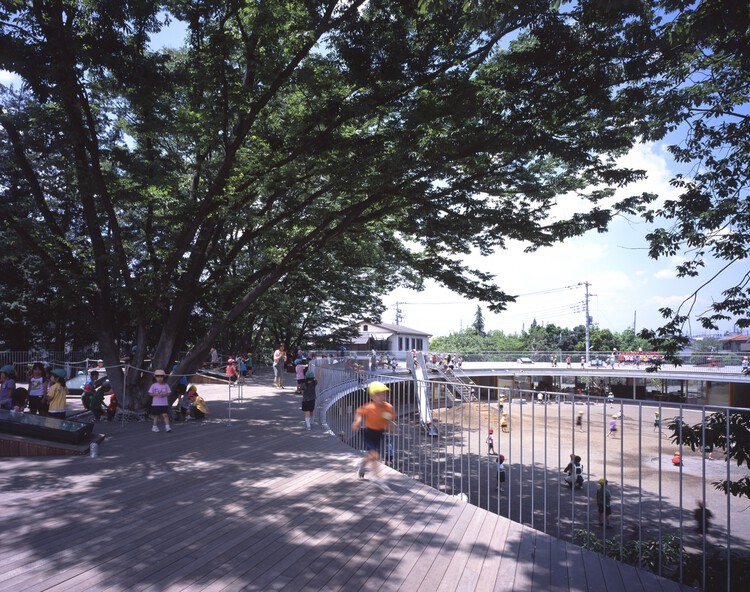
What if the best kind of play isn't the safest? For decades, cities have built playgrounds to be clean, colorful, and easy to supervise. Yet these spaces—designed more for adult peace of mind than for children's curiosity—often strip away what makes play truly transformative: risk, unpredictability, and self-direction. Rising safety standards, shrinking public space, and the commercialization of play equipment have only further narrowed the possibilities for children's independent exploration. From a junkyard in 1940s Copenhagen to the concrete landscapes of postwar Amsterdam, a handful of architects, planners, and activists have challenged the idea that play must be neat and controlled. Their unconventional playgrounds—made of loose parts, raw materials, and abstract forms—gave children the freedom to build, demolish, explore, and get dirty.

Unconventional Playgrounds: Built from Junk, Shaped by Concrete, Freed by Play - Image 1 of 4Unconventional Playgrounds: Built from Junk, Shaped by Concrete, Freed by Play - Image 2 of 4Unconventional Playgrounds: Built from Junk, Shaped by Concrete, Freed by Play - Image 3 of 4Unconventional Playgrounds: Built from Junk, Shaped by Concrete, Freed by Play - Image 4 of 4Unconventional Playgrounds: Built from Junk, Shaped by Concrete, Freed by Play - More Images+ 8

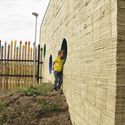
Childhood and Ancestry: What South American Indigenous Communities Can Teach Us About Environments for Children

In South American Indigenous communities, a child’s place is wherever they choose to be. Babies crawl on the earthen floor, approach the fire, investigate anthills, and experience the world with their whole bodies. They learn by feeling: discovering limits, recognizing dangers, and gathering lessons no manual could ever teach. In urban contexts, by contrast, children are often confined to spaces designed for adults, filled with rules that—though well-intentioned—tend to distance them from essential experiences. Rather than judging which model is “better,” what matters is recognizing that when cultures observe one another, there is always room for learning.

From an architectural perspective, this childhood with little freedom of time and movement challenges us to rethink how we shape daily environments. Why restrict spontaneous exploration to controlled settings? Why create physical and symbolic barriers between children and the natural world? And, above all, how might contemporary architecture break away from this paradigm and, inspired by Indigenous childhoods, design environments that restore to children their wild, curious, and complete dimension?

Childhood and Ancestry: What South American Indigenous Communities Can Teach Us About Environments for Children - Image 1 of 4Childhood and Ancestry: What South American Indigenous Communities Can Teach Us About Environments for Children - Image 2 of 4Childhood and Ancestry: What South American Indigenous Communities Can Teach Us About Environments for Children - Image 3 of 4Childhood and Ancestry: What South American Indigenous Communities Can Teach Us About Environments for Children - Image 4 of 4Childhood and Ancestry: What South American Indigenous Communities Can Teach Us About Environments for Children - More Images+ 15

The Why, What, and How of Human-Centered and Successful Playground Design

 | Sponsored Content

By Jeanette Fich Jespersen, MA, Head of the KOMPAN Play Institute, Head of the steering committee of the World Playground Research Institute, University of Southern Denmark, Vice-president of International Play Association, Denmark.

"No, I don't want to go to that playground. It is boring!" This may sound like something no child would ever utter. But children do have strong opinions on what playgrounds they like, from quite early on. The reason why not only parents and caregivers but also city planners and architects should listen and adjust is more critical than ever.

"The city cannot be understood from the screen": AI and childhood in urban design

Subscriber Access | 

Neither a passing trend nor a permanent threat: the initial alarm is fading. Artificial intelligence is increasingly being adopted as a strategic tool which, when integrated responsibly, can be highly valuable—especially in participatory urban design processes focused on children and youth.

To explore this intersection of technology, cities, and new generations, we spoke with Dolores Victoria Ruiz Garrido, architect and founder of Little Architects, a program she created over a decade ago at the Architectural Association (AA) in London. With more than 15 years of experience in participatory urbanism, she emphasizes that AI can be a powerful tool when used ethically and purposefully—particularly to enrich education and community-focused design processes. But she warns: "The city cannot be understood from the screen—it must be grasped through the body, the walk, and wonder. Before generating stunning or visually beautiful images to transform the city, we must teach how to read it: to observe, understand, and emotionally connect with it."

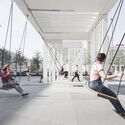
Urban Revitalization Through Motion: 9 Public Swings That Invite Play

Subscriber Access | 

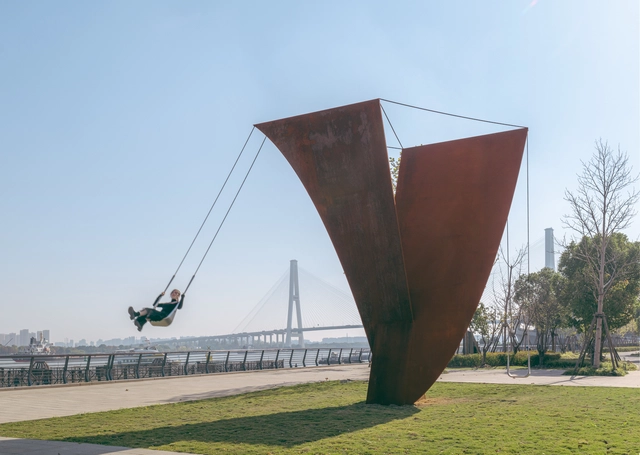
In the productivity-driven dynamics of contemporary cities, playful interventions in public spaces offer an innovative way to reclaim urban environments. These interventions encourage new ways of thinking and acting, temporarily breaking the monotony of everyday life and redefining the concept of play. Once confined to childhood and separate from daily activities, play has begun to intertwine with routine paths, becoming an integral part of urban life even outside traditional leisure times. In this way, reintroducing the swing—the most iconic children's toy—becomes particularly significant. As a symbol of childhood, pleasure, and joy, the swing contrasts sharply with the rigid appropriations of most public spaces, inviting a more relaxed and playful engagement with the urban environment. On June 11th, the UN International Day of Play reminds us of the benefits of incorporating diverse activities into urban spaces, for both children and adults, fostering community, creativity, and well-being.

Urban Revitalization Through Motion: 9 Public Swings That Invite Play - Image 1 of 4Urban Revitalization Through Motion: 9 Public Swings That Invite Play - Image 2 of 4Urban Revitalization Through Motion: 9 Public Swings That Invite Play - Image 3 of 4Urban Revitalization Through Motion: 9 Public Swings That Invite Play - Image 4 of 4Urban Revitalization Through Motion: 9 Public Swings That Invite Play - More Images+ 8

Refuges of Hope: 10 Shelters for Vulnerable Children Around the World

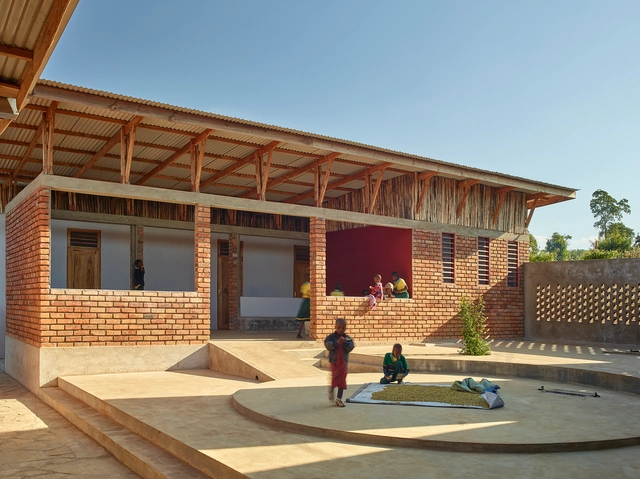
Architecture in children’s shelters serves a purpose beyond building physical spaces; it is about creating refuges that nurture healing, protection, and growth. For vulnerable children, designing these environments plays a vital role in their emotional recovery. Every aspect—from natural lighting to room layout—works together to create a secure and welcoming atmosphere, supporting their physical well-being and psychological and social development.

Refuges of Hope: 10 Shelters for Vulnerable Children Around the World - Image 1 of 4Refuges of Hope: 10 Shelters for Vulnerable Children Around the World - Image 2 of 4Refuges of Hope: 10 Shelters for Vulnerable Children Around the World - Image 3 of 4Refuges of Hope: 10 Shelters for Vulnerable Children Around the World - Image 4 of 4Refuges of Hope: 10 Shelters for Vulnerable Children Around the World - More Images+ 10

Dystopian Disneyland: The Story Behind Turkey’s Castle Ghost Town

Subscriber Access | 

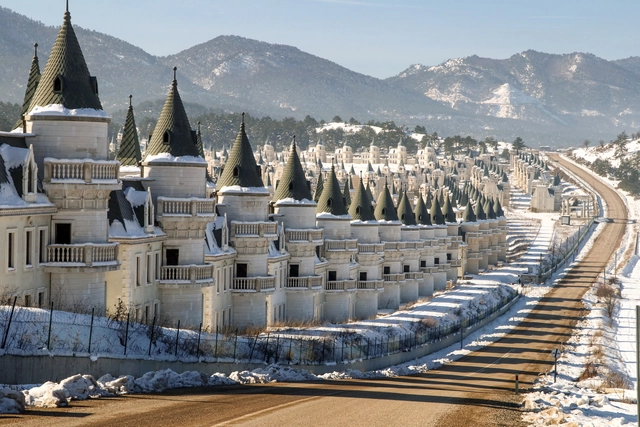
Most of us have probably imagined living in a castle at some point, whether during childhood, enchanted by fairy tales, or as adults studying European monarchies. Considering this fascination, what would you think if you had the chance to buy your castle? In mid-2014, you could make that dream a reality in Turkey for just $370,000. Each luxurious 325-square-meter castle came complete with blue turrets and spiral staircases. The only catch? Your castle would be one of 731 identical ones. But who cares about exclusivity when you have the chance to live in a Disney fairy tale?

Dystopian Disneyland: The Story Behind Turkey’s Castle Ghost Town - Image 1 of 4Dystopian Disneyland: The Story Behind Turkey’s Castle Ghost Town - Image 2 of 4Dystopian Disneyland: The Story Behind Turkey’s Castle Ghost Town - Image 3 of 4Dystopian Disneyland: The Story Behind Turkey’s Castle Ghost Town - Image 4 of 4Dystopian Disneyland: The Story Behind Turkey’s Castle Ghost Town - More Images+ 2