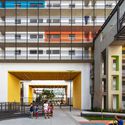
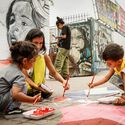
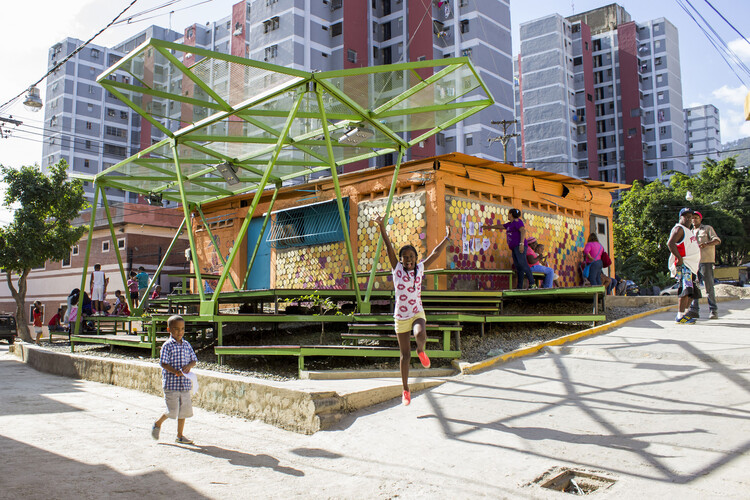
How the "Espacios de Paz" project is transforming community spaces in Venezuela. Pinto Salinas -- Oficina Lúdica + PKMN. Image Courtesy of PICO Estudio.
In Latin America, encounters do not necessarily arise from grand architectural gestures or monumental urban plans. They emerge from the in-between, from intermediate spaces: the courtyard, the veranda, the sidewalk, the shared corridor. These areas, often considered residual or informal by the traditional architectural discipline, are precisely where everyday life builds bonds.
From this Latin American culture comes a spatial logic in which daily life is organized in a relational and expansive way. Practices such as sitting at the front door, occupying the sidewalk, and playing in the street produce a lived city that extends beyond the formal limits of design.
Architecture encompasses a comprehensive design process that incorporates various steps and considerations for transforming abstract ideas into well-designed and functional projects. While specific approaches may vary, this dynamic and iterative process involves understanding the requirements, goals, and constraints of each case, followed by a conceptual design and detailed development of the spatial organization, relationships, and aesthetic aspects. It concludes with a construction and post-occupancy evaluation. Creativity, collaboration, problem-solving, and previous site analysis guide the creation of functional and aesthetically pleasing designs.
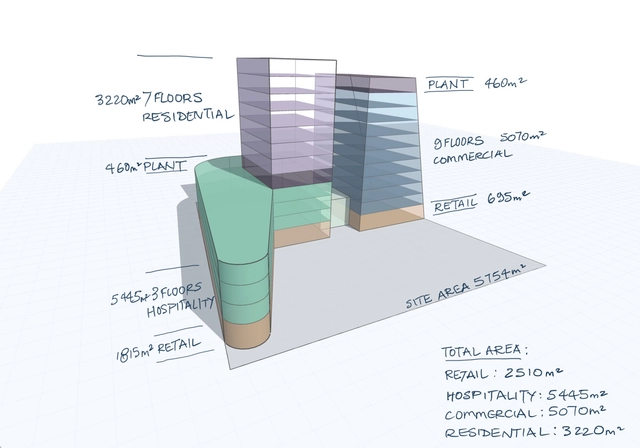
As the most impactful part of the process, the concept design stage is where the shape of a project comes together. Utilizing technologies to revolutionize the nature of design processes, Codesign emerges as a pioneering tool that leverages the power of the iPad and the flexibility of sketching to inform and encourage architects in exploring all the angles and potentialities of their ideas. By transforming sketches into 3D building models, Codesign facilitates an iterative process, enabling architects to explore, iterate, and promptly comprehend the downstream effects of their design possibilities. Here are five ways they are helping leading practices and principles design more today.
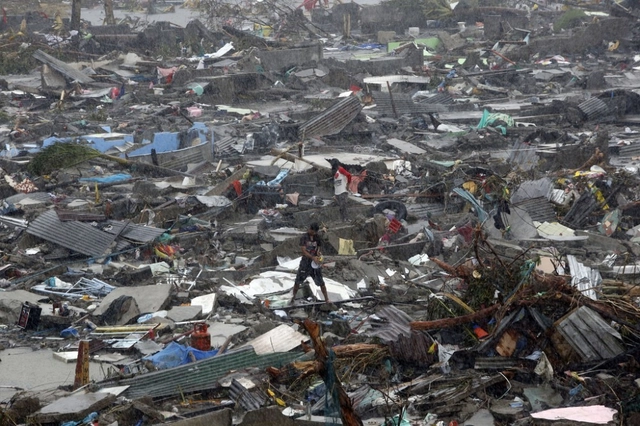
In the wake of the destruction of Typhoon Haiyan, architects were asking: "couldn't we have avoided this?" Technically, yes. But while the opportunity to build better exists, such measures are often expensive - and in poverty-stricken areas like the Philippines - cost-prohibitive. A recently published article by Carey Dunne on Co.Design breaks down why disaster-proof construction is such a complex challenge.
https://www.archdaily.com/453969/the-challenges-of-post-disaster-designKatherine Allen