1. ArchDaily
  2. collaborative urbanism

collaborative urbanism: The Latest Architecture and News

The OBEL Award Reveals "Systems’ Hack" as the Theme for Its 2026 Edition

©OBEL Foundation

The OBEL Foundation has announced "Systems' Hack" as the focus of its 2026 cycle, setting the conceptual framework that will guide the foundation's activities and the selection of the next OBEL Award. Founded in 2019, OBEL recognises architecture's potential to act as a tangible agent of positive social and ecological change, supporting approaches that expand how the built environment is defined and shaped. The 2026 theme calls on architecture to critically engage with the systems that underpin contemporary society, including infrastructure, energy, food, water, education, and information, and to examine how these interconnected networks might be reconfigured in response to accelerating global challenges.


The OBEL Award Reveals "Systems’ Hack" as the Theme for Its 2026 Edition - Image 1 of 4The OBEL Award Reveals "Systems’ Hack" as the Theme for Its 2026 Edition - Image 2 of 4The OBEL Award Reveals "Systems’ Hack" as the Theme for Its 2026 Edition - Image 3 of 4The OBEL Award Reveals "Systems’ Hack" as the Theme for Its 2026 Edition - Image 4 of 4The OBEL Award Reveals Systems’ Hack as the Theme for Its 2026 Edition - More Images+ 3

Reactivating Residual Public Spaces with Community-Led Design

Subscriber Access | 

Contemporary cities and urban settlements manifest as intricate structures that demand deep reflection and a careful approach. The social models and spatial layouts within them are in constant evolution, transforming over time. In this context, a crucial question arises: What is the predominant model for cities today? Many contemporary cities result from a paradigm that reached its apogee in the 19th century, characterized by intensive densification and urbanization in response to needs that weren't always reflective of its inhabitants.

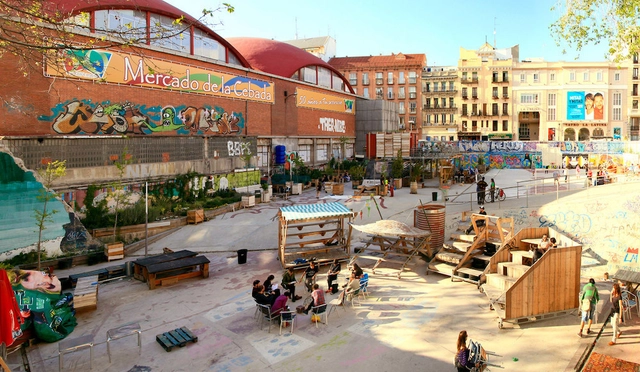
In some cases, due to the transformations experienced by large cities, certain urban sectors have fallen into disuse, becoming residual spaces or moving away from purposes oriented to community development. Recognizing that people are the driving force behind the dynamics of cities and human settlements, it is imperative to reclaim these spaces. To this end, theoretical approaches such as the one proposed by Henri Lefebvre's right to the city and the 15-minute city are presented as alternatives. In these cases, people regain the focus, becoming key elements in the design, and allowing for the re-establishment of a community-person-space bond.

What Is Open-Source Urbanism?

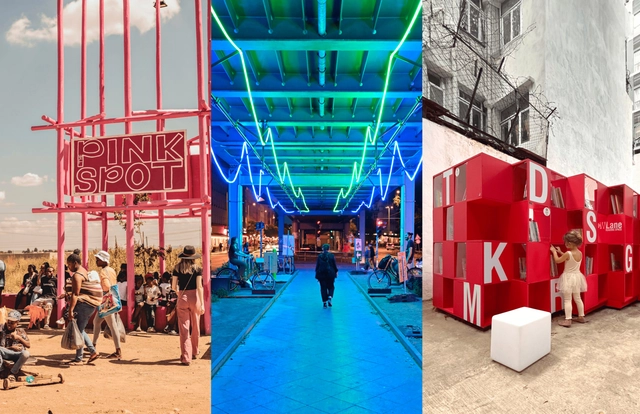
Many initiatives around the world have lately focused on ways to improve the urban environment through the actions of their inhabitants, be it in designing, building, or managing projects. Open-source urbanism is a collaborative approach that seeks to enhance the citizens' capacity for change.

An in-depth look at the concept of open-source urbanism is happening nowadays, and one can find many different definitions and approaches to it. But overall, open-source urbanism can be defined as the co-production of open-source common urban assets.

What Is Open-Source Urbanism? - Image 2 of 4What Is Open-Source Urbanism? - Image 3 of 4What Is Open-Source Urbanism? - Image 4 of 4What Is Open-Source Urbanism? - Image 5 of 4What Is Open-Source Urbanism? - More Images+ 1