1. ArchDaily
  2. Curation

Curation: The Latest Architecture and News

Curatorial Work as City-Making: Design Trust’s Marisa Yiu on Exhibitions and Spatial Agency

Subscriber Access | 

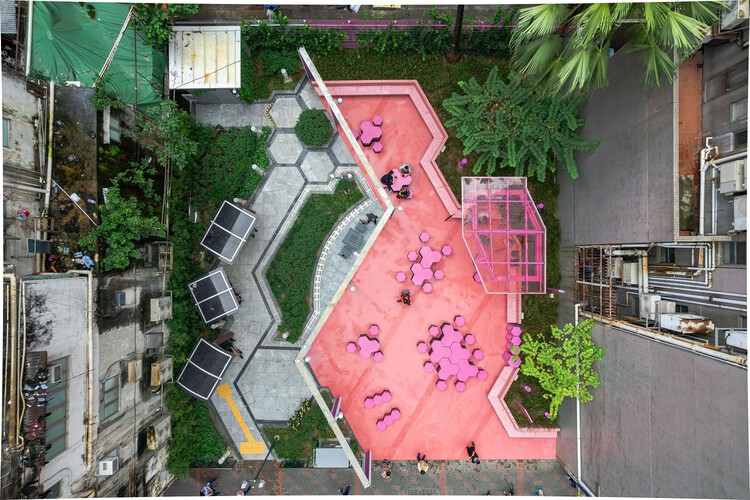
In Hong Kong, where architecture is often driven by real estate logic, infrastructure, and accelerated development, the space for bodily-scaled civic experimentation can be surprisingly narrow. This is where Design Trust has become distinctive. As a grant-making and project-enabling platform, it supports spatial interventions that sit between architecture, research, and public programming—work that is often too modest, collective, or uncertain to fit conventional client–architect pipelines.

At the center of this work is Marisa Yiu, whose leadership positions Design Trust as both an enabler and a cultural actor. Through initiatives such as Micro-Parks Hong Kong, alongside exhibitions and public programs, the organization treats discourse and prototyping as forms of spatial agency, linking designers, communities, institutions, and policy conversations while foregrounding questions of stewardship, maintenance, and the "afterlife" of public space.


Curatorial Work as City-Making: Design Trust’s Marisa Yiu on Exhibitions and Spatial Agency - Image 1 of 4Curatorial Work as City-Making: Design Trust’s Marisa Yiu on Exhibitions and Spatial Agency - Image 2 of 4Curatorial Work as City-Making: Design Trust’s Marisa Yiu on Exhibitions and Spatial Agency - Image 3 of 4Curatorial Work as City-Making: Design Trust’s Marisa Yiu on Exhibitions and Spatial Agency - Image 4 of 4Curatorial Work as City-Making: Design Trust’s Marisa Yiu on Exhibitions and Spatial Agency - More Images+ 19

"Calibrated Instability": Daryan Knoblauch on Building With Tension, Time, and Light

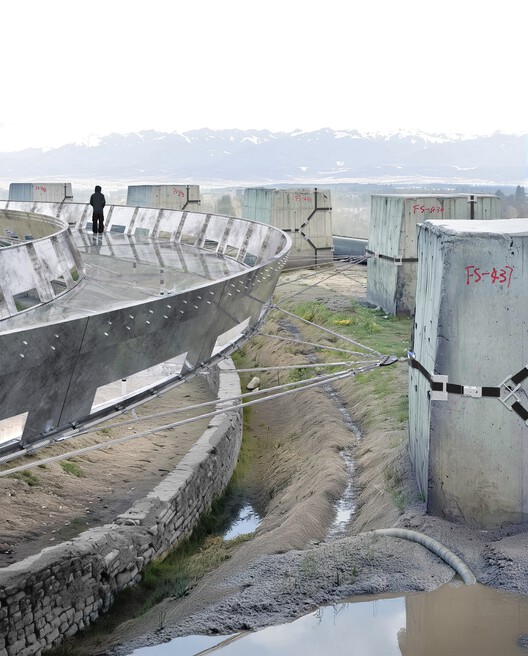
Daryan Knoblauch's work sits at the intersection of architecture and live cultural production, with a focus on how space is made legible through tension and atmosphere. Rather than treating temporary work as a lesser category of architecture, Knoblauch approaches installations, stages, and event architectures as full disciplinary problems—where enclosure, stability, light, and movement must be resolved with the same seriousness as any building, often under tighter constraints and faster timelines.

Across projects, a consistent thread is the productive tension between high-modern precision and an intentionally raw clarity of assembly. Membranes and lightweight systems are not deployed as surface effects, but as structural and spatial instruments—tuned to wind, load, and occupation, and calibrated to produce a sublimity that is felt as much as it is seen. Here, ephemerality is not simply a duration, but a design condition: temporality makes forces—weather, wear, performance—more visible, and demands an ethic of making that is both exacting and adaptable.

"Calibrated Instability": Daryan Knoblauch on Building With Tension, Time, and Light - Image 1 of 4"Calibrated Instability": Daryan Knoblauch on Building With Tension, Time, and Light - Image 2 of 4"Calibrated Instability": Daryan Knoblauch on Building With Tension, Time, and Light - Image 3 of 4"Calibrated Instability": Daryan Knoblauch on Building With Tension, Time, and Light - Image 4 of 4Calibrated Instability: Daryan Knoblauch on Building With Tension, Time, and Light - More Images+ 4

“Material Is Where the Story Begins”: Studio NEiDA on Building Through Craft and Context

Studio NEiDA operates at the intersection of architectural practice, research, and curatorial work, with a consistent focus on how buildings emerge from the material and cultural conditions of a place. Rather than treating materiality as a finishing language, the studio frames it as the beginning of an architectural narrative—starting from what is locally available, they look at what craft knowledge exists on the ground, and how those resources and skills situate a project within an architectural lineage. This approach foregrounds limitations and possibilities as productive forces, and positions design as an iterative process of aligning spatial intent with the realities of construction culture and vernacular intelligence.
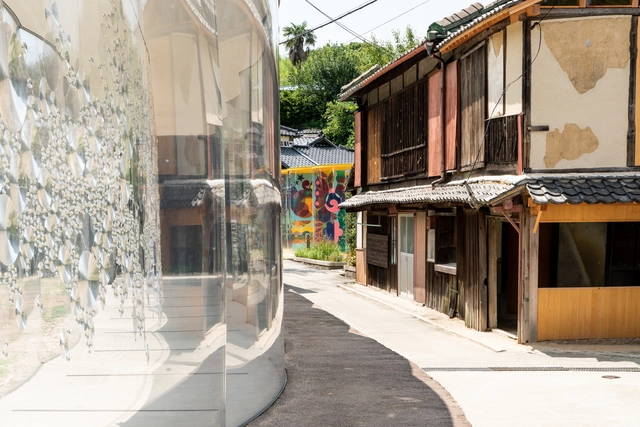
Across their work, NEiDA's interests extend beyond form toward the socio-political and climatic contexts that shape how architecture is made and inhabited. They emphasize learning from non-authored, vernacular, and informal building practices as a way of establishing a shared grammar for intervention, and they describe an indoor–outdoor continuity not as a stylistic preference but as a response to local life and ventilation logics—where outdoor rooms can be as spatially defined and programmatically central as interior ones. Collaboration, in this framework, is not auxiliary: the studio highlights on-site exchange with craftspeople and builders as a core methodology, where projects evolve through collective intelligence and adaptive communication.

“Material Is Where the Story Begins”: Studio NEiDA on Building Through Craft and Context - Image 1 of 4“Material Is Where the Story Begins”: Studio NEiDA on Building Through Craft and Context - Image 2 of 4“Material Is Where the Story Begins”: Studio NEiDA on Building Through Craft and Context - Image 3 of 4“Material Is Where the Story Begins”: Studio NEiDA on Building Through Craft and Context - Image 9 of 4“Material Is Where the Story Begins”: Studio NEiDA on Building Through Craft and Context - More Images+ 12

La Biennale di Venezia Unveils Renovated Central Pavilion at the Giardini

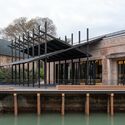
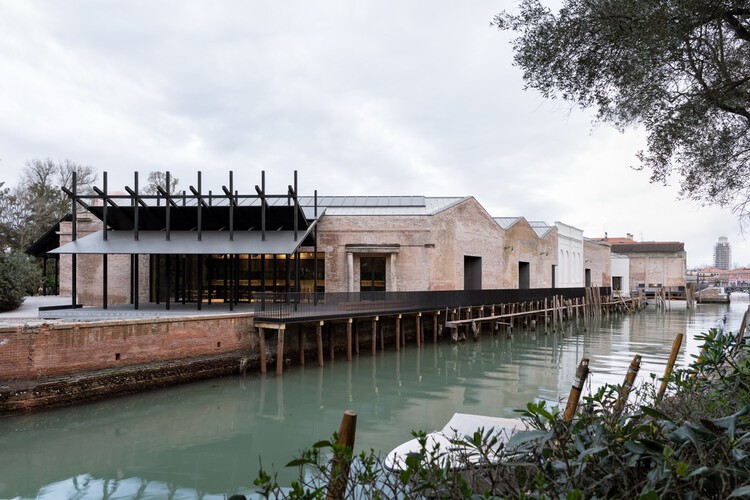
La Biennale di Venezia has unveiled the renovated Central Pavilion at the Giardini, completing a comprehensive intervention delivered between December 2024 and March 2026 as part of a broader national program to enhance cultural infrastructure. Funded by the Italian Ministry of Culture under the National Recovery and Resilience Plan (PNRR) and its complementary investment program (PNC), the project contributes to the development of a permanent hub for cultural production and exchange in Venice. The works form part of a wider initiative involving multiple sites associated with the Biennale, including the Giardini, the Arsenale, and other locations across the city, developed in coordination with local authorities and heritage institutions.

La Biennale di Venezia Unveils Renovated Central Pavilion at the Giardini - Image 1 of 4La Biennale di Venezia Unveils Renovated Central Pavilion at the Giardini - Image 2 of 4La Biennale di Venezia Unveils Renovated Central Pavilion at the Giardini - Image 3 of 4La Biennale di Venezia Unveils Renovated Central Pavilion at the Giardini - Image 4 of 4La Biennale di Venezia Unveils Renovated Central Pavilion at the Giardini - More Images+ 19

Error 404: Architectural Memory in the Age of Algorithms

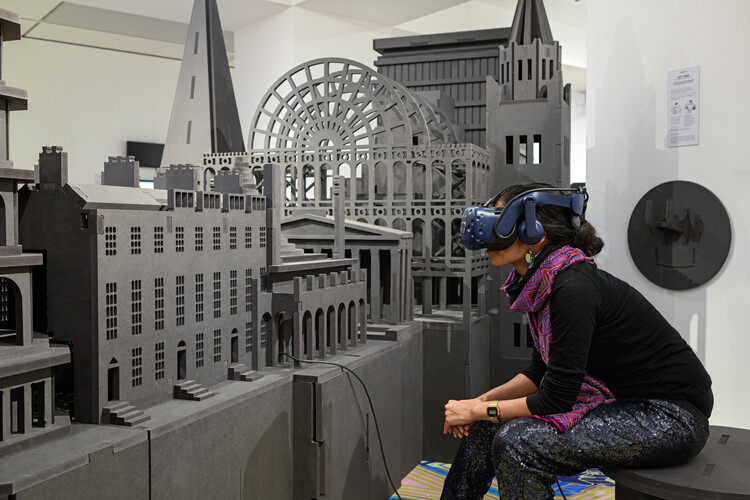
Before the digital turn, architecture's memory was largely tangible. It lived in the weight of drawings, the patina of models, and the thickness of books. To preserve architecture meant to preserve its traces, the documents, sketches, and photographs through which buildings could be remembered long after their material form had changed or disappeared. The modern architectural archive, as it developed in the 20th century, was both a refuge and a device of legitimacy. Institutions such as the Canadian Centre for Architecture, Casa da Arquitectura, or the Deutsches Architekturmuseum were built upon the conviction that to preserve architecture was to preserve its documents.

However, these archives didn't merely store knowledge. They determined what counted as architecture, who belonged to its canon, and how history would be told. To archive is to edit the past — to decide what enters, what is omitted, and how it will be interpreted. The archive, as theorised by Michel Foucault and later by Jacques Derrida, is never neutral; it is an instrument of power, a space that selects and excludes. In architecture, these dynamics are especially evident as they record the visible while silencing what falls outside their categories. The act of collecting has always been, implicitly, an act of judgment.

Error 404: Architectural Memory in the Age of Algorithms - Image 1 of 4Error 404: Architectural Memory in the Age of Algorithms - Image 2 of 4Error 404: Architectural Memory in the Age of Algorithms - Image 3 of 4Error 404: Architectural Memory in the Age of Algorithms - Image 4 of 4Error 404: Architectural Memory in the Age of Algorithms - More Images+ 15

Behind the Scenes, On Display: Self-Curated Journeys through the Museum Archive

The museum and gallery visit has long been a highly curated experience. Visitors are guided through a carefully orchestrated sequence of rooms, with hand-picked works arranged to tell a specific narrative, supported by signage, graphics, scenography, and calibrated lighting. Even the rarely changed exhibitions - the permanent collections, also typically rely on a strong curatorial voice— led by noted artists or curators—to set institutional stance and shape interpretation.

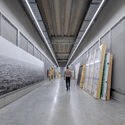
At the same time, storage areas for museums and galleries are typically kept separately—often within the same building but under tightly controlled access, and not infrequently off-site in dedicated facilities, such as the Louvre Conservation Centre. These zones have long been understood as highly controlled spaces not only in terms of access, but also in relation to climate, humidity, archival order, handling protocols, maintenance, and repair. For fear of thefts and that the spatial, environmental, and sequencing requirements of the archive could be disturbed, storage has traditionally been somewhat secretive and primarily serves academic researchers and art practitioners by request. Rarely does the general public gain a comprehensive picture of the works safeguarded by any given institution.

Behind the Scenes, On Display: Self-Curated Journeys through the Museum Archive - Image 1 of 4Behind the Scenes, On Display: Self-Curated Journeys through the Museum Archive - Image 2 of 4Behind the Scenes, On Display: Self-Curated Journeys through the Museum Archive - Image 3 of 4Behind the Scenes, On Display: Self-Curated Journeys through the Museum Archive - Image 4 of 4Behind the Scenes, On Display: Self-Curated Journeys through the Museum Archive - More Images+ 27

Inaugural Copenhagen Architecture Biennial 2025 Unveils "Slow Down" Theme

The inaugural Copenhagen Architecture Biennial, set to take place from September 18 to October 19, 2025, has announced its first curatorial theme, "Slow Down." Organized by CAFx, the biennial builds upon the foundation of the annual Copenhagen Architecture Festival, established in 2014, evolving into a larger international platform aimed at deepening engagement with architectural issues. This transition marks a shift in focus toward more comprehensive and long-term dialogue around the built environment's role in shaping society and addressing contemporary challenges.

Inaugural Copenhagen Architecture Biennial 2025 Unveils "Slow Down" Theme - Image 1 of 4Inaugural Copenhagen Architecture Biennial 2025 Unveils "Slow Down" Theme - Image 2 of 4Inaugural Copenhagen Architecture Biennial 2025 Unveils "Slow Down" Theme - Image 3 of 4Inaugural Copenhagen Architecture Biennial 2025 Unveils "Slow Down" Theme - Image 4 of 4Inaugural Copenhagen Architecture Biennial 2025 Unveils Slow Down Theme - More Images+ 1

“Resources For a Future”: Tallinn Architecture Biennale Announces Program and Curation for 2024 Edition

The 7th Tallinn Architecture Biennale (TAB 2024) will commence on October 9th, 2024, at various venues around the city. Organized by the Estonian Centre for Architecture, this edition of the global architecture exhibition explores “Resources For a Future,” hoping to encourage dialogue, interdisciplinary work, and innovation within architecture. The event targets both architects and the general public and includes a comprehensive program featuring workshops, panels, seminars, and Open House Tallinn.

“Resources For a Future”: Tallinn Architecture Biennale Announces Program and Curation for 2024 Edition - Image 1 of 4“Resources For a Future”: Tallinn Architecture Biennale Announces Program and Curation for 2024 Edition - Featured Image“Resources For a Future”: Tallinn Architecture Biennale Announces Program and Curation for 2024 Edition - Image 2 of 4“Resources For a Future”: Tallinn Architecture Biennale Announces Program and Curation for 2024 Edition - Image 3 of 4“Resources For a Future”: Tallinn Architecture Biennale Announces Program and Curation for 2024 Edition - More Images+ 6

"Intelligens. Natural. Artificial. Collective": Carlo Ratti Announces Theme and Title for 2025 Venice Architecture Biennale

Carlo Ratti, the curator of the 19th International Architecture Exhibition - La Biennale di Venezia, along with The President of La Biennale di Venezia, Pietrangelo Buttafuocco, have just revealed highly anticipated details for the upcoming edition. Titled "Intelligens," the exhibition will be running from May 24th to November 23rd, 2025 in Giardini, the Arsenale, and various landmark locations throughout Venice.

"Intelligens. Natural. Artificial. Collective": Carlo Ratti Announces Theme and Title for 2025 Venice Architecture Biennale  - Image 1 of 4"Intelligens. Natural. Artificial. Collective": Carlo Ratti Announces Theme and Title for 2025 Venice Architecture Biennale  - Image 2 of 4"Intelligens. Natural. Artificial. Collective": Carlo Ratti Announces Theme and Title for 2025 Venice Architecture Biennale  - Featured Image"Intelligens. Natural. Artificial. Collective": Carlo Ratti Announces Theme and Title for 2025 Venice Architecture Biennale  - Image 3 of 4Intelligens. Natural. Artificial. Collective: Carlo Ratti Announces Theme and Title for 2025 Venice Architecture Biennale  - More Images+ 7

New Exhibition Co-Curated by Kazuyo Sejima Explores the Art and Architecture Programme Reviving the Island of Inujima

A new exhibition at the Japan House in London explores the large-scale art and architecture project driving the transformation of the Japanese island of Inujima for the past 13 years. Titled Symbiosis: Living Island, the show co-curated by the project's artistic director Yūko Hasegawa and architect Kazuyo Sejima showcases how the innovative scheme of accessible art, pavilions and creative projects brought together artists and locals in the effort to revitalize and secure a future for this island in the Seto Inland Sea confronted with diminishing population. Running from 21 May to 4 September 2022, the exhibition takes visitors on a journey around the island that illustrates the transformative impact of the Inujima' Art House Project' through architectural models, photography, videos and testimonies of the residents.

New Exhibition Co-Curated by Kazuyo Sejima Explores the Art and Architecture Programme Reviving the Island of Inujima - Image 1 of 4New Exhibition Co-Curated by Kazuyo Sejima Explores the Art and Architecture Programme Reviving the Island of Inujima - Image 2 of 4New Exhibition Co-Curated by Kazuyo Sejima Explores the Art and Architecture Programme Reviving the Island of Inujima - Image 3 of 4New Exhibition Co-Curated by Kazuyo Sejima Explores the Art and Architecture Programme Reviving the Island of Inujima - Image 4 of 4New Exhibition Co-Curated by Kazuyo Sejima Explores the Art and Architecture Programme Reviving the Island of Inujima - More Images+ 3