1. ArchDaily
  2. Daylight & Architecture

Daylight & Architecture: The Latest Architecture and News

Atelier Bow-Wow and Climate Scientists Honored with 2026 Daylight Award on UNESCO International Day of Light

On UNESCO's International Day of Light, celebrated annually on May 16, the Daylight Award announced its 2026 laureates. Established to support research into the scientific understanding of daylight and its significance for health, well-being, ecosystems, and architectural design, the award recognizes achievements in two categories: Daylight in Architecture and Daylight Research. This year, Japanese architects Momoyo Kaijima and Yoshiharu Tsukamoto of Atelier Bow-Wow were honored for demonstrating how daylight can shape shared spaces and everyday life, while marine biologists Brittany N. Zepernick, Steven W. Wilhelm, and R. Michael McKay of the United States and Canada were recognized for their research on aquatic microorganisms and their implications for planetary health and biodiversity.


Evenly Lit, Not Overlit: Rethinking Brightness in Subtropical Cities

Subscriber Access | 

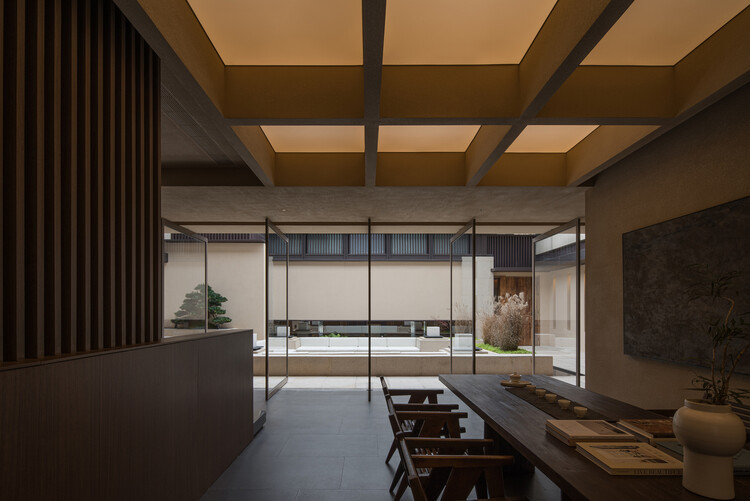
In South China, there is occasionally an urban myth—especially across Hong Kong, Shenzhen, and Guangzhou—about choosing a home that avoids western light. Over decades, the west-facing sun has proven to be a particularly difficult condition to live with: its low angle in the afternoon, its aggressive heat gain (especially in summer), and the way it penetrates deep into interiors. With global warming and longer, hotter seasons, that much-romanticized "afternoon glow" is increasingly experienced less as romance and more as glare, heat, and fatigue. Although this wisdom circulates as a community-driven rule of thumb, it carries an undeniable architectural clarity about building orientations: avoiding western light is not only about thermal comfort, but also about avoiding the sharpest, most intrusive form of direct illumination—light that strikes at the most unforgiving angle, washing surfaces, flattening depth, and turning rooms into high-contrast fields of discomfort.

Evenly Lit, Not Overlit: Rethinking Brightness in Subtropical Cities - Image 1 of 4Evenly Lit, Not Overlit: Rethinking Brightness in Subtropical Cities - Image 2 of 4Evenly Lit, Not Overlit: Rethinking Brightness in Subtropical Cities - Image 3 of 4Evenly Lit, Not Overlit: Rethinking Brightness in Subtropical Cities - Image 4 of 4Evenly Lit, Not Overlit: Rethinking Brightness in Subtropical Cities - More Images+ 8

The Evolving Practice of Designing Light in Scandinavian Environments

Subscriber Access | 

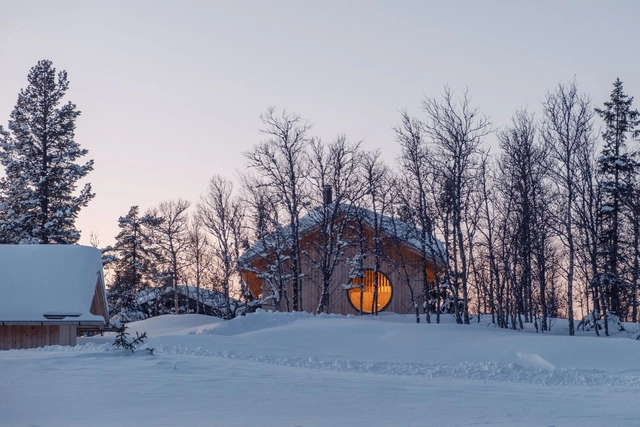
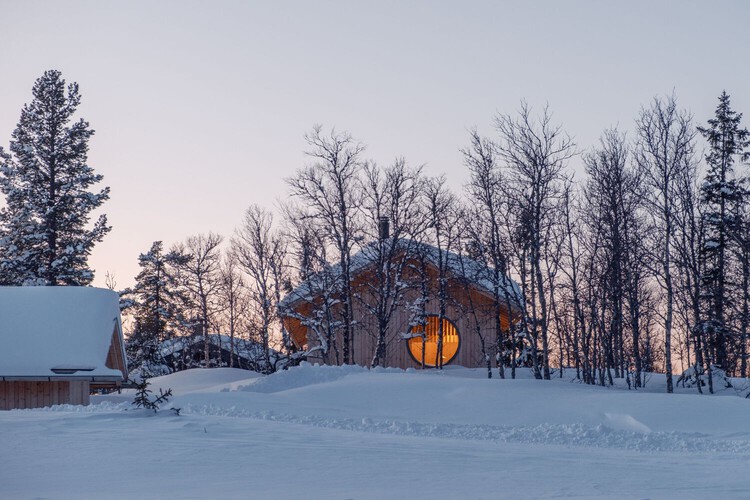
Scandinavia is shaped by environmental conditions that test both human endurance and architectural ingenuity, with long winters defined by limited daylight, low sun angles, deep snowfall, and cold winds that transform everyday movement, gathering, and habitation into deliberate acts. In this context, architecture is never neutral, and hospitality is never incidental. Buildings that welcome visitors across cities, forests, and coastlines must respond directly to darkness and cold, not by denying them, but by creating interior worlds that offer orientation, warmth, and psychological relief. The act of welcoming in Scandinavia is therefore inseparable from the climate, grounded in the understanding that shelter, light, and human presence are fundamental resources in Arctic environments.

The Evolving Practice of Designing Light in Scandinavian Environments - Image 1 of 4The Evolving Practice of Designing Light in Scandinavian Environments - Image 2 of 4The Evolving Practice of Designing Light in Scandinavian Environments - Image 3 of 4The Evolving Practice of Designing Light in Scandinavian Environments - Image 4 of 4The Evolving Practice of Designing Light in Scandinavian Environments - More Images+ 18

Quiet Hope: Frank Gehry’s Maggie’s Centre Hong Kong

Subscriber Access | 

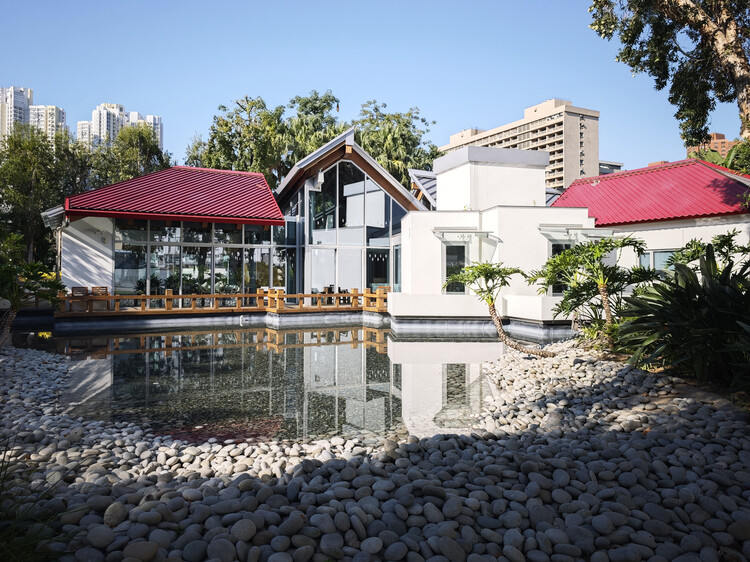
Earlier this month, news of Frank Gehry's passing prompted an outpouring of tributes to the architect behind flamboyant museums, concert halls, and sinuous residential complexes. Rather than revisit that well-charted terrain, it is worth pausing on a more contemplative work in his oeuvre: Maggie's Cancer Caring Centre in Hong Kong. Quiet, optimistic, and calibrated for everyday resilience, the building reflects multiple registers of Gehry's intent: a commitment to positivity and survival—and, more personally, an architect's own reckoning with loss and end-of-life care.

The remark reframes Maggie's Hong Kong as more than a commission; it suggests a design process shaped by grief and turned toward comfort, dignity, and the possibility of hope—an ethos that aligns closely with the organization's mission.

Quiet Hope: Frank Gehry’s Maggie’s Centre Hong Kong - Image 1 of 4Quiet Hope: Frank Gehry’s Maggie’s Centre Hong Kong - Image 2 of 4Quiet Hope: Frank Gehry’s Maggie’s Centre Hong Kong - Image 3 of 4Quiet Hope: Frank Gehry’s Maggie’s Centre Hong Kong - Image 4 of 4Quiet Hope: Frank Gehry’s Maggie’s Centre Hong Kong - More Images+ 20

Carlo Scarpa: The Master of Sculpture and Light

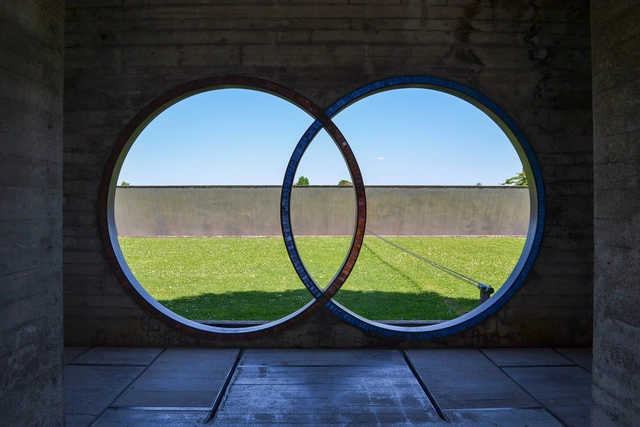
Natural light is one of the most critical elements in architecture. Although unbuilt and difficult to control, it plays a crucial part in defining how space is perceived in terms of scale, textures, materiality, and overall atmosphere. Natural light also impacts the emotions people feel in a space, whether lack of light makes us feel fear and anxiety or ample light makes us feel safe and ethereal. As much as light impacts architecture, architecture also impacts light. Through framing vistas, creating 3D massings that cast sculptural shadows, and carving voids from solids that create unique light projections, many architects have mastered design techniques that utilize light in a way that seamlessly integrates it within a building- and perhaps one of the best to do this was the Venetian architect, Carlo Scarpa.

The Threshold Between Daylight and Architecture: Flat Roof Access Hatches

 | Sponsored Content

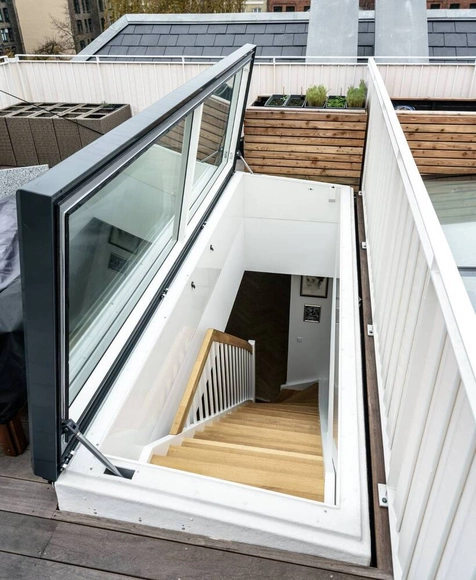
Beyond light as a physical phenomenon perceptible by the human eye, daylight is an inexhaustible architectural resource that is sometimes taken for granted. Just like the air we breathe, we are all aware of the existence of light, but rarely do we seek to do anything else with it. It is essential to recognize its presence as an enabler of experiences in space, due to its intrinsic relationship with architecture and human beings.

The incidence of light in architecture directly influences the way we perceive the passage of time. Since ancient times, constructions such as ziggurats have integrated strategies to capture the changing daylight through their roofs, evolving and remaining present in modern constructions such as the Villa Savoye. More recently, the flatness of roofs in contemporary buildings has been a great resource for incorporating architectural elements that also allow them to be inhabited, such as roof access hatches, which serve as a link between natural light and roof terraces.

Below, we review some of the latest technologies in skylights and access hatches, such as those developed by LAMILUX.

How to Frame Dawn in England's Cathedrals

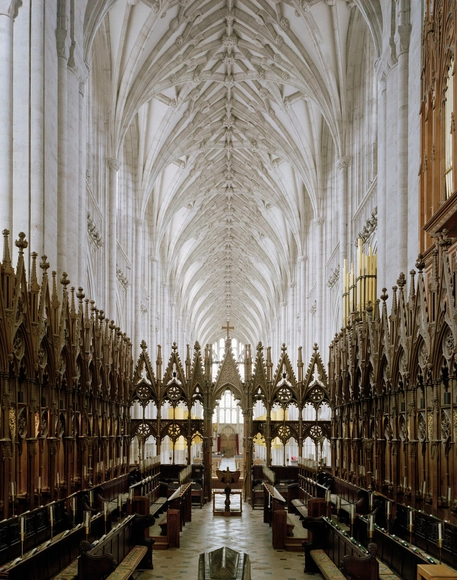
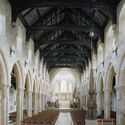
Using only natural light to document English cathedrals can turn into a logistical and technical challenge. However, Peter Marlow's photography has resulted in a remarkable series of iconic spiritual sites whose contemplative atmosphere is rarely accessible to others. Looking east with the camera towards the nave as the dawn light streamed through the main window opens a purist and mystical perspective to the time when these sacred structures were erected. 

How to Frame Dawn in England's Cathedrals  - Image 1 of 4How to Frame Dawn in England's Cathedrals  - Image 2 of 4How to Frame Dawn in England's Cathedrals  - Image 3 of 4How to Frame Dawn in England's Cathedrals  - Image 4 of 4How to Frame Dawn in England's Cathedrals  - More Images+ 2

Solar Decathlon Europe: Sustainable Lighting Combines Engineering and Design

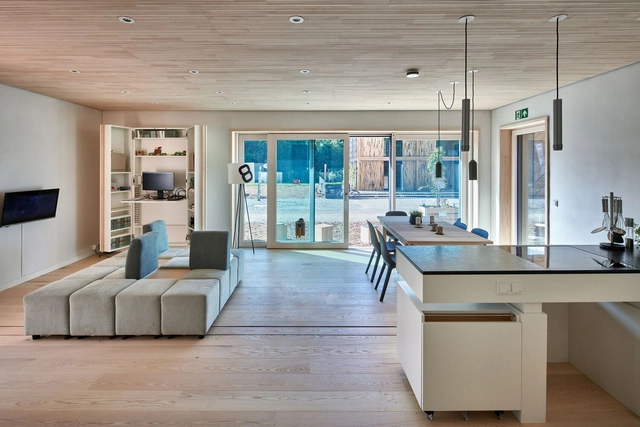
The motto of the Solar Decathlon Europe 21/22 was to convert and expand rather than to demolish and reconstruct. Recycling windows, using biodegradable materials for luminaires and connecting light with sensors represented just some innovative examples of the international university-level student competition in Wuppertal, Germany. For the first time, the competition presented an award for sustainable architectural lighting. This was a question of quality as much as quantity, and that applies equally to daylight and artificial light.
Solar Decathlon Europe: Sustainable Lighting Combines Engineering and Design - Image 1 of 4Solar Decathlon Europe: Sustainable Lighting Combines Engineering and Design - Image 2 of 4Solar Decathlon Europe: Sustainable Lighting Combines Engineering and Design - Image 3 of 4Solar Decathlon Europe: Sustainable Lighting Combines Engineering and Design - Image 4 of 4Solar Decathlon Europe: Sustainable Lighting Combines Engineering and Design - More Images+ 7

Vitamin D Architecture

Subscriber Access | 

Plague clouds

On August 27th, 1883, the volcano of Krakatoa in the Indonesian islands erupted. Ashes and rocks flew miles high. Barometers wobbled three and a half times as they recorded the atmospheric pressure wave circumnavigating the globe. The noise was heard across the Indian Ocean and Australia. And for years, small ash particles floated in the atmosphere, diffusing the sun’s light and scattering colors around the world.

Vitamin D Architecture - Image 1 of 4Vitamin D Architecture - Image 2 of 4Vitamin D Architecture - Image 3 of 4Vitamin D Architecture - Image 4 of 4Vitamin D Architecture - More Images+ 9

Have Gardens Become a Privilege?

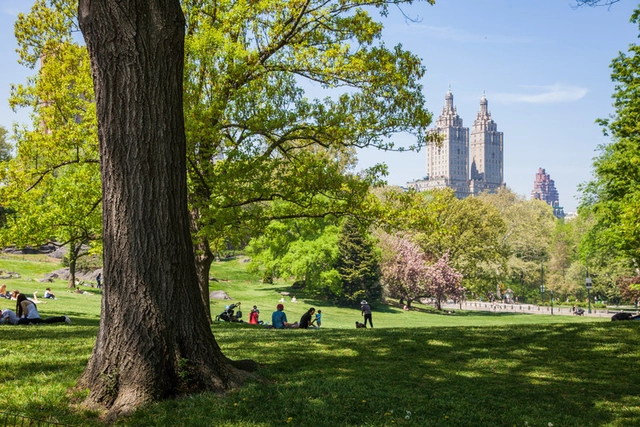
Whether it is a small balcony, access to green space or a private garden, the outdoor space has become a privilege for many, especially upon the dawn of the Covid-19 pandemic and the multiple lock down periods that followed. Green space in the city is constantly under threat, particularly since governments seek to increase housing densities in order to feed a growing demand for suburban development. As a result, the garden and access to green/outdoor spaces has decreased in recent times, as priorities lie in housing as many as possible, often with disregard to beneficial features such as access to outdoor areas in residential developments.

In terms of living conditions the lack of access to these spaces presents evident inequalities, uncovered during periods of lock down and restrictions during the pandemic. People were confined to their homes and local outdoor spaces, where they could exercise. Those who had access to these public spaces and had their own gardens/external space were very lucky in the sense that they were able to enjoy an element of the outside. While those less fortunate in flats and areas of depravity faced claustrophobic and demoralizing conditions, contained within the shell of their homes. 

Have Gardens Become a Privilege? - Image 1 of 4Have Gardens Become a Privilege? - Image 2 of 4Have Gardens Become a Privilege? - Image 3 of 4Have Gardens Become a Privilege? - Image 4 of 4Have Gardens Become a Privilege? - More Images+ 2

On UNESCO’s Day of Light, The Daylight Award Released Footage of the 2022 Laureates

On the UNESCO International Day of Light, The Daylight Awards announced the 2022 Laureates: Yvonne Farrell and Shelley McNamara from Grafton Architects (Ireland) for their use of light in architecture, and Anna Wirz-Justice (Switzerland) for her extensive daylight research. Releasing footage offering an insight into the winning works, The Daylight Awards present international excellence in daylight research and practice and the humanistic approach to celebrating light.

In interview with Anna Wirz-Justice she discusses her time working within a psychiatric clinic, uncovering connections between abnormal light exposure and the impact this has on overall mental health. In conversation with both Shelley McNamara and Yvonne Farrell of Grafton Architects, they offer insight into the employment of daylight within the design process as a key and inherent quality, which can ultimately influence spacial arrangement.

Daylight and Architecture: New Series of Daylight Talks Announced

Daylight and Architecture, a global knowledge-sharing initiative focusing on exploring the limitless potential of daylight in architecture, has announced the new series of ‘Daylight Talks’.

Steven Holl Wins 2016 Daylight Award in Architecture

Steven Holl has been awarded the 2016 Daylight Award in Architecture, which honors architects “who have distinguished themselves by realizing architecture or creating urban environments that showcase a unique use of daylight, for the benefit of overall quality of life, its impact on human health, well-being and performance, and its value to society.”

Light Matters: Learning From Vernacular Windows

Before computer daylight simulations were used to optimize the atmosphere and energy in buildings, generations of builders developed simple principles to create the best windows for their site. Two lighting experts have studied these traditional openings in buildings to find inspiration for more sustainable designs today. Francesco Anselmo, a lighting designer at Arup, and John Mardaljevic, Professor of Building Daylight Modelling at the School of Civil & Building Engineering of Loughborough University, have analysed the sun and skylight variations from northern regions like Stockholm down to the equator in cities like Haiti or Abu Dhabi.

Read on to learn more about the variety of traditional windows.

Light Matters: Learning From Vernacular Windows - Image 1 of 4Light Matters: Learning From Vernacular Windows - Image 2 of 4Light Matters: Learning From Vernacular Windows - Image 3 of 4Light Matters: Learning From Vernacular Windows - Image 4 of 4Light Matters: Learning From Vernacular Windows - More Images+ 2